White bleeding heart
Lamprocapnos spectabilis 'Alba'. Family Papaveraceae. Perennial.
Also called Old-fashioned white bleeding heart, Dicentra spectabilis 'Alba', Lady-in-the-bath.
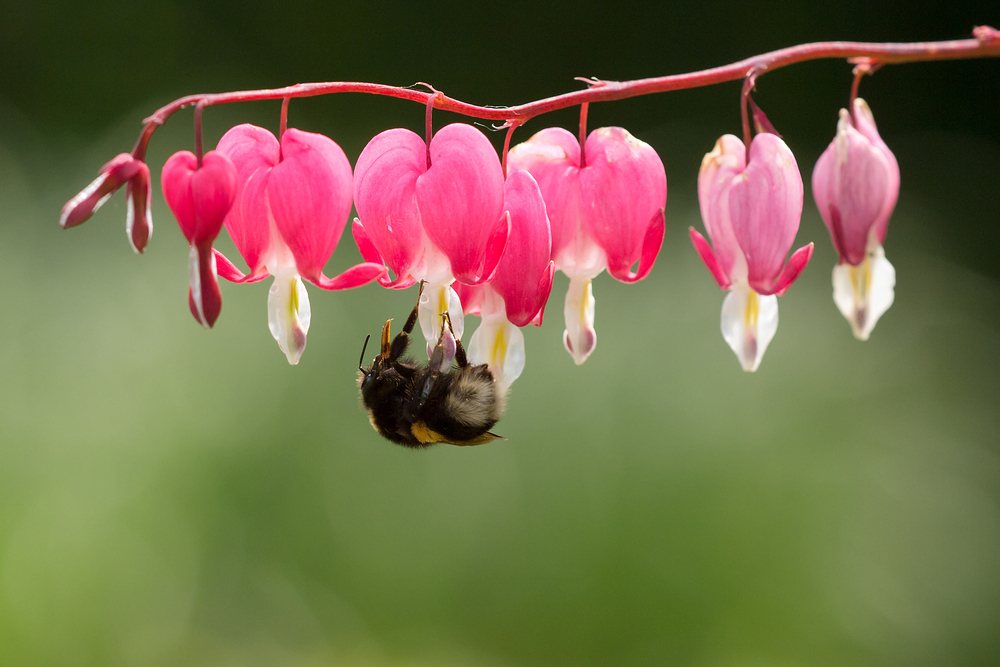
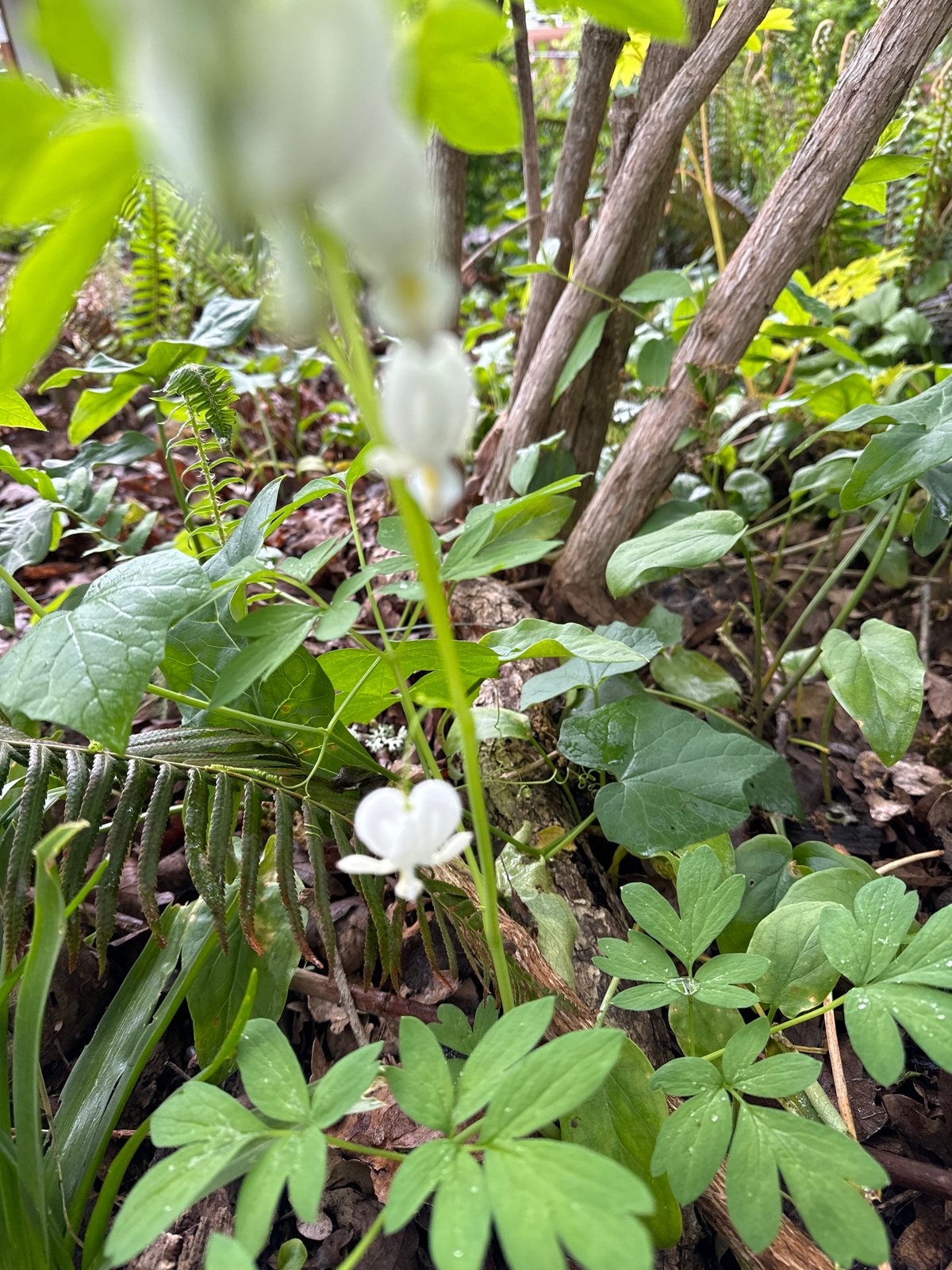
White bleeding heart is a deciduous perennial with arching stems of white, heart-shaped flowers above soft green foliage. It brings spring flowers to sheltered, partly shaded borders, then often dies back in summer, especially when conditions turn hot or dry.
At a glance
- Sun
- Partial shade; morning sun with afternoon shade is ideal. More sun is tolerable in cool climates if the soil stays moist.
- Water
- Keep evenly moist during spring growth and flowering, without waterlogging. Water during dry spells, but do not keep dormant crowns wet.
- Soil
- Humus-rich, moisture-retentive but well-drained soil; tolerates mildly acidic to mildly alkaline conditions.
- Height
- 2-3 ft (0.6-0.9 m)
- Spread
- 2-3 ft (0.6-0.9 m)
- Flowers
- Spring to early summer; pure white, pendant, heart-shaped flowers hang along arching stems.
- Foliage
- Soft green, deeply divided leaves form a loose mound; foliage usually yellows and disappears in summer, though it may last longer in cool, moist conditions.
- Growth
- Moderate; forms a substantial clump over several years.
- Care needed
- Low
The year at a glance
- Pollinators
- Deer resistant
- Cold hardy
- Low allergen
| J | F | M | A | M | J | J | A | S | O | N | D | |
|---|---|---|---|---|---|---|---|---|---|---|---|---|
| Flowers | ||||||||||||
| Plant |
Northern hemisphere months. In Australia, shift them by six.
- Difficulty
- Easy
- Toughness
- Fairly tough
Will it suit your garden?
Pick your zone, country, light and whether you have pets.
Full sun is 6 or more hours of direct sun a day, part shade 3 to 6 hours, shade under 3.
How it grows
Planting day
1 ft (0.3 m)
After 1 year
1.5 ft (0.45 m)
After 2 years
2 ft (0.6 m)
After 3 years
2.5 ft (0.75 m)
full size
About 3 years to full size.
From a typical nursery size, at an average rate for this kind of plant. A rule of thumb, not a forecast.
Good to know
- Cats and dogs
- Toxic
- Growth rate
- Moderate
Care
Jobs through the year
- WaterMar–Apr, every 7 days
- Check established plants and water deeply if soil begins drying; water new plants more often.
- WaterMay–Jun, every 5 days
- Maintain even moisture while actively growing; stop routine watering after summer dormancy.
- FeedMar
- Apply a thin compost dressing; additional feeding is usually unnecessary.
- MulchMar, Oct
- Refresh leaf mould around the plant without covering the crown.
- ProtectMar–Apr
- Cover emerging shoots before hard frosts and check for slugs and snails.
- DeadheadMay–Jun
- Remove spent flower stems if desired, leaving green foliage intact.
- PruneJun–Aug
- Remove foliage only once fully yellow and dead; mark the crown.
- DivideMar, Sep–Oct
- Divide only when necessary, taking care not to break the brittle roots.
- Plant in a sheltered spot with afternoon shade and space for its arching stems.
- Water deeply during dry spring weather, keeping the root zone moist rather than saturated.
- Apply compost or leaf mould in spring, keeping it clear of the crown.
- Avoid heavy feeding; a spring compost dressing is usually enough.
- Mark the crown before summer dieback so you do not damage it while planting nearby.
- Divide only when needed, in early spring or autumn, handling the brittle roots carefully.
Pruning. Remove spent flower stems if you want a tidier appearance. Leave green foliage intact, then cut it to ground level once it has yellowed and died back.
Through the year
- Early spring
- Plant or divide as growth begins; protect emerging shoots if a hard frost is forecast.
- Spring
- Apply compost or leaf mould and check young shoots for slugs and snails.
- Spring to early summer
- Water during dry spells and enjoy the flowers; remove spent stems if desired.
- Summer
- Allow yellowing foliage to die back naturally, then cut it down and mark the crown.
- Autumn
- Plant dormant nursery stock or divide established clumps if necessary; avoid waterlogged sites.
- Winter
- Leave dormant crowns undisturbed and check that water is not pooling over them.
In the garden
- Plant in a woodland border with ferns and hostas for contrasting leaf shapes.
- Use in a white garden where its flowers brighten spring shade.
- Place behind later-emerging shade perennials that will cover the gap after summer dieback.
- Grow beside a sheltered path where the hanging flowers can be seen close up.
Garden styles it suits: Woodland, Cottage garden, Romantic rose garden, White garden, English country and Secret garden.
Plant it with: Hostas, Japanese painted fern, Siberian bugloss, Lungwort, Hellebores and Astilbes.
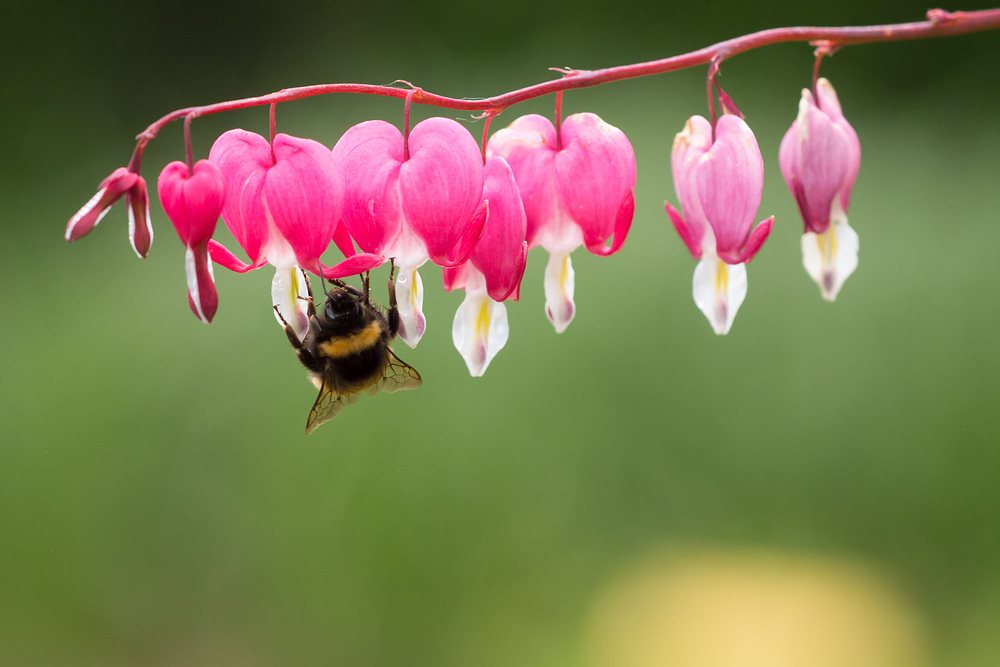
Wildlife: Flowers can attract long-tongued bees and, in North America, hummingbirds. It is not a North American, British or Australian native plant.
Problems to watch for
- Slugs and snails can eat emerging shoots: check at dusk, remove by hand and use iron phosphate bait according to the label if needed.
- Crown and root rot can develop in saturated soil: improve drainage or move the plant, and avoid burying the crown too deeply.
- Hot sun or dry soil can scorch leaves and bring early dormancy: provide afternoon shade, mulch and water during active growth.
- Late frost can blacken new shoots: cover emerging growth before cold nights and trim damaged tissue once the extent of injury is clear.
Safety
All parts, including the roots, contain toxic alkaloids and are poisonous if eaten by people, cats, dogs or horses. Ingestion can cause vomiting, abdominal pain and, in larger amounts, tremors or other serious neurological signs. Sap may irritate skin; wear gloves when dividing and seek medical or veterinary advice after ingestion.
Easily confused with
Pink bleeding heart (Lamprocapnos spectabilis)
Has the same tall, arching habit, but the usual flowers have pink outer petals and white inner tips rather than being entirely white.
Pacific bleeding heart (Dicentra formosa)
Forms lower, spreading patches with finer, fern-like foliage and smaller flowers in clusters above the leaves; white-flowered forms also occur.
Dutchman's breeches (Dicentra cucullaria)
Much shorter, with finely divided foliage and white flowers shaped like upside-down trousers, with two distinct spurs rather than a rounded heart.
The name
Bleeding heart describes the heart-shaped flowers with protruding inner petals, while 'Alba' means white in Latin.
Propagation. Divide established clumps in early spring or autumn, keeping healthy buds and roots on each section. Root cuttings taken during dormancy are another option. Seedlings may not retain the white flowers of 'Alba', so use vegetative propagation to keep the cultivar true.
Checked against open data
- Accepted botanical name
- Lamprocapnos spectabilis
- In the US and Canada
- Introduced in the lower 48 states.
- Native range
- Korea and Manchuria.
- Measured
- Average height 75 cm.
Sources: GBIF (CC BY 4.0), USDA PLANTS and Trefle (CC BY 4.0). The care and design notes are LandscapeGPT's own.
See it in your own yard.
Upload a photo of your yard and see it redesigned with plants that suit your climate, each checked against your zone.