White clover
Trifolium repens. Family Fabaceae. Groundcover.
Also called Dutch clover, Creeping clover.
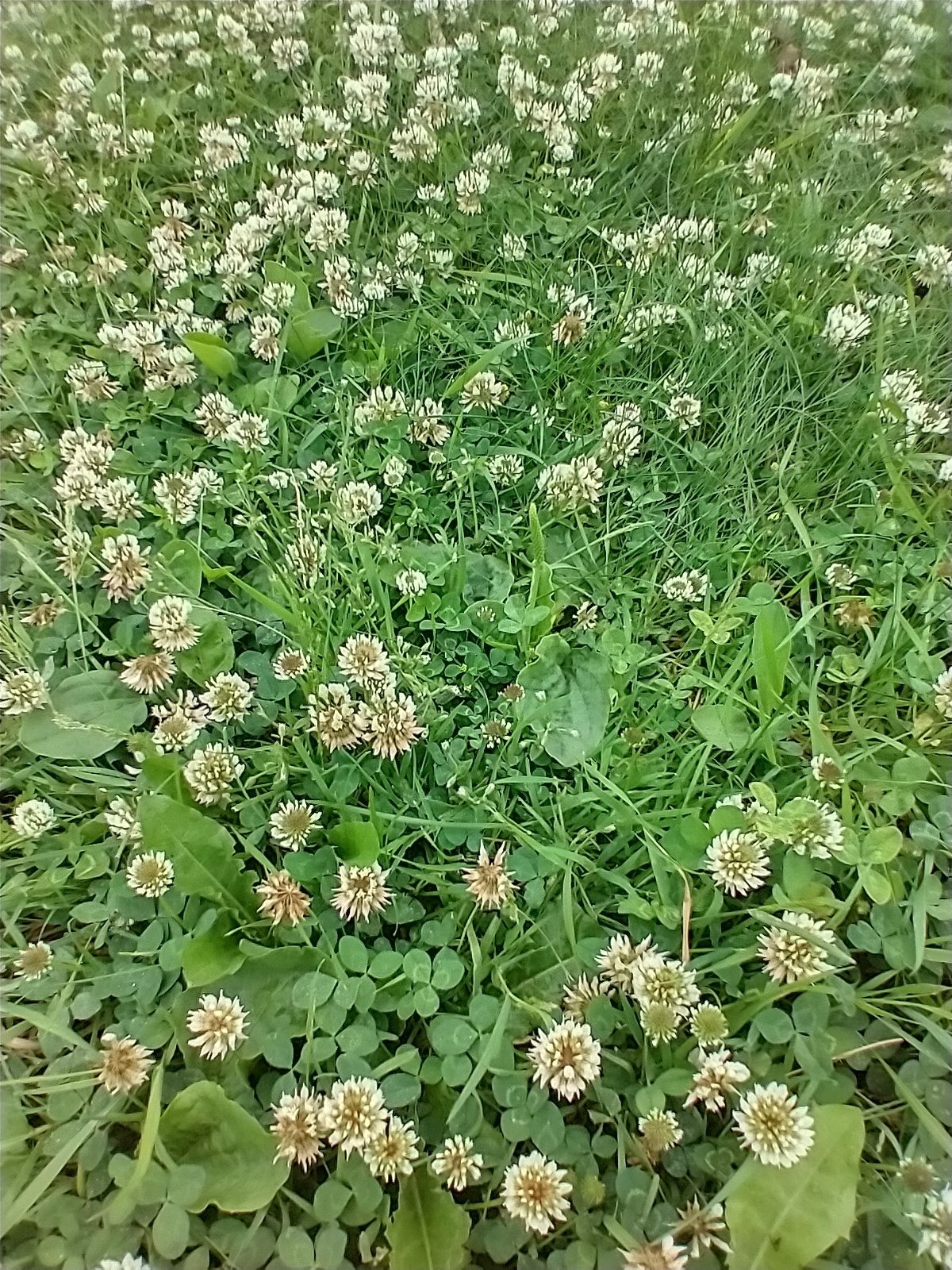
White clover is a low-growing perennial that spreads by creeping stems, forming patches of three-part leaves and white flower heads. Gardeners grow it in mixed lawns, orchard groundcovers and informal flowering turf because it tolerates mowing, supports bees and fixes nitrogen through bacteria in its roots. It spreads readily into nearby beds and is less suitable than turfgrass for heavy foot traffic.
At a glance
- Sun
- Full sun to light partial shade; flowering and growth are weaker in deep shade.
- Water
- Moderate; water during establishment and prolonged dry spells. Established plants tolerate brief drought but may brown off in hot, dry weather.
- Soil
- Moist, well-drained loam or clay loam; tolerates a broad range of soils but performs poorly in strongly acidic soil or prolonged waterlogging.
- Height
- 4-8 in (0.1-0.2 m), including flowers
- Spread
- 1-2 ft (0.3-0.6 m) per patch initially; rooting stems can eventually cover a much larger area.
- Flowers
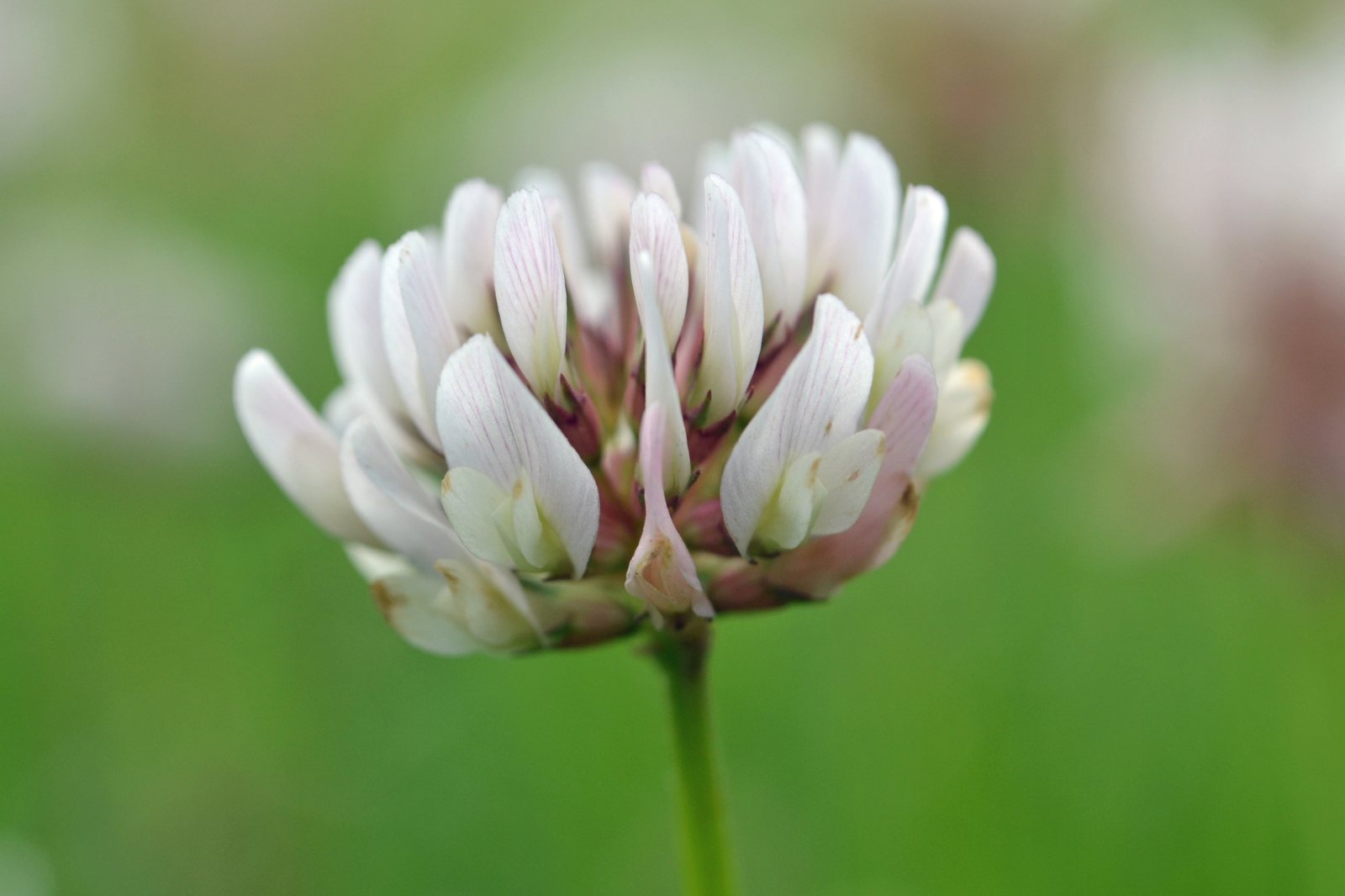
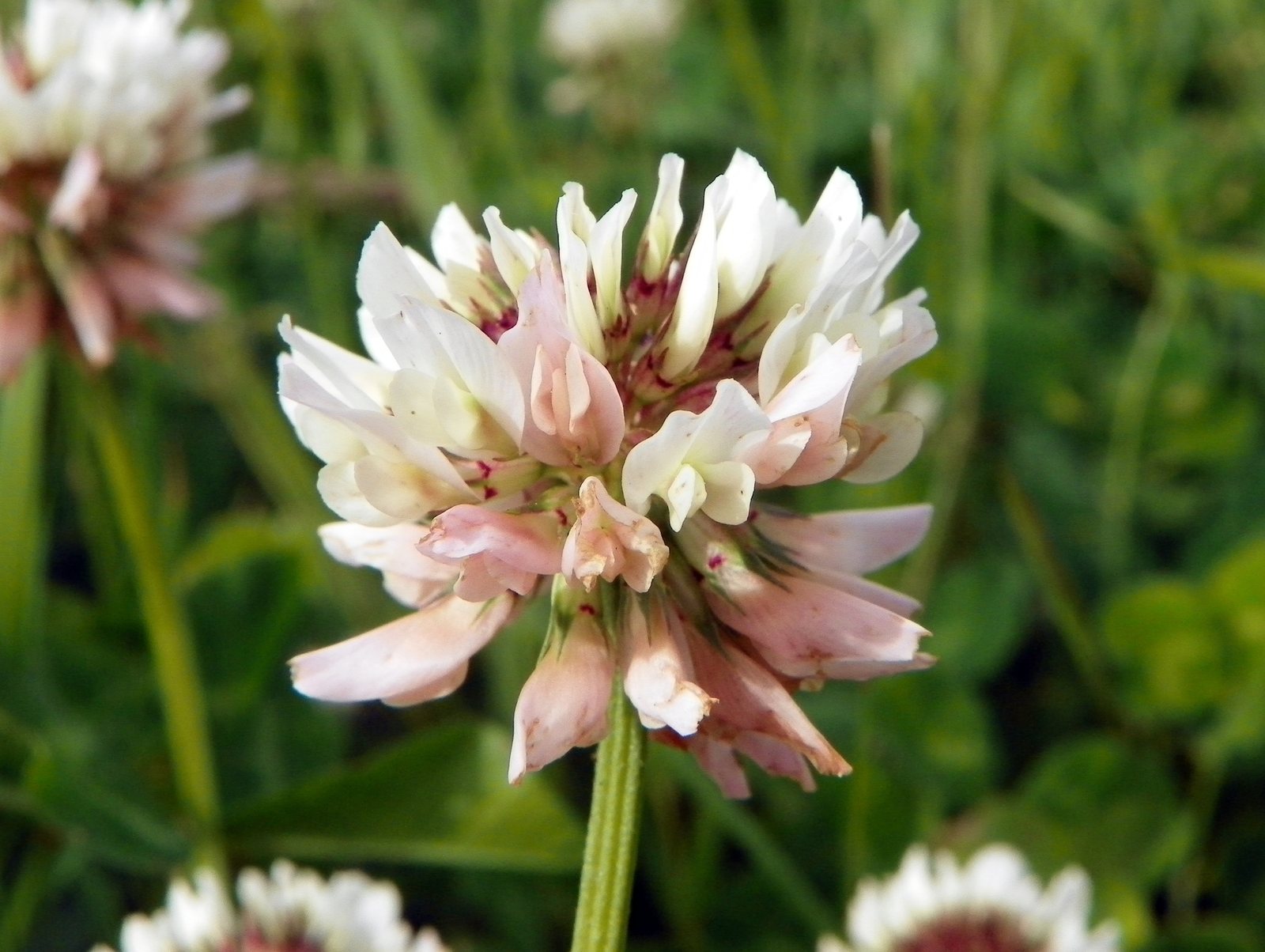
- Late spring to autumn in suitable conditions; rounded white flower heads, sometimes tinged pink, turn brown as they age.
- Foliage
- Three rounded leaflets, often marked with a pale crescent, on long stalks. Usually evergreen in mild climates, but may lose foliage in severe cold or summer drought.
- Growth
- Fast in mild, moist weather
- Care needed
- Low
The year at a glance
- Pollinators
- Cold hardy
- Wildlife
- Low allergen
| J | F | M | A | M | J | J | A | S | O | N | D | |
|---|---|---|---|---|---|---|---|---|---|---|---|---|
| Flowers | ||||||||||||
| Plant |
Northern hemisphere months. In Australia, shift them by six.
- Difficulty
- Easy
- Toughness
- Very tough
Will it suit your garden?
Pick your zone, country, light and whether you have pets.
Full sun is 6 or more hours of direct sun a day, part shade 3 to 6 hours, shade under 3.
How it grows
Planting day
0.1 ft (0.04 m)
After 1 year
0.4 ft (0.11 m)
After 2 years
0.5 ft (0.15 m)
full size
About 2 years to full size.
From a typical nursery size, at an average rate for this kind of plant. A rule of thumb, not a forecast.
Good to know
- Cats and dogs
- Mildly toxic: may upset a stomach
- Native to
- the UK
- Invasive in
- Australia
- In the garden
- Spreads vigorously: plan to contain it.
- Growth rate
- Fast
Care
Jobs through the year
- WaterApr–May, Sep, every 14 days
- Water established patches only in prolonged dry weather; keep new sowings consistently moist.
- WaterJun–Aug, every 10 days
- Water during extended drought to retain green growth, or allow temporary browning.
- PruneMay–Sep, every 21 days
- If used as lawn, mow to 8–10 cm and leave some flowering patches for bees.
- PruneApr–Sep, every 30 days
- Remove runners entering neighbouring beds before they root.
- ProtectJan–Feb, Nov–Dec
- Avoid heavy traffic when soil is frozen or waterlogged.
- Sow shallowly onto a firm, weed-free surface and keep the soil moist until seedlings establish.
- Water established patches during prolonged drought if you want them to remain green.
- Avoid routine nitrogen feeding; it encourages competing grasses and is usually unnecessary for clover.
- Use a soil test before adding lime or other nutrients, especially where growth is poor.
- Pull or edge out creeping stems before they root in adjoining beds.
Pruning. Mow mixed clover lawns to about 3-4 in (0.08-0.1 m), avoiding repeated close scalping. Leave some areas unmown during flowering for bees, and trim spreading edges whenever needed.
Through the year
- Early spring
- Check soil drainage and remove weeds from areas intended for sowing.
- Spring
- Sow when soil is warming and moisture is reliable; keep the surface moist through germination.
- Late spring
- Begin light mowing once plants are well rooted, leaving some flowering patches untouched.
- Summer
- Water during extended drought if needed and remove runners entering beds.
- Early autumn
- Overseed thin patches while soil is warm and rain is likely.
- Winter
- Avoid heavy traffic on frozen or waterlogged ground.
In the garden
- Mix with fine fescues or perennial ryegrass for informal turf with seasonal flowers and reduced nitrogen fertiliser needs.
- Use beneath widely spaced fruit trees where there is enough light, keeping a clear area around trunks.
- Create mown paths through taller informal planting, provided traffic is light to moderate.
- Plant in a contained flowering groundcover patch beside a vegetable garden to provide forage for bees.
Garden styles it suits: Cottage garden, Wildlife garden, Pollinator garden, Low-maintenance, Backyard orchard and Homestead.
Plant it with: Fine fescues, Perennial ryegrass, Self-heal, English daisy, Apple trees and Pear trees.
Wildlife: Flowers provide nectar and pollen for honeybees and bumblebees. Rabbits and deer may graze the foliage. Flowering clover attracts bees at foot level, so use caution where people walk barefoot.
Problems to watch for
- Summer browning: heat and dry soil can cause dormancy or patch loss; water deeply during extended drought or allow recovery when cooler, wetter weather returns.
- Poor growth in shade: thin patches develop beneath dense trees or buildings; increase light or choose a shade-tolerant groundcover.
- Slugs and snails: seedlings may be eaten; remove sheltering debris and protect new sowings with barriers or locally approved bait.
- Leaf spots and rust: affected leaves develop spots or orange-brown pustules; remove badly affected clippings, improve airflow and avoid frequent overhead watering.
Safety
Not generally considered poisonous to people, cats or dogs in small incidental amounts, although eating it may cause stomach upset. Leaves and stems can contain cyanogenic compounds, so large amounts should not be assumed safe for grazing animals, including horses. Mold-infected clover can cause excessive salivation in horses, and some clover-associated molds can cause more serious illness. Do not offer garden clippings as animal feed.
Where it spreads. Spreads readily by rooting stems and seed in lawns, borders and disturbed ground across the United States, southern Canada and temperate Australia. It can displace low-growing plants and is an environmental weed in parts of Australia. It is native in the United Kingdom, but can still be an unwanted, persistent lawn or border weed.
Easily confused with
Alsike clover (Trifolium hybridum)
Has more upright stems, usually unmarked leaflets and pink-and-white flower heads; it does not form the same network of creeping, rooting stems.
Red clover (Trifolium pratense)
Usually taller and hairier, with larger pink-purple flower heads and more elongated leaflets; flower heads sit close to the upper leaves.
Creeping woodsorrel (Oxalis corniculata)
Has distinctly heart-shaped leaflets and small, five-petalled yellow flowers rather than rounded heads of white flowers.
The name
Trifolium means 'three-leaved', repens means 'creeping', and white clover refers to its usually white flower heads.
Propagation. Sow seed in spring or early autumn when moisture is reliable. Press seed into the surface or cover only very lightly. Rooted sections of creeping stems can also be lifted and replanted in spring or autumn.
Checked against open data
- Accepted botanical name
- Trifolium repens
- In the US and Canada
- Introduced in Alaska, Canada, Greenland, Hawaii, the lower 48 states and St. Pierre and Miquelon.
- Native range
- Afghanistan, Albania, Algeria, Altay, Austria, Azores, Baleares, Baltic States, Belarus, Belgium, Bulgaria and Buryatiya.
- Measured
- Soil pH 6 to 7. Average height 10 cm.
Sources: GBIF (CC BY 4.0), USDA PLANTS and Trefle (CC BY 4.0). The care and design notes are LandscapeGPT's own.
See it in your own yard.
Upload a photo of your yard and see it redesigned with plants that suit your climate, each checked against your zone.