White ginger lily
Hedychium coronarium. Family Zingiberaceae. Perennial.
Also called White butterfly ginger, Butterfly lily, Garland flower.
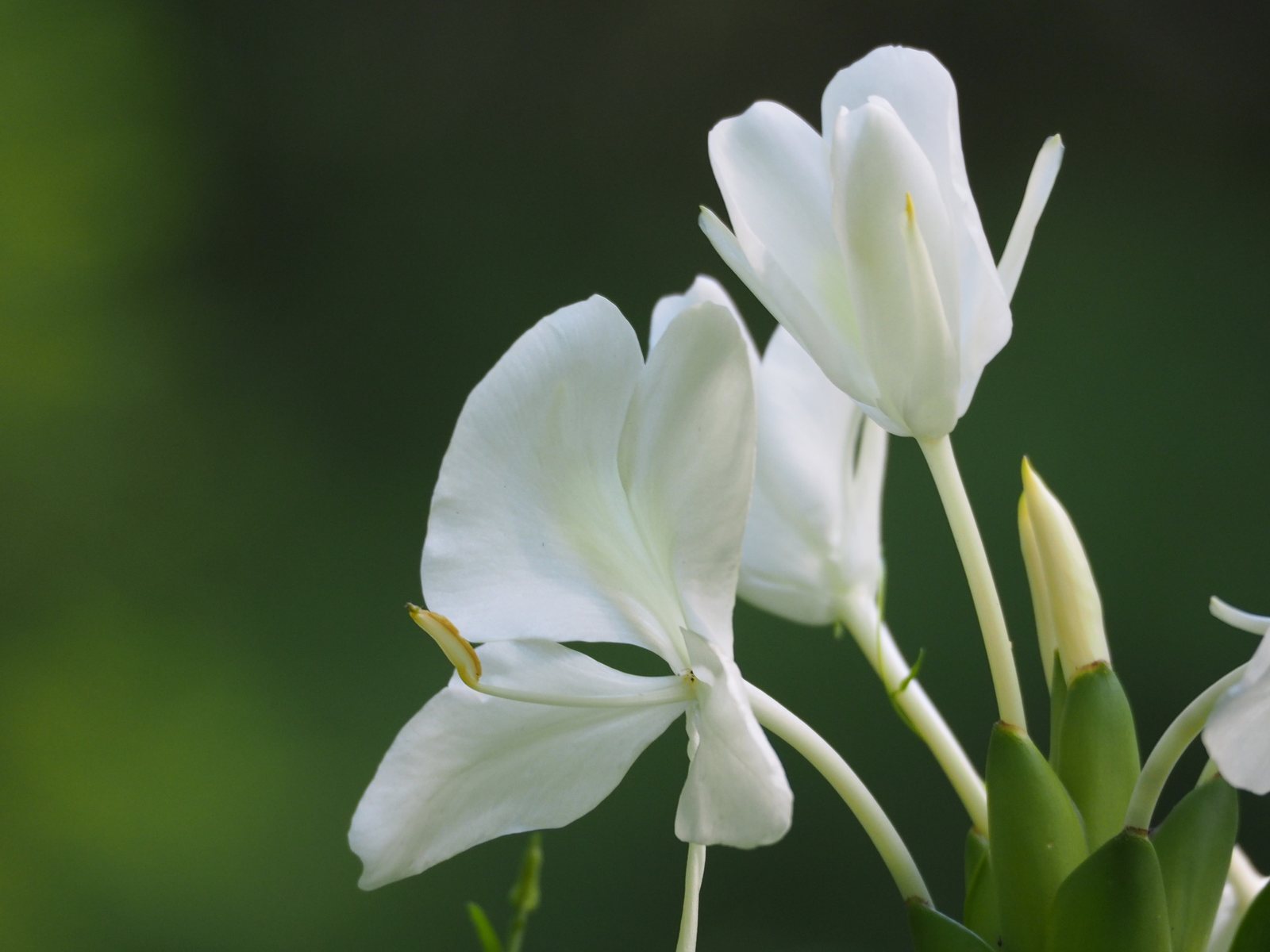
White ginger lily is a rhizomatous perennial grown for its strongly fragrant, butterfly-shaped white flowers and tall, tropical-looking foliage. It needs a warm growing season to flower well, so cooler gardens may get more leaves than blooms. Grow it in a container where winters are cold, and avoid planting it where it is invasive.
At a glance
- Sun
- Full sun to partial shade; afternoon shade helps in hot, dry climates. Give it a warm, sheltered position in cooler regions.
- Water
- Keep consistently moist during active growth; water containers thoroughly whenever the surface starts to dry. Reduce watering during winter dormancy without letting stored rhizomes shrivel.
- Soil
- Rich, moisture-retentive soil with plenty of organic matter. Good winter drainage is important where temperatures approach freezing.
- Height
- 3-6 ft (0.9-1.8 m)
- Spread
- 2-4 ft (0.6-1.2 m) initially; rhizomes can eventually form much wider colonies
- Flowers
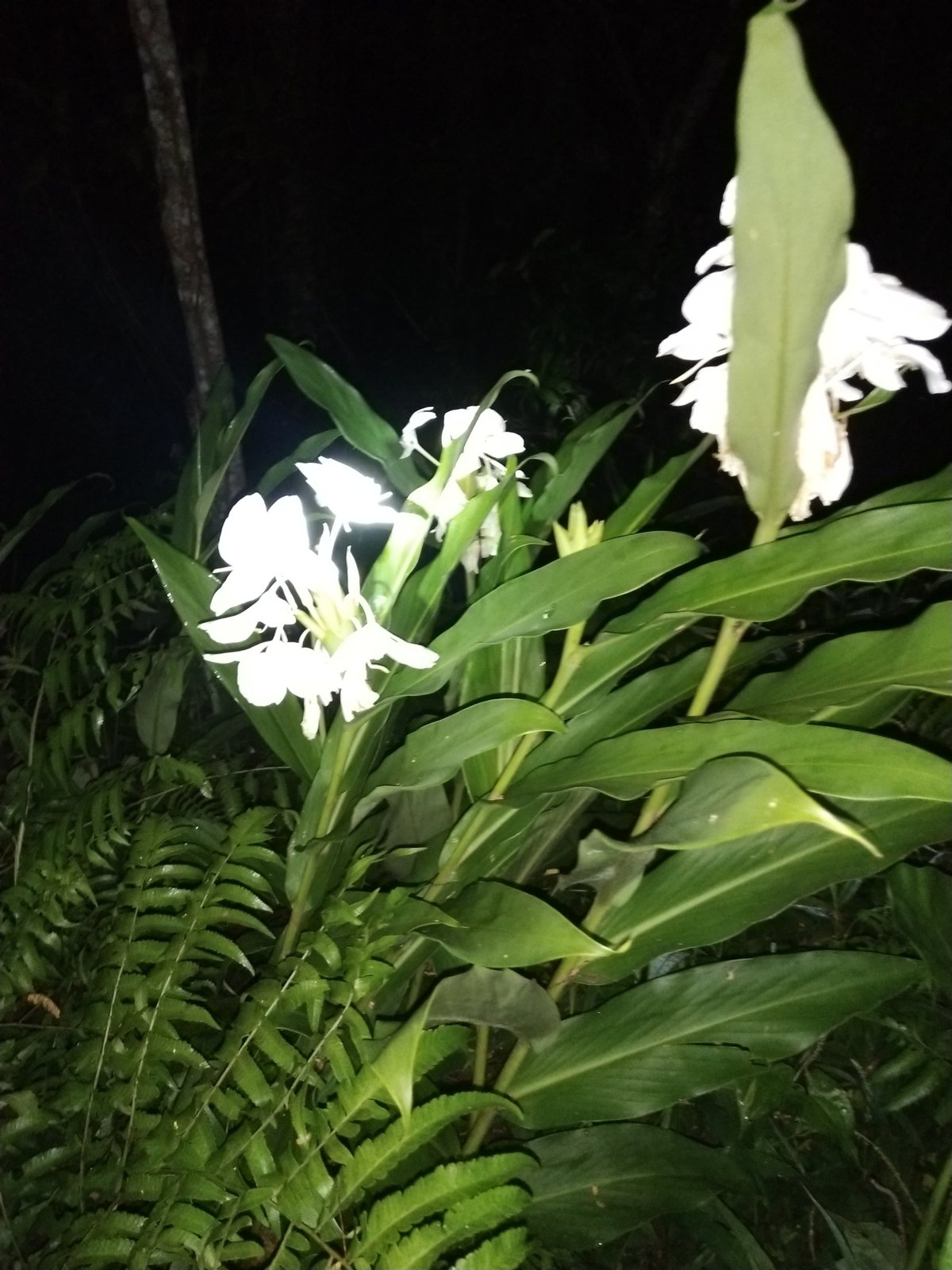
- Late summer to autumn in temperate gardens; flowering can extend longer in tropical climates. White flowers with a strong, sweet fragrance.
- Foliage
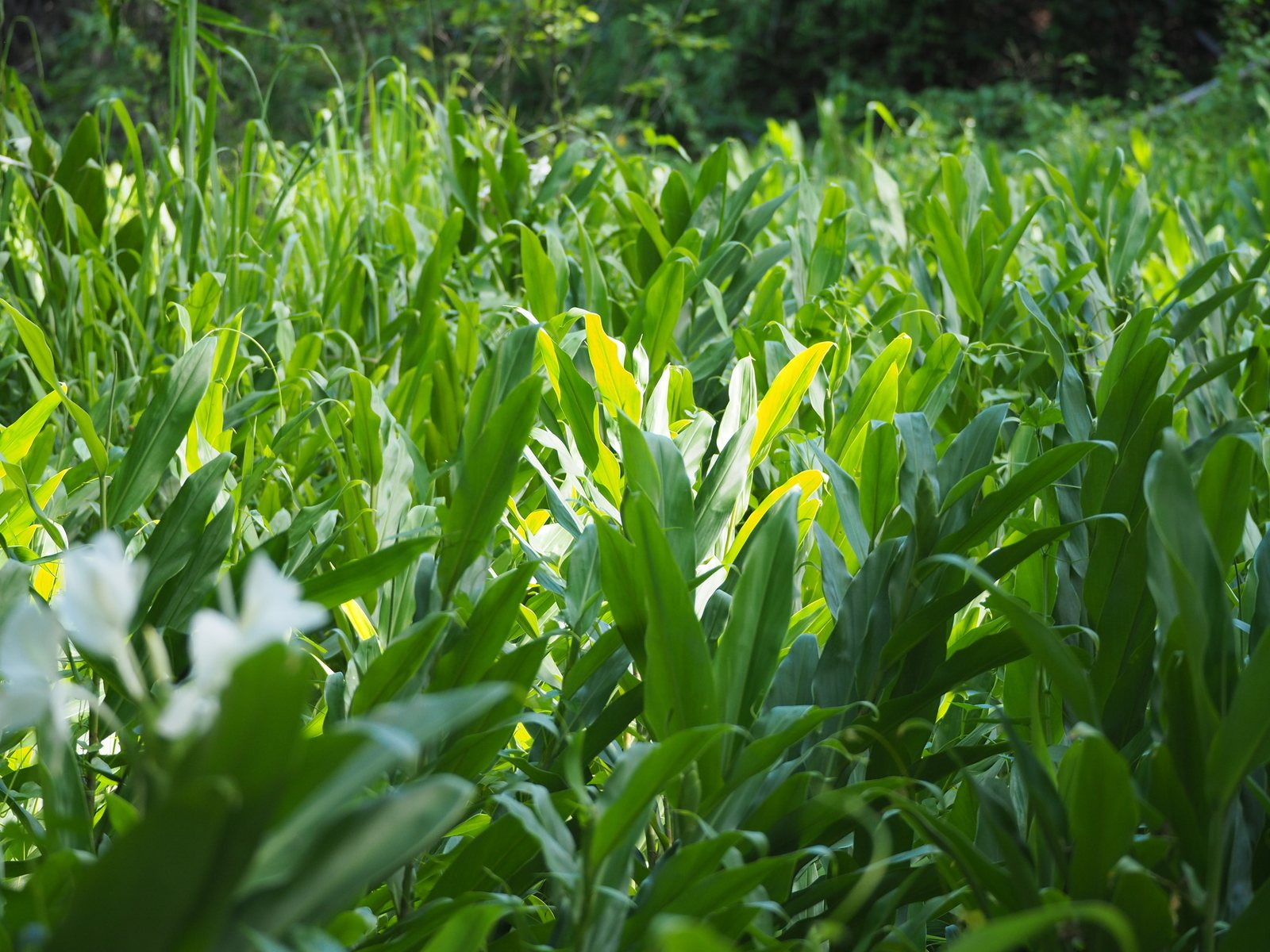
- Large, lance-shaped green leaves arranged along upright, cane-like stems. Usually dies back after frost but can remain leafy in frost-free climates.
- Growth
- Fast in warm, moist conditions
- Care needed
- Medium
The year at a glance
- Pollinators
- Heat tolerant
- Low allergen
- Fragrant
| J | F | M | A | M | J | J | A | S | O | N | D | |
|---|---|---|---|---|---|---|---|---|---|---|---|---|
| Flowers | ||||||||||||
| Plant |
Northern hemisphere months. In Australia, shift them by six.
- Difficulty
- Moderate
- Toughness
- Fairly tough
Will it suit your garden?
Pick your zone, country, light and whether you have pets.
Full sun is 6 or more hours of direct sun a day, part shade 3 to 6 hours, shade under 3.
How it grows
Planting day
1 ft (0.3 m)
After 1 year
2.8 ft (0.84 m)
After 2 years
4 ft (1.4 m)
full size
About 2 years to full size.
From a typical nursery size, at an average rate for this kind of plant. A rule of thumb, not a forecast.
Good to know
- Cats and dogs
- Safe
- Invasive in
- the US and Australia
- In the garden
- Spreads vigorously: plan to contain it.
- Growth rate
- Fast
Care
Jobs through the year
- WaterApr–May, Sep–Oct, every 7 days
- Water established ground plants if rainfall is insufficient; keep actively growing roots moist.
- WaterJun–Aug, every 3 days
- Water during dry weather to maintain consistent moisture; check pots and new plants more often.
- WaterJan–Mar, Nov–Dec, every 21 days
- Check frost-free stored rhizomes; add only enough water to prevent shrivelling.
- FeedApr
- Top-dress with compost as spring growth starts.
- FeedMay–Aug, every 30 days
- For container plants, apply balanced fertiliser according to its label.
- DivideApr–May
- Divide crowded clumps, retaining several healthy buds on each piece.
- PruneOct–Nov
- Cut dead stems near ground level after they die back.
- ProtectJan–Apr, Oct–Dec
- In zones 6–7, overwinter pots or lifted rhizomes frost-free; mulch alone is unreliable.
- ProtectMay–Jun
- Move outside only after frost risk passes; provide a warm sheltered site for flowering.
- Water regularly through the growing season; do not let container plants dry out.
- Apply compost in spring and feed container plants with a balanced fertiliser according to the label.
- Mulch the root area deeply before winter at the colder end of its range.
- Move containers into a frost-free greenhouse or conservatory before freezing weather.
- Divide crowded clumps in spring, keeping several healthy shoots or buds on each division.
- Remove unwanted rhizomes promptly to keep the clump within bounds.
Pruning. Cut frost-killed stems down near ground level once they have died back. In frost-free gardens, remove old or damaged stems individually after flowering, leaving healthy new shoots.
Through the year
- Spring
- Divide crowded clumps as growth begins and refresh container compost.
- Late spring
- Plant out or move containers outside after frost risk has passed and the soil has warmed.
- Summer
- Keep the root zone moist and feed container plants regularly.
- Late summer
- Enjoy the flowers and check for rhizomes spreading beyond the intended planting area.
- Autumn
- Before frost, move containers under cover in cold climates; reduce watering as growth slows.
- Winter
- Check sheltered containers occasionally, keeping dormant rhizomes barely moist and free from rot.
In the garden
- Plant behind lower foliage plants in a warm, sheltered border for height and broad-leaved contrast.
- Use a large container beside a terrace or seating area where the flower fragrance can be enjoyed.
- Combine with cannas and elephant ears for a tropical-looking summer display.
- Use the white flowers as a late-season highlight in a white garden or evening garden.
Garden styles it suits: Tropical, Modern tropical, Sensory garden, White garden, Moon garden and Modern courtyard.
Plant it with: Canna, Elephant ears, Hardy banana, Japanese forest grass, Hosta and Astilbe.
Wildlife: Fragrant flowers attract moths and other nectar-feeding insects. In regions where it is invasive, dense colonies can displace native vegetation and reduce habitat quality.
Problems to watch for
- Few or no flowers: provide more warmth and a longer growing season; in cool climates, start container plants under cover in spring.
- Yellowing or collapsing growth in winter: check for cold, waterlogged rhizomes; improve drainage and keep dormant containers only barely moist.
- Red spider mites under glass: inspect leaf undersides, rinse foliage and use a suitable biological control or labelled treatment if needed.
- Aggressive spreading: lift out unwanted rhizomes regularly, or grow in a sturdy container; do not dump divisions near waterways or natural vegetation.
Safety
Not generally known to be toxic to people, cats or dogs, although it is an ornamental rather than a food plant. Horse-specific safety information is limited, so keep it out of grazing areas. Discourage pets and children from eating any part.
Where it spreads. Spreads aggressively by rhizomes in warm, wet regions. It is invasive in Hawaii, parts of the Caribbean and Brazil, and parts of eastern Australia, including Queensland and New South Wales. Check local weed guidance before planting, especially near streams, wetlands or moist woodland.
Easily confused with
Kahili ginger (Hedychium gardnerianum)
Has upright spikes of smaller yellow flowers with conspicuous long red stamens, rather than large white butterfly-shaped flowers.
Yellow ginger lily (Hedychium flavescens)
Has pale yellow flowers, usually with a deeper yellow centre, rather than predominantly white flowers.
Shell ginger (Alpinia zerumbet)
Produces drooping clusters of waxy, pink-tinged buds and shell-like flowers, rather than upright heads of open white flowers.
The name
Hedychium comes from Greek words meaning sweet snow, referring to fragrant white flowers, while coronarium means used for garlands.
Propagation. Divide rhizomes in spring as growth starts, retaining healthy roots and several buds or shoots per piece. Pot divisions into rich compost and keep warm and moist until established.
Checked against open data
- Accepted botanical name
- Hedychium coronarium
- In the US and Canada
- Introduced in Hawaii, the lower 48 states, Pacific Basin and Puerto Rico.
- Native range
- Assam, China South-Central, China Southeast, East Himalaya, India, Myanmar, Nepal, Taiwan, Thailand and Vietnam.
Sources: GBIF (CC BY 4.0), USDA PLANTS and Trefle (CC BY 4.0). The care and design notes are LandscapeGPT's own.
See it in your own yard.
Upload a photo of your yard and see it redesigned with plants that suit your climate, each checked against your zone.