White Nancy dead nettle
Lamium maculatum 'White Nancy'. Family Lamiaceae. Groundcover.
Also called White Nancy spotted deadnettle, Lamium maculatum 'White Nancy'.
White Nancy is a low, spreading perennial with silver leaves edged in green and small white flowers. Gardeners grow it to brighten shaded borders and cover bare soil beneath shrubs, but its rooting stems need watching near smaller plants.
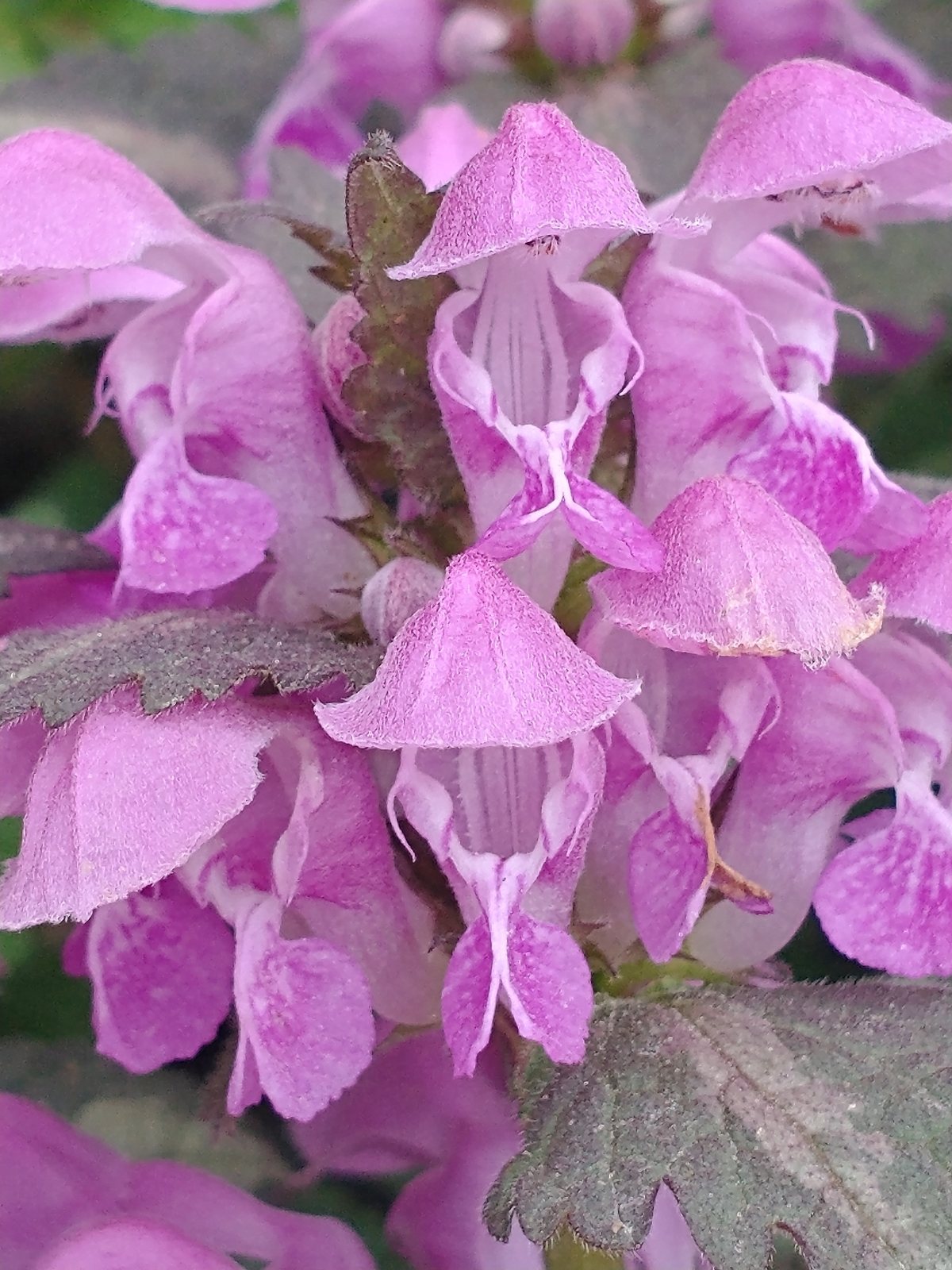
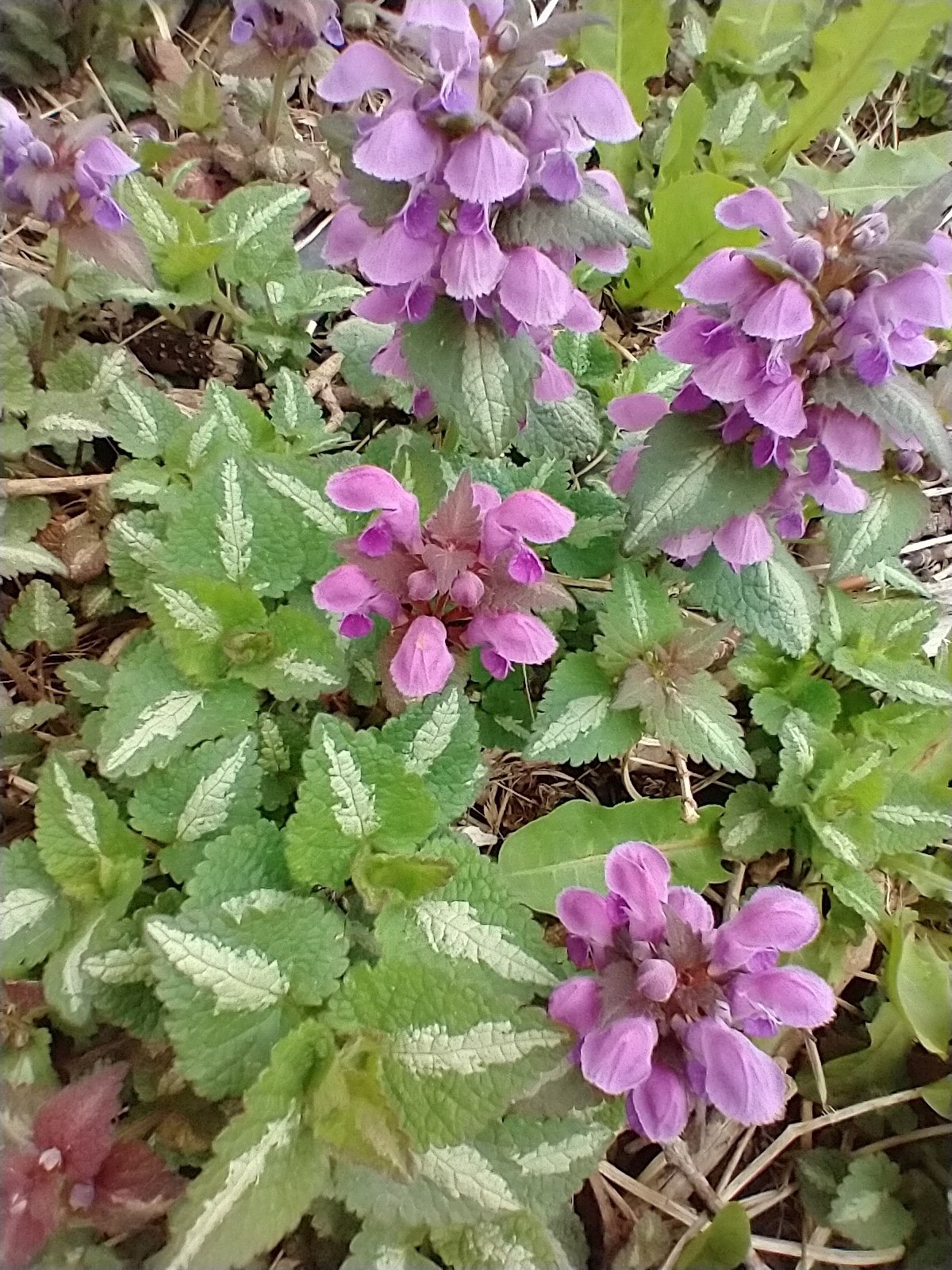
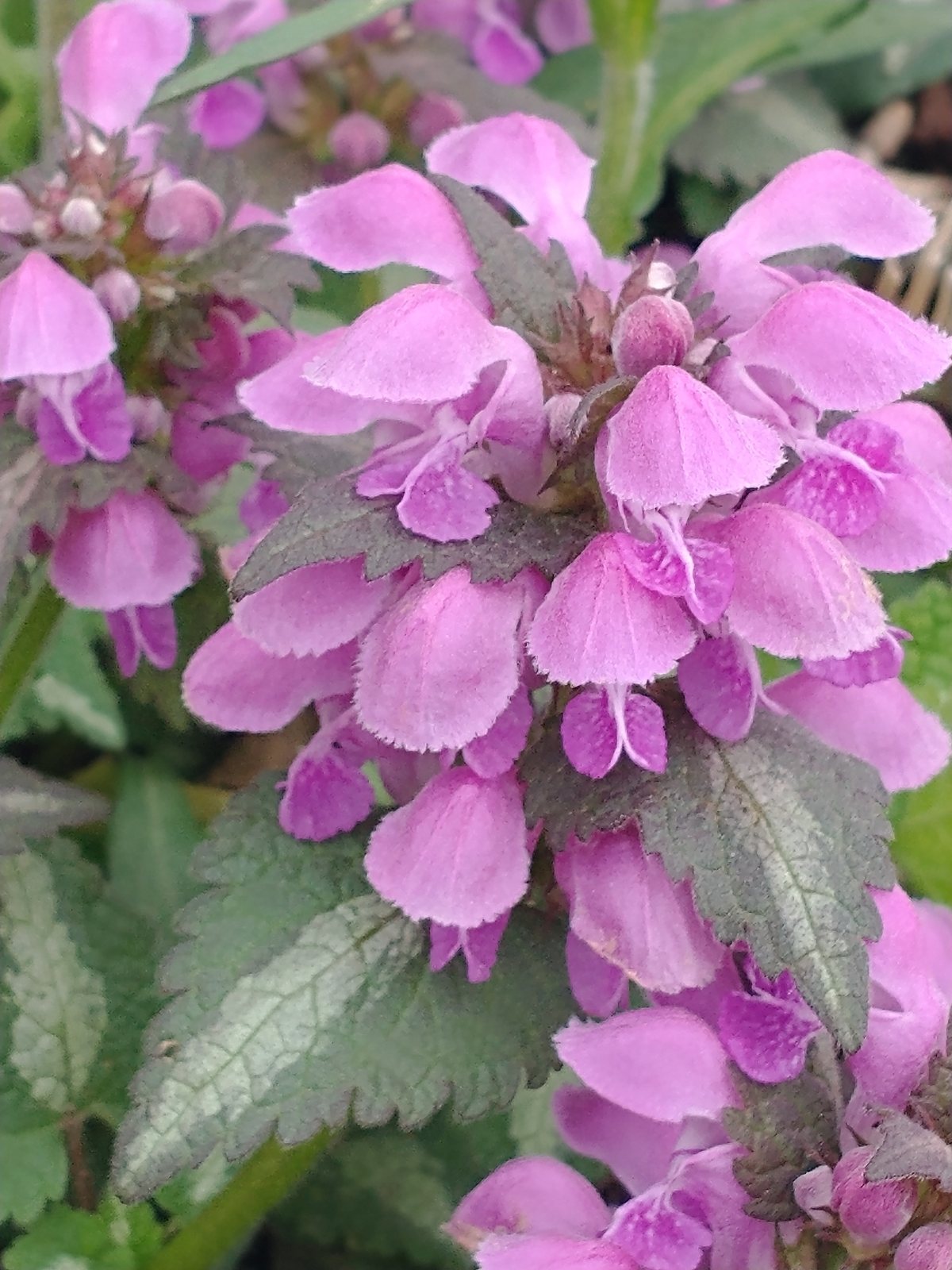
At a glance
- Sun
- Partial shade to full shade; gentle morning sun is suitable where the soil stays moist. Avoid hot afternoon sun.
- Water
- Keep evenly moist while establishing. Established plants tolerate brief dry spells, but prolonged drought causes thinning and browning.
- Soil
- Humus-rich, well-drained soil; tolerates clay if it drains freely. Avoid waterlogged ground.
- Height
- 0.5-0.75 ft (0.15-0.23 m)
- Spread
- 1-2 ft (0.3-0.6 m), spreading farther over time as stems root
- Flowers
- White, hooded flowers in late spring and early summer, with occasional later flowers in mild conditions.
- Foliage
- Paired, toothed leaves with broad silver centres and narrow green margins. Evergreen or semi-evergreen in mild climates; often dies back in cold winters.
- Growth
- Fast in moist, partly shaded soil
- Care needed
- Low
The year at a glance
- Pollinators
- Deer resistant
- Cold hardy
- Low allergen
| J | F | M | A | M | J | J | A | S | O | N | D | |
|---|---|---|---|---|---|---|---|---|---|---|---|---|
| Flowers | ||||||||||||
| Plant |
Northern hemisphere months. In Australia, shift them by six.
- Difficulty
- Easy
- Toughness
- Very tough
Will it suit your garden?
Pick your zone, country, light and whether you have pets.
Full sun is 6 or more hours of direct sun a day, part shade 3 to 6 hours, shade under 3.
How it grows
Planting day
0.2 ft (0.05 m)
After 1 year
0.4 ft (0.14 m)
After 2 years
0.6 ft (0.19 m)
full size
About 2 years to full size.
From a typical nursery size, at an average rate for this kind of plant. A rule of thumb, not a forecast.
Good to know
- Cats and dogs
- Safe
- Invasive in
- the US and Canada
- In the garden
- Spreads vigorously: plan to contain it.
- Growth rate
- Fast
Care
Jobs through the year
- WaterApr–May, Sep–Oct, every 14 days
- Water established patches if soil is drying; keep new plants evenly moist.
- WaterJun–Aug, every 7 days
- Water during dry spells to prevent browning and thinning; avoid waterlogging.
- MulchMar–Apr
- Top-dress lightly with compost, keeping crowns clear.
- PruneMar
- Remove winter-damaged foliage and lift stems rooted beyond the intended patch.
- PruneJun–Jul
- Lightly shear after the main flowering flush if growth looks untidy.
- PruneApr–Sep, every 30 days
- Trim wandering stems and lift unwanted rooted sections.
- DivideMar–Apr, Sep
- Divide crowded or thinning patches as needed and water divisions until established.
- ProtectNov–Dec
- Remove thick, wet leaf accumulations from crowns.
- Water during the first growing season whenever the soil begins to dry.
- Apply a thin layer of compost in spring; rich soil rarely needs additional fertiliser.
- Mulch lightly between young plants, keeping mulch away from their crowns.
- Lift stems that root beyond the intended patch before they form a dense mat.
- Divide crowded or thinning patches in spring or early autumn, watering divisions until established.
Pruning. Lightly shear after the main flowering flush to remove spent flowers and encourage fresh foliage. Cut away winter-damaged growth in early spring and trim wandering stems whenever necessary.
Through the year
- Early spring
- Remove damaged foliage and check that spreading stems have not rooted into neighbouring plants.
- Spring
- Plant or divide clumps and top-dress lightly with compost.
- Early summer
- Lightly shear after the main flowering flush if the patch looks untidy.
- Summer
- Water during prolonged dry weather and check for leaf scorch or heat-related thinning.
- Early autumn
- Divide or move rooted pieces while the soil is moist and temperatures are mild.
- Winter
- Keep fallen leaves from forming a wet, compacted layer over the crowns.
In the garden
- Carpet the ground beneath deciduous shrubs, keeping it clear of small, slow-growing plants.
- Edge a shaded path with silver foliage that remains visible in low light.
- Combine with hostas and ferns for contrasting leaf shapes and colours.
- Use in shaded containers as a trailing foliage plant, where its spread is easier to control.
Garden styles it suits: Woodland, Cottage garden, White garden, Moon garden, Blues and silvers and English country.
Plant it with: Hostas, Japanese painted fern, Siberian bugloss, Hellebores, Astilbes and Solomon's seal.
Wildlife: Flowers provide nectar for bees, including bumblebees. It is not a substitute for locally native woodland groundcovers where supporting native ecosystems is the priority.
Problems to watch for
- Slugs and snails can chew young leaves; remove hiding places and use wildlife-conscious slug control where needed.
- Crown and root rot develop in waterlogged soil; improve drainage and remove rotting plants.
- Hot sun or prolonged drought can scorch leaves and leave bare patches; provide afternoon shade and water deeply during dry spells.
- Rooting stems can overrun neighbouring plants; trim the edges and lift unwanted rooted sections regularly.
Safety
Not known to be toxic to people, cats, dogs or horses. No part is recognised as poisonous, but it is an ornamental rather than a food plant, and eating large amounts may cause digestive upset.
Where it spreads. Spreads readily by rooting stems and can become aggressive in cool, moist gardens. The species has escaped cultivation in parts of North America, including the Pacific Northwest of the United States and British Columbia, Canada. Avoid planting beside woodland or natural areas, and do not dump trimmings outdoors.
Easily confused with
Beacon Silver dead nettle (Lamium maculatum 'Beacon Silver')
Has similarly silver leaves with green edges, but its flowers are pink-purple rather than white.
White dead-nettle (Lamium album)
Has white flowers but plain green leaves and a taller, more upright habit.
Yellow archangel (Lamium galeobdolon)
Silver-marked forms can look similar in leaf, but they have yellow flowers and usually taller flowering stems.
The name
The species name maculatum means 'spotted', referring to the marked leaves, while 'dead nettle' describes its resemblance to a nettle without the sting.
Propagation. Divide clumps or detach rooted stems in spring or early autumn. Softwood cuttings also root readily; use vegetative propagation to retain the cultivar's silver foliage and white flowers.
Checked against open data
- Accepted botanical name
- Lamium maculatum
- In the US and Canada
- Introduced in Alaska, Canada and the lower 48 states.
- Native range
- Albania, Austria, Baltic States, Belarus, Belgium, Bulgaria, Central European Rus, China North-Central, Czechoslovakia, East Aegean Is., East European Russia and France.
- Measured
- Soil pH 6.5 to 7. Average height 50 cm.
Sources: GBIF (CC BY 4.0), USDA PLANTS and Trefle (CC BY 4.0). The care and design notes are LandscapeGPT's own.
See it in your own yard.
Upload a photo of your yard and see it redesigned with plants that suit your climate, each checked against your zone.