Wild bergamot
Monarda fistulosa. Family Lamiaceae. Perennial.
Also called Bee balm, Horsemint.
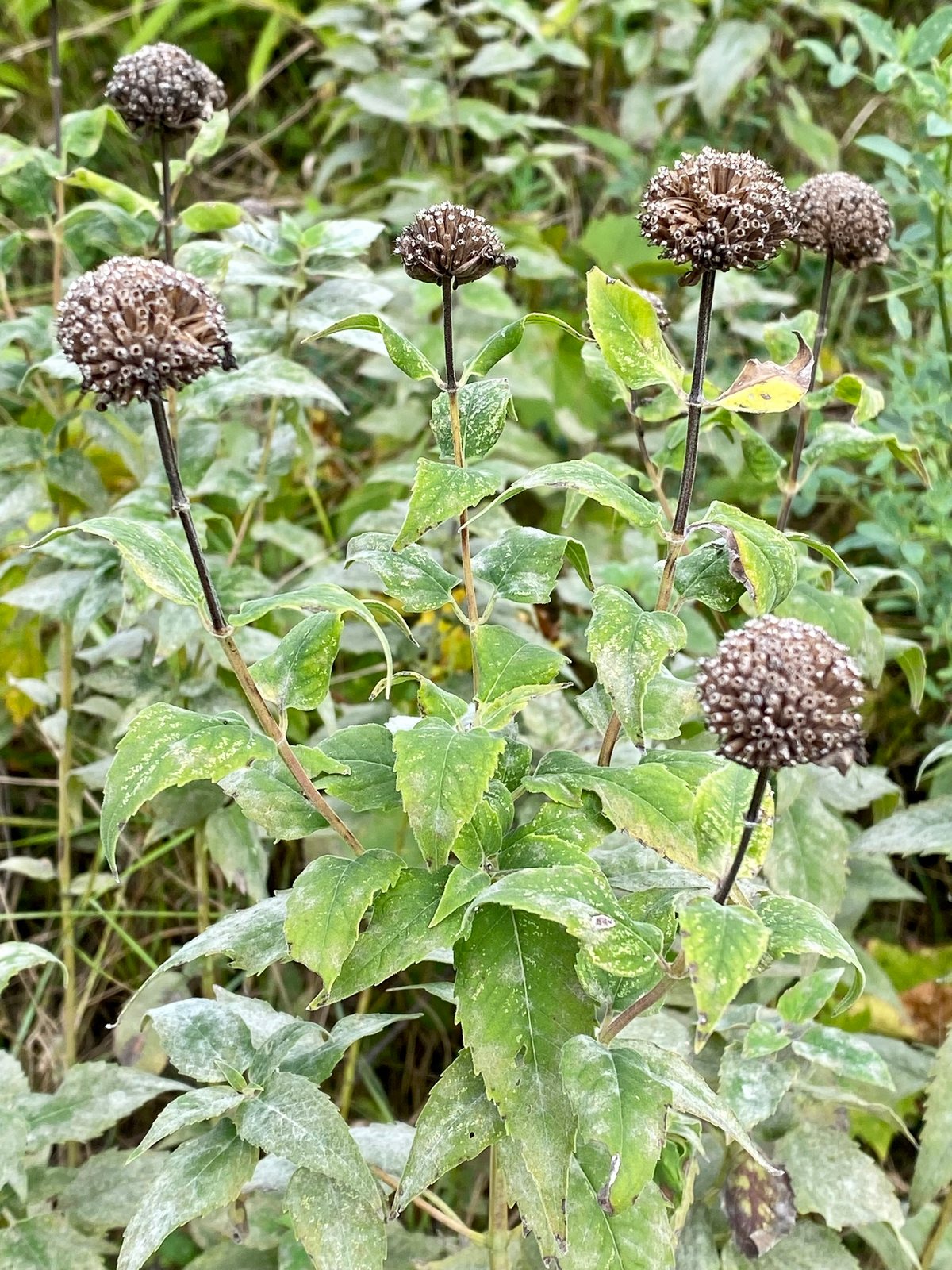
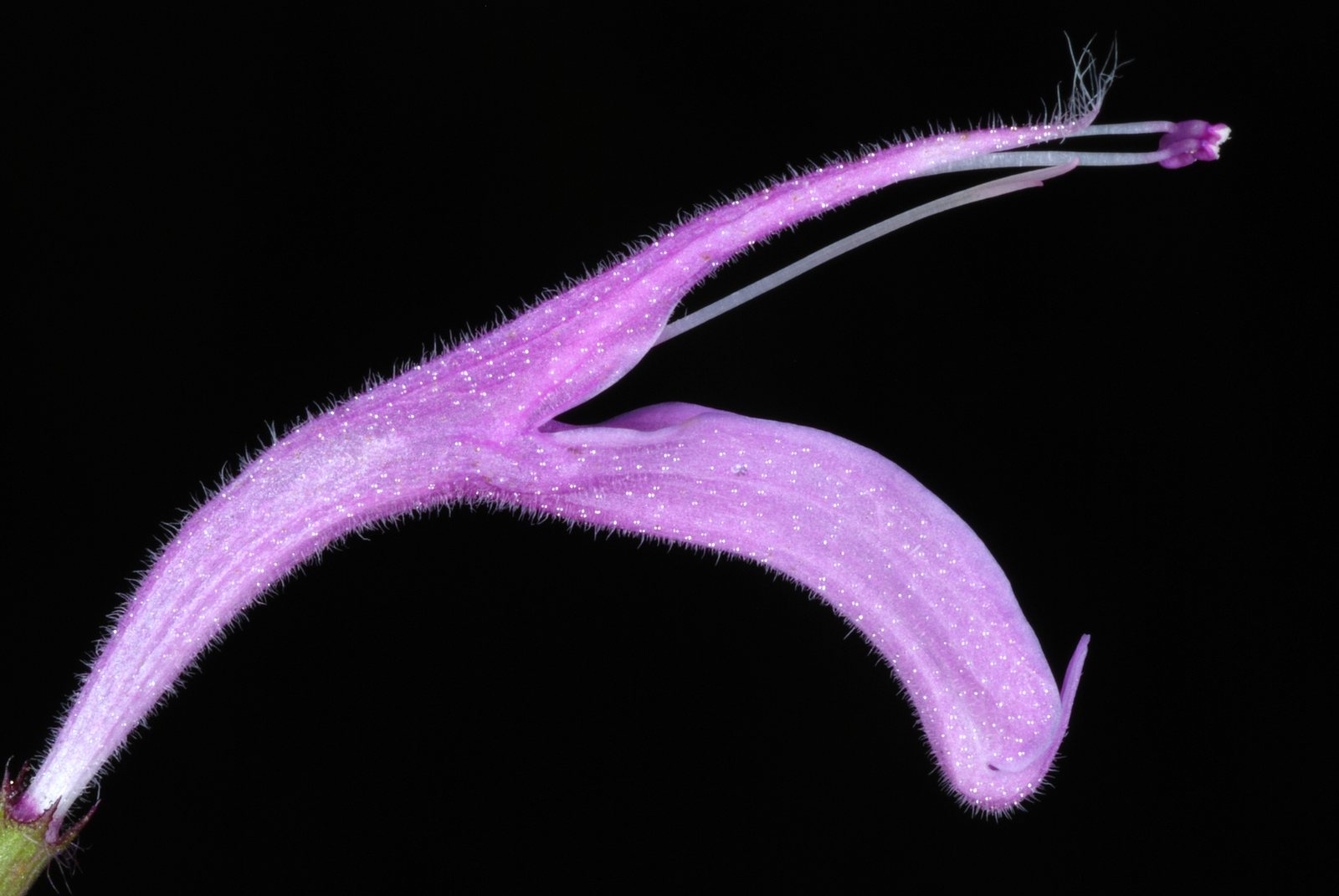
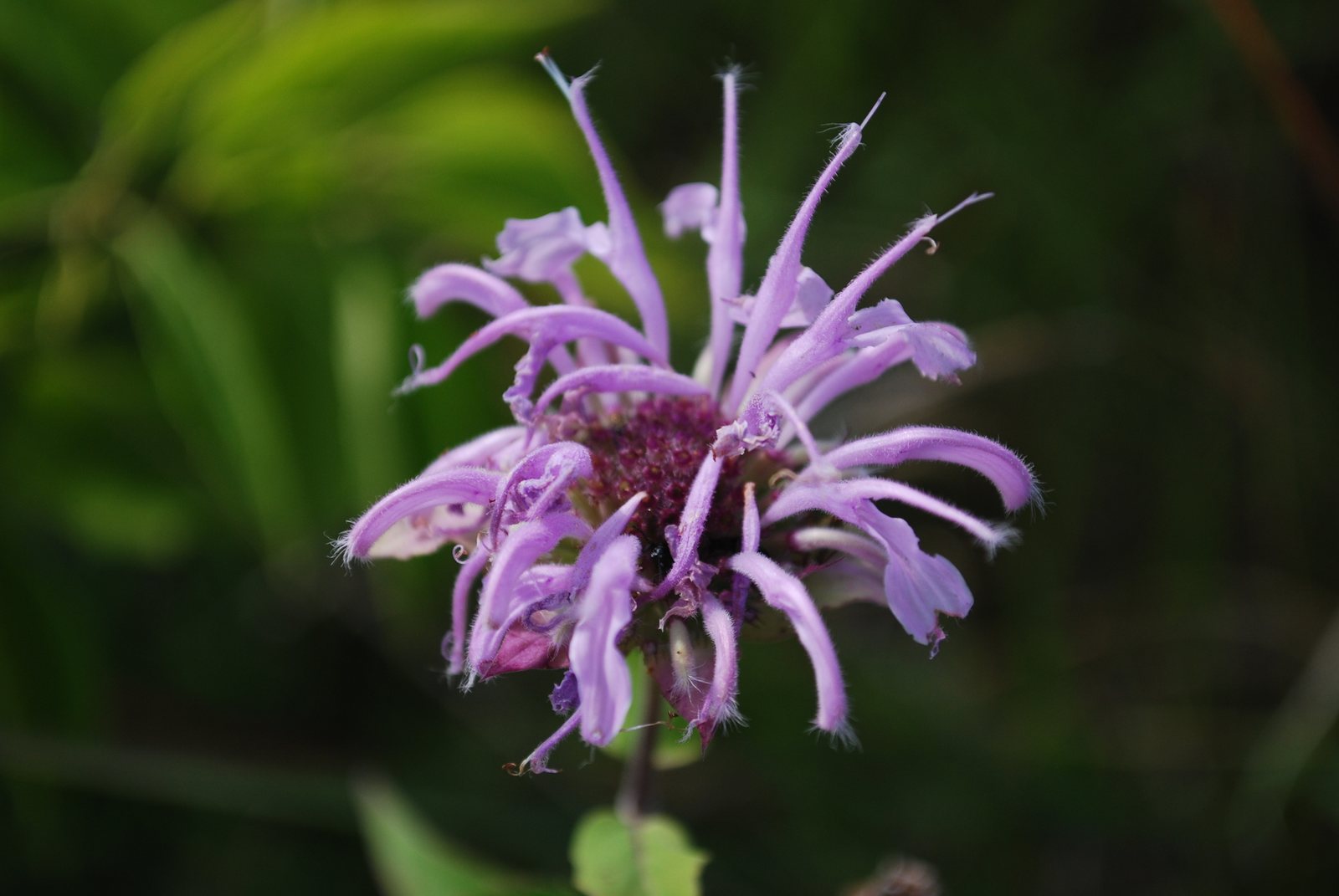
Wild bergamot is a North American perennial with aromatic leaves and shaggy heads of lavender-pink flowers. Grow it for summer colour and visiting bees and butterflies in sunny borders or meadow-style planting. It spreads by shallow rhizomes and loses its top growth in winter.
At a glance
- Sun
- Full sun to light shade; flowering and resistance to mildew are generally better in full sun.
- Water
- Water regularly while establishing. Established plants tolerate some drought, but prolonged dryness can cause lower leaves to deteriorate.
- Soil
- Well-drained sandy, loamy or clay soil; tolerates relatively poor soil but dislikes prolonged winter waterlogging.
- Height
- 2-4 ft (0.6-1.2 m)
- Spread
- 2-3 ft (0.6-0.9 m), expanding farther over time
- Flowers
- Summer to early autumn; lavender to pinkish-purple flower heads, occasionally pale pink or white.
- Foliage
- Opposite, toothed, grey-green to green leaves on square stems; strongly aromatic when rubbed.
- Growth
- Moderate to fast; forms widening colonies where conditions suit it.
- Care needed
- Medium
The year at a glance
- Pollinators
- Deer resistant
- Drought tolerant
- Cold hardy
- Wildlife
- Low allergen
- Fragrant
| J | F | M | A | M | J | J | A | S | O | N | D | |
|---|---|---|---|---|---|---|---|---|---|---|---|---|
| Flowers | ||||||||||||
| Fruit | ||||||||||||
| Plant |
Northern hemisphere months. In Australia, shift them by six.
- Difficulty
- Easy
- Toughness
- Very tough
Will it suit your garden?
Pick your zone, country, light and whether you have pets.
Full sun is 6 or more hours of direct sun a day, part shade 3 to 6 hours, shade under 3.
How it grows
Planting day
1 ft (0.3 m)
After 1 year
1.8 ft (0.55 m)
After 2 years
2.6 ft (0.8 m)
After 3 years
3 ft (0.9 m)
full size
About 2 years to full size.
From a typical nursery size, at an average rate for this kind of plant. A rule of thumb, not a forecast.
Good to know
- Cats and dogs
- Safe
- Native to
- the US and Canada
- In the garden
- Spreads vigorously: plan to contain it.
- Growth rate
- Fast
Care
Jobs through the year
- WaterApr–May, Sep–Oct, every 14 days
- Water established clumps only during dry spells; keep newly planted clumps moist.
- WaterJun–Aug, every 7 days
- Water deeply during prolonged drought, directing water onto soil rather than leaves.
- FeedMar–Apr
- Apply a little compost only on poor soil; avoid rich feeding.
- MulchApr
- Apply a light organic mulch, keeping the crown clear.
- DivideMar–Apr
- Divide crowded clumps every three to four years and remove unwanted rhizomes.
- PruneFeb–Mar
- Cut back old stems before new growth; retain some hollow stems for insects.
- DeadheadJul–Sep, every 14 days
- Remove spent heads to limit seedlings, or retain some for birds and winter interest.
- PruneSep–Oct
- Remove badly mildewed foliage and fallen debris; retain healthy standing stems.
- Water at soil level during establishment and extended dry spells; avoid repeatedly wetting the leaves.
- Allow space between plants for airflow to reduce powdery mildew.
- Apply a light layer of compost in spring on poor soil; avoid heavy feeding, which encourages floppy growth.
- Mulch lightly to conserve moisture, keeping mulch away from the crown.
- Divide crowded clumps every 3-4 years and remove unwanted spreading shoots.
- Support tall stems early if growing in partial shade or exposed conditions.
Pruning. Remove spent flower heads if you want to limit self-seeding; this may also encourage a little repeat flowering. Leave healthy stems standing through winter, then cut them back near ground level in late winter or early spring before new growth develops.
Through the year
- Late winter
- Cut back old stems, leaving some hollow stems standing where practical for overwintering insects.
- Spring
- Plant or divide clumps as growth starts; water thoroughly after replanting.
- Late spring
- Thin crowded shoots and install discreet supports if stems are likely to flop.
- Summer
- Water during prolonged drought and check lower leaves for powdery mildew.
- Late summer
- Deadhead to reduce seed production, or leave some heads for seed and winter structure.
- Autumn
- Remove badly mildewed fallen foliage and mark any spreading clumps that need dividing in spring.
In the garden
- Plant in drifts through a sunny meadow-style border with coneflowers and upright grasses.
- Use in the middle of a cottage border, where neighbouring plants can hide sparse lower stems.
- Combine with black-eyed Susans for a summer contrast of lavender and yellow.
- Place beside a path where the aromatic foliage can be reached without stepping into the planting.
Garden styles it suits: Native meadow, New perennial (prairie), Cottage garden, Wildlife garden, Pollinator garden and Sensory garden.
Plant it with: Purple coneflower, Black-eyed Susan, Little bluestem, Switchgrass, Butterfly weed and Blazing star.
Wildlife: Flowers provide nectar for many bees and butterflies, and hummingbirds visit within their American range. Seed heads offer some food for small birds, while retained stems can provide shelter for insects.
Problems to watch for
- Powdery mildew: give plants sun and good airflow, water at soil level, and divide crowded clumps; remove badly affected debris.
- Flopping stems: avoid rich feeding and deep shade; support stems early or divide congested plants.
- Crown or root rot in wet soil: improve drainage or move plants out of winter-wet ground.
- Unwanted spreading: lift excess rhizomes in spring and remove seedlings while small.
Safety
Not known to be toxic to people, cats, dogs or horses. Leaves and flowers have traditional culinary uses, but aromatic plant material may cause stomach upset if eaten in quantity; concentrated essential oils should not be treated as equivalent to the garden plant.
Easily confused with
Scarlet bee balm (Monarda didyma)
The wild species usually has bright red flowers and greener foliage and favours moister ground. Garden hybrids come in many colours, so colour alone cannot reliably identify cultivated plants.
Spotted bee balm (Monarda punctata)
Has several tiers of pale yellow, purple-spotted flowers surrounded by conspicuous pinkish or whitish bracts, rather than wild bergamot's rounded lavender flower heads.
The name
Monarda honours the Spanish physician Nicolás Monardes, fistulosa means hollow or tubular, and bergamot refers to the foliage's citrus-like scent rather than any relationship to bergamot orange.
Propagation. Divide clumps in spring, keeping roots and several healthy shoots on each division. Sow seed outdoors in autumn or use a cold, moist treatment before spring sowing; named selections should be propagated by division to preserve their characteristics.
Checked against open data
- Accepted botanical name
- Monarda fistulosa
- In the US and Canada
- Native in Canada and the lower 48 states.
- Native range
- Alabama, Alberta, Arizona, Arkansas, British Columbia, Colorado, Connecticut, District of Columbia, Florida, Georgia, Idaho and Illinois.
- Measured
- Average height 89 cm.
Sources: GBIF (CC BY 4.0), USDA PLANTS and Trefle (CC BY 4.0). The care and design notes are LandscapeGPT's own.
See it in your own yard.
Upload a photo of your yard and see it redesigned with plants that suit your climate, each checked against your zone.