Wild geranium
Geranium maculatum. Family Geraniaceae. Perennial.
Also called Spotted cranesbill, Wood geranium, Spotted geranium.
Wild geranium is a clump-forming perennial native to eastern North America, grown for its pink to lavender flowers and deeply lobed leaves. It suits woodland edges and lightly shaded borders, where it provides spring colour before sometimes becoming dormant in hot, dry summers.
At a glance
- Sun
- Partial shade is ideal; tolerates full sun with consistent moisture and deeper shade with fewer flowers.
- Water
- Moderate; keep evenly moist while establishing. Established plants tolerate short dry spells but may lose their foliage during prolonged summer drought.
- Soil
- Humus-rich, well-drained soil that retains some moisture; tolerates clay, loam and sandy soil if drainage and organic matter are adequate.
- Height
- 1-2 ft (0.3-0.6 m)
- Spread
- 1-1.5 ft (0.3-0.45 m)
- Flowers
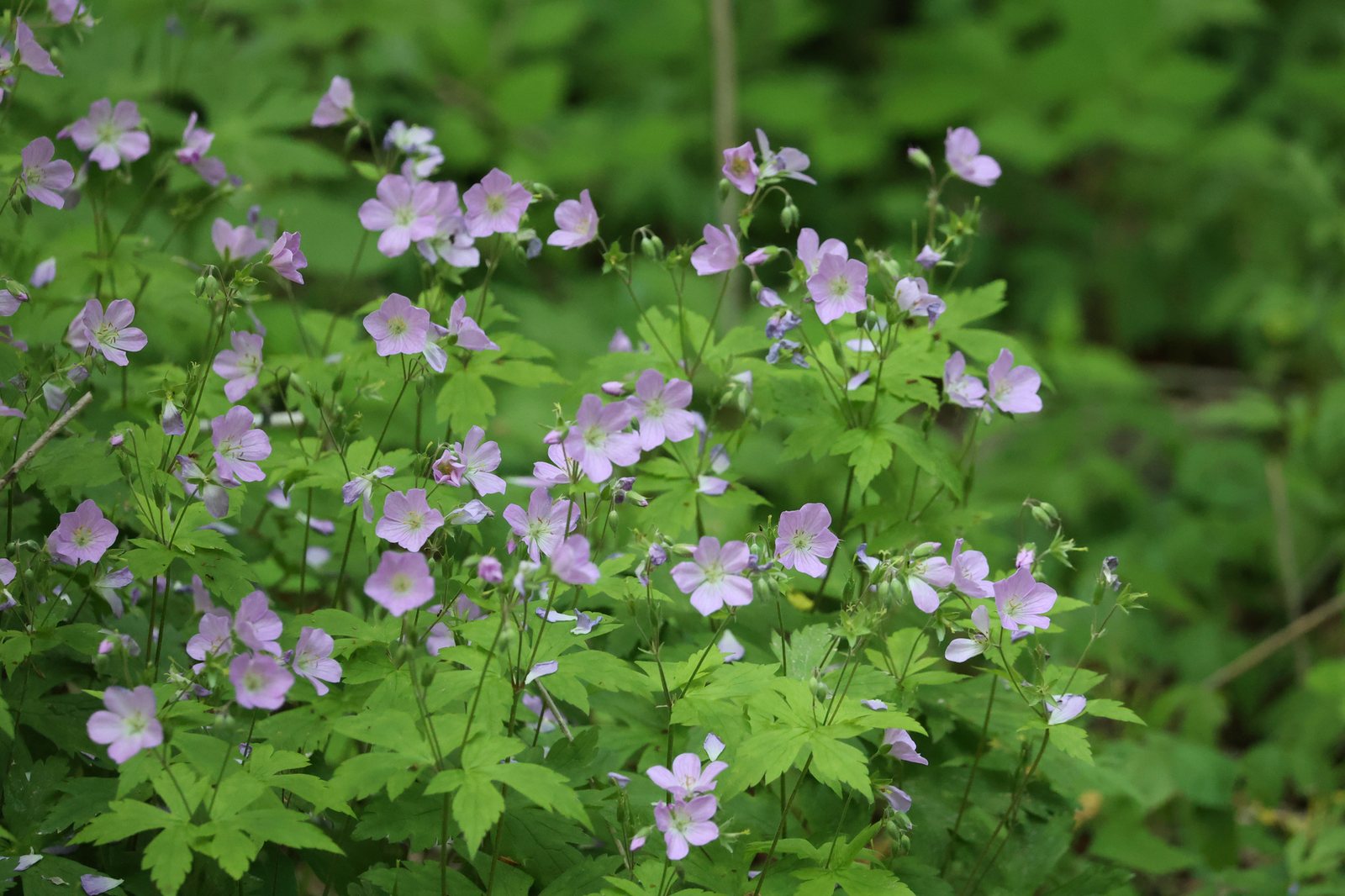
- Pink, lavender-pink or pale purple flowers in late spring to early summer, sometimes beginning in mid-spring in warmer areas.
- Foliage
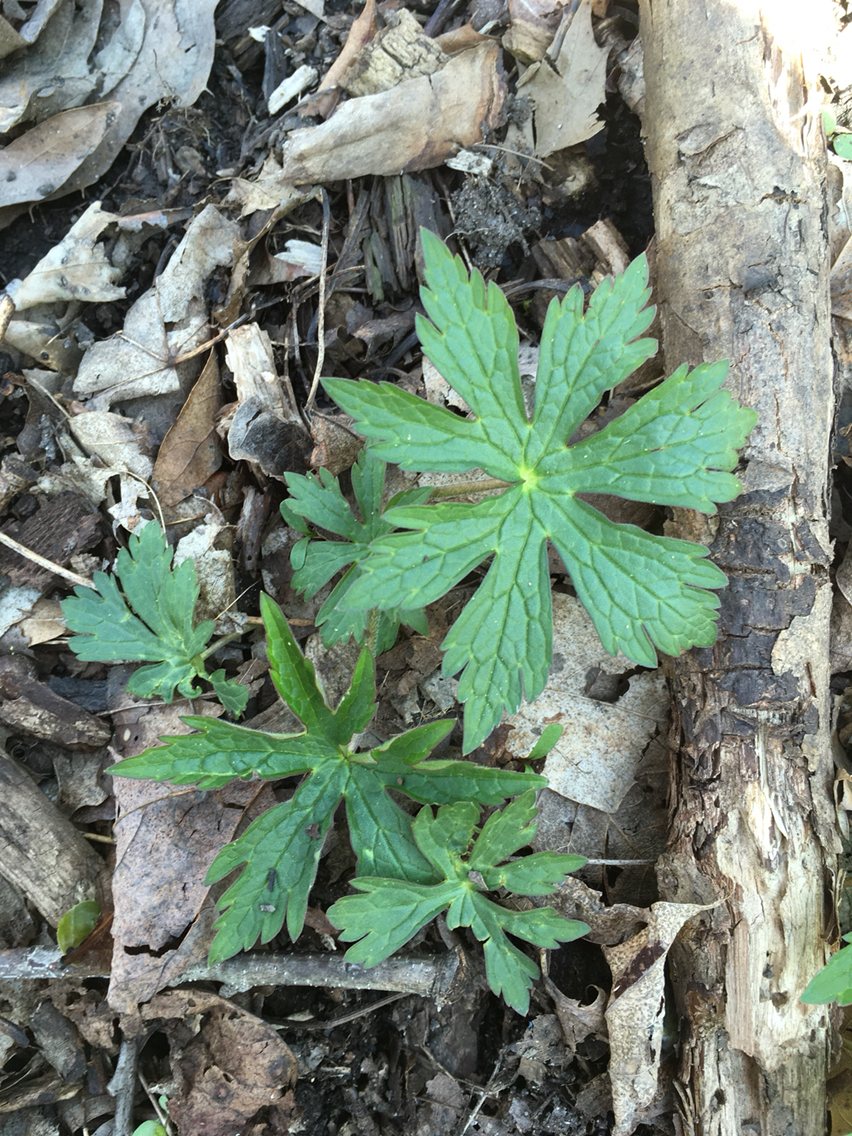
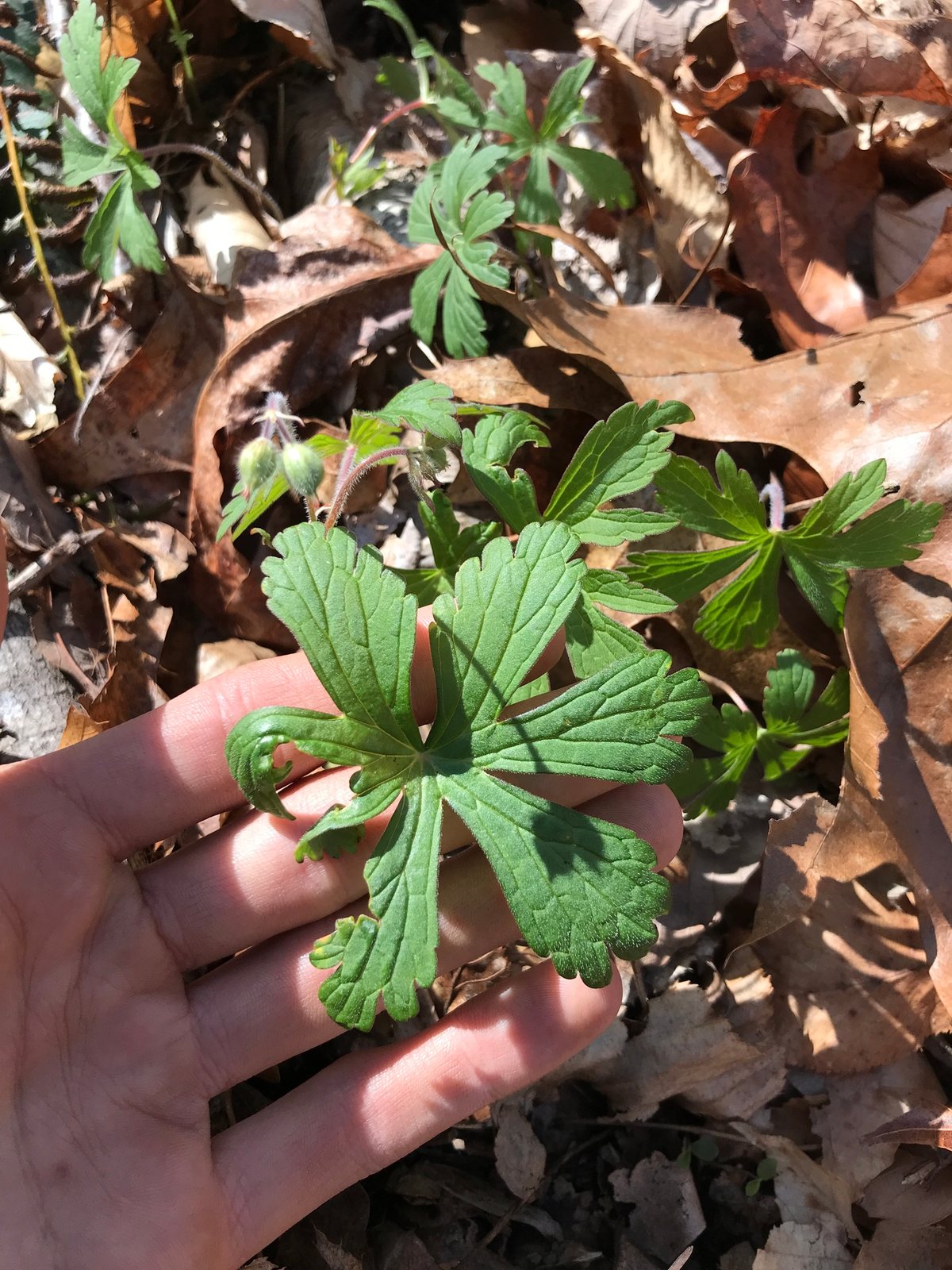
- Green, softly hairy leaves divided into five to seven broad, toothed lobes; sometimes turns reddish in autumn.
- Growth
- Moderate
- Care needed
- Low
The year at a glance
- Pollinators
- Deer resistant
- Cold hardy
- Wildlife
- Low allergen
| J | F | M | A | M | J | J | A | S | O | N | D | |
|---|---|---|---|---|---|---|---|---|---|---|---|---|
| Flowers | ||||||||||||
| Fruit | ||||||||||||
| Plant |
Northern hemisphere months. In Australia, shift them by six.
- Difficulty
- Easy
- Toughness
- Fairly tough
Will it suit your garden?
Pick your zone, country, light and whether you have pets.
Full sun is 6 or more hours of direct sun a day, part shade 3 to 6 hours, shade under 3.
How it grows
Planting day
1 ft (0.3 m)
After 1 year
1.1 ft (0.35 m)
After 2 years
1.3 ft (0.4 m)
After 3 years
1.5 ft (0.45 m)
full size
About 3 years to full size.
From a typical nursery size, at an average rate for this kind of plant. A rule of thumb, not a forecast.
Good to know
- Cats and dogs
- Safe
- Native to
- the US and Canada
- Growth rate
- Moderate
Care
Jobs through the year
- WaterApr–May, Sep, every 14 days
- Water established clumps during dry spells; keep newly planted clumps evenly moist.
- WaterJun–Aug, every 7 days
- Soak established clumps during extended drought; summer dormancy can still occur.
- MulchMar–Apr
- Apply leaf mould or compost around clumps without covering their crowns.
- DivideMar–Apr, Sep–Oct
- Divide only crowded clumps or those flowering poorly, in moist workable soil.
- DeadheadJun–Jul
- Remove spent flower stems before capsules open if self-seeding is unwanted.
- PruneJul–Nov
- Remove yellow or collapsed foliage, leaving healthy leaves and the resting crown intact.
- Water during dry spells in the first growing season, soaking the root zone rather than sprinkling the leaves.
- Apply leaf mould or compost mulch in spring, keeping it clear of the crown.
- Avoid heavy feeding; a light compost top-dressing is usually enough.
- Divide crowded clumps in early spring or autumn if flowering declines or you want more plants.
- Mark the planting position if summer dormancy leaves a gap, and avoid digging through the resting crown.
Pruning. Remove spent flower stems after flowering if you want to limit self-seeding. Cut back yellow or collapsed foliage as it dies, but leave healthy leaves to feed the plant.
Through the year
- Early spring
- Remove old stems and divide established clumps before vigorous growth begins.
- Spring
- Plant in moist, well-drained soil and add a light mulch of leaf mould or compost.
- Late spring
- Water new plants during dry weather and leave flowers available to visiting bees.
- Early summer
- Remove spent stems to reduce seedlings, or collect seed before the capsules spring open.
- Summer
- Check soil moisture during drought; remove yellowing foliage if the plant goes dormant.
- Autumn
- Plant or divide while the soil is workable and moist; leave a loose covering of fallen leaves around the clumps.
In the garden
- Plant in loose groups beneath deciduous trees for spring flowers before the canopy becomes dense.
- Edge lightly shaded paths with its rounded clumps and softly textured foliage.
- Combine with ferns and sedges in woodland borders, using their foliage to cover gaps if it becomes dormant.
- Include in eastern North American native plantings with foamflower and woodland phlox for overlapping spring bloom.
Garden styles it suits: Woodland, Wildlife garden, Pollinator garden, Cottage garden, Wildflower and Low-maintenance.
Plant it with: Foamflower, Woodland phlox, Wild columbine, Christmas fern, Pennsylvania sedge and Solomon's seal.
Wildlife: Flowers provide pollen and nectar for native bees and other insects. The foliage supports some caterpillars, including larvae of the geranium budworm in North America.
Problems to watch for
- Powdery mildew can coat leaves in crowded, poorly ventilated plantings; improve spacing, water at soil level and remove badly affected foliage.
- Slugs and snails may chew young shoots; hand-pick them and use wildlife-conscious controls where damage is persistent.
- Root or crown rot can develop in waterlogged soil; improve drainage and avoid planting the crown too deeply.
- Summer heat and drought can cause early dormancy; mulch and water during extended dry spells, but do not assume a leafless plant is dead.
Safety
Geranium maculatum is not known to be toxic to cats, dogs, horses or people. No part is established as a significant poisoning hazard, but it is not a food plant and eating it may cause digestive upset. Do not confuse it with Pelargonium, also commonly called geranium, which is toxic to pets.
Easily confused with
Bloody cranesbill (Geranium sanguineum)
Usually forms a lower, broader mound with leaves divided into much narrower segments and stronger magenta-pink flowers; wild geranium has broader leaf lobes and more upright flowering stems.
Herb-robert (Geranium robertianum)
Has smaller pink flowers, finely divided, fern-like leaves, often reddish stems and a strong smell when crushed. It is an annual or biennial rather than a persistent rhizomatous perennial.
Zonal geranium (Pelargonium zonale)
Has fleshy stems, rounded scalloped leaves often marked with a dark band, and flowers grouped in conspicuous clusters; it is frost-tender rather than a hardy woodland perennial.
The name
Geranium comes from the Greek word for crane, referring to the beak-shaped fruit, while maculatum means spotted.
Propagation. Divide the short rhizomes in early spring or autumn, retaining roots and growing buds on each piece. Sow freshly collected seed promptly outdoors; germination can be irregular and may require a winter cold period. Seedlings may appear around established plants.
Checked against open data
- Accepted botanical name
- Geranium maculatum
- In the US and Canada
- Native in Canada and the lower 48 states.
- Native range
- Alabama, Arkansas, Connecticut, Delaware, District of Columbia, Florida, Georgia, Illinois, Indiana, Iowa, Kansas and Kentucky.
- Measured
- Average height 47 cm.
Sources: GBIF (CC BY 4.0), USDA PLANTS and Trefle (CC BY 4.0). The care and design notes are LandscapeGPT's own.
See it in your own yard.
Upload a photo of your yard and see it redesigned with plants that suit your climate, each checked against your zone.