Wildfire black gum
Nyssa sylvatica 'Wildfire'. Family Nyssaceae. Tree.
Also called Wildfire black tupelo, Wildfire sour gum, Nyssa sylvatica 'Wildfire'.
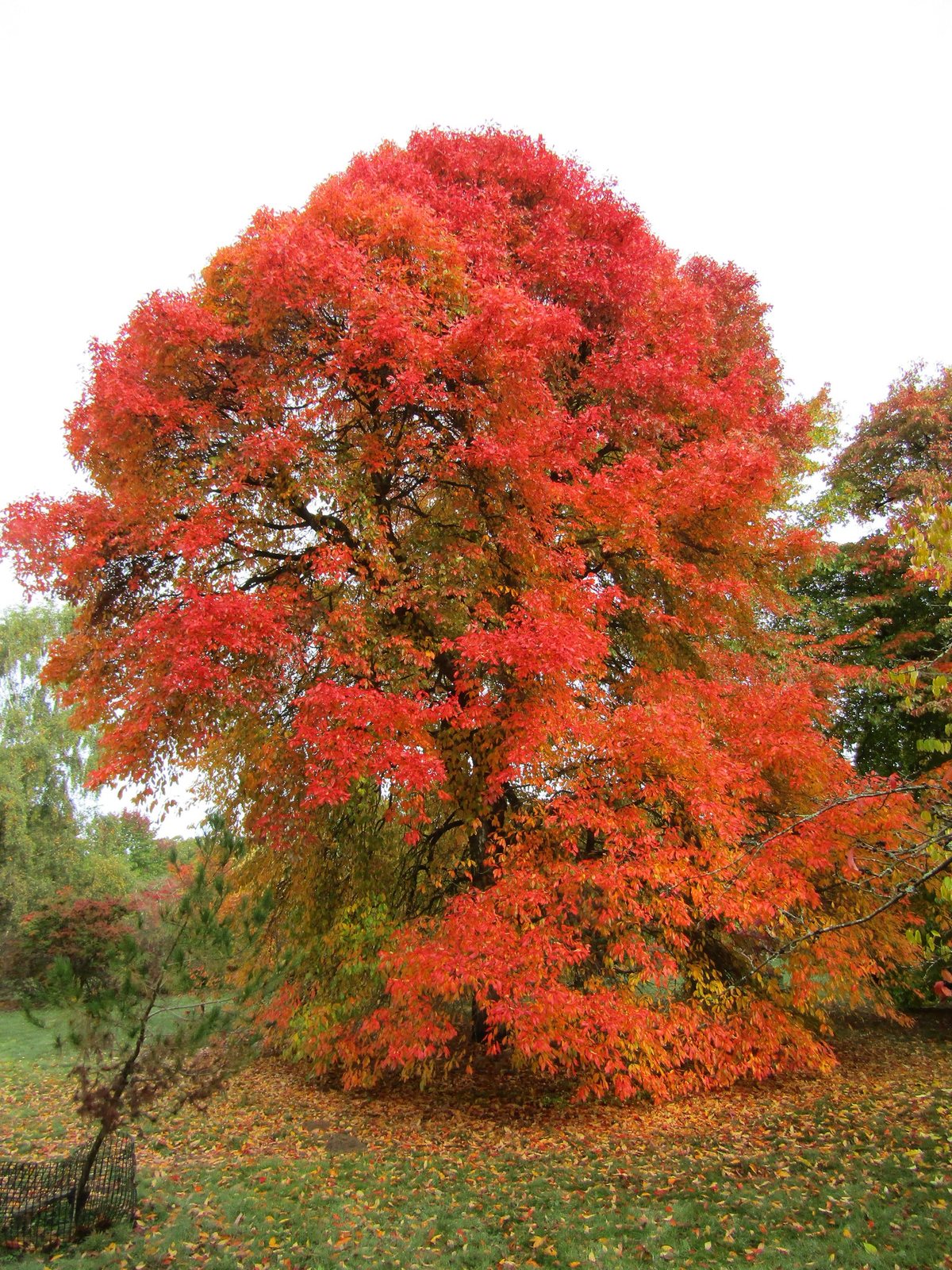
A deciduous shade tree selected for bright red new growth that gradually turns dark green. It also gives strong orange, scarlet and purple autumn colour, especially in sunny positions with moist, acidic soil. Allow room for a substantial tree rather than treating it as a small ornamental.
At a glance
- Sun
- Full sun to partial shade; best foliage colour in full sun.
- Water
- Keep evenly moist while establishing. Established trees tolerate occasional dry spells, but prolonged drought can cause leaf scorch and early leaf fall.
- Soil
- Acidic, humus-rich soil that retains moisture; tolerates clay and periodic wetness. Avoid chalky or strongly alkaline soil.
- Height
- 30-50 ft (9-15 m), sometimes taller with age
- Spread
- 20-30 ft (6-9 m)
- Flowers
- Small, inconspicuous greenish flowers in late spring.
- Foliage
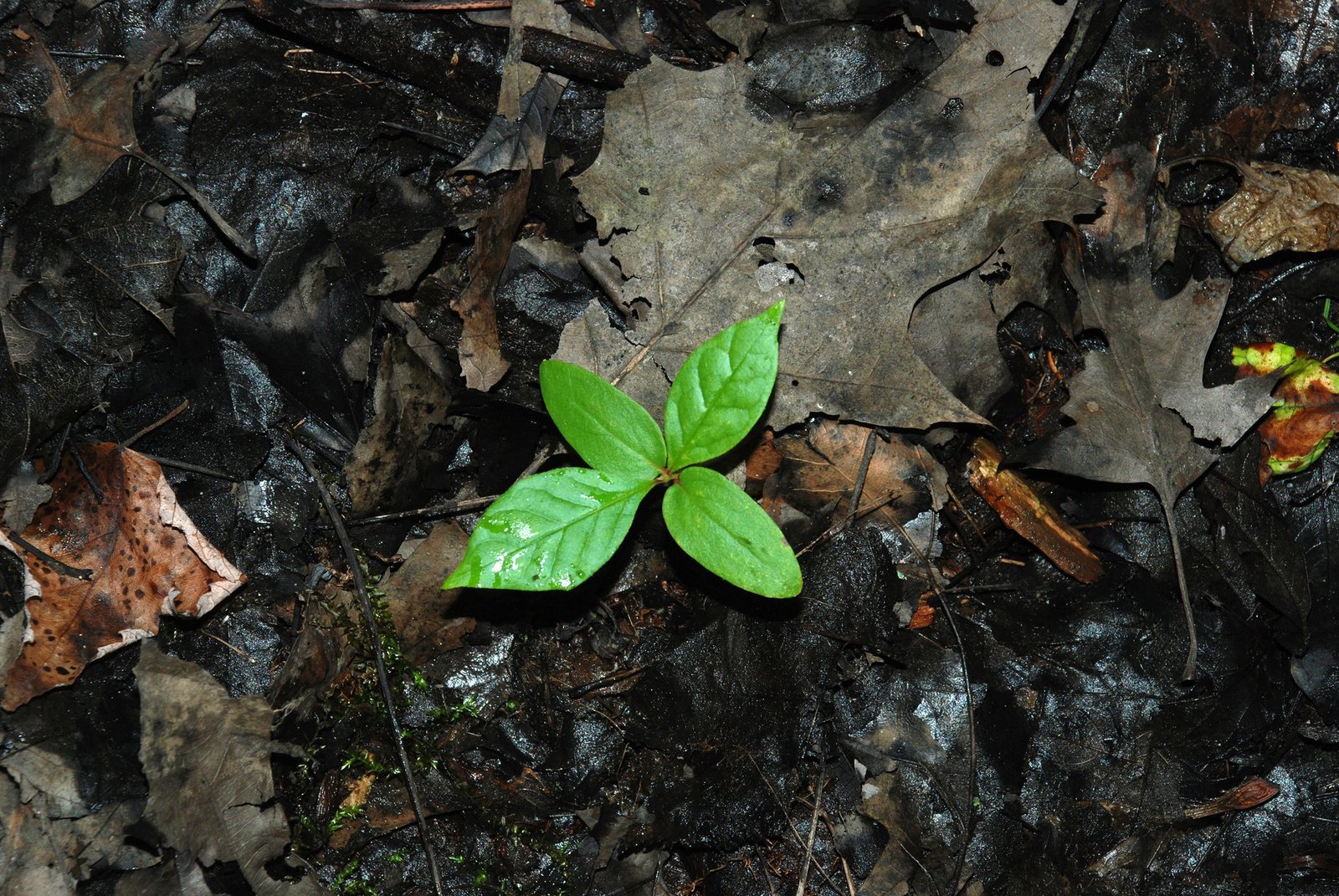
- Glossy, oval leaves emerge red, mature to dark green and turn orange, scarlet or purple in autumn. Fresh growth can add further red highlights during summer.
- Growth
- Moderate once established; often slow during the first few years.
- Care needed
- Low
The year at a glance
- Pollinators
- Cold hardy
- Heat tolerant
- Wildlife
- Low allergen
| J | F | M | A | M | J | J | A | S | O | N | D | |
|---|---|---|---|---|---|---|---|---|---|---|---|---|
| Flowers | ||||||||||||
| Fruit | ||||||||||||
| Plant |
Northern hemisphere months. In Australia, shift them by six.
- Difficulty
- Easy
- Toughness
- Fairly tough
Will it suit your garden?
Pick your zone, country, light and whether you have pets.
Full sun is 6 or more hours of direct sun a day, part shade 3 to 6 hours, shade under 3.
How it grows
Planting day
7 ft (2 m)
After 1 year
8 ft (2.4 m)
After 2 years
9 ft (2.8 m)
After 3 years
10 ft (3.2 m)
After 5 years
13 ft (3.9 m)
About 26 years to full size.
From a typical nursery size, at an average rate for this kind of plant. A rule of thumb, not a forecast.
Good to know
- Cats and dogs
- Safe
- Native to
- the US and Canada
- Growth rate
- Slow
Care
Jobs through the year
- WaterApr–May, Sep–Oct, every 14 days
- Water established trees deeply if dry; young trees need more frequent moisture checks.
- WaterJun–Aug, every 7 days
- Water deeply during dry spells; keep establishing trees evenly moist for three years.
- MulchMar, Nov
- Maintain 5–8 cm of organic mulch, keeping the trunk and root flare clear.
- PruneFeb–Mar
- Before bud break, remove damaged or crossing branches and competing leaders; never top.
- Plant a young, container-grown tree in its permanent position; established trees resent root disturbance.
- Water deeply during dry weather for the first two or three growing seasons.
- Spread 2-3 in (5-8 cm) of organic mulch over the root area, keeping it clear of the trunk.
- Feed only if growth or a soil test indicates a deficiency; avoid routine high-nitrogen feeding.
- Stake only if the root ball moves in wind, and remove supports once the tree is firmly rooted.
Pruning. Prune in late winter while dormant, removing dead, damaged or crossing branches and correcting competing leaders while the tree is young. Keep pruning light and do not top the tree.
Through the year
- Late winter
- Check the branch structure and carry out any light corrective pruning.
- Spring
- Plant where winters are severe, water thoroughly and mulch the root area.
- Late spring
- Check new leaves for yellowing between green veins, especially on alkaline soil.
- Summer
- Water young trees deeply during dry spells and keep grass away from the trunk.
- Autumn
- Plant in mild regions while the soil remains warm and moist.
- Late autumn
- Refresh mulch if needed and check young trunks for rubbing guards or tight ties.
In the garden
- Use as a lawn specimen where its red spring growth and autumn colour can be seen from the house.
- Place at a woodland edge with acid-loving shrubs and shade-tolerant groundcover.
- Use as a long-term shade tree in a medium or large garden, allowing space for its mature crown.
- Plant near a pond or rain-garden margin where soil stays moist but planting depth does not leave the trunk submerged.
Garden styles it suits: Woodland, Wildlife garden, Autumn colour, Grand estate, New England and Traditional.
Plant it with: Rhododendrons, Deciduous azaleas, Oakleaf hydrangea, Virginia sweetspire, Christmas fern and Pennsylvania sedge.
Wildlife: Flowers provide nectar and pollen for insects. Where fruit is produced, the small blue-black drupes feed birds; fruiting depends on flower sex and suitable pollination. Older trees provide shelter and nesting sites.
Problems to watch for
- Yellow leaves with green veins usually indicate iron chlorosis on alkaline soil. Test the soil; use an appropriate iron treatment for temporary relief, but choose a naturally acidic site for a lasting solution.
- Brown leaf edges and premature leaf fall can follow drought. Water deeply and maintain an organic mulch.
- Poor establishment often follows planting too deeply or disturbing large roots. Keep the root flare visible and start with a younger tree.
- Leaf spots may develop in humid weather. Clear badly affected fallen leaves and avoid wetting the foliage; established trees rarely need treatment.
Safety
Not known to be toxic to people, cats, dogs or horses. No part is generally recognised as poisonous, but the leaves, bark and fruit should not be treated as pet feed.
Easily confused with
Wild-type black gum (Nyssa sylvatica)
Has the same general leaf shape and habit, but usually lacks the conspicuous, consistent red flush of new growth characteristic of 'Wildfire'.
Sweetgum (Liquidambar styraciflua)
Has star-shaped, deeply lobed leaves and spiky seed balls; black gum has unlobed oval leaves and small, smooth fruits when present.
Red maple (Acer rubrum)
Has opposite, lobed leaves and paired winged seeds; black gum has alternate, unlobed leaves.
The name
Nyssa refers to a water nymph, sylvatica means 'of woods', and 'Wildfire' describes the cultivar's fiery red new growth.
Propagation. Named plants are normally propagated commercially by grafting or budding onto Nyssa sylvatica rootstock. Seedlings will not reliably retain the red new growth of 'Wildfire'.
Checked against open data
- Accepted botanical name
- Nyssa sylvatica
- In the US and Canada
- Native in Canada and the lower 48 states.
- Native range
- Alabama, Arkansas, Connecticut, Florida, Georgia, Illinois, Kansas, Kentucky, Louisiana, Maine, Maryland and Masachusettes.
- Measured
- Soil pH 4.5 to 6. Average height 1370 cm.
Sources: GBIF (CC BY 4.0), USDA PLANTS and Trefle (CC BY 4.0). The care and design notes are LandscapeGPT's own.
See it in your own yard.
Upload a photo of your yard and see it redesigned with plants that suit your climate, each checked against your zone.