Willow myrtle After Dark
Agonis flexuosa 'After Dark'. Family Myrtaceae. Tree.
Also called After Dark peppermint tree, After Dark Western Australian peppermint, Agonis flexuosa 'After Dark'.
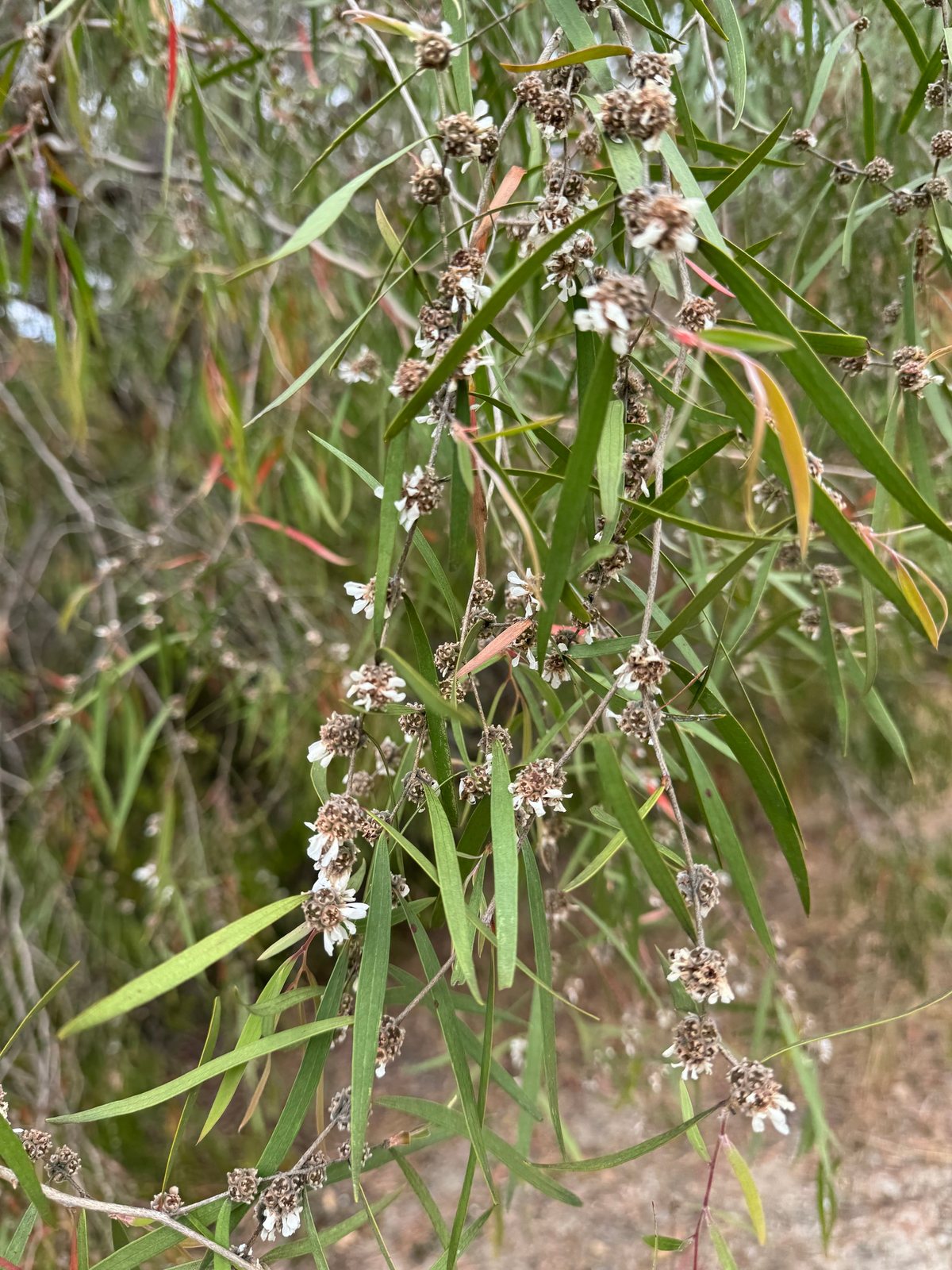
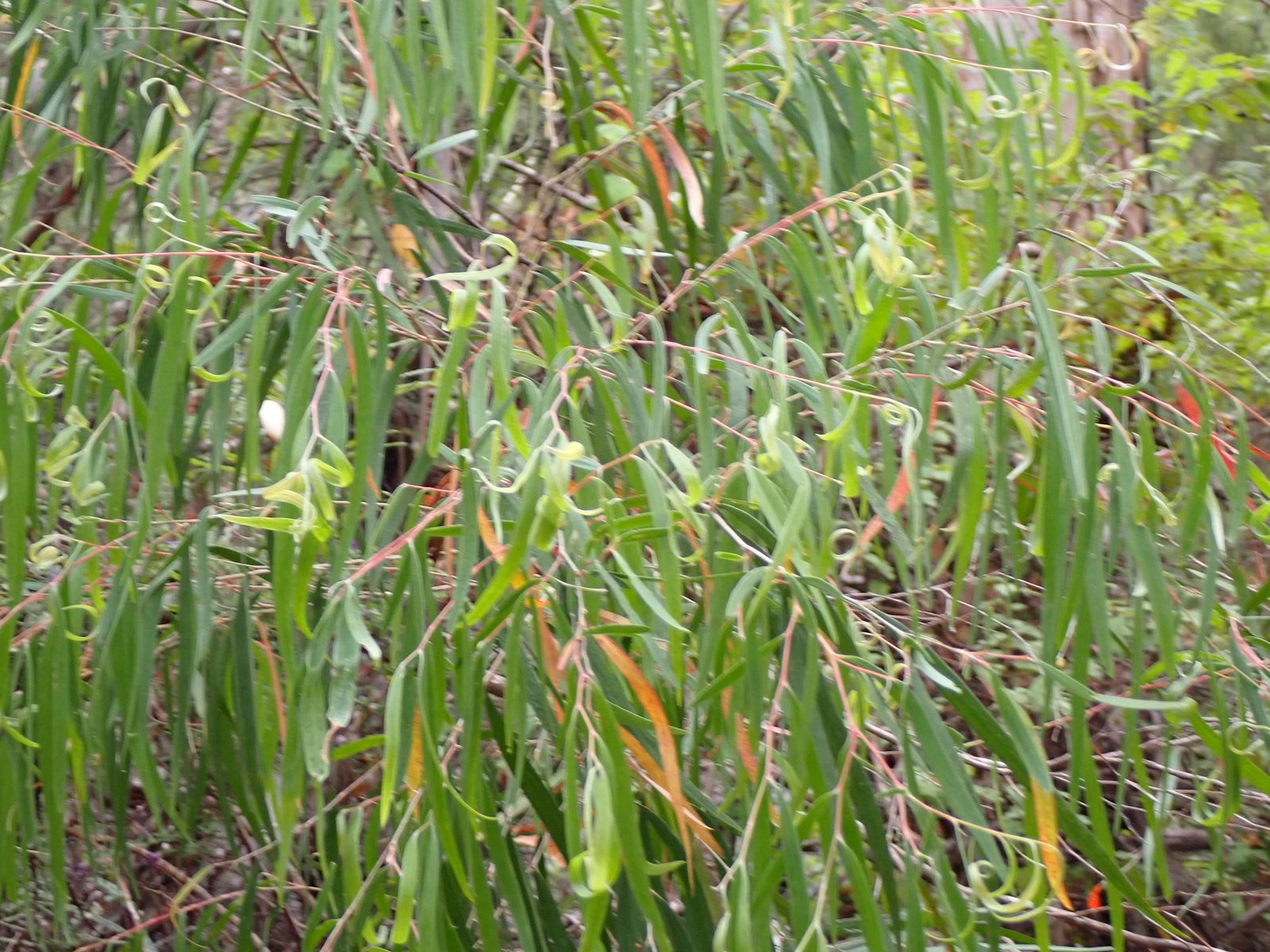
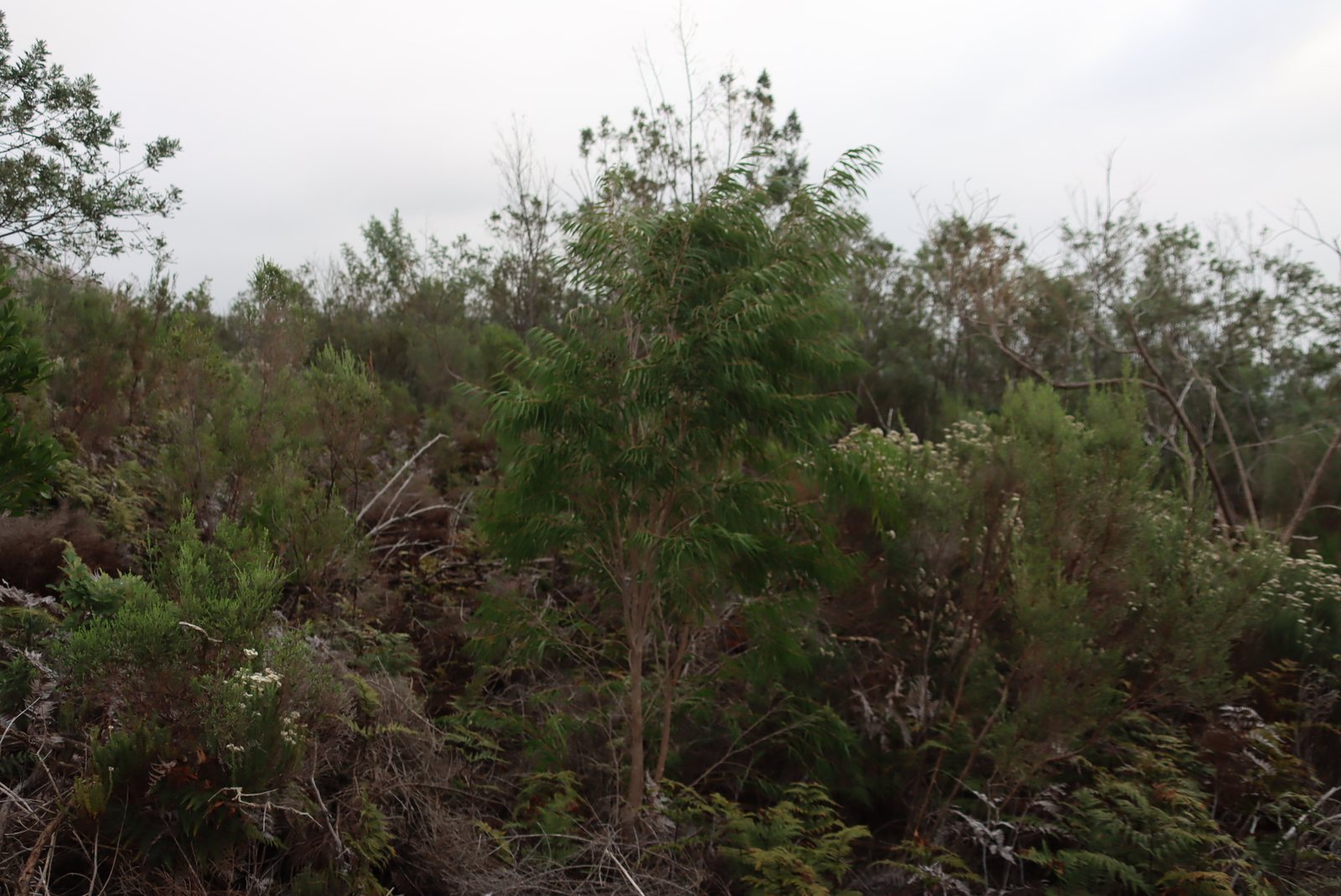
This evergreen Australian tree has narrow, deep burgundy-purple leaves and gracefully drooping branches. Gardeners grow it mainly for its dark foliage and soft outline, which contrast well with silver leaves and pale planting. It needs a mild climate and is not reliably hardy outdoors across most of the UK or Canada.
At a glance
- Sun
- Full sun for the strongest foliage colour; tolerates light partial shade.
- Water
- Water regularly while establishing; moderately drought tolerant once established, but benefits from deep watering during prolonged dry weather.
- Soil
- Well-drained sandy or loamy soil; tolerates a range of soil pH levels but dislikes waterlogged ground.
- Height
- 18-25 ft (5.5-7.6 m), potentially taller with age in favourable climates
- Spread
- 10-15 ft (3-4.6 m)
- Flowers
- Small white flowers in clusters along the branches in late spring and summer; often inconspicuous against the foliage.
- Foliage
- Evergreen. Narrow, pointed, burgundy-purple leaves on slender, weeping branches; leaves smell of peppermint when crushed.
- Growth
- Moderate to fast in mild climates with adequate moisture.
- Care needed
- Low
The year at a glance
- Pollinators
- Drought tolerant
- Heat tolerant
- Wildlife
- Low allergen
- Fragrant
| J | F | M | A | M | J | J | A | S | O | N | D | |
|---|---|---|---|---|---|---|---|---|---|---|---|---|
| Flowers | ||||||||||||
| Plant |
Northern hemisphere months. In Australia, shift them by six.
- Difficulty
- Hard
- Toughness
- Fairly tough
Will it suit your garden?
Pick your zone, country, light and whether you have pets.
Full sun is 6 or more hours of direct sun a day, part shade 3 to 6 hours, shade under 3.
How it grows
Planting day
7 ft (2 m)
After 1 year
7 ft (2.3 m)
After 2 years
8 ft (2.6 m)
After 3 years
9 ft (2.9 m)
After 5 years
11 ft (3.4 m)
About 16 years to full size.
From a typical nursery size, at an average rate for this kind of plant. A rule of thumb, not a forecast.
Good to know
- Cats and dogs
- Safe
- Native to
- Australia
- Growth rate
- Fast
Care
Jobs through the year
- WaterApr–May, Sep–Oct, every 21 days
- Water established ground plants only in dry weather; water regularly during the first two growing seasons.
- WaterJun–Aug, every 14 days
- Give established plants a deep soak during prolonged drought; check young plants and pots more often.
- WaterJan–Mar, Nov–Dec, every 21 days
- In frost-free shelter, water when the surface dries, avoiding saturated roots.
- MulchApr–May
- Renew organic mulch over the root zone without touching the trunk.
- FeedApr–May
- Feed lightly only if growth is weak; avoid heavy nitrogen applications.
- PruneJul–Aug
- After flowering, remove damaged or crossing branches and lightly shape; do not top.
- ProtectJan–Apr, Sep–Dec
- Outdoor winters are unsuitable; keep young specimens in movable pots under bright, frost-free cover.
- Plant after the main frost risk has passed, with the root flare level with the surrounding soil.
- Water deeply through the first two growing seasons, allowing the surface soil to dry between waterings.
- Spread organic mulch over the root zone, keeping it clear of the trunk.
- Feed lightly in spring only if growth is weak; avoid heavy applications of nitrogen.
- Shelter young trees from cold, drying winds and protect them during brief frosts.
- Stake only if the root ball moves in wind, and remove the support once the tree is firmly rooted.
Pruning. Prune lightly after flowering to remove damaged or crossing branches and develop a sound framework while young. Avoid repeated topping or severe cuts into mature wood, which spoil the natural weeping shape.
Through the year
- Spring
- Plant once frost risk has passed, and begin regular establishment watering.
- Spring
- Renew mulch and check that it is not touching the trunk.
- Late spring
- Check young shoots for aphids and treat only if colonies are causing damage.
- Summer
- Water young trees deeply during dry spells; give established trees an occasional deep soak during prolonged drought.
- Late summer
- After flowering, make any necessary light shaping cuts and remove damaged branches.
- Winter
- Protect young plants during forecast frosts and check ties after storms.
In the garden
- Use as a small specimen tree where its weeping crown can develop without repeated clipping.
- Set against a pale wall or fence to make the burgundy foliage stand out.
- Combine with silver-leaved shrubs and ornamental grasses for contrasting colour and texture.
- Use as a loose evergreen screen in a mild coastal garden, allowing enough space for its mature width.
Garden styles it suits: Australian native, Coastal, Modern Mediterranean, Architectural minimal, Dry gravel garden and Low-maintenance.
Plant it with: Coastal rosemary, Lomandra, Dianella, Lavender, Santolina and Kangaroo paw.
Wildlife: Flowers provide pollen and nectar for bees and other insects. The evergreen canopy offers shelter for small birds.
Problems to watch for
- Frost damage: young foliage and shoots may blacken after freezing weather. Protect young plants and wait until spring growth starts before cutting back damaged wood.
- Root rot in wet soil: declining foliage and dieback can follow prolonged saturation. Improve drainage and avoid frequent shallow watering; badly affected trees may need replacement.
- Aphids or scale insects: inspect shoots and stems if foliage becomes sticky or develops sooty mould. Encourage predators and use a suitable horticultural oil when necessary, following the label.
- Weak branch structure: crowded or poorly attached limbs can split as the crown grows. Correct structural faults with light formative pruning while the tree is young.
Safety
Not known to be toxic to people, cats, dogs or horses, but species-specific safety information is limited. Do not treat the aromatic leaves, bark or seeds as food or use them to make essential-oil preparations.
Easily confused with
Burgundy willow myrtle (Agonis flexuosa 'Burgundy')
New growth is burgundy, but older foliage becomes greener; 'After Dark' retains much darker foliage through the canopy.
Weeping willow (Salix babylonica)
Has green leaves that fall in autumn, produces catkins rather than small white myrtle flowers, and lacks the peppermint scent of crushed agonis leaves.
The name
The species name flexuosa refers to the bent or zigzag branchlets, while willow myrtle describes the willow-like leaves of this member of the myrtle family.
Propagation. Propagate from semi-ripe cuttings in summer to retain the dark foliage. Seed-grown plants will not reliably come true to the cultivar; check local plant breeders' rights before propagating for sale.
Checked against open data
- Accepted botanical name
- Agonis flexuosa
- Native range
- Western Australia.
Sources: GBIF (CC BY 4.0) and Trefle (CC BY 4.0). The care and design notes are LandscapeGPT's own.
See it in your own yard.
Upload a photo of your yard and see it redesigned with plants that suit your climate, each checked against your zone.