Winter honeysuckle 'Winter Beauty'
Lonicera × purpusii 'Winter Beauty'. Family Caprifoliaceae. Shrub.
Also called Lonicera × purpusii 'Winter Beauty', Purpus honeysuckle 'Winter Beauty'.
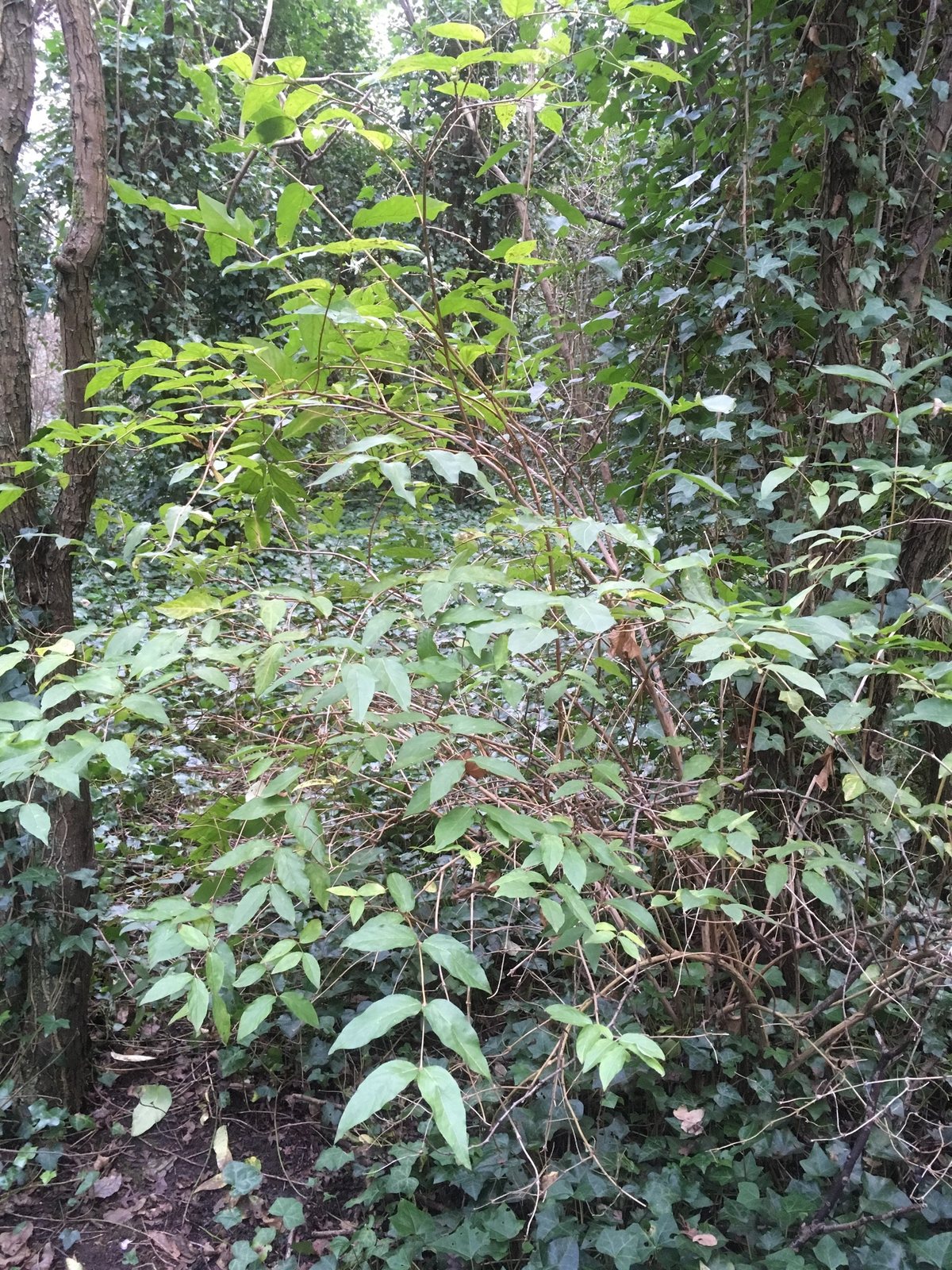
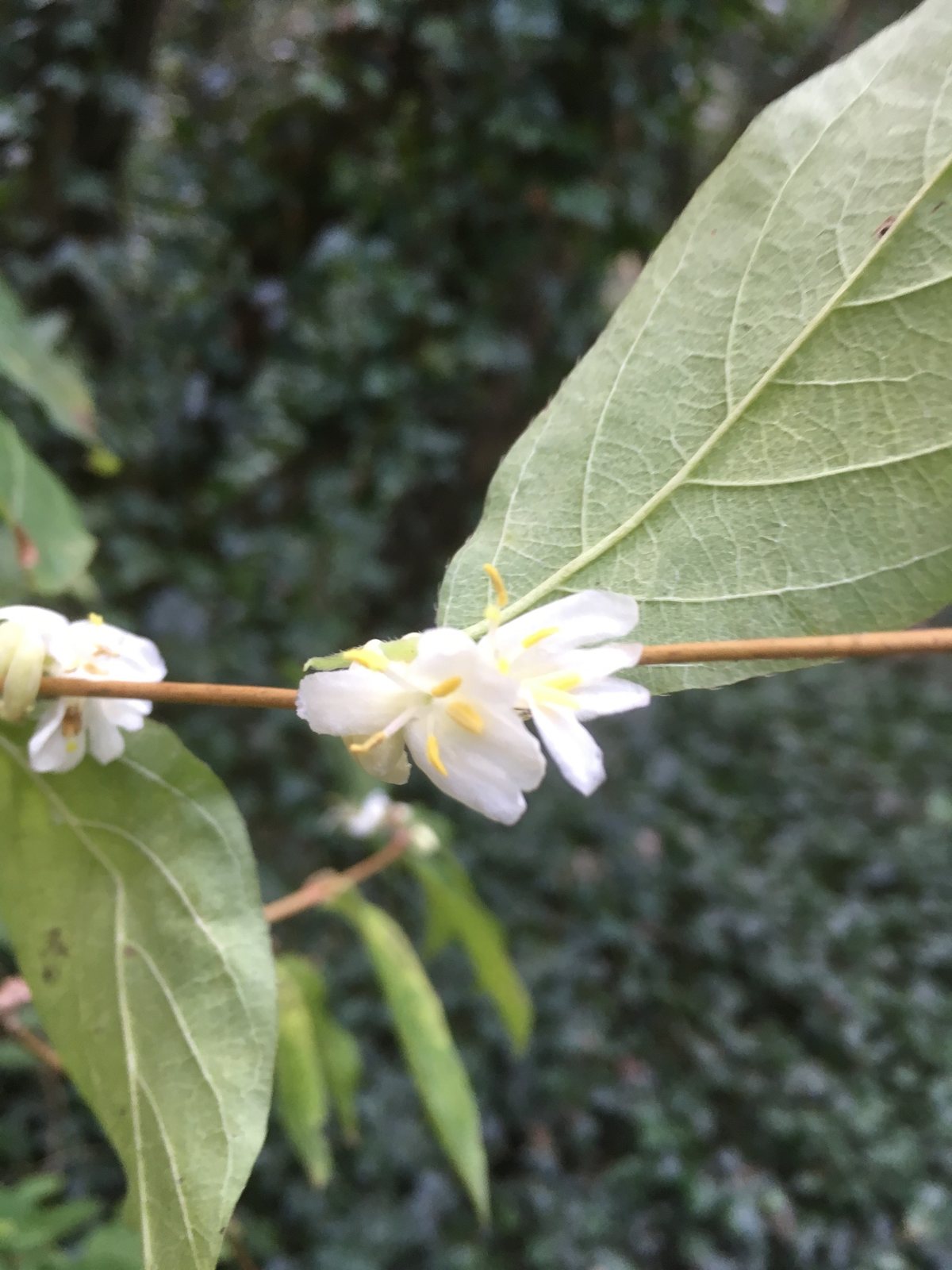
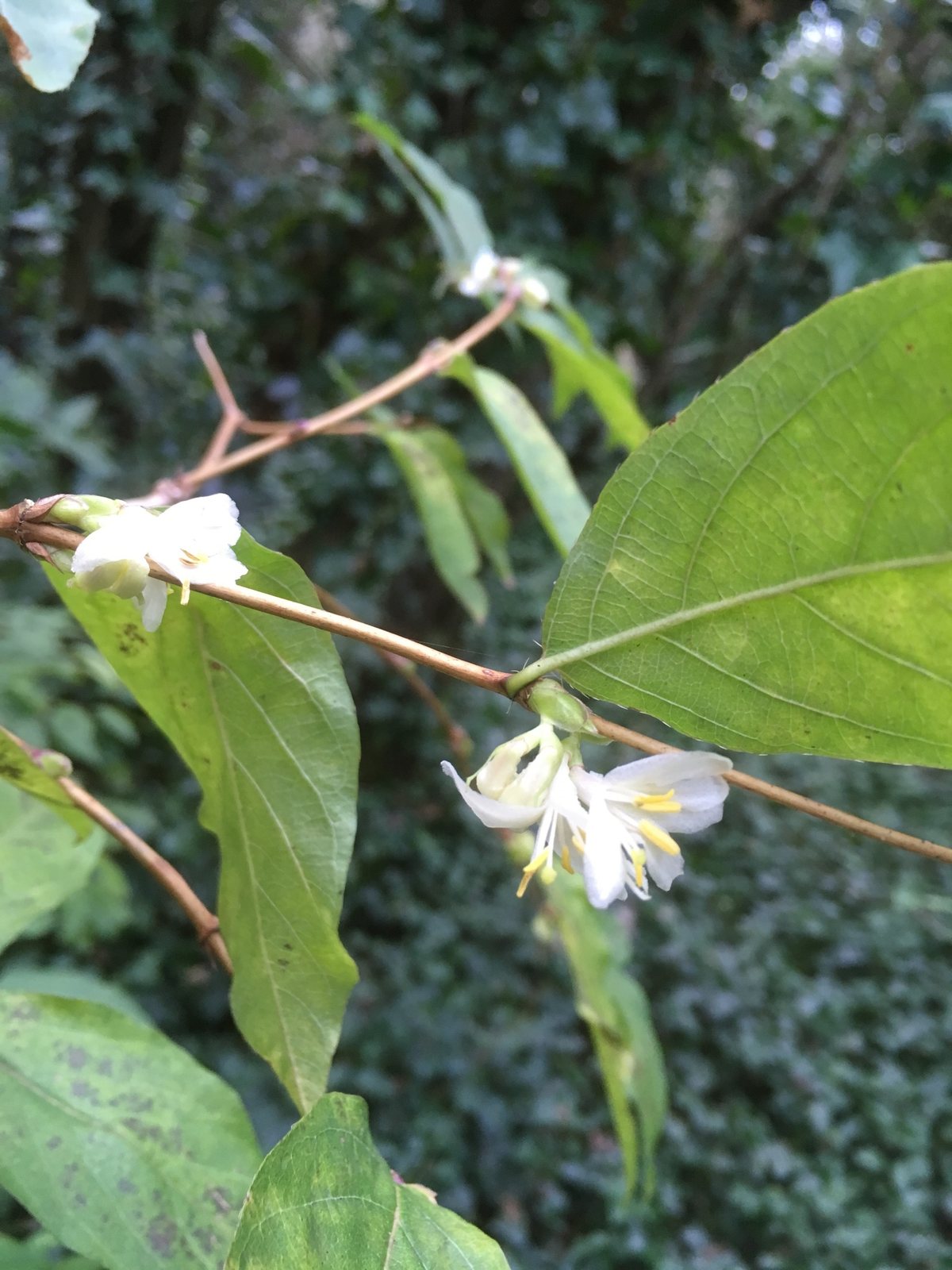
A spreading, arching shrub grown for small, strongly fragrant cream-white flowers in winter and early spring. Plant it near a path or entrance where you can enjoy the scent; its summer foliage is fairly plain, so it works best behind later-flowering plants.
At a glance
- Sun
- Full sun or partial shade; flowering is usually best with several hours of direct sun.
- Water
- Keep the soil evenly moist while establishing. Established plants tolerate short dry spells, but water deeply during prolonged drought.
- Soil
- Most reasonably fertile, well-drained soils, including clay that does not remain waterlogged; tolerates acid, neutral and alkaline conditions.
- Height
- 6-10 ft (1.8-3 m)
- Spread
- 6-10 ft (1.8-3 m)
- Flowers
- Small cream-white, strongly scented flowers from midwinter into early spring; timing and abundance depend on winter temperatures.
- Foliage
- Opposite, oval, dull green leaves. Usually deciduous, but may retain some leaves through mild winters.
- Growth
- Moderate
- Care needed
- Low
The year at a glance
- Pollinators
- Wildlife
- Low allergen
- Fragrant
| J | F | M | A | M | J | J | A | S | O | N | D | |
|---|---|---|---|---|---|---|---|---|---|---|---|---|
| Flowers | ||||||||||||
| Fruit | ||||||||||||
| Plant |
Northern hemisphere months. In Australia, shift them by six.
- Difficulty
- Easy
- Toughness
- Very tough
Will it suit your garden?
Pick your zone, country, light and whether you have pets.
Full sun is 6 or more hours of direct sun a day, part shade 3 to 6 hours, shade under 3.
How it grows
Planting day
1.6 ft (0.5 m)
After 1 year
2.9 ft (0.88 m)
After 2 years
4 ft (1.3 m)
After 3 years
5 ft (1.6 m)
After 5 years
8 ft (2.4 m)
full size
About 5 years to full size.
From a typical nursery size, at an average rate for this kind of plant. A rule of thumb, not a forecast.
Good to know
- Cats and dogs
- Mildly toxic: may upset a stomach
- Growth rate
- Moderate
Care
Jobs through the year
- WaterApr–May, Sep–Oct, every 14 days
- Water established shrubs deeply only if the root zone is dry; young plants need more frequent watering.
- WaterJun–Aug, every 14 days
- Water established shrubs deeply during prolonged drought; keep new plants evenly moist.
- MulchMar–Apr
- Spread 5–8 cm of compost or leaf mould, keeping it clear of stems.
- PruneMar–Apr
- Immediately after flowering, remove crossing wood and up to one-third of old stems if congested.
- FeedMar–Apr
- Apply general-purpose shrub fertilizer only if growth is weak.
- Water deeply through the first growing season whenever the root zone begins to dry.
- Apply a 2-3 in (5-8 cm) mulch of compost or leaf mould in spring, keeping it clear of the stems.
- Feed only if growth is weak, using a general-purpose fertiliser in spring at the labelled rate.
- Allow room for the arching branches rather than repeatedly clipping them to fit a narrow space.
Pruning. Prune just after flowering, removing dead or crossing branches and cutting up to one-third of the oldest stems to ground level if the shrub is congested. Avoid routine pruning in late summer or autumn, which removes wood carrying the next winter's flowers.
Through the year
- Winter
- Enjoy the flowers and cut a few lightly budded stems to open indoors.
- Early spring
- After flowering, thin crowded growth and remove selected old stems at ground level.
- Spring
- Mulch the root area and check that newly planted shrubs are receiving enough water.
- Early summer
- Take softwood cuttings from healthy, non-flowering shoots.
- Summer
- Water during prolonged dry weather, particularly while the shrub is establishing.
- Autumn
- Plant in workable, well-drained soil in mild climates; in very cold areas, wait until spring.
In the garden
- Near a frequently used winter path or doorway, with enough clearance for its arching branches.
- At the back of a mixed border, where summer perennials conceal its unremarkable lower growth.
- Along a woodland edge with hellebores, snowdrops and early bulbs beneath it.
- In an informal mixed shrub boundary, providing winter scent between seasons of stronger colour.
Garden styles it suits: English country, Cottage garden, Woodland, Sensory garden, Winter interest and Low-maintenance.
Plant it with: Hellebores, Snowdrops, Winter aconites, Cyclamen, Red-stemmed dogwood and Witch hazel.
Wildlife: Flowers provide nectar and pollen for bees active during mild winter and early spring weather. The branching growth offers shelter for small birds.
Problems to watch for
- Aphids can cluster on soft shoots; wash them off with water and encourage natural predators.
- Powdery mildew may affect leaves in dry, crowded conditions; water the root zone during drought and thin congested stems after flowering.
- Poor flowering often follows pruning at the wrong time or deep shade; prune only after bloom and provide more light where practical.
- Waterlogged soil can cause root decline; improve drainage or move the shrub rather than continuing to water.
Safety
Do not eat the berries: honeysuckle fruits can cause stomach upset in people and pets. Toxicity information specific to this hybrid is limited, including for cats, dogs and horses, so keep berries and prunings away from animals rather than assuming they are safe.
Easily confused with
Winter honeysuckle (Lonicera fragrantissima)
One of the hybrid's parents, with similarly fragrant winter flowers and generally broader, more rounded leaves. The plants overlap in appearance, so foliage alone may not establish a reliable identification.
Standish's honeysuckle (Lonicera standishii)
The other parent, usually with more conspicuously hairy young shoots and leaf undersides. 'Winter Beauty' has intermediate features, so a reliable nursery label is useful.
The name
Lonicera honours the German botanist Adam Lonitzer, while 'Winter Beauty' refers to the cultivar's winter flowers.
Propagation. Take softwood cuttings in early summer or semi-ripe cuttings later in summer. Layering a low branch also works; use vegetative propagation to retain the cultivar's characteristics.
Checked against open data
- Accepted botanical name
- Lonicera purpusii
Sources: GBIF (CC BY 4.0). The care and design notes are LandscapeGPT's own.
See it in your own yard.
Upload a photo of your yard and see it redesigned with plants that suit your climate, each checked against your zone.