Winter King hawthorn
Crataegus viridis 'Winter King'. Family Rosaceae. Tree.
Also called Winter King green hawthorn, Southern hawthorn 'Winter King'.
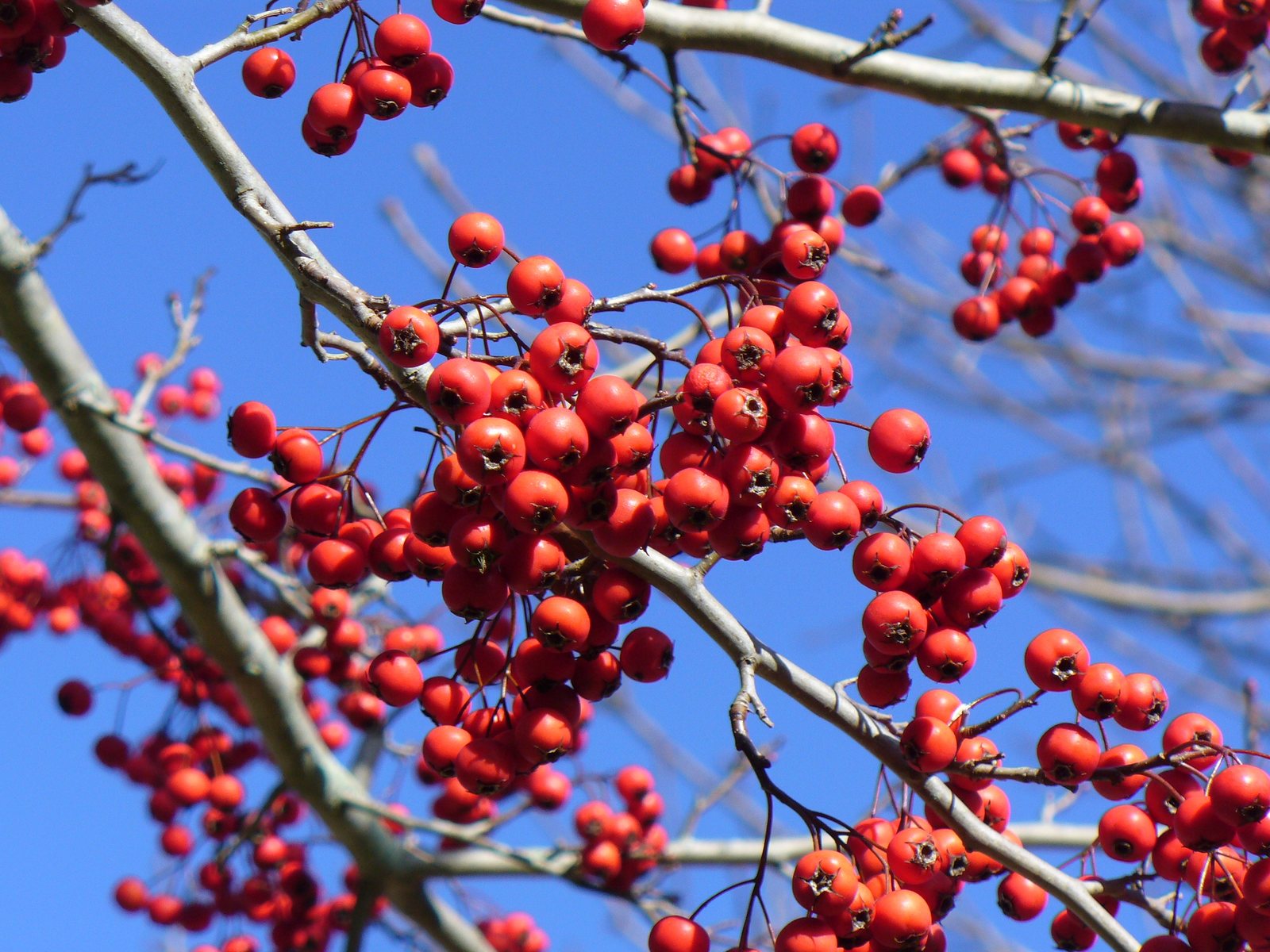
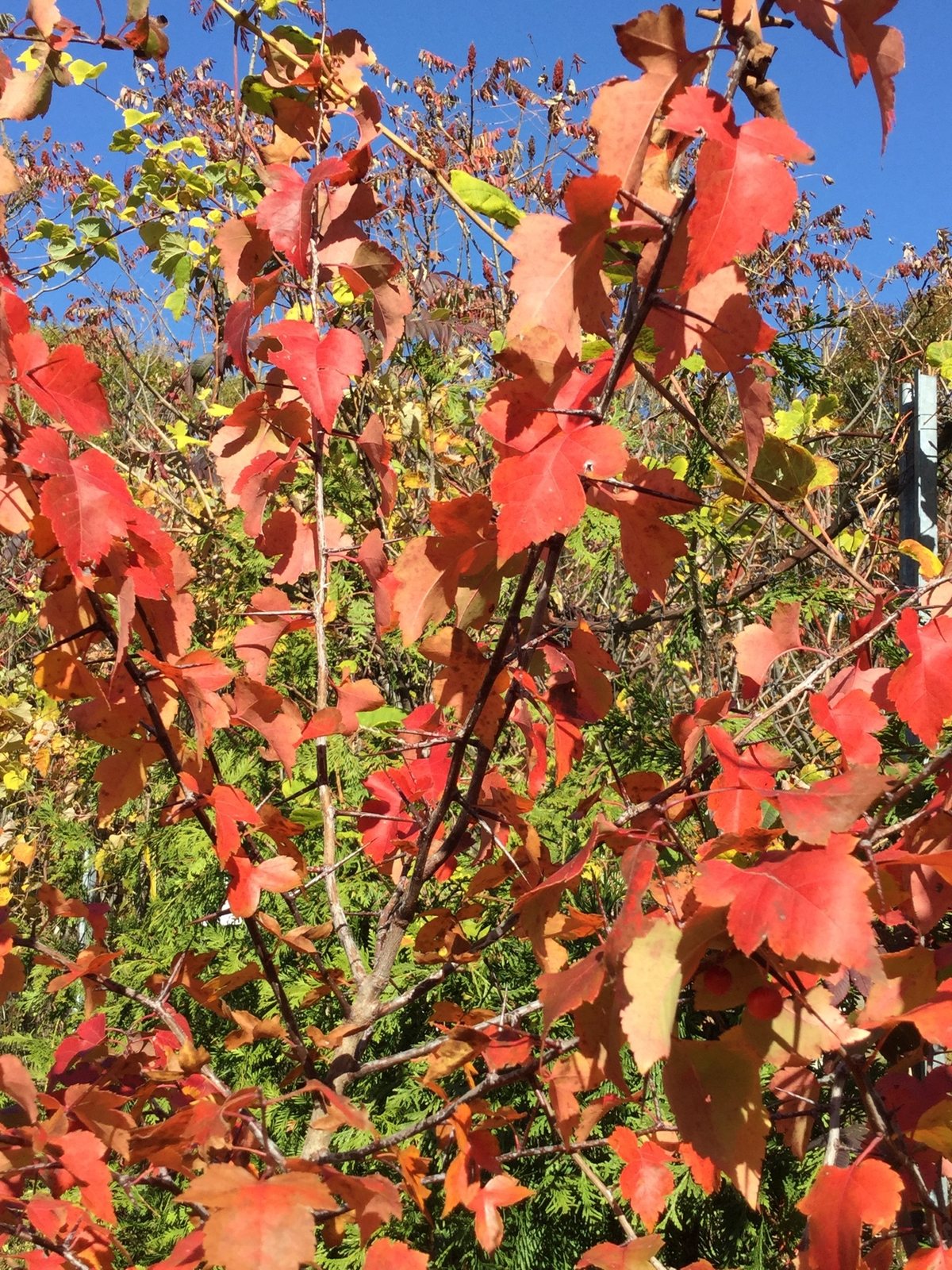
Winter King hawthorn is a small deciduous tree with a rounded crown, white spring flowers and bright red fruits that often remain into winter. Gardeners grow it for its long season of interest, including orange-purple autumn leaves and peeling bark on older trunks. It has fewer thorns than many hawthorns, but occasional sharp thorns still occur.
At a glance
- Sun
- Full sun gives the best flowering, fruiting and autumn colour; tolerates partial shade.
- Water
- Moderate; water regularly while establishing. Established trees tolerate some drought and occasional wet soil, but not permanent waterlogging.
- Soil
- Adaptable to clay, loam or sandy soil with reasonable drainage; tolerates acidic to alkaline conditions.
- Height
- 25-35 ft (7.6-10.7 m)
- Spread
- 25-35 ft (7.6-10.7 m)
- Flowers
- Late spring; clusters of small white flowers, sometimes with an unpleasant scent.
- Foliage
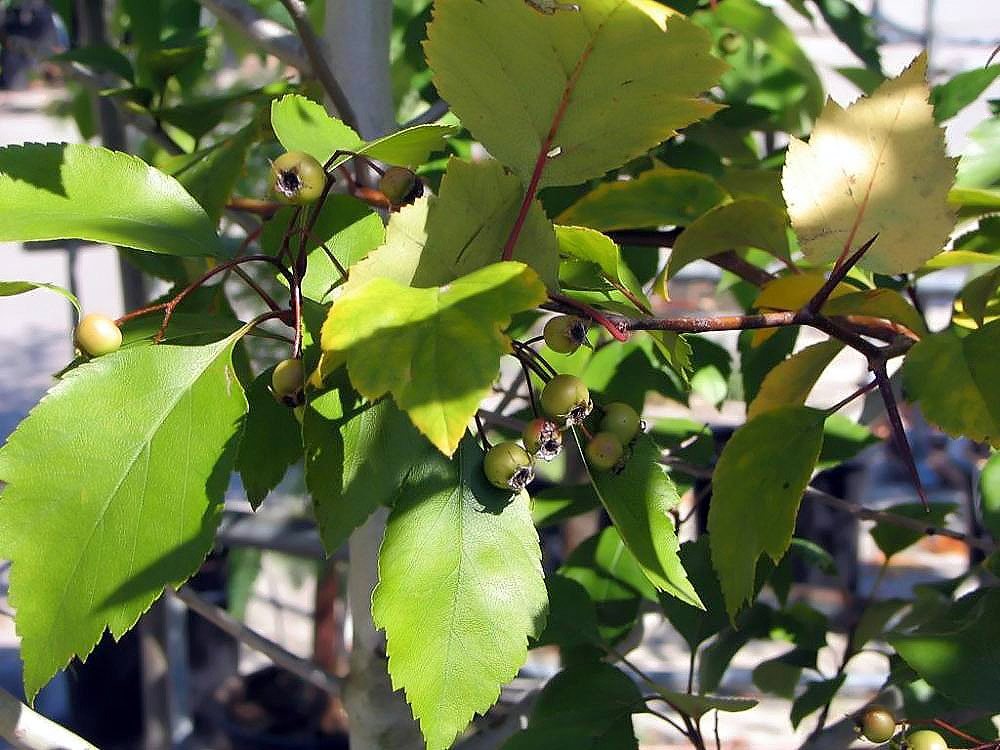
- Glossy, dark green leaves with shallow lobes and toothed edges; autumn colour ranges from yellow and orange to red-purple.
- Growth
- Moderate
- Care needed
- Medium
The year at a glance
- Pollinators
- Drought tolerant
- Cold hardy
- Heat tolerant
- Disease resistant
- Wildlife
- Low allergen
| J | F | M | A | M | J | J | A | S | O | N | D | |
|---|---|---|---|---|---|---|---|---|---|---|---|---|
| Flowers | ||||||||||||
| Fruit | ||||||||||||
| Plant |
Northern hemisphere months. In Australia, shift them by six.
- Difficulty
- Moderate
- Toughness
- Very tough
Will it suit your garden?
Pick your zone, country, light and whether you have pets.
Full sun is 6 or more hours of direct sun a day, part shade 3 to 6 hours, shade under 3.
How it grows
Planting day
7 ft (2 m)
After 1 year
8 ft (2.4 m)
After 2 years
9 ft (2.7 m)
After 3 years
10 ft (3.1 m)
After 5 years
12 ft (3.8 m)
About 20 years to full size.
From a typical nursery size, at an average rate for this kind of plant. A rule of thumb, not a forecast.
Good to know
- Cats and dogs
- Mildly toxic: may upset a stomach
- Native to
- the US
- Growth rate
- Moderate
Care
Jobs through the year
- WaterApr–May, Sep–Oct, every 14 days
- Water established trees only during dry spells; water more regularly for two years after planting.
- WaterJun–Aug, every 14 days
- Water deeply in prolonged drought; young trees may need weekly watering.
- MulchMar–Apr
- Refresh organic mulch to 5–8 cm deep, keeping it away from the trunk.
- PruneFeb
- Remove dead or crossing branches and shoots below the graft; avoid heavy heading cuts.
- PruneMay–Aug
- If fire blight appears, cut well below damage in dry weather and disinfect tools between cuts.
- Water deeply during dry spells for the first two growing seasons, wetting the root ball and surrounding soil.
- Apply 2-3 in (5-8 cm) of organic mulch over the root area, keeping it clear of the trunk.
- Avoid routine high-nitrogen feeding, which encourages soft growth vulnerable to fire blight.
- Stake only if the root ball moves in wind, and remove supports once the tree is firmly rooted.
- Remove shoots arising below the graft union so they do not replace the named cultivar.
Pruning. Prune lightly in late winter while dormant, removing dead, crossing or badly placed branches and developing a sound framework. Avoid heavy heading cuts; remove fire-blight-infected shoots in dry weather, cutting well below visible damage and disinfecting tools between cuts.
Through the year
- Autumn
- Plant while the soil is workable, setting the root flare at ground level and watering thoroughly.
- Late winter
- Inspect the branch framework and prune out dead, damaged or crossing growth.
- Spring
- Refresh mulch and check that ties are not rubbing or constricting the trunk.
- Late spring
- Check flowers and young shoots for fire blight, especially after warm, wet weather.
- Summer
- Water young trees during dry spells and inspect leaves for rust or spotting.
- Late autumn
- Collect badly diseased fallen leaves; leave healthy fruit on the tree for winter display and birds.
In the garden
- Use as a lawn specimen where its broad crown, winter fruit and mature bark can be seen.
- Place behind mixed borders with asters, coneflowers and ornamental grasses for late-season interest.
- Include in a wildlife garden with native shrubs, leaving room for its mature canopy.
- Use in a loose avenue or boundary planting where branches and occasional thorns will not obstruct paths.
Garden styles it suits: Traditional, English country, Wildlife garden, Winter interest, New England and Grand estate.
Plant it with: Oakleaf hydrangea, Virginia sweetspire, Purple coneflower, New England aster, Little bluestem and Christmas fern.
Wildlife: Flowers provide pollen and nectar for insects. Birds eat the fruits, often later in winter, and the branching crown offers nesting cover; hawthorns also support many leaf-feeding insects.
Problems to watch for
- Fire blight can blacken flowers and shoots, although this cultivar has useful resistance. Prune affected growth well below the damage in dry weather and avoid excessive nitrogen.
- Cedar-hawthorn rust and related rusts can cause orange leaf spots or distorted fruit. Avoid overhead watering; if damage is severe and recurring, seek locally approved preventive treatment timed to spring growth.
- Leaf spot can cause premature leaf fall in wet seasons. Collect infected leaves and maintain an open canopy with good air circulation.
- Aphids may curl young leaves and produce sticky honeydew. Wash small colonies off with water and conserve ladybirds and other predators.
Safety
Not generally regarded as toxic to people, cats, dogs or horses. Fruit flesh is not considered poisonous, but hawthorn seeds contain cyanogenic compounds, so avoid chewing or deliberately eating seeds, especially in quantity. Occasional thorns can cause puncture injuries.
Easily confused with
Washington hawthorn (Crataegus phaenopyrum)
Usually has more sharply triangular, deeply lobed leaves and numerous long thorns; Winter King has shallower leaf lobes and relatively few thorns.
Cockspur hawthorn (Crataegus crus-galli)
Has leathery, mostly unlobed leaves that broaden toward the tip. Typical plants have conspicuous long thorns, although thornless cultivars exist.
Common hawthorn (Crataegus monogyna)
Has much more deeply divided leaves and fruits usually containing one hard seed-bearing stone; green hawthorn fruits generally contain several.
The name
Crataegus comes from the Greek word for strength, referring to the hard wood, viridis means green, and 'Winter King' refers to the tree's conspicuous winter fruit display.
Propagation. Usually propagated by budding or grafting onto compatible hawthorn rootstocks. Seedlings do not reliably retain 'Winter King' characteristics, and seed can be slow to germinate.
Checked against open data
- Accepted botanical name
- Crataegus viridis
- In the US and Canada
- Native in the lower 48 states.
- Native range
- Alabama, Arkansas, Florida, Georgia, Illinois, Indiana, Kansas, Kentucky, Louisiana, Maryland, Mississippi and Missouri.
- Measured
- Average height 914 cm.
Sources: GBIF (CC BY 4.0), USDA PLANTS and Trefle (CC BY 4.0). The care and design notes are LandscapeGPT's own.
See it in your own yard.
Upload a photo of your yard and see it redesigned with plants that suit your climate, each checked against your zone.