Wintergreen
Gaultheria procumbens. Family Ericaceae. Groundcover.
Also called Eastern teaberry, Checkerberry, American wintergreen.
Wintergreen is a low, creeping evergreen native to eastern North American woodlands, grown for glossy leaves, small bell-shaped flowers and red berries that often last through winter. It makes a slow-spreading carpet in cool, acidic woodland soil, but struggles in lime-rich ground, drought and prolonged heat.
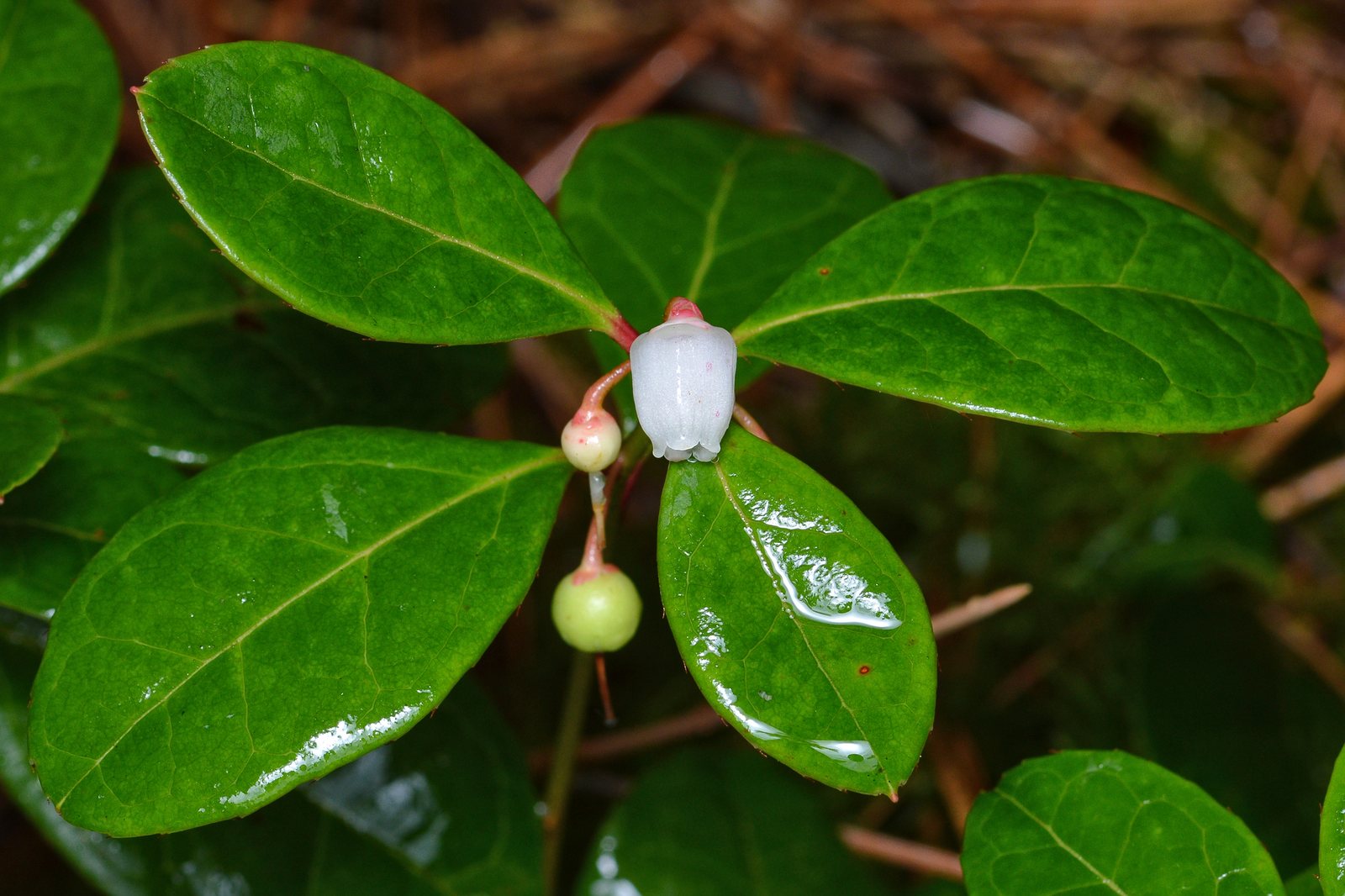
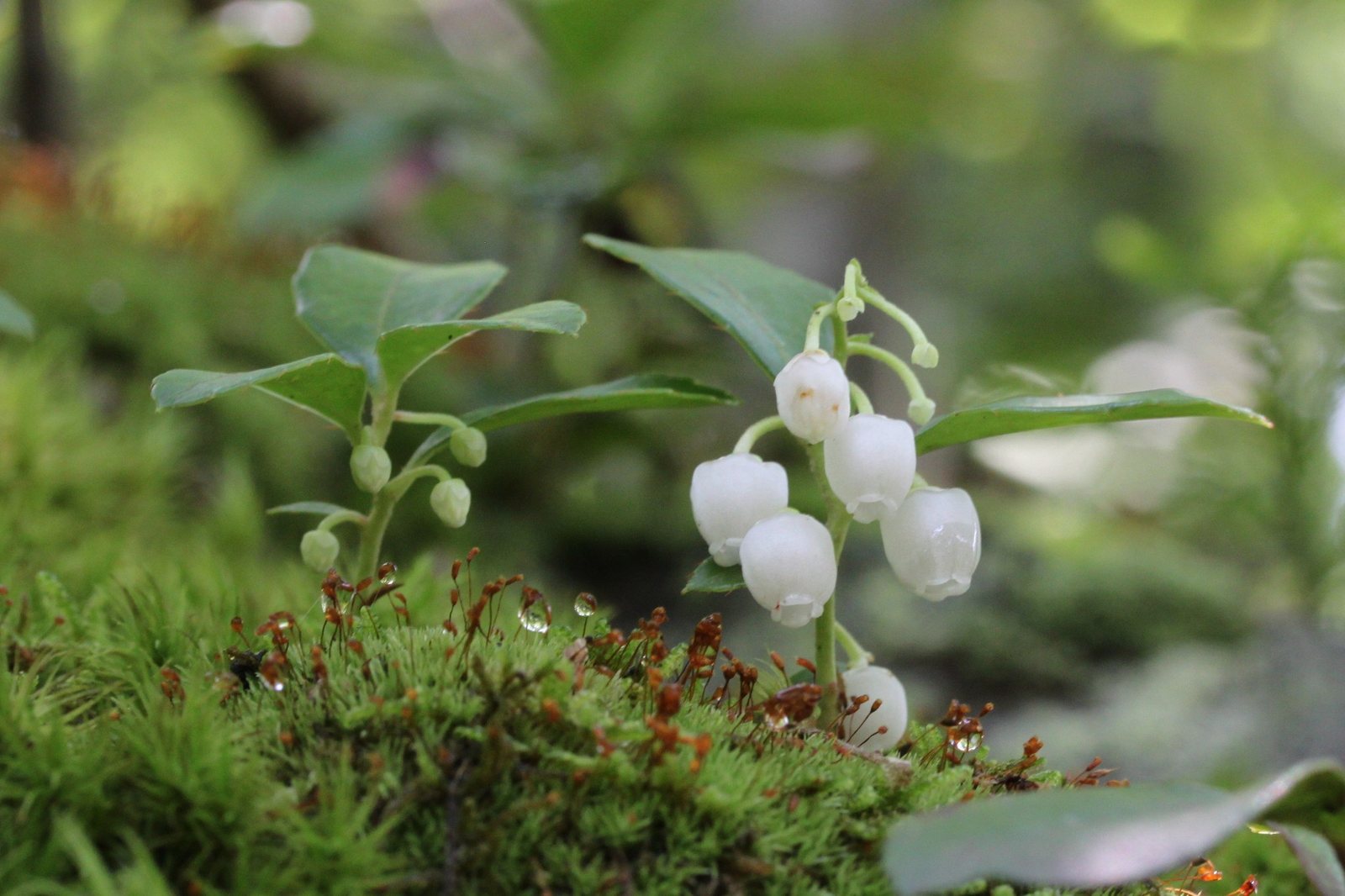
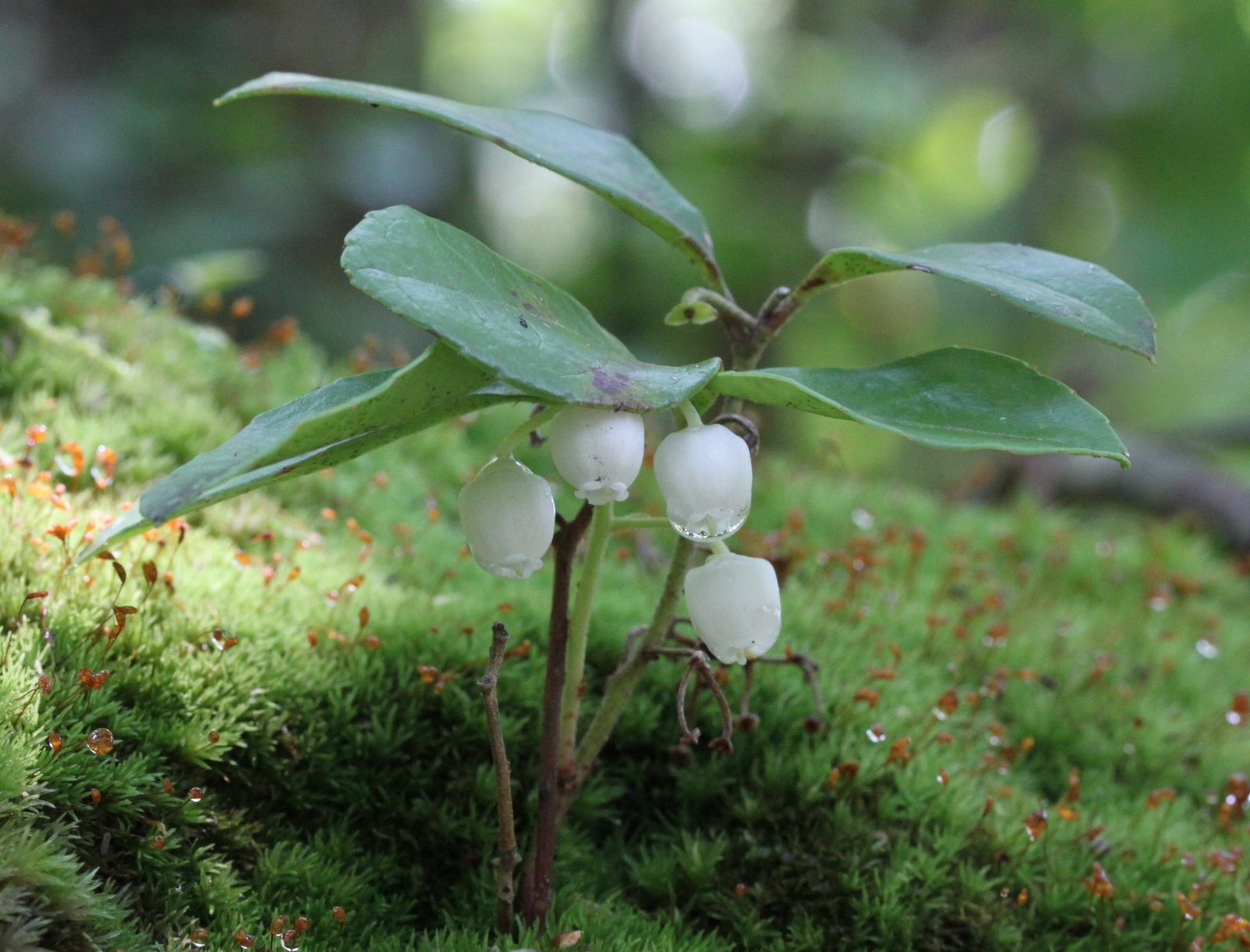
At a glance
- Sun
- Partial shade or light woodland shade; tolerates more sun where summers are cool and the soil stays moist.
- Water
- Keep evenly moist but not waterlogged; its shallow roots dry out readily.
- Soil
- Acidic, humus-rich, well-drained soil, ideally pH 4.5-6.0. Avoid chalky soil and compacted, wet ground.
- Height
- 0.3-0.5 ft (0.1-0.15 m)
- Spread
- 1-3 ft (0.3-0.9 m), eventually wider through creeping underground stems
- Flowers
- Small white to pale pink, nodding bells in summer, followed by red berries in autumn.
- Foliage
- Evergreen. Small, leathery, glossy dark green leaves with finely toothed edges; often bronze or reddish in cold weather. Crushed leaves smell of wintergreen.
- Growth
- Slow
- Care needed
- Medium
The year at a glance
- Pollinators
- Cold hardy
- Wildlife
- Low allergen
- Fragrant
| J | F | M | A | M | J | J | A | S | O | N | D | |
|---|---|---|---|---|---|---|---|---|---|---|---|---|
| Flowers | ||||||||||||
| Fruit | ||||||||||||
| Plant |
Northern hemisphere months. In Australia, shift them by six.
- Difficulty
- Moderate
- Toughness
- Needs looking after
Will it suit your garden?
Pick your zone, country, light and whether you have pets.
Full sun is 6 or more hours of direct sun a day, part shade 3 to 6 hours, shade under 3.
How it grows
Planting day
0.1 ft (0.03 m)
After 1 year
0.2 ft (0.05 m)
After 2 years
0.3 ft (0.08 m)
After 3 years
0.3 ft (0.1 m)
After 5 years
0.4 ft (0.13 m)
full size
About 4 years to full size.
From a typical nursery size, at an average rate for this kind of plant. A rule of thumb, not a forecast.
Good to know
- Cats and dogs
- Toxic
- Native to
- the US and Canada
- Growth rate
- Slow
Care
Jobs through the year
- WaterMar–May, Sep–Nov, every 7 days
- Water established patches if the surface soil is drying; young plants need closer monitoring.
- WaterJun–Aug, every 4 days
- Keep shallow roots evenly moist during dry weather, using rainwater where tap water is hard.
- MulchMar–Apr
- Apply a thin layer of leaf mould or fine pine bark, keeping crowns clear.
- FeedApr
- Use a light ericaceous feed only if growth is weak; check soil acidity if leaves yellow.
- PruneMar
- Snip out dead or damaged shoots and trim wandering stems only where needed.
- DivideApr–May
- If propagation or containment is needed, lift and replant rooted pieces from patch edges.
- Plant with the rootball surface level with the surrounding soil; do not bury the crown.
- Water during dry spells, especially through the first two growing seasons.
- Apply a thin layer of leaf mould or fine pine bark in spring, keeping it clear of the crowns.
- Feed lightly in spring with an ericaceous fertiliser only if growth is weak; avoid heavy feeding.
- Use rainwater for containers where tap water is hard, and keep pots shaded from hot afternoon sun.
Pruning. In early spring, snip out dead or damaged shoots and trim wandering stems if needed. Routine shearing is unnecessary and can remove flowers or berries.
Harvest
Pick fully red berries from autumn onward, when they detach easily; they can remain on the plant into winter. Established nursery plants may give a small crop within 1-2 years, but cropping is usually modest and varies with pollination and growing conditions. Eat only small food quantities and avoid them if you are sensitive to aspirin or other salicylates.
Through the year
- Early spring
- Remove winter-damaged shoots and check that drainage remains clear.
- Spring
- Plant or transplant into acidic soil, water thoroughly and add a thin organic mulch.
- Late spring
- Lift and replant rooted pieces from the edge of an established patch.
- Summer
- Water during dry spells and avoid disturbing the shallow roots while plants flower.
- Autumn
- Pick ripe red berries if wanted, leaving some for winter display and wildlife.
- Winter
- Check container plants for drying out and protect pots from persistent waterlogging.
In the garden
- Use as a low carpet beneath rhododendrons and azaleas where soil is acidic and roots have enough moisture.
- Edge shaded woodland paths with glossy foliage and winter berries; keep it out of foot traffic.
- Combine with small ferns and woodland perennials for contrasting leaf shapes.
- Plant in shallow, well-drained containers of ericaceous compost for a small winter display.
Garden styles it suits: Woodland, Winter interest, Sensory garden, Moss and fern garden, New England and Small-space.
Plant it with: Rhododendrons, Azaleas, Japanese pieris, Dwarf mountain laurel, Christmas fern and Foamflower.
Wildlife: Flowers provide nectar and pollen for bees, including bumblebees. Birds and small mammals eat the berries, although fruit may remain untouched for long periods.
Problems to watch for
- Yellow leaves with green veins usually indicate soil that is too alkaline: test the pH and move plants to suitable acidic soil or ericaceous compost.
- Brown leaf edges and wilting often follow drought or hot sun: water deeply, mulch lightly and provide afternoon shade.
- Root rot develops in waterlogged soil: improve drainage and replace badly affected plants rather than watering more.
- Vine weevil larvae can damage roots, especially in pots: inspect failing plants and use an appropriate biological nematode treatment when soil temperatures suit.
Safety
The ripe berries are edible in small food quantities, but the plant contains salicylates. Leaves and large amounts of fruit can be harmful to people and pets; concentrated wintergreen oil is highly poisonous if swallowed. Keep cats, dogs and horses from eating it, and never use homemade leaf preparations or wintergreen oil as a remedy. People with aspirin sensitivity should avoid consuming it.
Easily confused with
Partridgeberry (Mitchella repens)
Has opposite leaves, often with a pale central vein, and red fruits with two small scars. Wintergreen has alternate, finely toothed leaves.
Prickly heath (Gaultheria mucronata)
Forms a taller, twiggy shrub with sharply pointed leaves and berries that may be white, pink or red, rather than a low creeping carpet.
Salal (Gaultheria shallon)
Grows into a much taller shrub with larger leaves, elongated flower clusters and dark purple-black ripe fruits.
The name
Gaultheria honours the French physician and botanist Jean-François Gaultier, while procumbens means lying along the ground.
Propagation. Divide rooted sections of the creeping stems in spring and keep them moist while they establish. Semi-ripe cuttings can be taken in summer; seed is slow and usually needs cold stratification.
Checked against open data
- Accepted botanical name
- Gaultheria procumbens
- In the US and Canada
- Native in Canada, the lower 48 states and St. Pierre and Miquelon.
- Native range
- Alabama, Connecticut, Delaware, District of Columbia, Georgia, Illinois, Indiana, Kentucky, Maine, Manitoba, Maryland and Masachusettes.
- Measured
- Soil pH 4 to 6.5. Average height 9 cm.
Sources: GBIF (CC BY 4.0), USDA PLANTS and Trefle (CC BY 4.0). The care and design notes are LandscapeGPT's own.
See it in your own yard.
Upload a photo of your yard and see it redesigned with plants that suit your climate, each checked against your zone.