Wintersweet
Chimonanthus praecox. Family Calycanthaceae. Shrub.
Also called Japanese allspice.
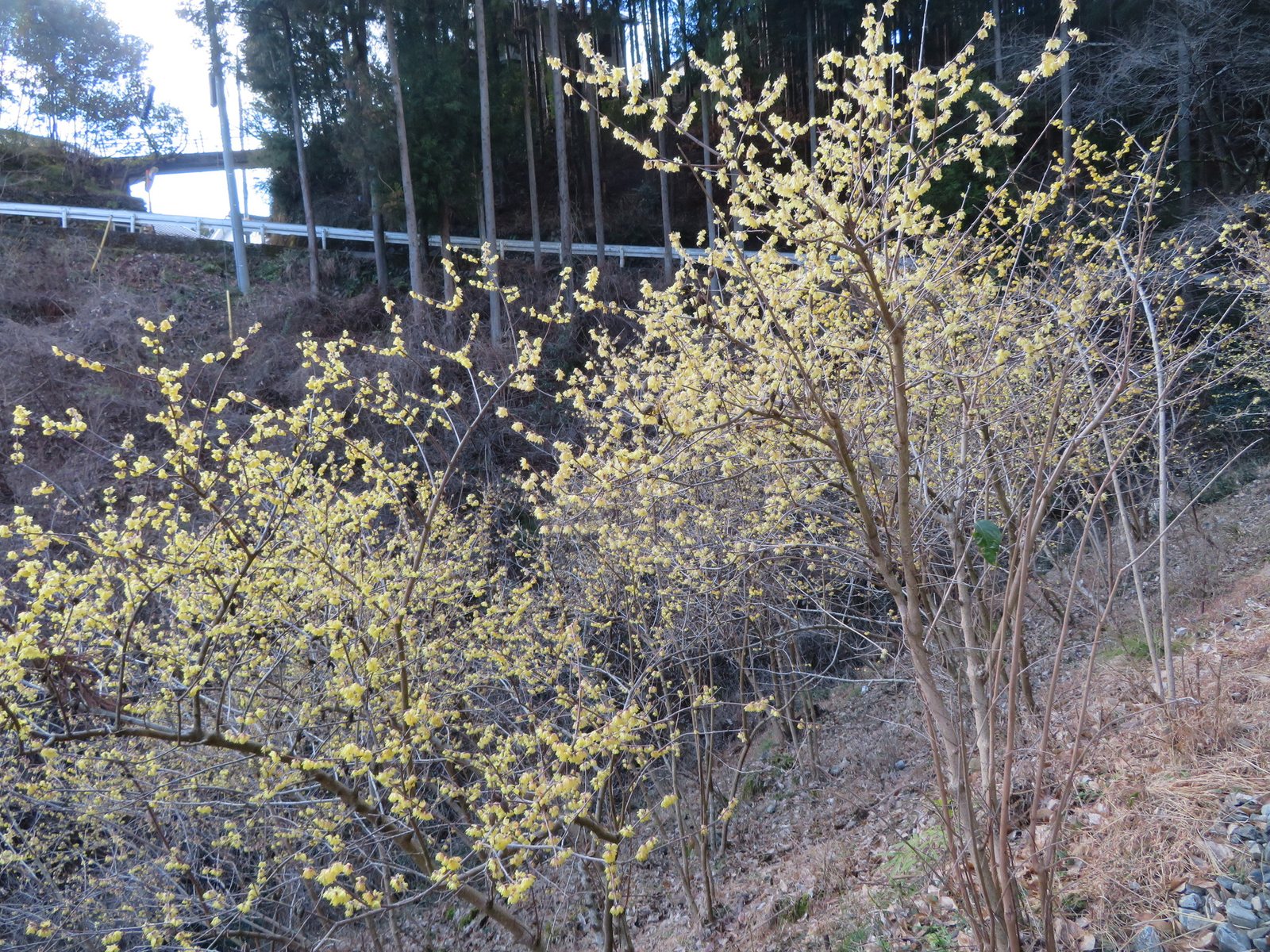
Wintersweet is a large deciduous shrub grown for its intensely fragrant, waxy flowers on bare winter branches. Give it a sheltered, sunny position near a path or doorway, with enough room for its rather plain summer foliage and spreading framework.
At a glance
- Sun
- Full sun is best for flowering; tolerates light partial shade. Shelter from cold, drying winds.
- Water
- Water regularly while establishing, then during prolonged dry spells. Established shrubs tolerate some drought, but flower best without severe summer water stress.
- Soil
- Fertile, well-drained soil that retains some moisture; tolerates acidic, neutral and alkaline conditions. Avoid waterlogged ground.
- Height
- 10-15 ft (3-4.5 m)
- Spread
- 8-12 ft (2.4-3.7 m)
- Flowers
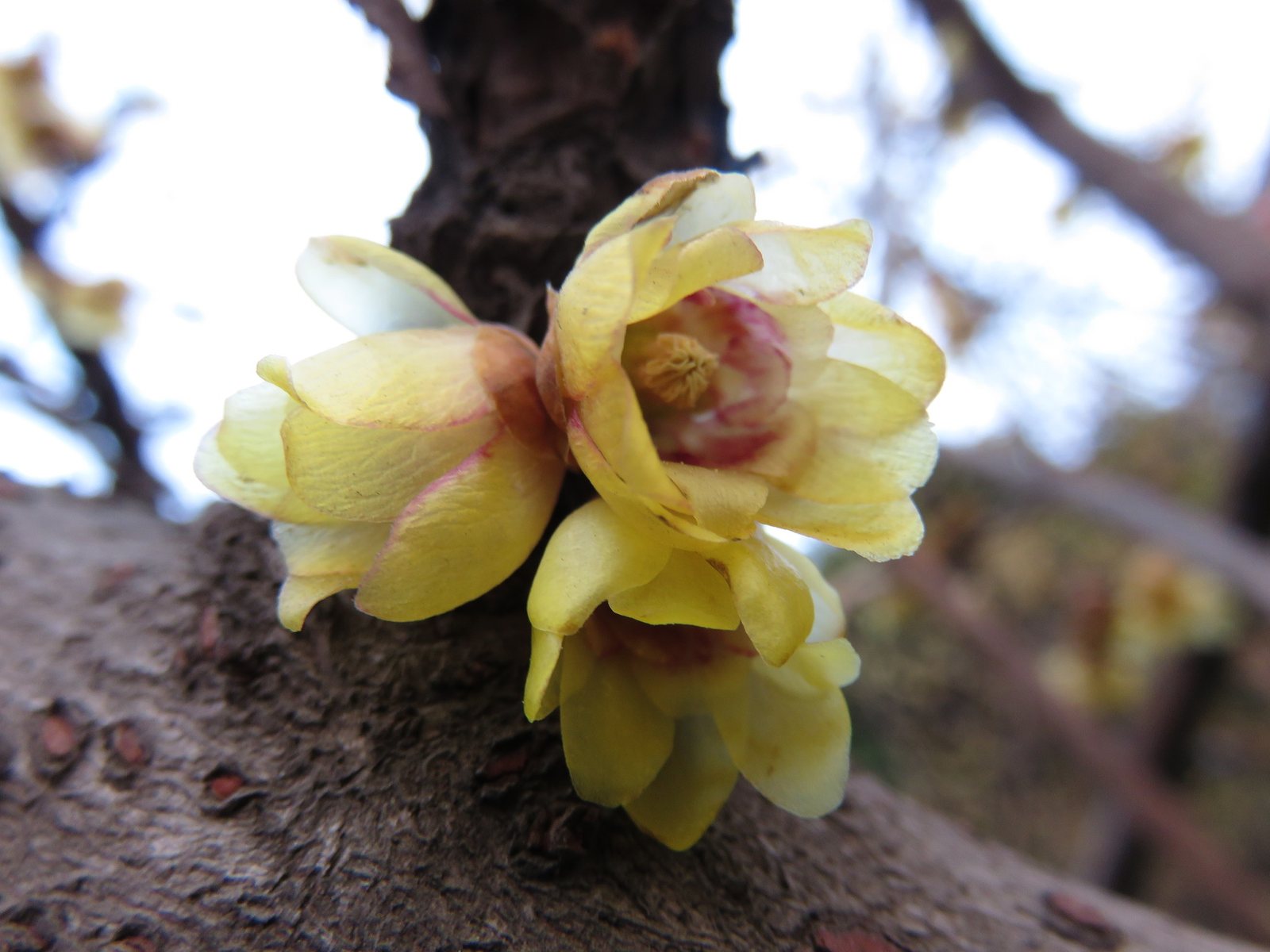
- Winter to early spring, depending on climate; small, translucent pale-yellow flowers, usually with purplish-brown inner petals, strongly fragrant.
- Foliage
- Opposite, pointed, oval leaves with a rough texture; green in summer, sometimes turning yellow before falling in autumn.
- Growth
- Moderate once established; often slow to settle in.
- Care needed
- Low
The year at a glance
- Pollinators
- Low allergen
- Fragrant
| J | F | M | A | M | J | J | A | S | O | N | D | |
|---|---|---|---|---|---|---|---|---|---|---|---|---|
| Flowers | ||||||||||||
| Plant |
Northern hemisphere months. In Australia, shift them by six.
- Difficulty
- Moderate
- Toughness
- Fairly tough
Will it suit your garden?
Pick your zone, country, light and whether you have pets.
Full sun is 6 or more hours of direct sun a day, part shade 3 to 6 hours, shade under 3.
How it grows
Planting day
1.6 ft (0.5 m)
After 1 year
3 ft (1 m)
After 2 years
5 ft (1.5 m)
After 3 years
7 ft (2 m)
After 5 years
10 ft (3 m)
About 7 years to full size.
From a typical nursery size, at an average rate for this kind of plant. A rule of thumb, not a forecast.
Good to know
- Cats and dogs
- Toxic
- Growth rate
- Slow
Care
Jobs through the year
- WaterApr–May, Sep–Oct, every 14 days
- Water established shrubs only when soil is dry; water regularly during the first two growing seasons.
- WaterJun–Aug, every 7 days
- During dry spells, soak deeply to prevent severe summer stress; skip when soil remains moist.
- MulchMar–Apr
- Spread compost or leaf mould over the root area, keeping stems clear.
- PruneMar
- Immediately after flowering, remove damaged or crossing branches and shape only if necessary.
- ProtectJan–Mar, Dec
- Temporarily fleece small flowering shrubs before hard frost; zone 6 plants need a very sheltered site.
- Plant in a sheltered position where summer sun can ripen the wood for winter flowering.
- Water deeply during dry weather for the first two growing seasons.
- Apply a layer of compost or leaf mould each spring, keeping it clear of the stems.
- Feed lightly in spring only if growth is weak or the soil is poor; avoid heavy nitrogen feeding.
- Choose its permanent position carefully, as established shrubs dislike being moved.
Pruning. Prune only when needed, immediately after flowering: remove dead, damaged or crossing branches and shorten awkward shoots. Avoid routine shearing or heavy summer pruning, which removes wood carrying future flowers.
Through the year
- Autumn
- Plant while the soil is workable, or wait until spring where winters are severe.
- Winter
- Enjoy the flowers near paths and entrances; cover a small shrub temporarily if a hard frost threatens open blooms.
- Late winter to early spring
- After flowering, remove damaged or crossing branches and make any necessary shaping cuts.
- Spring
- Mulch with compost or leaf mould and check moisture around newly planted shrubs.
- Summer
- Water young plants during dry spells and leave healthy new shoots untrimmed.
- Late autumn
- Check that surrounding plants are not crowding the shrub or shading its branches.
In the garden
- Place beside a frequently used winter path so the fragrance is easy to enjoy.
- Grow against a sunny, sheltered wall in cooler gardens to help the wood ripen.
- Use at the back of a mixed border, with summer-flowering perennials masking its plain lower branches.
- Underplant with snowdrops, winter aconites and hellebores for a layered winter display.
Garden styles it suits: English country, Traditional, Cottage garden, Sensory garden, Winter interest and Chinese scholar garden.
Plant it with: Snowdrops, Winter aconites, Hellebores, Cyclamen, Sarcococca and Early crocuses.
Wildlife: Flowers can provide food for bees active during mild winter weather. Its branches also offer cover for small birds, but it is not a major wildlife food plant.
Problems to watch for
- Few or no flowers: young seed-grown plants can take 5-10 years or longer to bloom; improve sunlight and avoid heavy feeding or pruning.
- Frost-damaged flowers: choose a sheltered site away from frost pockets; flower buds and open blooms are less hardy than the shrub.
- Scale insects: inspect stems, remove small infestations by hand and use a locally approved treatment if infestations persist.
- Poor growth in wet soil: improve drainage before planting; move a young plant if its roots remain waterlogged.
Safety
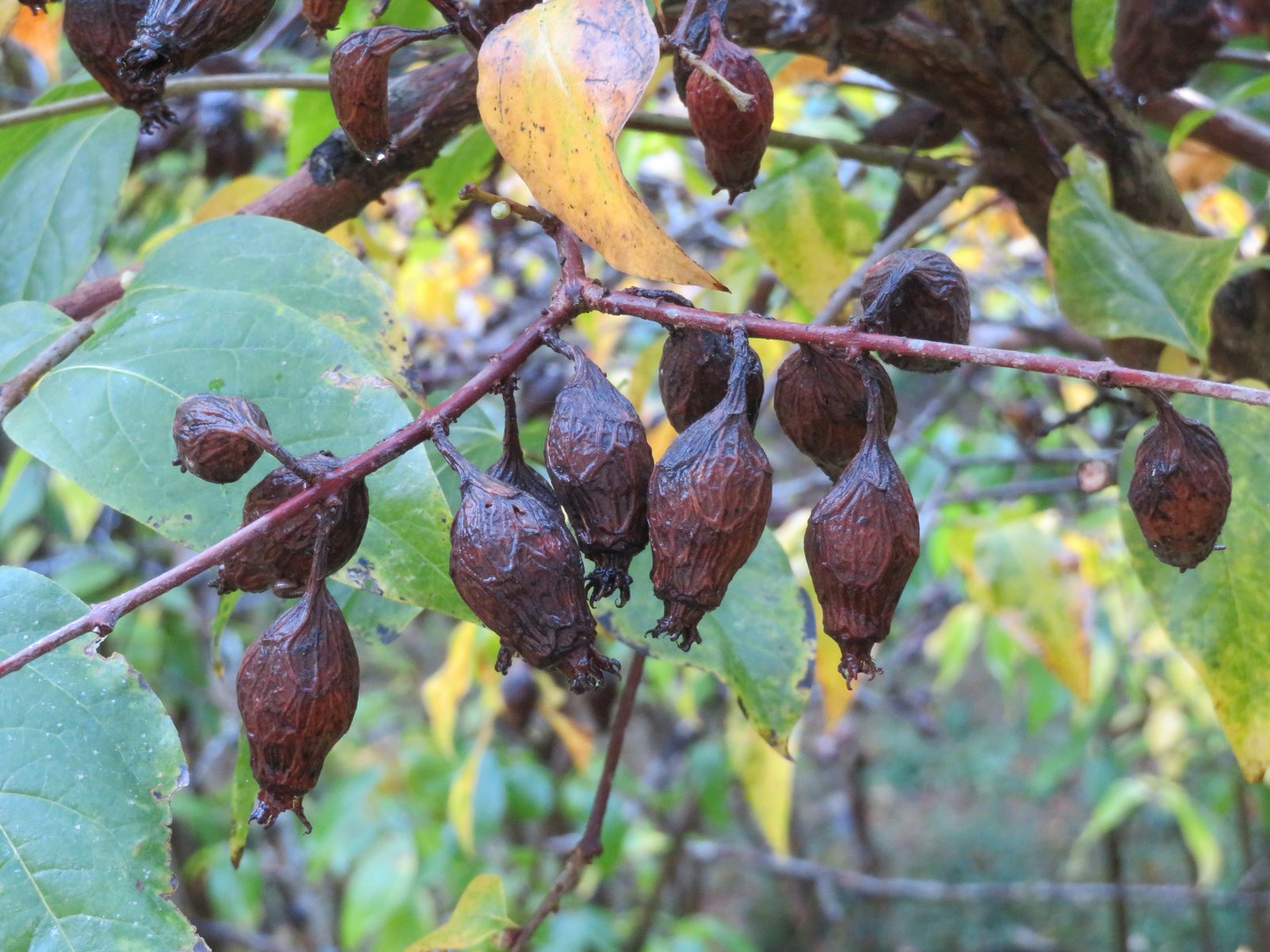
Seeds are poisonous and contain alkaloids that can cause serious poisoning if swallowed. Keep seeds and seed-containing fruits away from children, cats, dogs and horses; species-specific information for these animals is limited, so do not allow ingestion. Seek medical or veterinary advice promptly after suspected ingestion.
Easily confused with
Sweetshrub (Calycanthus floridus)
Usually bears larger, reddish-brown flowers in late spring or summer when leaves are present, rather than pale-yellow flowers on bare winter stems.
Witch hazel (Hamamelis × intermedia)
Winter flowers have narrow, crinkled, ribbon-like petals; wintersweet has broader, waxy petals. Witch hazel leaves are alternate rather than opposite.
Winter-flowering honeysuckle (Lonicera fragrantissima)
Has paired, creamy-white tubular flowers with projecting stamens, rather than rounded flowers made of overlapping waxy petals.
The name
Chimonanthus comes from Greek words meaning winter flower, while praecox means early, referring to its flowering before the leaves appear.
Propagation. Sow fresh seed in autumn, although seedlings vary and may take many years to flower. Layer low branches or take semi-ripe cuttings in summer; rooting can be slow and unreliable. Use vegetative propagation to preserve named cultivars.
Checked against open data
- Accepted botanical name
- Chimonanthus praecox
- Native range
- China North-Central, China South-Central and China Southeast.
- Measured
- Average height 400 cm.
Sources: GBIF (CC BY 4.0) and Trefle (CC BY 4.0). The care and design notes are LandscapeGPT's own.
See it in your own yard.
Upload a photo of your yard and see it redesigned with plants that suit your climate, each checked against your zone.