Wire-netting bush
Corokia cotoneaster. Family Argophyllaceae. Shrub.
Also called Zigzag bush, Korokio.
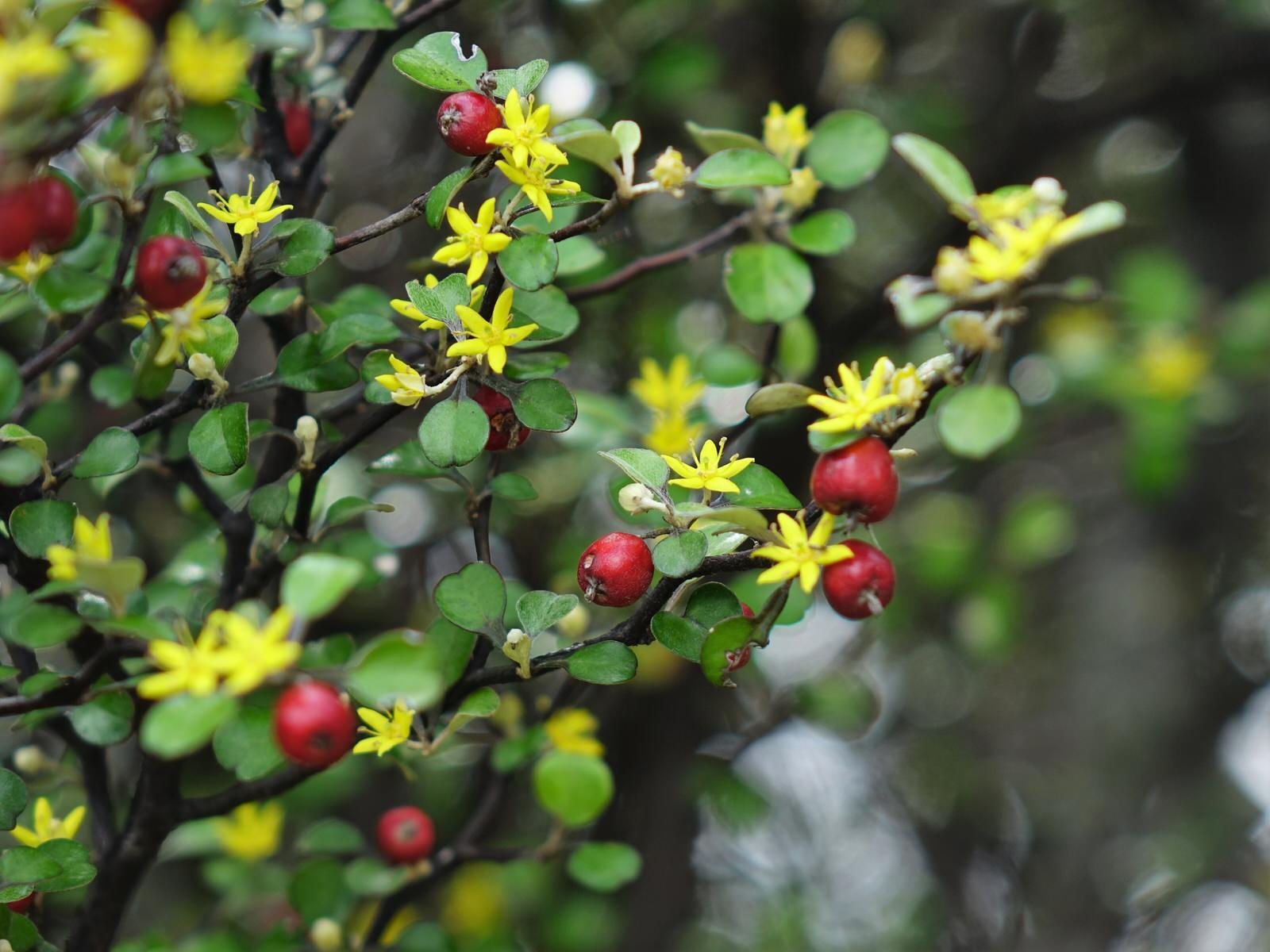
This evergreen New Zealand shrub has tangled, zigzag branches and tiny leaves, giving it an open, wiry outline. Gardeners grow it for its branching pattern, clipped shapes and tolerance of coastal conditions; small yellow flowers and occasional red or yellow fruits add seasonal interest.
At a glance
- Sun
- Full sun or partial shade; growth is denser in good light. Shelter from cold, drying winds in colder gardens.
- Water
- Water regularly while establishing, then during prolonged dry spells. Established plants tolerate some drought but dislike persistently wet roots.
- Soil
- Well-drained soil, including sandy or stony ground; tolerates a range of soil pH levels. Avoid waterlogged clay.
- Height
- 5-10 ft (1.5-3 m)
- Spread
- 4-6 ft (1.2-1.8 m)
- Flowers
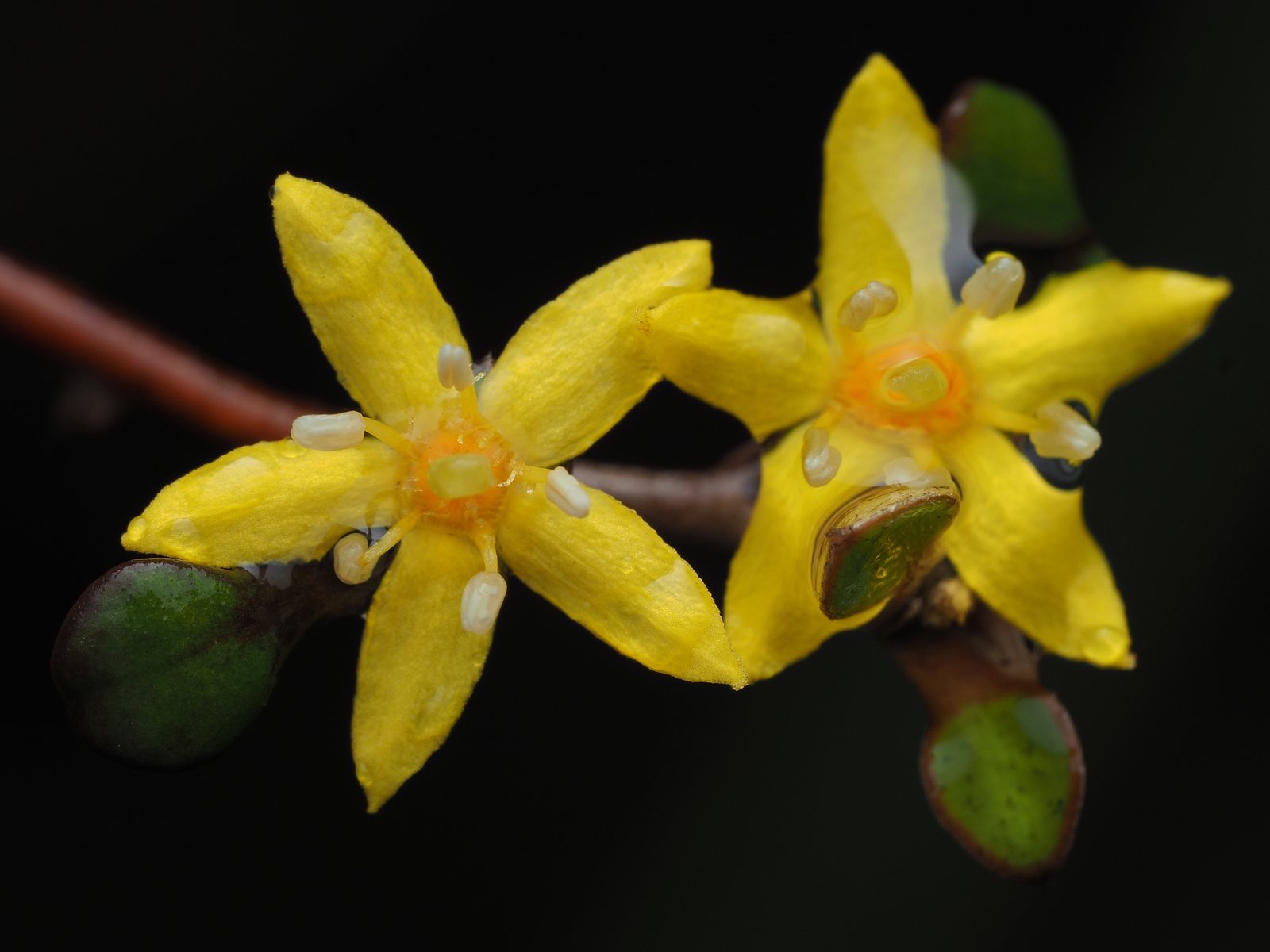
- Small, star-shaped yellow flowers in spring, sometimes continuing into early summer.
- Foliage
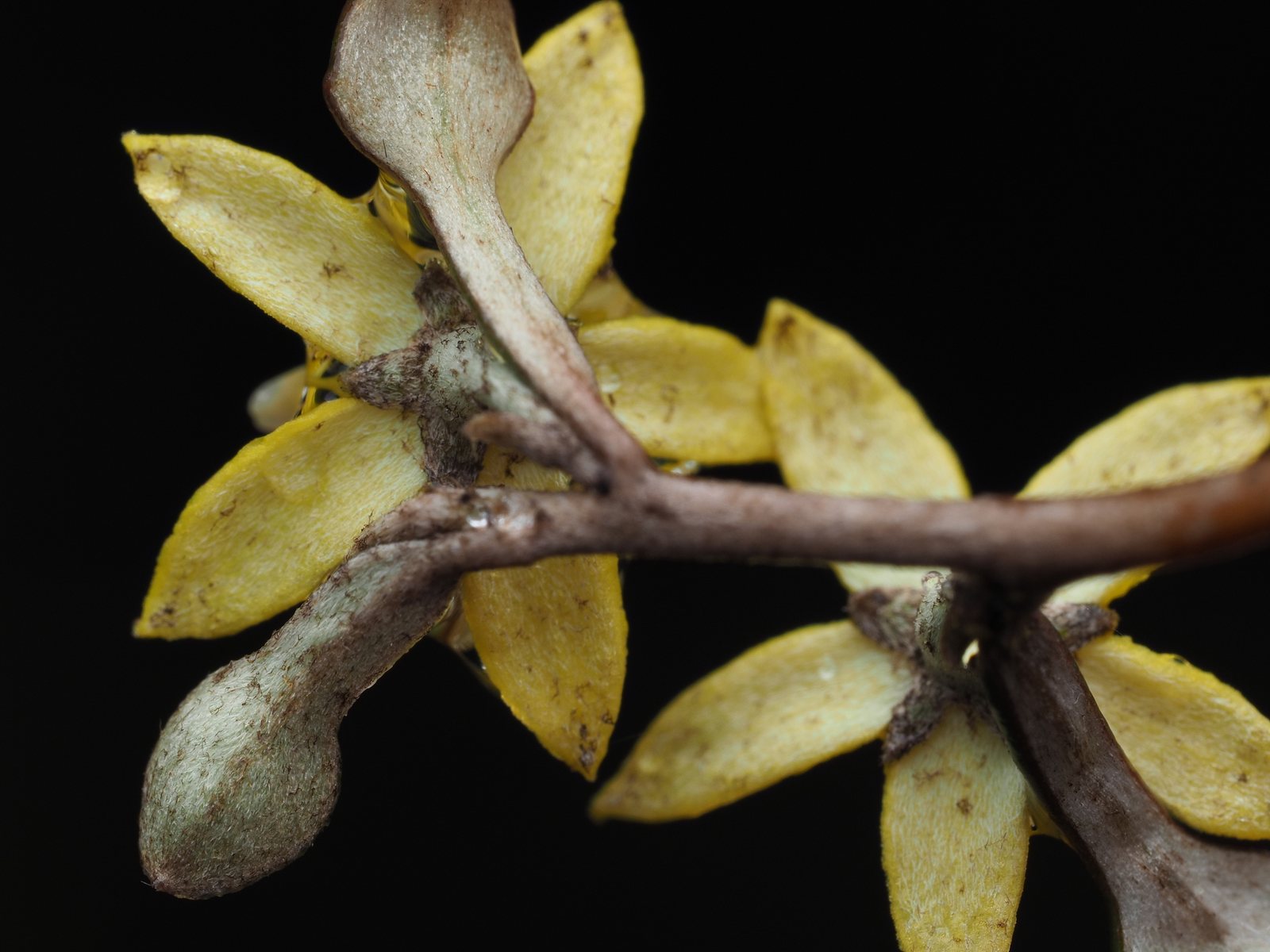
- Evergreen. Tiny, rounded to spoon-shaped, dark green leaves with pale, felted undersides; young shoots are also silvery.
- Growth
- Slow to moderate
- Care needed
- Low
The year at a glance
- Pollinators
- Drought tolerant
- Wildlife
- Low allergen
| J | F | M | A | M | J | J | A | S | O | N | D | |
|---|---|---|---|---|---|---|---|---|---|---|---|---|
| Flowers | ||||||||||||
| Fruit | ||||||||||||
| Plant |
Northern hemisphere months. In Australia, shift them by six.
- Difficulty
- Moderate
- Toughness
- Fairly tough
Will it suit your garden?
Pick your zone, country, light and whether you have pets.
Full sun is 6 or more hours of direct sun a day, part shade 3 to 6 hours, shade under 3.
How it grows
Planting day
1.6 ft (0.5 m)
After 1 year
2.5 ft (0.77 m)
After 2 years
3 ft (1 m)
After 3 years
4 ft (1.3 m)
After 5 years
6 ft (1.8 m)
About 7 years to full size.
From a typical nursery size, at an average rate for this kind of plant. A rule of thumb, not a forecast.
Good to know
- Cats and dogs
- Safe
- Growth rate
- Slow
Care
Jobs through the year
- WaterApr–May, Sep–Oct, every 21 days
- Water established ground plants only if the root zone is dry; young plants and pots need closer monitoring.
- WaterJun–Aug, every 14 days
- Water established ground plants deeply during prolonged dry spells; avoid persistently wet roots.
- WaterJan–Mar, Nov–Dec, every 21 days
- Check sheltered pots and water sparingly before the root ball dries completely.
- FeedApr–May
- Feed lightly only if growth is weak or the soil is poor.
- MulchMay
- Apply a thin mulch around the roots, leaving the stems clear.
- PruneMay–Jun
- Remove dead wood once new growth shows, then trim lightly after flowering if shaping is needed.
- ProtectJan–Apr, Oct–Dec
- Too tender for reliable outdoor winters in zones 6–7; overwinter pots in bright, cool, frost-free shelter.
- Water deeply during the first growing season whenever the root zone starts to dry.
- Plant with the root ball at soil level and improve drainage rather than leaving roots in wet ground.
- Apply a thin mulch in spring, keeping it clear of the stems.
- Feed lightly in spring only if growth is weak or the soil is poor; avoid heavy feeding.
- Use a freely draining potting mix in containers and protect the root ball from hard freezes.
Pruning. Prune lightly after flowering to shorten straggly shoots or maintain a hedge or clipped shape. Remove dead or frost-damaged wood in spring once new growth shows what has survived.
Through the year
- Spring
- Plant in cooler districts once severe frost has passed, and water thoroughly.
- Mid-spring
- Check for winter damage, remove dead shoots and renew mulch.
- Late spring
- Trim after flowering if a compact outline or hedge is wanted.
- Summer
- Water young plants during dry weather and check container plants frequently.
- Late summer
- Take semi-ripe cuttings from healthy, non-flowering shoots.
- Winter
- Protect container roots and shelter young plants during severe freezes; keep drainage holes clear.
In the garden
- Use as a specimen against a plain wall, where the zigzag branches are easy to see.
- Clip into a low hedge or loose geometric shapes for courtyard structure.
- Combine with ornamental grasses and silver-leaved plants in a well-drained gravel border.
- Plant in coastal gardens as a small structural shrub, with shelter from the harshest winds.
- Grow in a large container near an entrance, allowing room for its irregular outline.
Garden styles it suits: Architectural minimal, Coastal, Dry gravel garden, Modern courtyard, Topiary garden and Winter interest.
Plant it with: Lavender, Rosemary, New Zealand flax, Blue fescue, Rockrose and Hebe.
Wildlife: The flowers provide food for visiting insects, and birds may eat ripe fruits. Dense branching can offer shelter for small birds.
Problems to watch for
- Root rot or dieback in wet soil: improve drainage, reduce watering and move plants out of persistently saturated ground.
- Frost scorch on young growth: shelter from cold winds, protect young plants during hard freezes and prune damaged shoots in spring.
- Scale insects: inspect stems and leaf undersides; remove small infestations by hand or use a labelled horticultural oil as directed.
- Sparse, stretched growth in deep shade: move to a brighter position and trim lightly after flowering.
Safety
Not known to be toxic to people, cats, dogs or horses, but species-specific safety information is limited. The fruits and foliage are not food; discourage eating them.
Easily confused with
Hybrid corokia (Corokia × virgata)
Usually has larger, longer leaves and a more upright, less intricately tangled habit; many cultivated forms have coloured foliage.
Shrubby tororaro (Muehlenbeckia astonii)
Also has tangled, wiry branches, but its small leaves are typically heart-shaped and lack the pale, felted undersides of wire-netting bush.
Wall cotoneaster (Cotoneaster horizontalis)
Has flattened, herringbone branching, white to pinkish flowers and red berries; it is usually deciduous rather than evergreen.
The name
Corokia comes from the Māori name korokio, cotoneaster refers to its resemblance to a cotoneaster, and wire-netting bush describes its tangled branches.
Propagation. Take semi-ripe cuttings in late summer and root them in a moist, freely draining medium under cover. Seed is possible but can germinate slowly and unevenly.
Checked against open data
- Accepted botanical name
- Corokia cotoneaster
- Native range
- New Zealand North and New Zealand South.
- Measured
- Average height 85 cm.
Sources: GBIF (CC BY 4.0) and Trefle (CC BY 4.0). The care and design notes are LandscapeGPT's own.
See it in your own yard.
Upload a photo of your yard and see it redesigned with plants that suit your climate, each checked against your zone.