Wonga wonga vine
Pandorea pandorana. Family Bignoniaceae. Climber.
Also called Wonga vine, Spearwood.
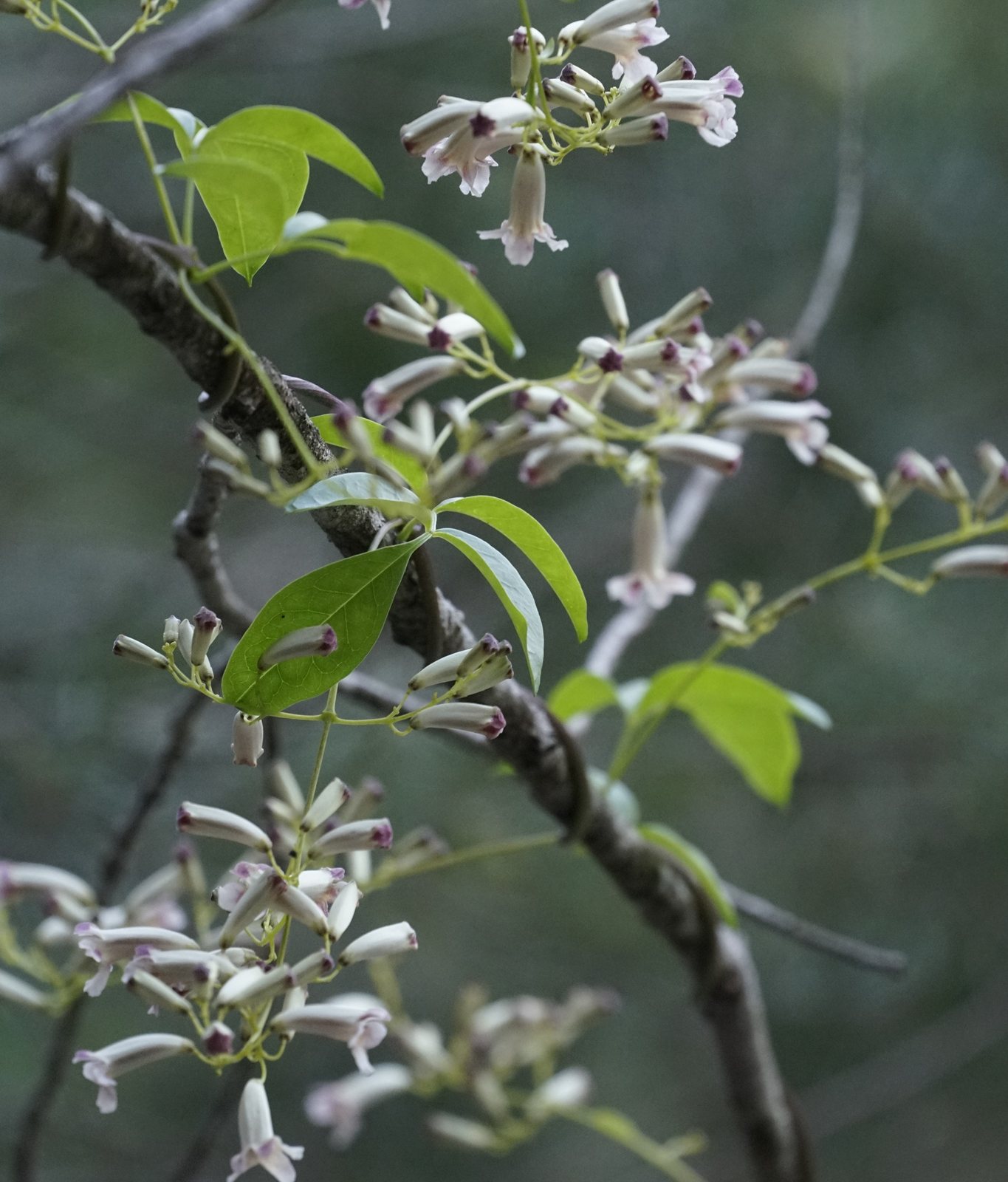
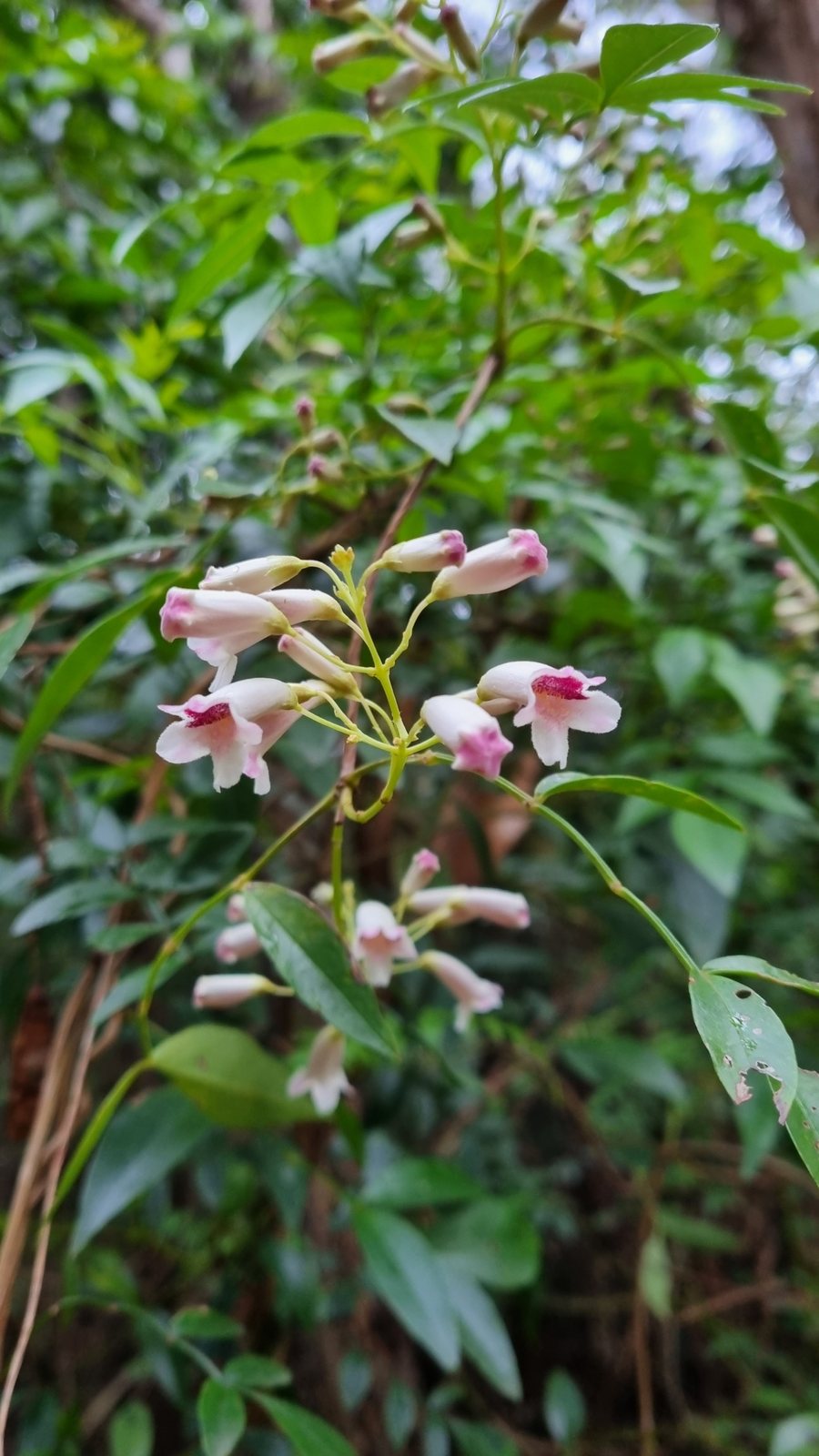
Wonga wonga vine is a vigorous, evergreen Australian climber grown for its hanging clusters of tubular flowers, usually cream with reddish-brown markings inside. It covers pergolas, fences and screens quickly in mild climates, but needs substantial support and regular pruning to keep it within bounds.
At a glance
- Sun
- Full sun to partial shade; flowering is usually best with plenty of sun. Choose a sheltered position in cooler areas.
- Water
- Water regularly while establishing. Established plants tolerate short dry spells, but benefit from deep watering during prolonged drought.
- Soil
- Well-drained soil, including sandy loam and clay loam; improve compacted ground before planting. Avoid persistently waterlogged sites.
- Height
- 15-30 ft (4.5-9 m), potentially taller when climbing through trees
- Spread
- 6-12 ft (1.8-3.7 m), or wider if left unpruned
- Flowers
- Late winter to spring, sometimes into early summer; usually creamy white with reddish-brown or purple markings in the throat. Selected forms may have yellow, golden or pinkish flowers.
- Foliage
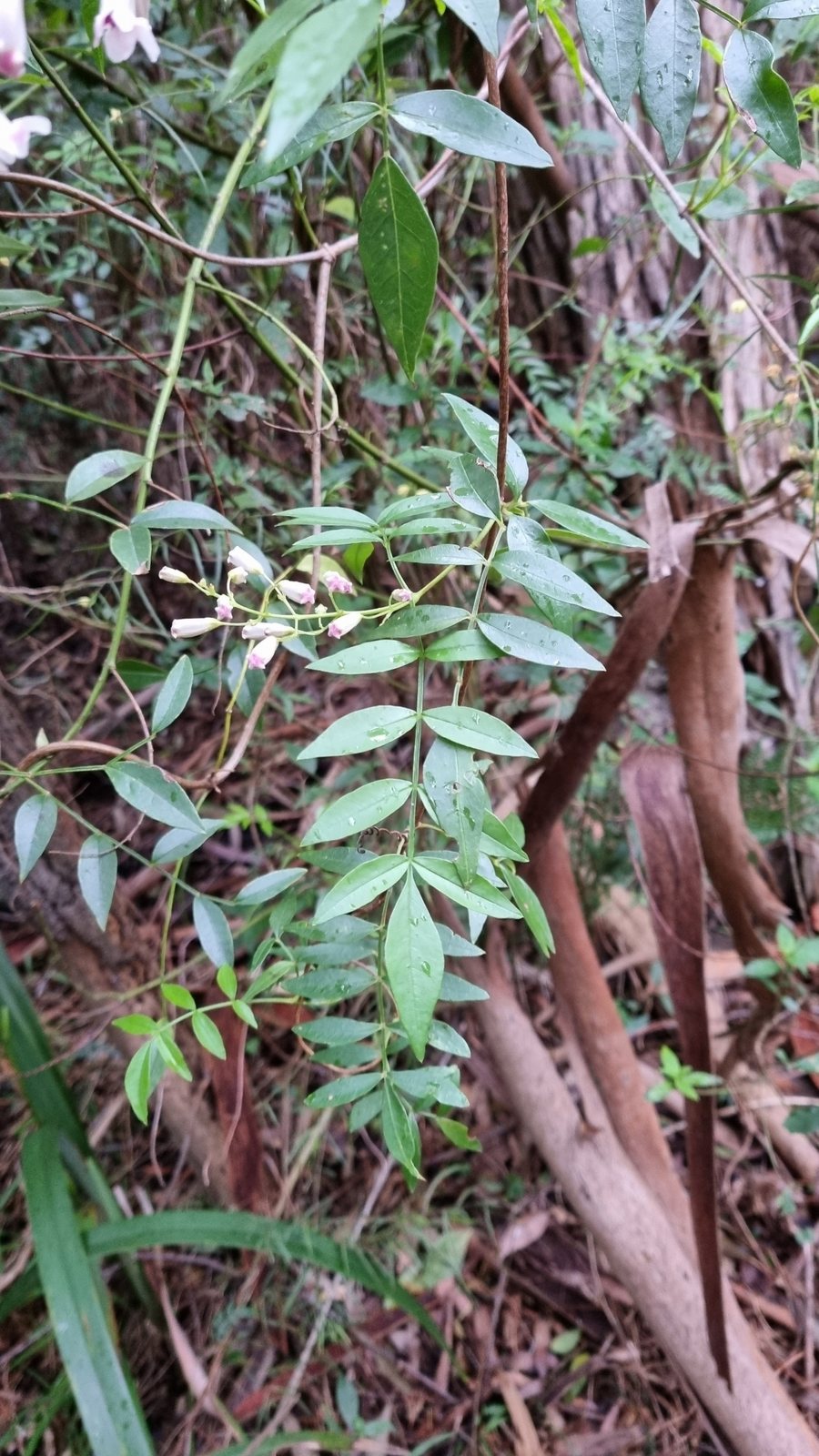
- Evergreen. Glossy green, divided leaves with several leaflets; juvenile foliage can be more finely divided than mature foliage.
- Growth
- Fast once established
- Care needed
- Medium
The year at a glance
- Pollinators
- Heat tolerant
- Wildlife
- Low allergen
| J | F | M | A | M | J | J | A | S | O | N | D | |
|---|---|---|---|---|---|---|---|---|---|---|---|---|
| Flowers | ||||||||||||
| Plant |
Northern hemisphere months. In Australia, shift them by six.
- Difficulty
- Moderate
- Toughness
- Fairly tough
Will it suit your garden?
Pick your zone, country, light and whether you have pets.
Full sun is 6 or more hours of direct sun a day, part shade 3 to 6 hours, shade under 3.
How it grows
Planting day
2 ft (0.6 m)
After 1 year
3 ft (1.1 m)
After 2 years
5 ft (1.5 m)
After 3 years
6 ft (1.8 m)
full size
About 3 years to full size.
From a typical nursery size, at an average rate for this kind of plant. A rule of thumb, not a forecast.
Good to know
- Cats and dogs
- Safe
- Native to
- Australia
- Growth rate
- Fast
Care
Jobs through the year
- WaterApr–May, Sep–Oct, every 14 days
- Water established in-ground plants during dry spells; young plants and pots need more frequent checks.
- WaterJun–Aug, every 7 days
- Water established roots deeply during drought; allow the soil surface to begin drying.
- WaterJan–Mar, Nov–Dec, every 21 days
- For frost-free overwintered pots, water sparingly when needed without letting the root ball dry completely.
- FeedApr
- Feed lightly only if growth is weak; avoid excessive nitrogen.
- MulchMay
- Apply organic mulch over the root area, keeping the main stem clear.
- PruneMay–Jun
- After the main flowering display, shorten long shoots and remove tangled or misplaced growth.
- ProtectMay–Aug, every 14 days
- Guide young stems onto sturdy supports and keep shoots away from gutters and small trees.
- ProtectSep–Oct
- Move container plants into bright, frost-free shelter before frost; outdoor winter survival is unreliable in zones 6–7.
- Provide a sturdy trellis, pergola or wire framework before planting; this vine twines rather than clinging to bare walls.
- Water deeply during the first growing season, allowing the surface soil to begin drying between waterings.
- Apply organic mulch over the root area, keeping it clear of the main stem.
- Feed lightly in spring if growth is weak; avoid heavy nitrogen feeding, which encourages leafy growth at the expense of flowers.
- Guide young stems onto supports and keep growth away from gutters, roof spaces and small trees.
- Protect young plants from frost; in cold climates, grow in a large container that can be moved into a bright, frost-free space.
Pruning. Prune just after the main flowering display, shortening long shoots and removing tangled, damaged or unwanted stems. Avoid heavy pruning before flowering, because this can remove the coming display.
Through the year
- Spring
- Plant after damaging frosts have passed, water thoroughly and secure young stems to their support.
- Late spring
- After flowering, shorten excessive growth and remove tangled or misplaced stems.
- Summer
- Check supports, guide new shoots and water deeply during extended dry weather.
- Autumn
- Refresh mulch where needed and move container plants under cover before frost in cold regions.
- Winter
- Keep sheltered container plants in good light and water sparingly without letting the root ball dry out completely.
In the garden
- Train over a strong pergola so the flower clusters hang where they can be seen from below.
- Cover a substantial fence or wire screen to provide evergreen privacy.
- Train against a sunny, sheltered wall using wires to support the twining stems.
- Use as a flowering backdrop to Australian native shrubs, keeping its stems out of their canopies.
Garden styles it suits: Australian native, Coastal, Modern courtyard, Mediterranean, Wildlife garden and Romantic rose garden.
Plant it with: Westringia, Bottlebrush, Lomandra, Dianella and Kangaroo paw.
Wildlife: The tubular flowers provide nectar for insects and nectar-feeding birds in its native range. Dense established growth can provide shelter for small birds.
Problems to watch for
- Frost damage: young shoots and leaves may blacken; protect vulnerable plants and wait until spring growth starts before cutting back damaged stems.
- Poor flowering: deep shade, excessive nitrogen or pruning before bloom can reduce flowers; improve light, reduce feeding and prune after flowering.
- Root rot in wet soil: improve drainage and avoid frequent watering while the ground remains wet.
- Scale insects: inspect stems and leaf undersides; remove small infestations by hand or use a horticultural oil labelled for the plant and pest.
Safety
Not known to be toxic to people, cats, dogs or horses, but species-specific safety information is limited. It is not an edible plant; discourage pets and children from chewing any part.
Easily confused with
Bower vine (Pandorea jasminoides)
Bower vine usually has larger, more open trumpet-shaped flowers, often pale pink or white with a strong pink throat. Wonga wonga vine usually carries smaller, narrower flowers in more numerous hanging clusters.
Trumpet vine (Campsis radicans)
Trumpet vine is deciduous, has conspicuously toothed leaflets and clings using aerial roots. Its large orange to red trumpets appear in summer, unlike the usually cream, spring-flowering wonga wonga vine.
The name
The botanical name Pandorea refers to Pandora of Greek mythology.
Propagation. Take semi-ripe cuttings during summer and root them in a free-draining propagation mix with warmth and humidity. Seed is another option, but seedlings may not retain the flower colour or other features of named selections.
Checked against open data
- Accepted botanical name
- Pandorea pandorana
- Native range
- Lesser Sunda Is., Maluku, New Caledonia, New Guinea, New South Wales, Norfolk Is., Northern Territory, Queensland, Solomon Is., Tasmania, Vanuatu and Victoria.
- Measured
- Average height 75 cm.
Sources: GBIF (CC BY 4.0) and Trefle (CC BY 4.0). The care and design notes are LandscapeGPT's own.
See it in your own yard.
Upload a photo of your yard and see it redesigned with plants that suit your climate, each checked against your zone.