Wood anemone
Anemone nemorosa. Family Ranunculaceae. Perennial.
Also called Windflower, European wood anemone.
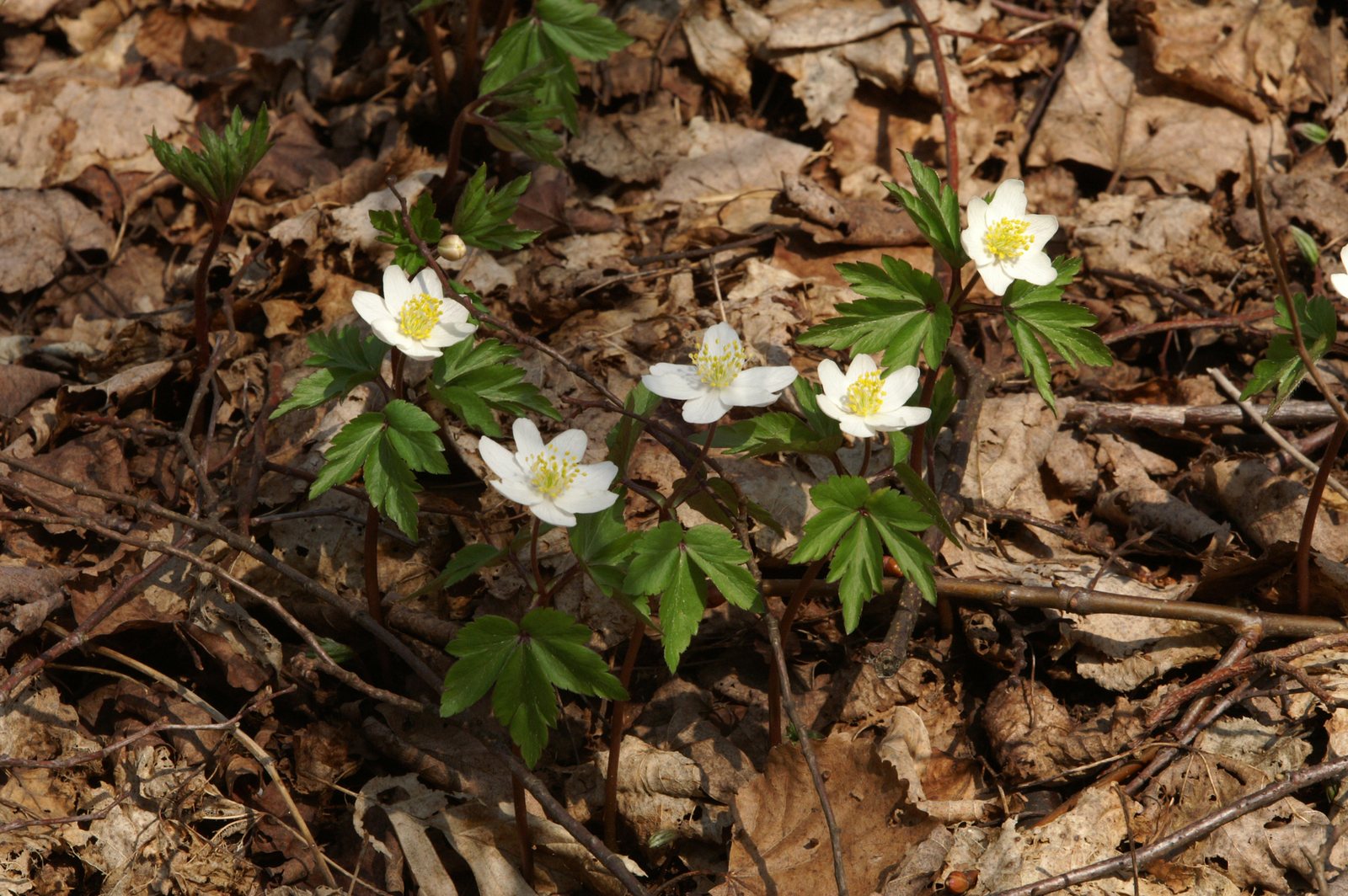
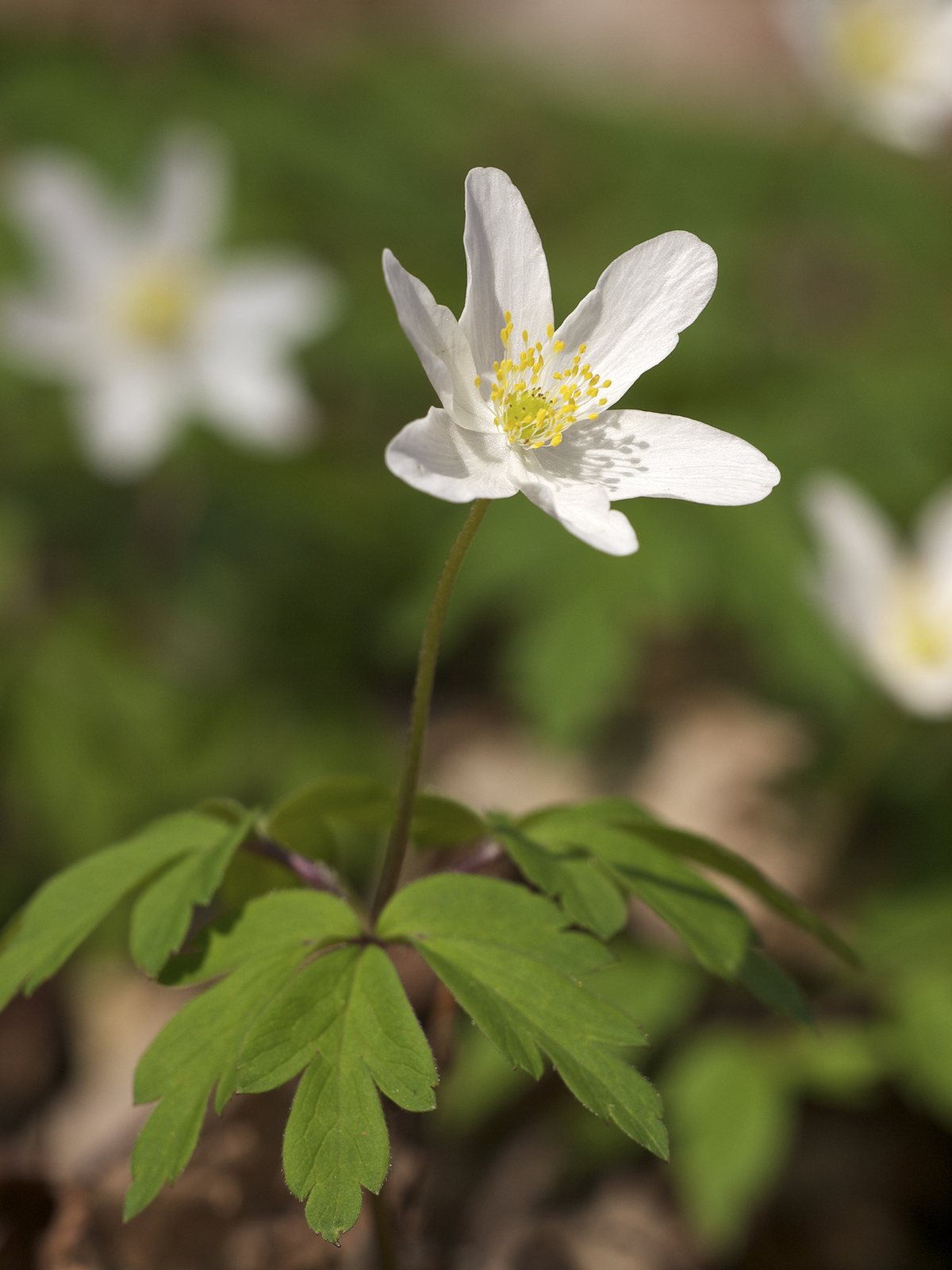
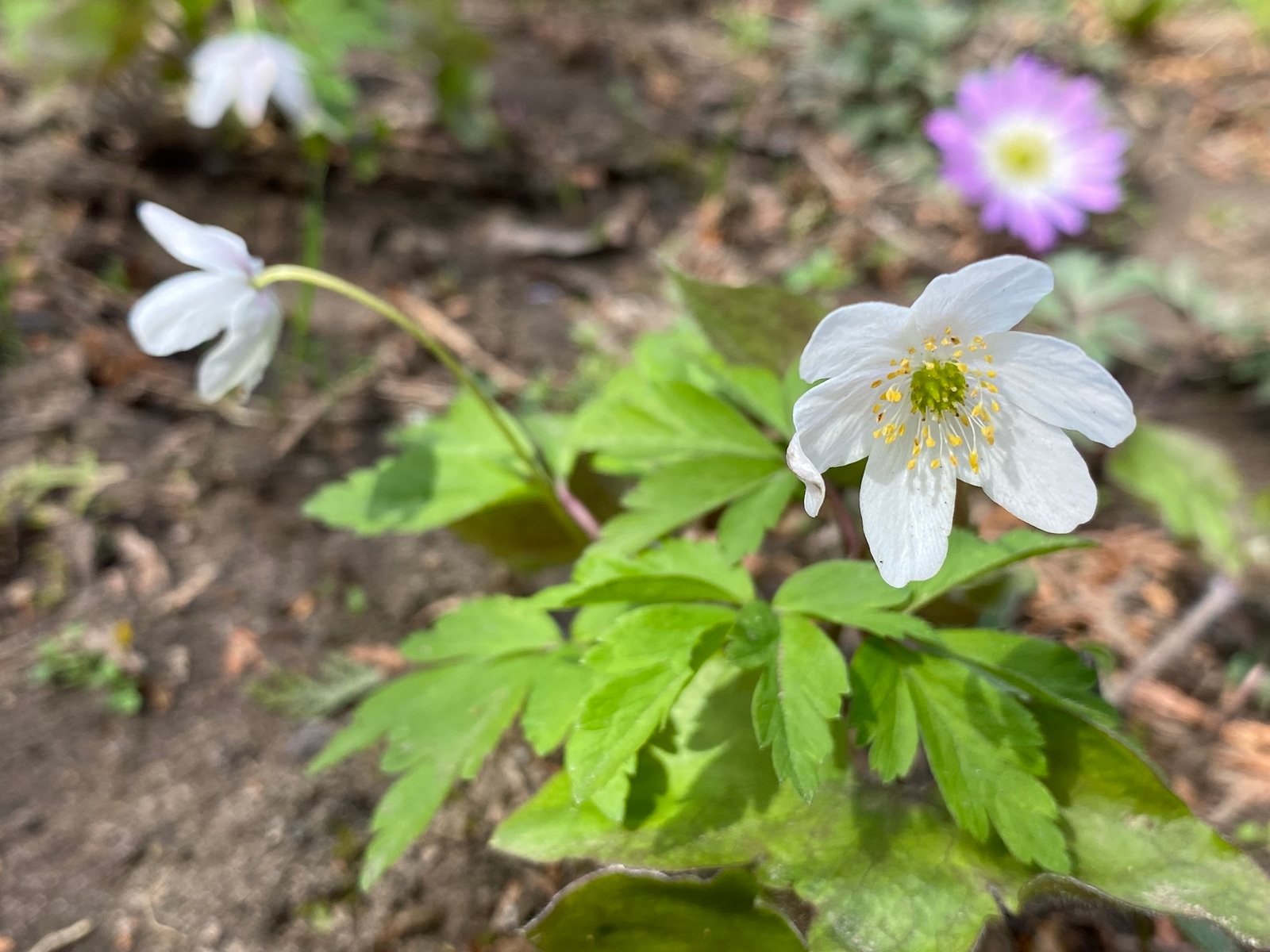
Wood anemone is a low, rhizomatous woodland perennial grown for its white spring flowers and finely divided leaves. It slowly forms carpets beneath deciduous trees and shrubs, then dies back in summer, leaving room for later-growing shade plants.
At a glance
- Sun
- Partial shade or dappled shade; spring sunshine beneath deciduous trees is ideal.
- Water
- Keep evenly moist during spring growth without waterlogging. Established dormant plants tolerate some summer dryness, but avoid sites that bake dry.
- Soil
- Humus-rich, well-drained soil that retains moisture; tolerates a broad range of soil pH.
- Height
- 0.3-0.7 ft (0.1-0.2 m)
- Spread
- 1-2 ft (0.3-0.6 m), gradually widening into a larger colony
- Flowers
- Early to mid-spring; usually white, sometimes flushed pink or purple on the reverse. Flowers close in dull weather and at night.
- Foliage
- Deeply divided green leaves form a low spring carpet; foliage yellows and disappears in summer.
- Growth
- Slow to establish, then steadily spreading by shallow rhizomes.
- Care needed
- Low
The year at a glance
- Pollinators
- Deer resistant
- Low allergen
| J | F | M | A | M | J | J | A | S | O | N | D | |
|---|---|---|---|---|---|---|---|---|---|---|---|---|
| Flowers | ||||||||||||
| Plant |
Northern hemisphere months. In Australia, shift them by six.
- Difficulty
- Easy
- Toughness
- Fairly tough
Will it suit your garden?
Pick your zone, country, light and whether you have pets.
Full sun is 6 or more hours of direct sun a day, part shade 3 to 6 hours, shade under 3.
How it grows
Planting day
0.5 ft (0.15 m)
full size
About 5 years to full size.
From a typical nursery size, at an average rate for this kind of plant. A rule of thumb, not a forecast.
Good to know
- Cats and dogs
- Toxic
- In the garden
- Spreads vigorously: plan to contain it.
- Growth rate
- Slow
Care
Jobs through the year
- WaterMar–May, every 7 days
- Check moisture and water during dry spells while growing; newly planted rhizomes must not dry out.
- DivideMay–Jun
- Divide established patches after flowering only if needed; replant moist rhizomes promptly.
- MulchOct–Nov
- Apply a light layer of leaf mould without disturbing shallow rhizomes.
- Plant fresh rhizomes horizontally about 2 in (5 cm) deep in autumn; do not let them dry out before planting.
- Water during dry spells while leaves and flowers are growing.
- Apply a light layer of leaf mould or well-rotted compost in autumn.
- Avoid digging or hoeing through the shallow rhizomes.
- Divide established patches after flowering if you want to extend the planting.
Pruning. No routine pruning is needed. Let leaves yellow naturally before removing them; cutting green foliage weakens the rhizomes.
Through the year
- Early spring
- Check soil moisture as shoots emerge and water if the ground is dry.
- Mid-spring
- Enjoy the flowers and remove weeds by hand without disturbing the shallow rhizomes.
- Late spring
- Divide crowded patches after flowering, keeping the rhizomes moist and replanting promptly.
- Summer
- Allow foliage to die back naturally and mark dormant patches to avoid digging into them.
- Autumn
- Plant fresh rhizomes and add a light mulch of leaf mould.
In the garden
- Plant beneath deciduous trees for a carpet of flowers before the canopy closes.
- Naturalise in lightly shaded woodland borders among ferns and other shade perennials.
- Edge a shaded path where the small flowers can be seen close up.
- Combine with hostas, whose emerging leaves help fill the space as the anemones become dormant.
Garden styles it suits: Woodland, English country, Cottage garden, Romantic rose garden, White garden and Low-maintenance.
Plant it with: Snowdrops, Primroses, Hellebores, Hostas, Hardy ferns and Lungwort.
Wildlife: Spring flowers provide pollen for visiting bees and other insects, though little or no nectar. Retained leaf litter around the planting shelters small invertebrates.
Problems to watch for
- Poor establishment: dried-out rhizomes can fail; buy fresh stock or growing plants and plant promptly.
- Rhizome rot in waterlogged soil: improve drainage or move the planting to a better-drained site.
- Slug and snail damage to young shoots: inspect during damp weather and remove pests by hand.
- Weak growth or few flowers in very deep shade: move some rhizomes to a site with more spring light.
Safety
All parts are toxic to people, cats, dogs and horses if eaten, especially when fresh. Chewing releases an irritant that can cause mouth pain, drooling, vomiting or diarrhoea; substantial ingestion can be serious. Sap may irritate skin, so wear gloves when dividing.
Easily confused with
Yellow wood anemone (Anemone ranunculoides)
Has similar divided foliage and creeping rhizomes, but bears yellow rather than white flowers.
Grecian windflower (Anemone blanda)
Has daisy-like flowers with many more narrow petal-like segments, often blue, pink or white, and grows from compact tubers rather than long creeping rhizomes.
The name
The species name nemorosa means 'of woods', referring to its woodland habitat.
Propagation. Divide rhizomes after flowering or during autumn dormancy and replant immediately. Fresh seed can be sown outdoors, but germination is slow and irregular, and seedlings take several years to flower.
Checked against open data
- Accepted botanical name
- Anemone nemorosa
- In the US and Canada
- Introduced in the lower 48 states.
Sources: GBIF (CC BY 4.0) and USDA PLANTS. The care and design notes are LandscapeGPT's own.
See it in your own yard.
Upload a photo of your yard and see it redesigned with plants that suit your climate, each checked against your zone.