Wood vamp
Decumaria barbara. Family Hydrangeaceae. Climber.
Also called Climbing hydrangea, American climbing hydrangea.
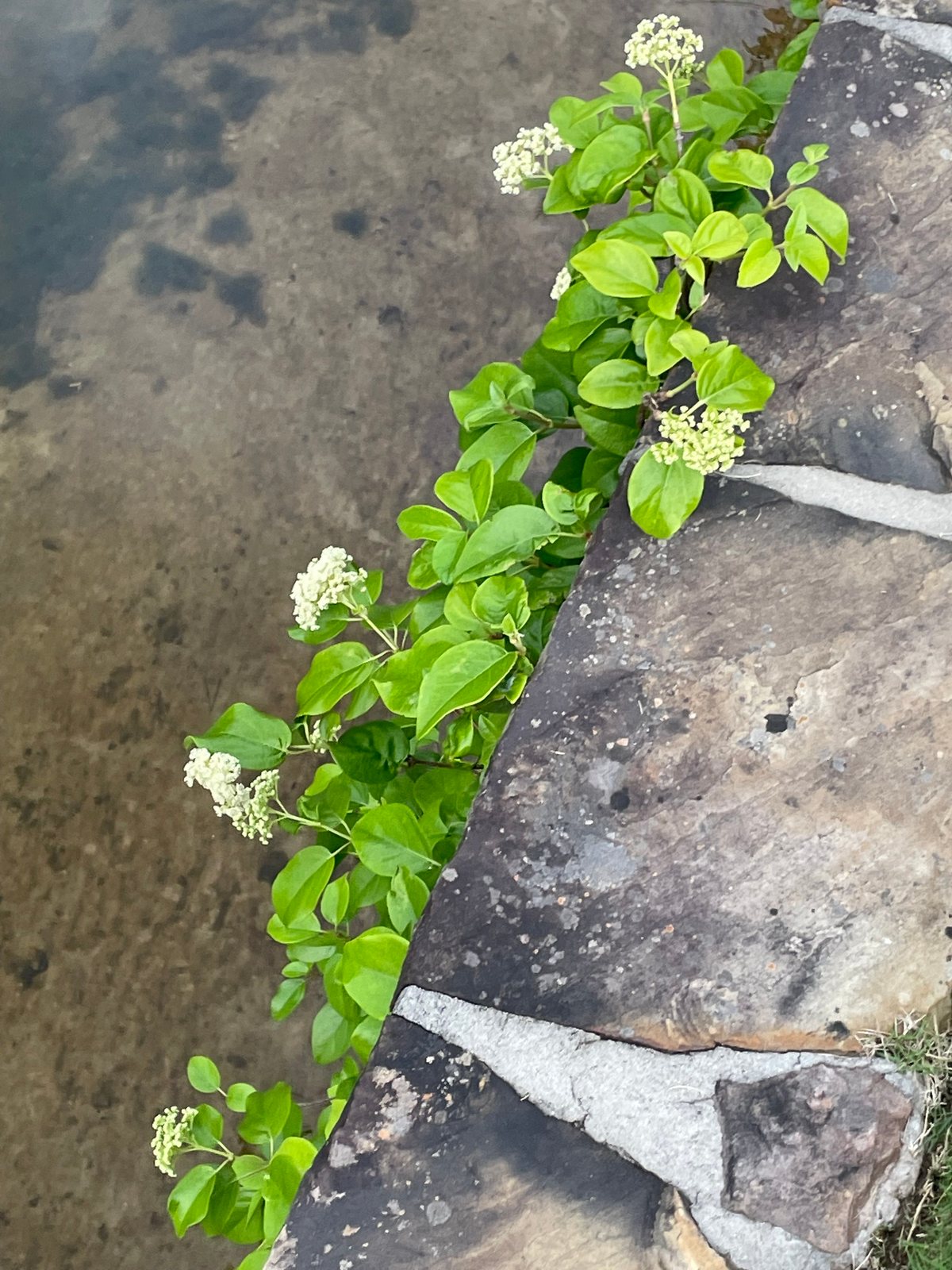
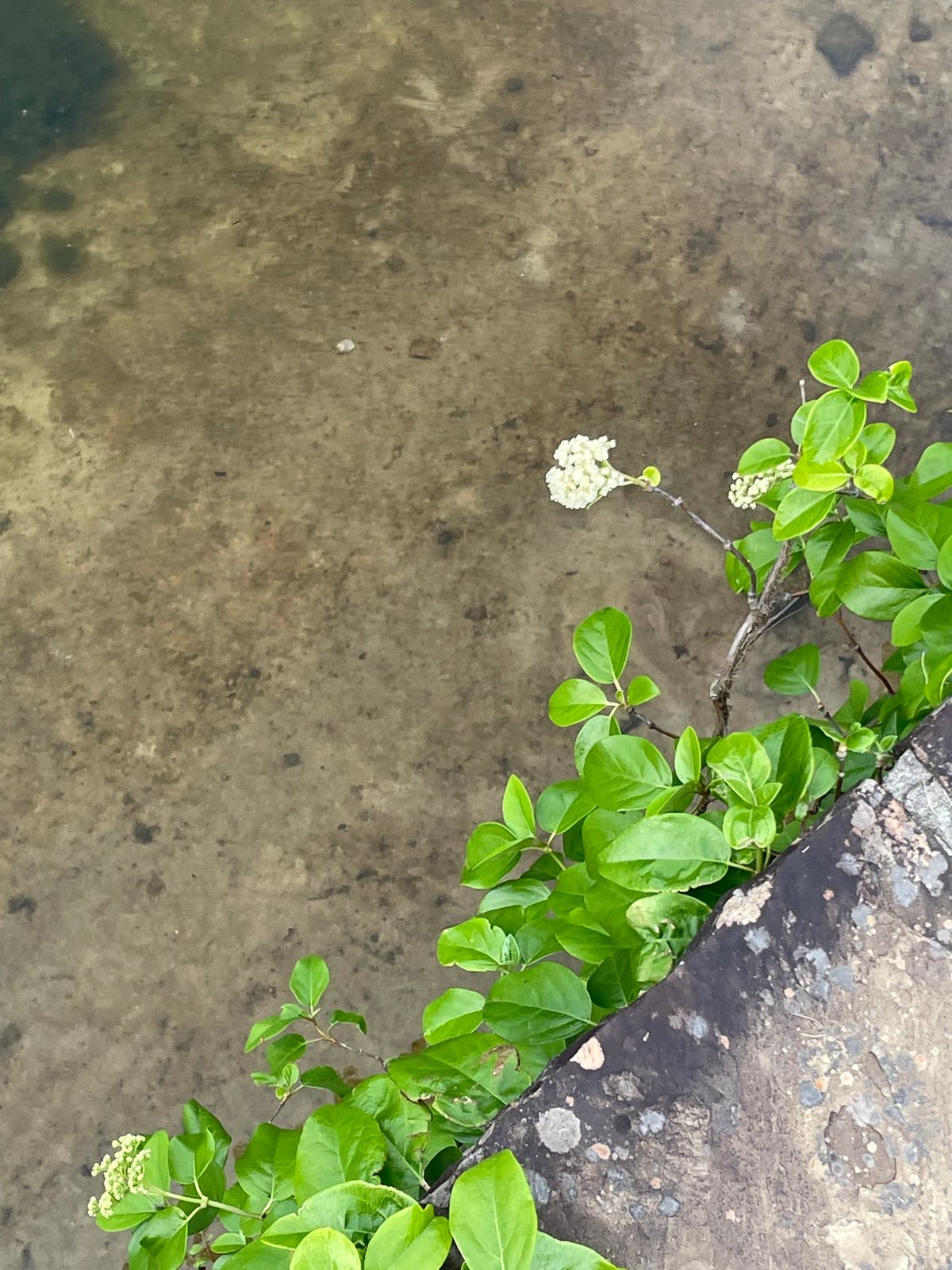
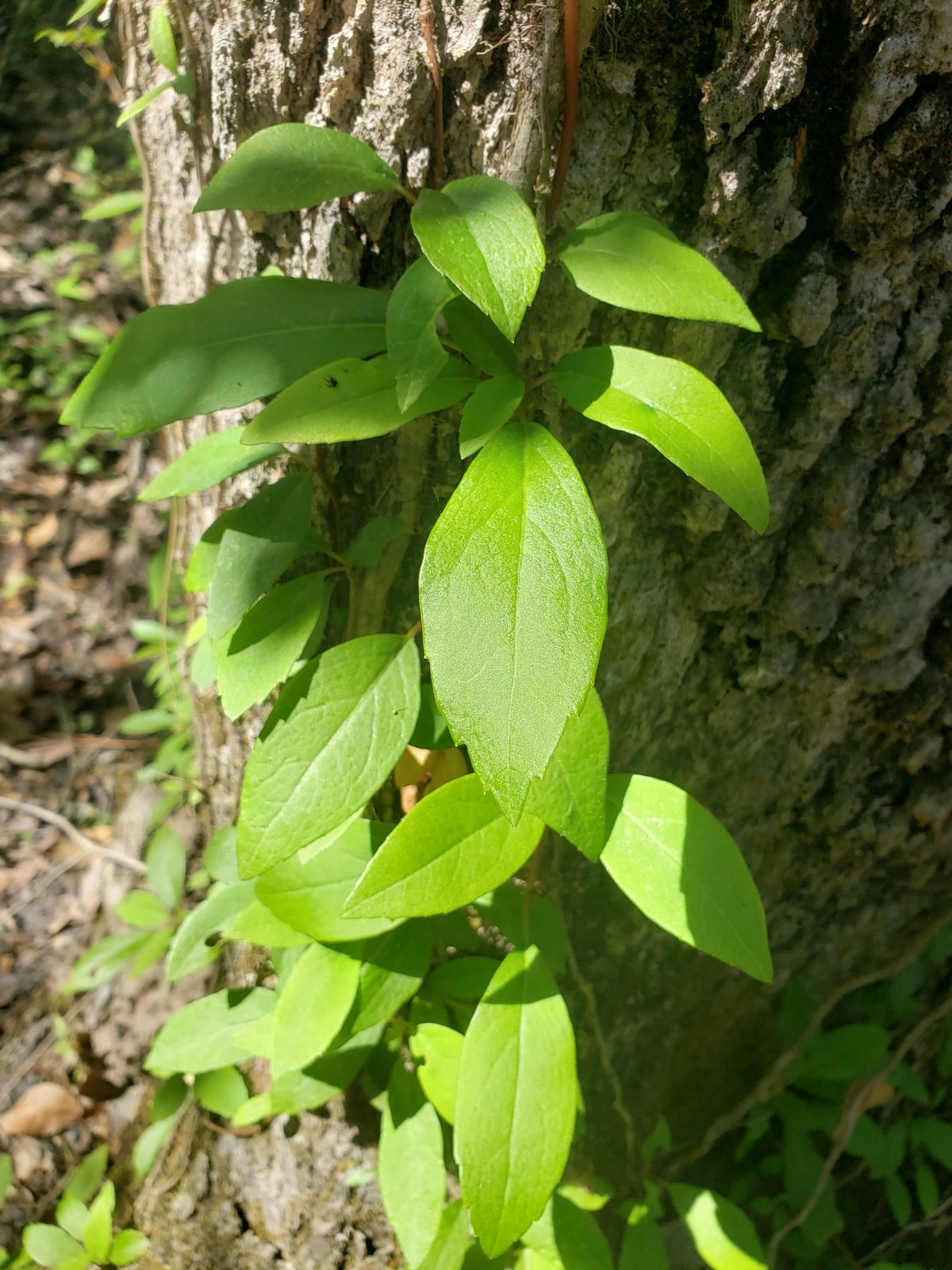
Wood vamp is a woody, self-clinging vine native to the southeastern United States, grown for glossy leaves and fragrant clusters of small white flowers. It suits shaded walls and woodland gardens, but usually flowers only when allowed to climb; plants spreading along the ground mainly provide foliage.
At a glance
- Sun
- Partial shade is ideal; tolerates full shade, though flowering may be reduced. Full sun is suitable where the roots stay consistently moist.
- Water
- Keep the soil evenly moist, especially during establishment and hot weather. Established plants tolerate brief dry spells but do poorly in prolonged drought.
- Soil
- Humus-rich, moist soil, preferably acidic to neutral. Tolerates seasonally wet ground, but avoid permanently stagnant conditions.
- Height
- 20-30 ft (6-9 m), potentially taller on a mature tree
- Spread
- 6-10 ft (1.8-3 m), depending on support and pruning
- Flowers
- Late spring to early summer; fragrant, creamy-white flowers in broad clusters on established climbing growth.
- Foliage
- Opposite, glossy green, oval leaves with smooth or lightly toothed edges; sometimes yellow in autumn. Usually deciduous, but may retain some leaves in mild climates.
- Growth
- Slow to establish, then moderate to fast in moist, sheltered conditions.
- Care needed
- Medium
The year at a glance
- Pollinators
- Heat tolerant
- Wildlife
- Low allergen
- Fragrant
| J | F | M | A | M | J | J | A | S | O | N | D | |
|---|---|---|---|---|---|---|---|---|---|---|---|---|
| Flowers | ||||||||||||
| Plant |
Northern hemisphere months. In Australia, shift them by six.
- Difficulty
- Moderate
- Toughness
- Fairly tough
Will it suit your garden?
Pick your zone, country, light and whether you have pets.
Full sun is 6 or more hours of direct sun a day, part shade 3 to 6 hours, shade under 3.
How it grows
Planting day
2 ft (0.6 m)
After 1 year
3 ft (0.9 m)
After 2 years
4 ft (1.2 m)
After 3 years
5 ft (1.5 m)
After 5 years
6 ft (1.8 m)
full size
About 4 years to full size.
From a typical nursery size, at an average rate for this kind of plant. A rule of thumb, not a forecast.
Good to know
- Cats and dogs
- Safe
- Growth rate
- Moderate
Care
Jobs through the year
- WaterApr–May, Sep–Oct, every 10 days
- Water established plants when soil begins drying; young plants need closer attention.
- WaterJun–Aug, every 7 days
- Water deeply during dry weather, maintaining moist but well-drained soil.
- MulchMar–Apr
- Apply 5–8 cm of compost or leaf mould, keeping stems clear.
- PruneFeb–Mar
- Remove dead or damaged stems only; avoid routine hard pruning.
- PruneJun–Jul
- Immediately after flowering, shorten wayward shoots and clear windows and gutters.
- ProtectApr–Jun
- Tie young shoots to a sound support until aerial roots attach.
- Water deeply during dry spells for the first two growing seasons, and thereafter when the root zone begins to dry.
- Apply a 2-3 in (5-8 cm) mulch of leaf mould or compost, keeping it clear of the main stems.
- Provide a sturdy support and tie in young shoots until their aerial rootlets take hold.
- Use sound masonry or a robust climbing structure; avoid damaged mortar, painted surfaces and gutters.
- Top-dress with compost in spring; avoid heavy nitrogen feeding, which encourages leafy growth rather than flowers.
Pruning. Prune immediately after flowering to shorten wayward shoots and keep growth away from roofs, windows and gutters. Remove dead or damaged stems in late winter, and avoid routine hard pruning because it can delay flowering.
Through the year
- Early spring
- Plant when the soil is workable, water thoroughly and guide stems onto their support.
- Spring
- Refresh the mulch and check ties, leaving room for stems to thicken.
- Early summer
- After flowering, shorten shoots that extend beyond the intended space.
- Summer
- Water during dry weather and guide new shoots away from gutters and roof edges.
- Autumn
- Layer a low-growing stem into moist soil to produce a new plant.
- Late winter
- Inspect the support and remove dead or damaged stems.
In the garden
- Clothe a shaded, sound masonry wall with glossy foliage and early-summer white flowers.
- Train onto a sturdy pergola or large trellis at the edge of a woodland garden.
- Grow up a suitable mature tree where its stems can be monitored and kept out of the canopy.
- Use as a leafy groundcover beneath trees where flowering is not essential.
Garden styles it suits: Woodland, Southern, Wildlife garden, Secret garden, White garden and Traditional.
Plant it with: Christmas fern, Foamflower, Virginia sweetspire, Oakleaf hydrangea, Solomon's seal and Woodland phlox.
Wildlife: The flowers attract bees and other pollinating insects. Dense climbing growth provides shelter for small garden wildlife.
Problems to watch for
- Few flowers: juvenile plants and trailing stems may not bloom; provide upright support, allow time to mature and avoid excessive nitrogen.
- Leaf scorch or wilting: dry soil and exposed afternoon sun can stress the plant; water deeply, mulch and provide afternoon shade.
- Leaf spots: remove badly affected fallen leaves, improve air circulation and water the soil rather than the foliage.
- Overgrown supports: established stems can reach gutters and roof spaces; inspect annually and prune after flowering.
Safety
Not known to be toxic to people, cats, dogs or horses, but species-specific safety information is limited. No particular poisonous part is established; it is not an edible plant.
Easily confused with
Japanese climbing hydrangea (Hydrangea anomala subsp. petiolaris)
Its flower clusters have conspicuous, large sterile florets around the edge, and its leaves are usually more heart-shaped with clearly toothed margins.
Japanese hydrangea vine (Schizophragma hydrangeoides)
Its flower clusters are edged with large, single, petal-like white bracts. Wood vamp lacks these conspicuous bracts.
The name
Decumaria comes from the Latin for ten, referring to the flower parts often occurring in tens.
Propagation. Layer low stems into moist soil, separating them once well rooted. Softwood cuttings taken in early summer can also be rooted in a humid, sheltered propagator.
Checked against open data
- Accepted botanical name
- Hydrangea barbara Decumaria barbara is an older name for Hydrangea barbara.
- Native range
- Alabama, Arkansas, Delaware, Florida, Georgia, Kentucky, Louisiana, Mississippi, North Carolina, South Carolina, Tennessee and Virginia.
Sources: GBIF (CC BY 4.0) and Trefle (CC BY 4.0). The care and design notes are LandscapeGPT's own.
See it in your own yard.
Upload a photo of your yard and see it redesigned with plants that suit your climate, each checked against your zone.