Woolly thyme
Thymus pseudolanuginosus. Family Lamiaceae. Groundcover.
Also called Wooly thyme, Thymus praecox subsp. britannicus 'Pseudolanuginosus'.
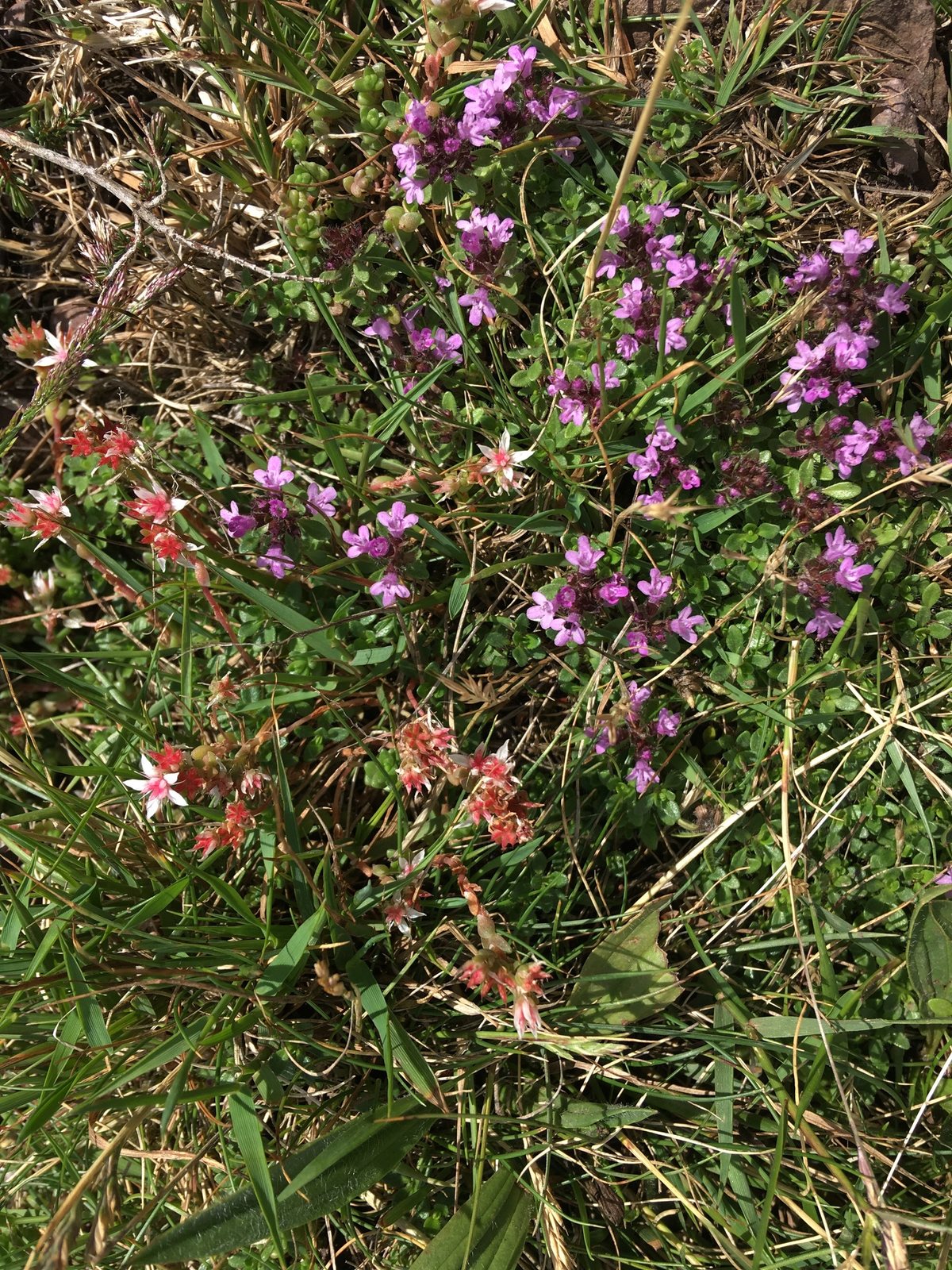
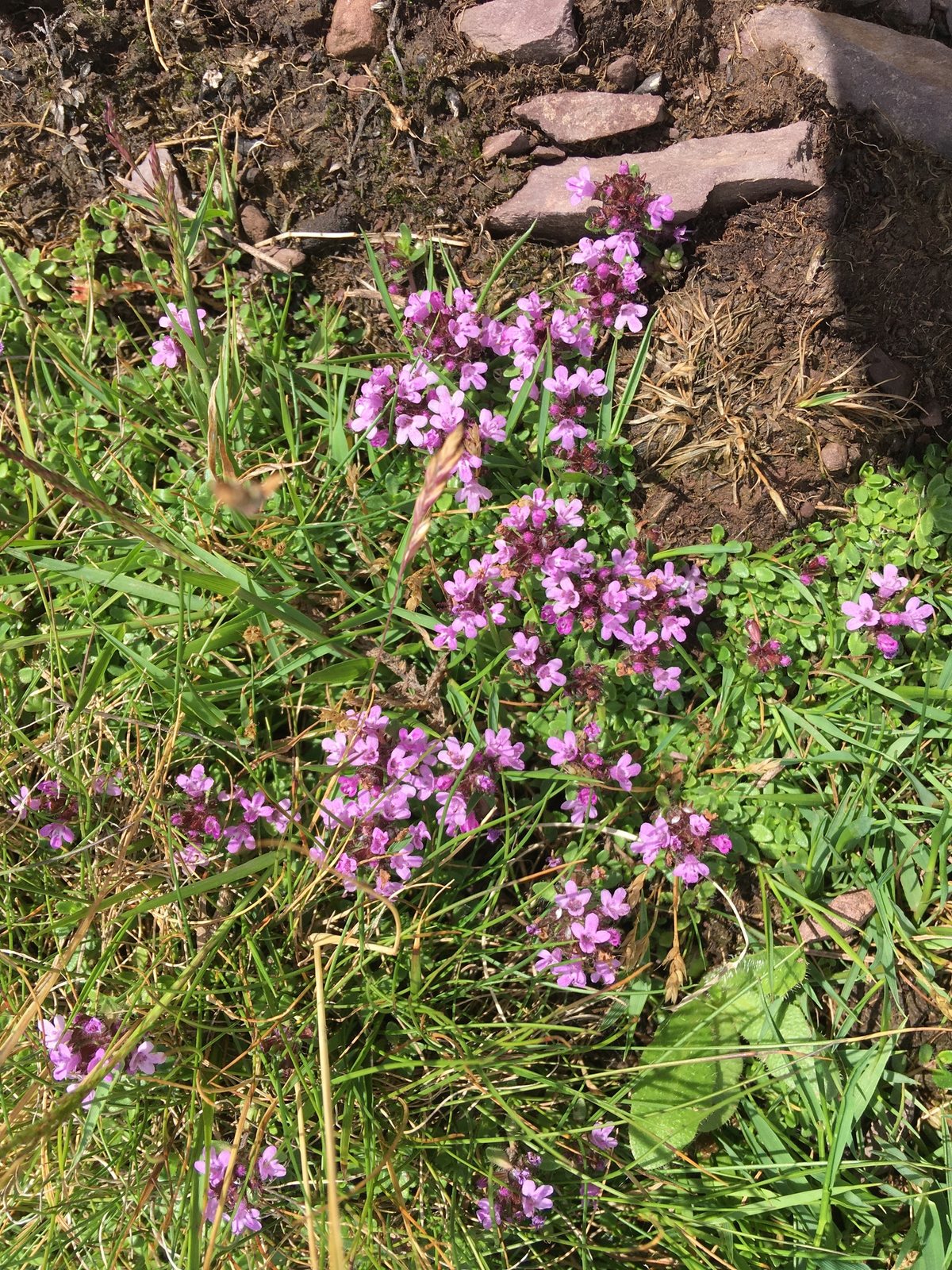
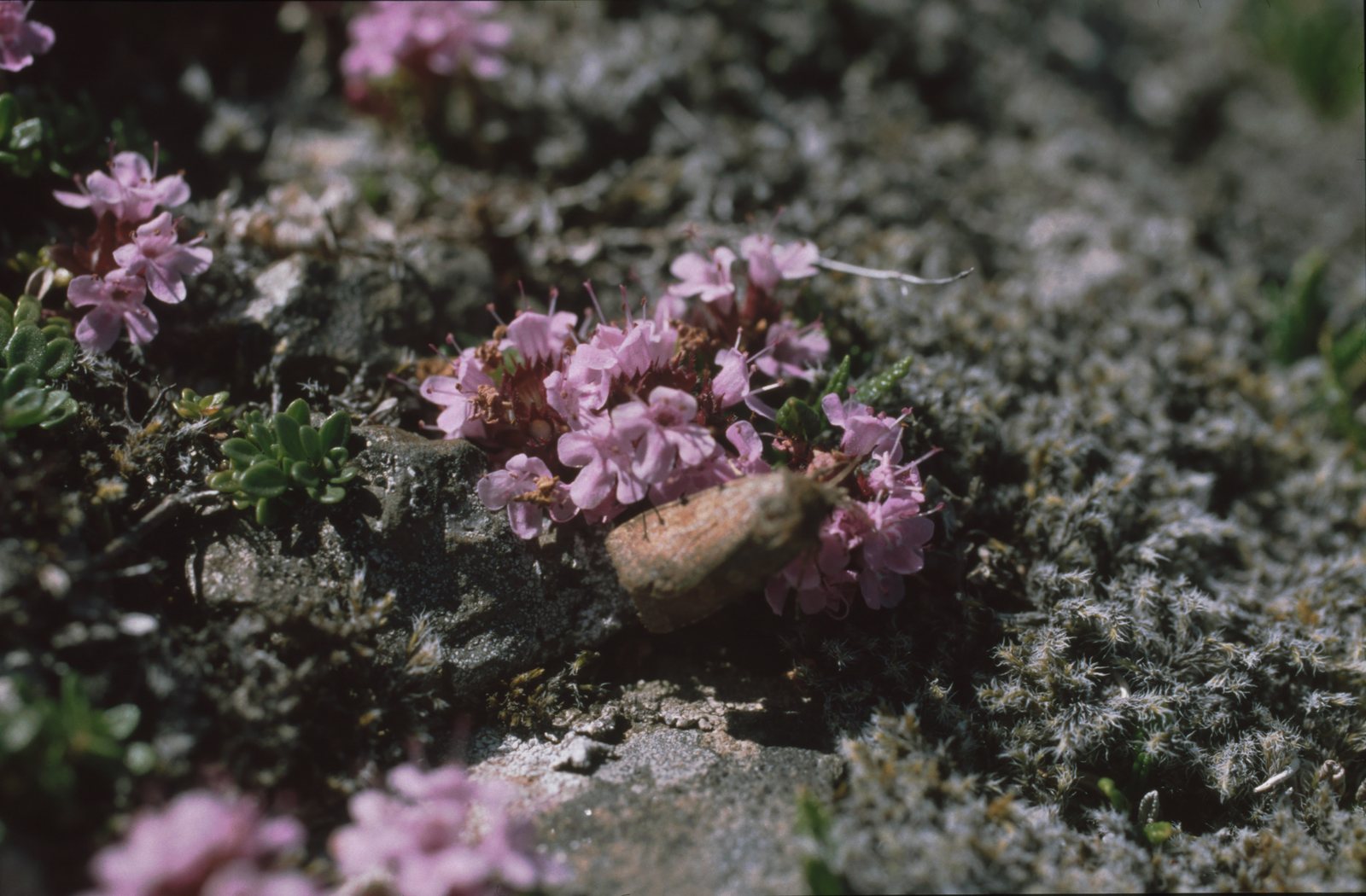
Woolly thyme forms a very low carpet of densely hairy, silver-grey leaves. Gardeners grow it mainly for its soft texture between stepping stones, along sunny edges and in rock gardens; it tolerates occasional footsteps but not regular foot traffic. It needs excellent drainage and is more likely to fail in wet soil than from drought.
At a glance
- Sun
- Full sun; light afternoon shade can help in hot climates, but too much shade produces a thin, loose mat.
- Water
- Low once established. Water new plants when the soil begins to dry; established plants usually need extra water only during prolonged drought.
- Soil
- Well-drained, sandy, gritty or gravelly soil, preferably neutral to alkaline. Avoid wet clay and rich, moisture-retentive soil.
- Height
- 0.1-0.25 ft (0.03-0.08 m)
- Spread
- 1-2 ft (0.3-0.6 m)
- Flowers
- Sparse, tiny pale pink flowers in early to midsummer; some plants flower very little.
- Foliage
- Evergreen. Tiny, rounded leaves covered in fine hairs, forming a soft silver-grey to grey-green mat. Leaves may develop bronze or purple tones in cold weather.
- Growth
- Slow to moderate; stems root where they touch suitable soil.
- Care needed
- Low
The year at a glance
- Pollinators
- Deer resistant
- Drought tolerant
- Low allergen
| J | F | M | A | M | J | J | A | S | O | N | D | |
|---|---|---|---|---|---|---|---|---|---|---|---|---|
| Flowers | ||||||||||||
| Plant |
Northern hemisphere months. In Australia, shift them by six.
- Difficulty
- Easy
- Toughness
- Very tough
Will it suit your garden?
Pick your zone, country, light and whether you have pets.
Full sun is 6 or more hours of direct sun a day, part shade 3 to 6 hours, shade under 3.
How it grows
Planting day
0 ft (0.01 m)
After 1 year
0.1 ft (0.03 m)
After 2 years
0.1 ft (0.04 m)
After 3 years
0.2 ft (0.05 m)
After 5 years
0.2 ft (0.06 m)
full size
About 3 years to full size.
From a typical nursery size, at an average rate for this kind of plant. A rule of thumb, not a forecast.
Good to know
- Cats and dogs
- Safe
- Growth rate
- Slow
Care
Jobs through the year
- WaterApr–May, Sep, every 21 days
- Water established mats only during prolonged dry spells; water new plants when the surface begins drying.
- WaterJun–Aug, every 14 days
- During prolonged drought, water established mats at soil level; otherwise leave dry.
- PruneMar–Apr
- Snip out dead patches and lightly trim edges without cutting into bare woody stems.
- PruneJul–Aug
- Lightly trim after flowering only if the mat becomes untidy.
- DivideApr–May
- Separate rooted sections only when propagation or patch repair is needed.
- MulchApr
- Use a thin gravel mulch around the mat rather than moisture-retaining organic mulch.
- ProtectJan–Feb, Oct–Dec
- Clear fallen leaves, keep drainage open and avoid walking on frozen or saturated mats.
- Water at soil level while establishing, allowing the surface to dry between waterings.
- Improve drainage before planting; use a raised bed or a gritty mound where soil stays wet.
- Avoid routine feeding, which encourages soft, loose growth.
- Use a thin gravel mulch rather than moisture-holding organic mulch around the mat.
- Remove fallen leaves and weeds promptly so they do not smother the foliage.
Pruning. In spring, snip out dead or winter-damaged patches and lightly trim spreading edges. After flowering, shear only if needed to keep the mat compact; avoid cutting deeply into bare, woody stems.
Through the year
- Spring
- Remove trapped leaves and dead patches once new growth shows which stems have survived.
- Spring
- Plant or divide rooted sections into freely draining soil, watering them in thoroughly.
- Late spring
- Weed carefully by hand before weeds become established within the mat.
- Summer
- Water young plants during dry spells; lightly trim untidy edges after flowering.
- Autumn
- Clear fallen leaves and check that runoff does not collect around the plants.
- Winter
- Avoid walking on frozen or saturated mats and keep drainage channels clear.
In the garden
- Plant between widely spaced stepping stones where footsteps will mostly land on the stone.
- Use as a silver carpet around rocks and small alpine plants in a sunny rock garden.
- Soften the edges of gravel paths alongside compact lavender and low sedums.
- Let it creep over the lip of a sunny trough or raised bed for a low, textured edge.
Garden styles it suits: Dry gravel garden, Alpine rock garden, Mediterranean, Sensory garden, Cottage garden and Low-maintenance.
Plant it with: English lavender, Rock rose, Creeping phlox, Low-growing sedums, Dwarf bearded iris and Sea thrift.
Wildlife: The occasional flowers provide nectar for bees and other small pollinating insects, but this sparsely flowering thyme is less useful to pollinators than more freely flowering thymes.
Problems to watch for
- Root and crown rot in wet soil: improve drainage, reduce watering and replace badly affected plants in a raised, gritty planting area.
- Thin or open growth in shade: move to a sunnier position and avoid heavy feeding.
- Winter dieback: remove dead sections in spring and improve drainage; cold combined with wet soil is particularly damaging.
- Bare patches from repeated footsteps: redirect traffic onto paving and replant damaged areas with rooted sections.
Safety
Not known to be toxic to people, cats, dogs or horses. No poisonous parts are recognized, although information specific to woolly thyme is limited. It is grown as an ornamental rather than a culinary herb.
Easily confused with
Breckland thyme (Thymus serpyllum)
Usually has greener, less densely hairy leaves and more conspicuous pink-purple flowers; woolly thyme has a noticeably felted, silver-grey surface.
Creeping thyme (Thymus praecox)
Most garden forms have greener foliage and flower more freely. The names overlap in horticultural use, so look for the dense woolly hairs rather than relying on the label alone.
The name
The common name refers to the dense, wool-like hairs covering its tiny leaves.
Propagation. Divide rooted pieces of the mat in spring and replant them promptly. Take short, non-flowering cuttings in late spring or early summer; division and cuttings preserve the woolly foliage more reliably than seed.
Checked against open data
- Accepted botanical name
- Thymus praecox britannicus Thymus pseudolanuginosus is an older name for Thymus praecox britannicus.
Sources: GBIF (CC BY 4.0). The care and design notes are LandscapeGPT's own.
See it in your own yard.
Upload a photo of your yard and see it redesigned with plants that suit your climate, each checked against your zone.