Wynyabbie Gem westringia
Westringia 'Wynyabbie Gem'. Family Lamiaceae. Shrub.
Also called Wynyabbie Gem coastal rosemary, Westringia 'Wynyabbie Gem'.
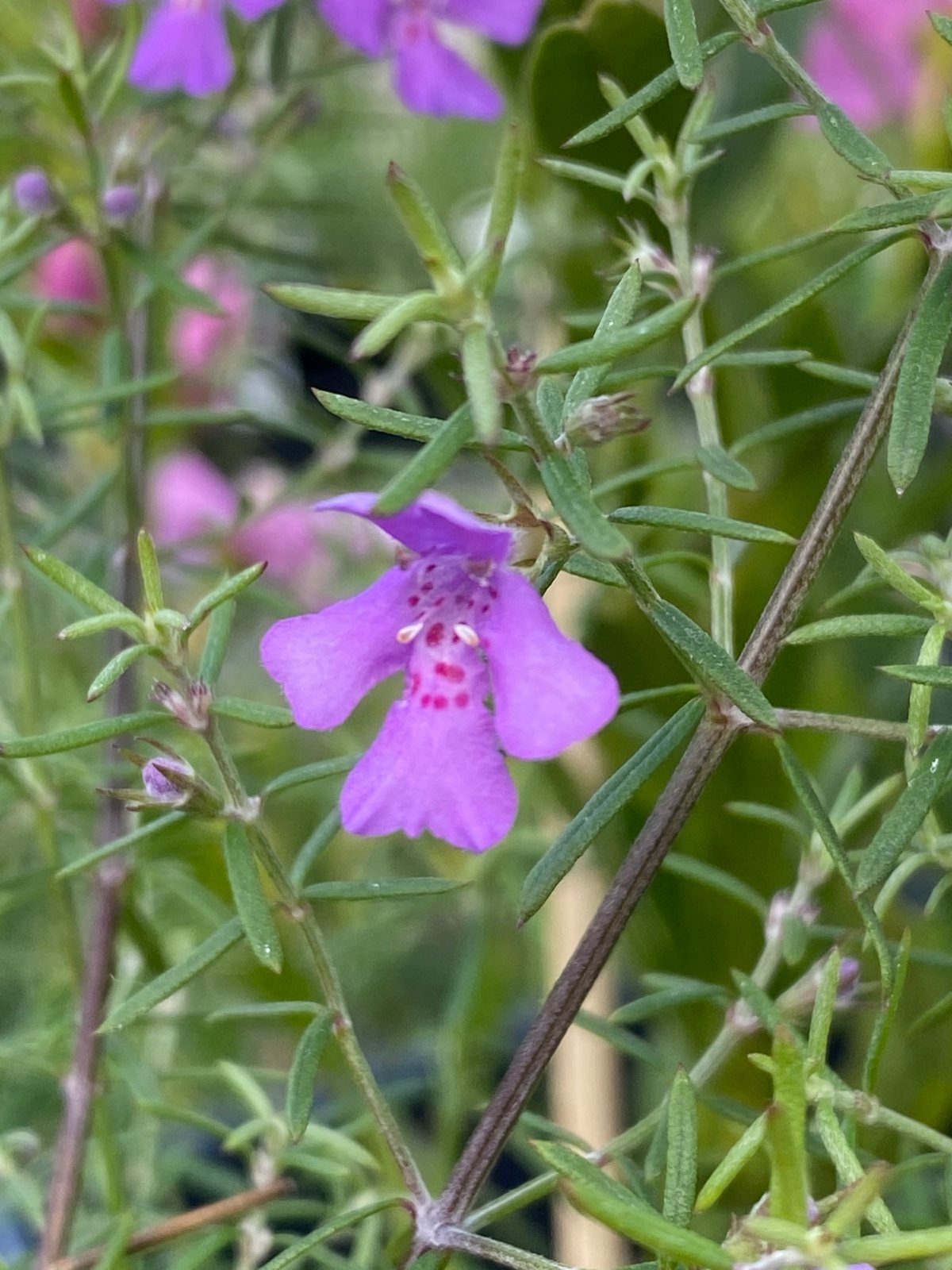
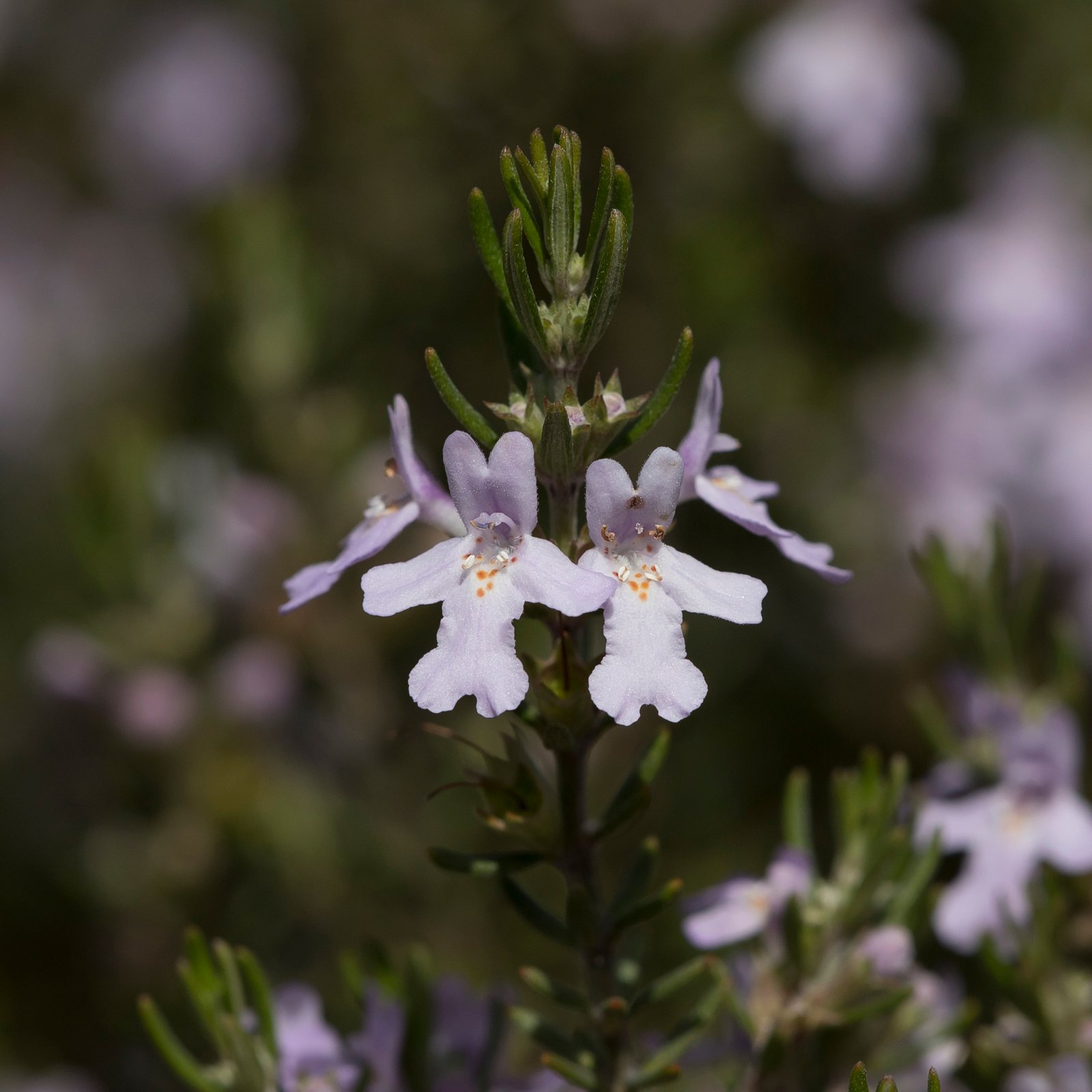
An evergreen Australian hybrid shrub with narrow grey-green leaves and small pale mauve flowers, grown for informal hedges, clipped shapes and coastal gardens. It tolerates wind, salt spray and dry spells once established, but needs freely draining soil and protection from hard frost; despite the name coastal rosemary, it is not a culinary herb.
At a glance
- Sun
- Full sun to light partial shade; growth is denser and flowering better in sun.
- Water
- Water regularly through the first growing season. Once established, water deeply during prolonged dry spells rather than giving frequent light sprinkles.
- Soil
- Well-drained sandy, gravelly or loamy soil; tolerates a range of soil pH. Avoid waterlogged ground and heavy, poorly drained clay.
- Height
- 5-7 ft (1.5-2.1 m)
- Spread
- 5-7 ft (1.5-2.1 m)
- Flowers
- Small pale mauve to lilac flowers, mainly from spring through autumn, with scattered flowers in winter in frost-free climates.
- Foliage
- Evergreen. Narrow grey-green leaves held in whorls along the stems, with paler, softly hairy undersides.
- Growth
- Moderate to fast in mild climates.
- Care needed
- Low
The year at a glance
- Pollinators
- Deer resistant
- Drought tolerant
- Heat tolerant
- Wildlife
- Low allergen
| J | F | M | A | M | J | J | A | S | O | N | D | |
|---|---|---|---|---|---|---|---|---|---|---|---|---|
| Flowers | ||||||||||||
| Plant |
Northern hemisphere months. In Australia, shift them by six.
- Difficulty
- Moderate
- Toughness
- Very tough
Will it suit your garden?
Pick your zone, country, light and whether you have pets.
Full sun is 6 or more hours of direct sun a day, part shade 3 to 6 hours, shade under 3.
How it grows
Planting day
1.6 ft (0.5 m)
After 1 year
2.7 ft (0.83 m)
After 2 years
4 ft (1.2 m)
After 3 years
5 ft (1.5 m)
After 5 years
6 ft (1.8 m)
full size
About 4 years to full size.
From a typical nursery size, at an average rate for this kind of plant. A rule of thumb, not a forecast.
Good to know
- Cats and dogs
- Safe
- Growth rate
- Fast
Care
Jobs through the year
- WaterApr–May, Sep–Oct, every 21 days
- Check established ground plants and water only if dry; new plants need more frequent watering.
- WaterJun–Aug, every 14 days
- Deep-water established ground plants during prolonged drought; check containers more often.
- FeedApr–May
- Feed lightly only if growth is weak; avoid heavy fertiliser applications.
- MulchMay
- Apply light mulch over the roots, leaving the stems clear.
- PruneJun
- Lightly trim after the main spring flowering, keeping cuts within leafy growth.
- PruneJul–Aug
- Trim again only for shaping; stop well before autumn frost.
- ProtectJan–Apr, Oct–Dec
- Overwinter containers in bright, frost-free shelter; not reliably hardy outdoors in zones 6–7.
- Plant in spring where winter frost is possible; autumn planting suits mild, frost-free areas.
- Water deeply during establishment, allowing the surface soil to dry between waterings.
- Apply a light mulch over the root area, keeping it clear of the stems.
- Feed lightly in spring only if growth is weak; avoid heavy applications of fertiliser.
- In colder regions, grow in a container and overwinter in a bright, frost-free place.
Pruning. Lightly trim after the main spring flowering and repeat during the growing season if maintaining a hedge or rounded shape. Keep cuts within leafy growth rather than cutting hard into bare old wood, and avoid pruning just before frost.
Through the year
- Spring
- Plant in frost-prone districts once hard frosts have passed, and water thoroughly.
- Late spring
- Lightly trim after the main flush of flowers to encourage dense growth.
- Summer
- Check new plants and containers regularly; water deeply when the root zone begins to dry.
- Late summer
- Take semi-ripe cuttings from healthy, non-flowering shoots.
- Autumn
- Plant in frost-free districts; stop clipping where cold weather is approaching.
- Winter
- Keep container plants sheltered from frost and ensure pots and beds drain freely.
In the garden
- Plant as an informal coastal hedge where wind and salt spray limit more delicate shrubs.
- Clip into rounded mounds beside paths or terraces for evergreen structure.
- Combine with lavender, rock roses and ornamental grasses in a sunny gravel garden.
- Use as a grey-green backdrop to flowering Australian native shrubs.
- Grow in a large, well-drained container in a sunny courtyard.
Garden styles it suits: Australian native, Coastal, Mediterranean, Dry gravel garden, Low-maintenance and Contemporary minimal.
Plant it with: Lavender, Rock rose, Kangaroo paw, Lomandra, Grevillea and Blue fescue.
Wildlife: Flowers provide nectar for bees and other visiting insects. Dense shrubs offer shelter for small garden wildlife.
Problems to watch for
- Root rot in wet soil: improve drainage before planting, avoid low spots and reduce watering during cool weather.
- Frost damage: choose a sheltered position, cover young plants during brief frosts and wait until spring to remove damaged shoots.
- Sparse, leggy growth: provide more sun and lightly trim leafy shoots regularly rather than allowing the shrub to become overgrown.
- Yellowing foliage in containers: check for saturated compost or blocked drainage holes before adding fertiliser.
Safety
Not known to be toxic to people, cats, dogs or horses, although specific safety information for this cultivar is limited. No part should be treated as edible or used as a substitute for culinary rosemary.
Easily confused with
Coastal rosemary (Westringia fruticosa)
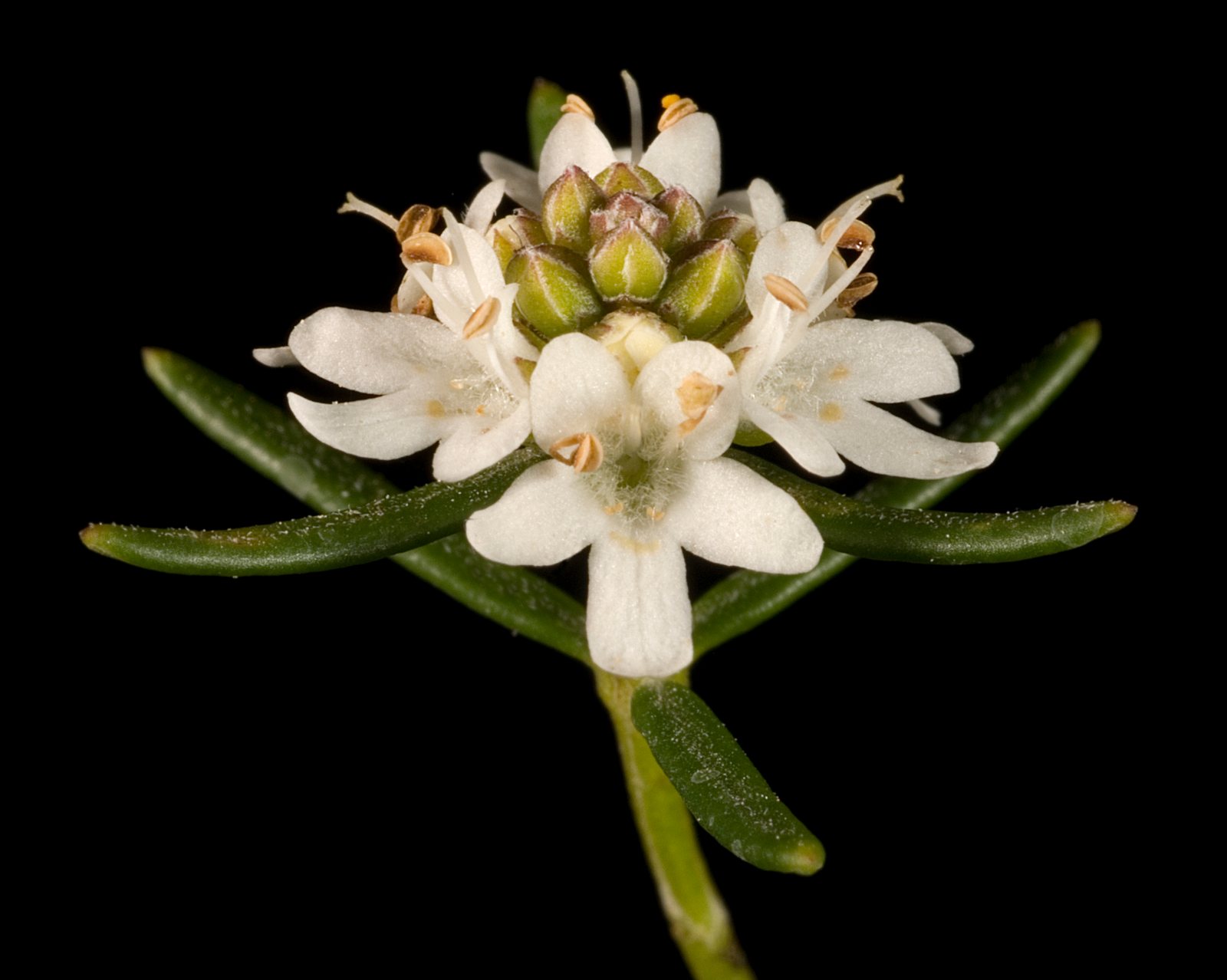
Usually has white flowers and broader, shorter leaves; 'Wynyabbie Gem' has narrower leaves and pale mauve flowers.
Rosemary (Salvia rosmarinus)
Has strongly aromatic leaves arranged in opposite pairs; westringia leaves occur in whorls and lack the familiar culinary rosemary scent.
The name
Westringia honours the Swedish physician and botanist Johan Peter Westring, while 'Wynyabbie Gem' refers to the Queensland nursery where the hybrid originated.
Propagation. Take semi-ripe cuttings in late summer and root them in a freely draining propagation mix under humid conditions. Use cuttings rather than seed to retain the cultivar's characteristics.
Checked against open data
- Accepted botanical name
- Westringia
Sources: GBIF (CC BY 4.0). The care and design notes are LandscapeGPT's own.
See it in your own yard.
Upload a photo of your yard and see it redesigned with plants that suit your climate, each checked against your zone.