Yacon
Smallanthus sonchifolius. Family Asteraceae. Perennial.
Also called Peruvian ground apple, Bolivian sunroot.
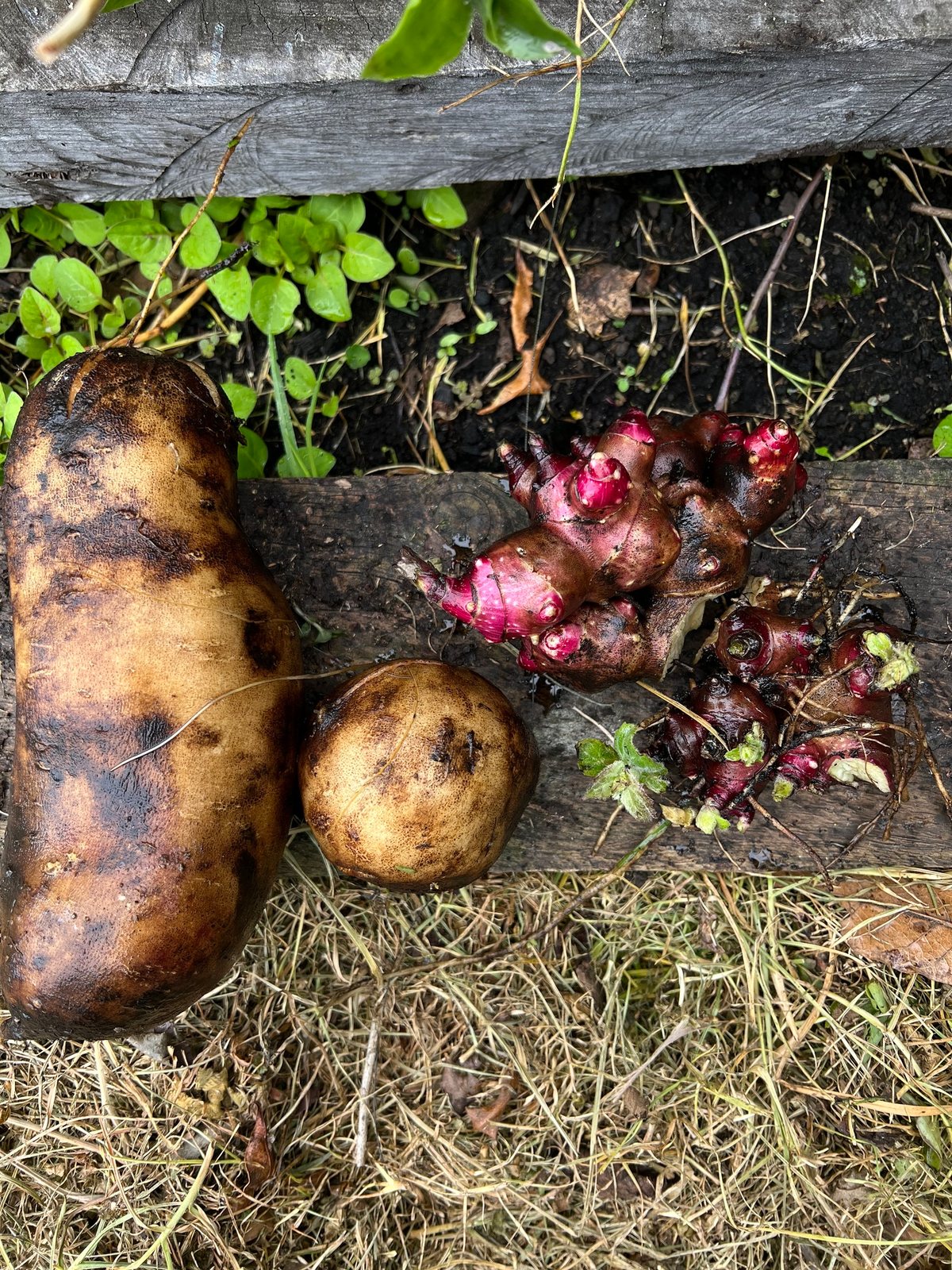
Yacon is a tall, frost-tender perennial grown for its crisp, sweet storage roots, which are usually eaten raw. Its large leaves give vegetable beds a lush backdrop, but it needs a long growing season to produce well. In frosty climates it is grown as an annual, with planting crowns lifted and stored for the following spring.
At a glance
- Sun
- Full sun; light afternoon shade can help in very hot climates.
- Water
- Water deeply during dry weather to keep the soil evenly moist, especially while roots are swelling; avoid waterlogged ground.
- Soil
- Deep, loose, fertile soil with good drainage; heavy or compacted soil makes harvesting difficult and encourages root damage.
- Height
- 4-7 ft (1.2-2.1 m)
- Spread
- 3-4 ft (0.9-1.2 m)
- Flowers
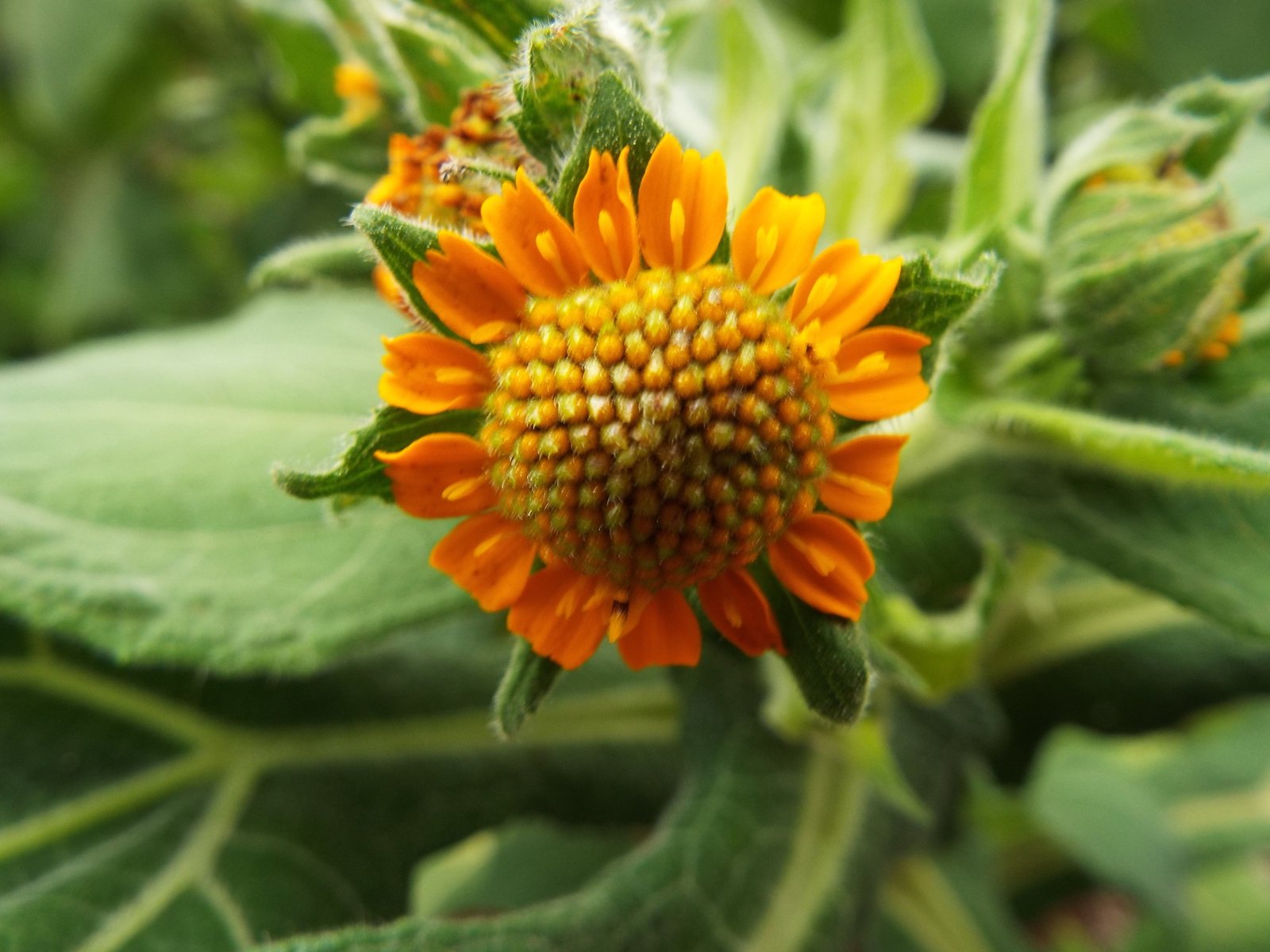
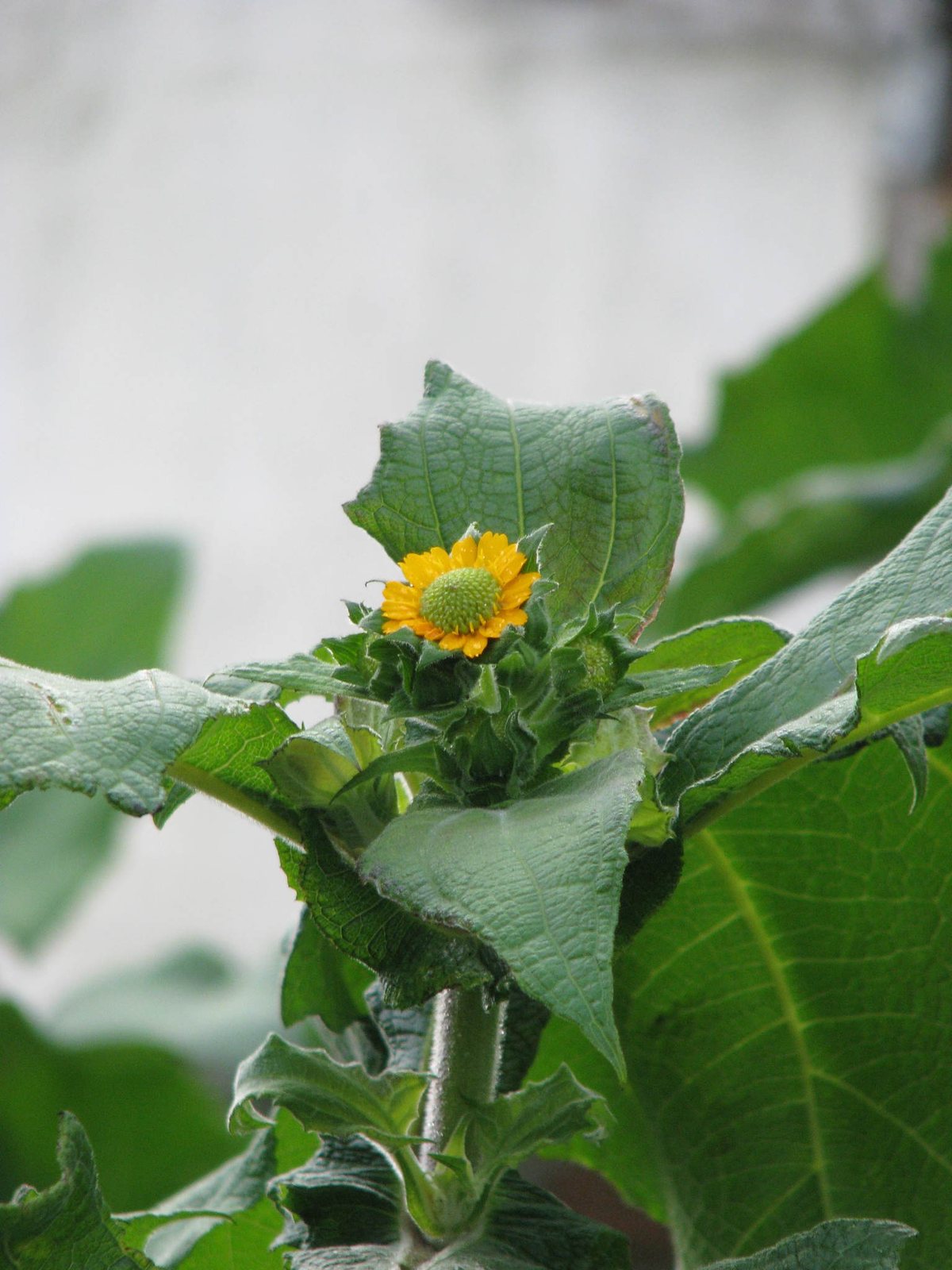
- Small yellow, sunflower-like flowers in late summer or autumn; flowering may be sparse or absent in short growing seasons.
- Foliage
- Large, soft, green, broadly triangular to heart-shaped leaves on thick, branching stems; frost kills the top growth.
- Growth
- Fast in warm weather.
- Care needed
- Medium
The year at a glance
- Pollinators
- Edible
| J | F | M | A | M | J | J | A | S | O | N | D | |
|---|---|---|---|---|---|---|---|---|---|---|---|---|
| Flowers | ||||||||||||
| Fruit | ||||||||||||
| Plant |
Northern hemisphere months. In Australia, shift them by six.
- Difficulty
- Moderate
- Toughness
- Needs looking after
Will it suit your garden?
Pick your zone, country, light and whether you have pets.
Full sun is 6 or more hours of direct sun a day, part shade 3 to 6 hours, shade under 3.
How it grows
Planting day
1 ft (0.3 m)
After 1 year
3 ft (0.99 m)
After 2 years
5 ft (1.7 m)
full size
About 2 years to full size.
From a typical nursery size, at an average rate for this kind of plant. A rule of thumb, not a forecast.
Good to know
- Cats and dogs
- Safe
- Growth rate
- Fast
Care
Jobs through the year
- WaterMay–Jun, Sep–Oct, every 7 days
- Water established plants deeply if rain is insufficient; keep new plants consistently moist.
- WaterJul–Aug, every 4 days
- Keep the root zone evenly moist during dry weather, especially as storage roots swell.
- FeedMay
- Incorporate compost before planting; avoid heavy nitrogen feeding.
- MulchJun
- Mulch warm soil to conserve moisture, keeping the crown clear.
- ProtectMay–Jun
- Protect young shoots from slugs and stake plants early in exposed sites.
- PruneOct–Nov
- After frost blackens foliage, cut stems back to short handling stubs.
- HarvestOct–Nov
- Lift roots carefully as foliage dies, before the ground freezes; retain bud-bearing crowns.
- ProtectOct–Nov
- Lift planting crowns before soil freezes and store cool and frost-free in barely moist compost.
- ProtectJan–Mar, Dec, every 30 days
- Check stored crowns for rot or shrivelling, keeping the compost barely moist.
- DivideMar–Apr
- Split saved crowns only if propagating, keeping a healthy bud on each piece; start under cover.
- Plant after the last frost, allowing about 3 ft (0.9 m) between plants.
- Mix compost into the soil before planting; avoid excessive nitrogen, which encourages leafy growth.
- Water regularly through dry spells rather than letting the plant repeatedly wilt.
- Mulch once the soil warms to conserve moisture and suppress weeds.
- Stake plants in exposed gardens before the stems become top-heavy.
- In frosty regions, lift planting crowns before the ground freezes and store them frost-free.
Pruning. No routine pruning is needed during growth. Cut stems back after frost blackens the foliage, leaving short stubs to help handle the crown during lifting.
Harvest
Lift the swollen storage roots in late autumn, usually after at least six months of growth, when the foliage yellows or the first light frost blackens it; harvest before the soil freezes. Loosen the soil widely with a fork and lift carefully, as the roots snap easily, keeping the small bud-bearing crown pieces separate for replanting. A few days in a warm, frost-free place can sweeten the edible roots;
Through the year
- Late winter
- Check stored crowns and discard any that are soft or rotten; pot up sound, bud-bearing pieces under frost-free cover.
- Spring
- Prepare a sunny bed with compost and gradually acclimatise young plants to outdoor conditions.
- Late spring
- Plant out after frost danger has passed and the soil has warmed.
- Summer
- Water during dry spells, maintain mulch and stake plants where wind is a problem.
- Autumn
- Let plants continue growing while conditions remain mild so the storage roots can swell.
- Late autumn
- Harvest roots and save the planting crowns; in frost-free gardens, divide crowded clumps after top growth dies back.
- Winter
- Keep saved crowns cool and frost-free in barely moist compost, checking occasionally for rot or shrivelling.
In the garden
- Plant at the back of a vegetable bed so its height does not shade shorter crops.
- Use broad leaves as a seasonal contrast beside fine-leaved culinary herbs.
- Grow in an edible border with flowers that remain visible around its base.
- Use a row as a temporary summer screen, allowing access for autumn lifting.
Garden styles it suits: Potager (kitchen garden), Edible landscape, Homestead, Cottage garden, Modern tropical and Food forest.
Plant it with: Nasturtiums, Calendula, French marigolds and Chives.
Wildlife: Flowers can attract bees and other insects when produced, but flowering is unreliable in cool or short-season gardens.
Problems to watch for
- Slugs and snails damage emerging shoots: protect young growth with barriers, night-time collection or locally approved slug controls.
- Wind can snap tall stems or loosen crowns: choose a sheltered site and stake early.
- Waterlogged soil causes crown and root rot: improve drainage or grow in raised beds, and keep stored crowns only barely moist.
- A short growing season gives small crops: start crowns under cover and plant out promptly once frost danger has passed.
Safety
The storage roots are edible for people and are not known to be toxic; large servings can cause wind, bloating or diarrhoea because they contain poorly digested fructans. Yacon is not known to be toxic to cats, dogs or horses, but species-specific safety information is limited. Do not assume leaves, stems or planting crowns are suitable animal feed.
Easily confused with
Jerusalem artichoke (Helianthus tuberosus)
Jerusalem artichoke usually has narrower, rougher leaves and knobbly stem tubers; yacon has broader leaves and elongated, smooth-skinned storage roots.
Mexican sunflower (Tithonia diversifolia)
Mexican sunflower has conspicuously lobed leaves and much larger yellow flower heads; yacon leaves are usually unlobed and its flowers are small.
The name
Yacon comes from the Quechua name for the plant, while sonchifolius means sow-thistle-leaved.
Propagation. Divide the compact crown into pieces with at least one healthy bud in late winter or spring, then pot them up frost-free. The large edible storage roots generally lack buds and will not produce new plants on their own; seed is uncommon and unreliable.
Checked against open data
- Accepted botanical name
- Smallanthus sonchifolius
- Native range
- Bolivia, Colombia, Ecuador and Peru.
Sources: GBIF (CC BY 4.0) and Trefle (CC BY 4.0). The care and design notes are LandscapeGPT's own.
See it in your own yard.
Upload a photo of your yard and see it redesigned with plants that suit your climate, each checked against your zone.