Yakushima rhododendron
Rhododendron yakushimanum. Family Ericaceae. Shrub.
Also called Yak rhododendron, Rhododendron degronianum subsp. yakushimanum.
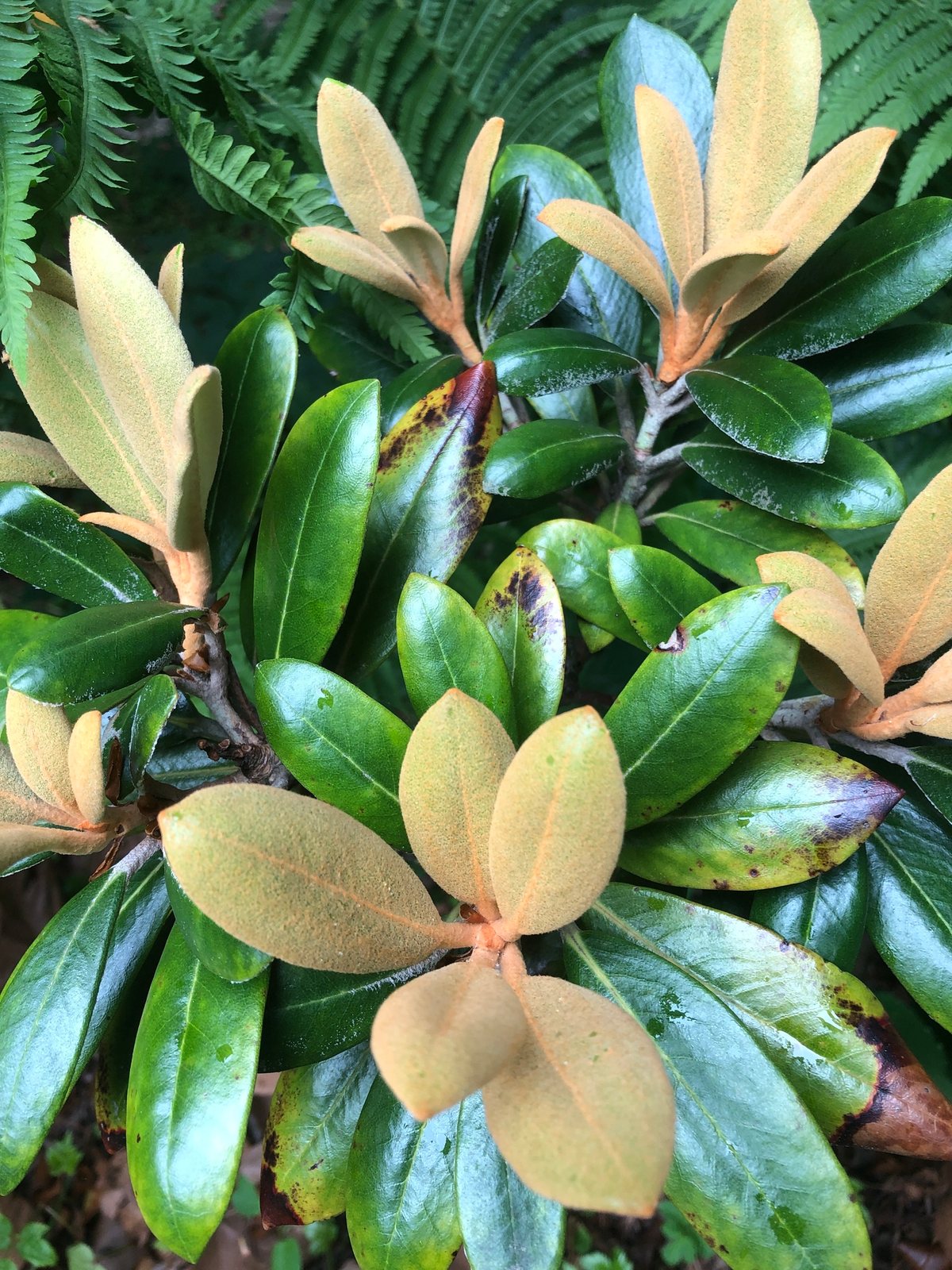
A slow-growing evergreen shrub with a rounded outline, pink buds opening to pale pink or white flowers, and thick leaves with felted undersides. Gardeners grow it for its spring flowers and handsome year-round foliage, especially in cool gardens with acidic soil.
At a glance
- Sun
- Partial shade, ideally morning sun and afternoon shade. Tolerates more sun in cool climates if the roots stay moist; protect from hot afternoon sun and drying winds.
- Water
- Keep the shallow root zone evenly moist but never waterlogged. Water deeply during dry spells, including winter dry spells when the ground is not frozen.
- Soil
- Acidic, humus-rich, well-drained soil, ideally pH 4.5-6.0. Unsuitable for chalky soil; use a container with ericaceous potting mix where the ground is alkaline.
- Height
- 3-5 ft (0.9-1.5 m), eventually taller in favourable conditions
- Spread
- 4-6 ft (1.2-1.8 m)
- Flowers
- Late spring to early summer; rounded clusters of pink buds open pale pink and usually fade to white.
- Foliage
- Evergreen, leathery, dark green leaves with slightly rolled edges and thick cream-to-cinnamon felt beneath. New leaves emerge with a silvery coating that gradually wears away.
- Growth
- Slow
- Care needed
- Medium
The year at a glance
- Pollinators
- Wildlife
- Low allergen
| J | F | M | A | M | J | J | A | S | O | N | D | |
|---|---|---|---|---|---|---|---|---|---|---|---|---|
| Flowers | ||||||||||||
| Plant |
Northern hemisphere months. In Australia, shift them by six.
- Difficulty
- Moderate
- Toughness
- Fairly tough
Will it suit your garden?
Pick your zone, country, light and whether you have pets.
Full sun is 6 or more hours of direct sun a day, part shade 3 to 6 hours, shade under 3.
How it grows
Planting day
1.6 ft (0.5 m)
After 1 year
1.9 ft (0.59 m)
After 2 years
2.2 ft (0.68 m)
After 3 years
2.5 ft (0.76 m)
After 5 years
3 ft (0.94 m)
About 8 years to full size.
From a typical nursery size, at an average rate for this kind of plant. A rule of thumb, not a forecast.
Good to know
- Cats and dogs
- Toxic
- Growth rate
- Slow
Care
Jobs through the year
- WaterMar–May, Sep–Oct, every 7 days
- For established shrubs, water deeply if rainfall is insufficient; keep roots moist and use rainwater where tap water is alkaline.
- WaterJun–Aug, every 5 days
- Water established shrubs if the shallow root zone begins drying; young plants need more frequent checks.
- WaterJan–Feb, Nov–Dec, every 21 days
- Water only during dry, frost-free spells if roots are dry; never water frozen or saturated ground.
- MulchMar–Apr
- Maintain 5–8 cm of leaf mould or fine pine bark, clear of stems; avoid disturbing shallow roots.
- FeedMar–Apr
- Apply a light ericaceous feed only if growth is weak; avoid heavy or late feeding.
- DeadheadMay–Jun
- Carefully remove faded flower clusters without damaging the new shoots beneath.
- PruneJun
- Immediately after flowering, remove damaged wood and lightly shorten stray shoots only if needed.
- ProtectJan–Feb, Nov–Dec
- Shelter exposed shrubs from drying winter winds with a breathable windbreak.
- Plant with the top of the root ball level with, or slightly above, the surrounding soil; never bury the stem base.
- Water during dry weather, using rainwater where tap water is very alkaline.
- Apply 2-3 in (5-8 cm) of leaf mould or fine pine bark over the root zone, keeping it clear of the stems.
- If growth is weak, apply a light dose of fertiliser for acid-loving shrubs in spring; avoid heavy or late-season feeding.
- Avoid digging or hoeing beneath the shrub because its roots lie close to the surface.
Pruning. Little pruning is needed. Immediately after flowering, remove dead or damaged growth and shorten stray shoots lightly; avoid routine shearing, which spoils the natural shape and removes future flowers.
Through the year
- Late winter
- Check for wind damage and water during dry, frost-free periods if the root zone is dry.
- Early spring
- Refresh the mulch and feed lightly only if growth or soil conditions warrant it.
- Late spring
- Enjoy the flowers; after they fade, remove spent clusters carefully if practical, without damaging the new shoots below.
- Early summer
- Complete any light shaping immediately after flowering.
- Summer
- Check soil moisture regularly and water deeply during dry spells, when next year's flower buds are developing.
- Autumn
- Plant or transplant in mild climates while the soil is moist and workable; in very cold regions, wait until spring.
In the garden
- Place at the front of a woodland shrub border, with ferns and hostas beneath taller trees that do not create dense, dry root competition.
- Use as a rounded evergreen anchor beside a shaded entrance or path, leaving room for its mature spread.
- Group with other compact rhododendrons and Japanese pieris for a layered spring display in acidic soil.
- Grow in a broad container with good drainage where garden soil is alkaline, positioning it away from reflected heat.
Garden styles it suits: Woodland, Japanese, English country, Pacific Northwest woodland, Pastel border and Small-space.
Plant it with: Japanese pieris, Japanese maple, Hostas, Japanese painted fern, Barrenwort and Hardy cyclamen.
Wildlife: Flowers attract bumblebees and other visiting insects. The dense evergreen branches provide shelter for small birds.
Problems to watch for
- Vine weevil: adults notch leaf edges and larvae damage roots, especially in containers. Inspect pots and use an appropriate biological nematode treatment when soil temperatures suit the product.
- Phytophthora root rot: wilting despite wet soil and dying roots often follow poor drainage. Improve drainage before planting, avoid overwatering, and remove badly affected plants.
- Iron chlorosis: yellow leaves with greener veins often indicate alkaline soil or water. Check soil pH, use rainwater, and move the plant to an ericaceous container if necessary.
- Leaf scorch or winter burn: brown leaf edges can follow drought, strong sun or drying winds. Keep roots moist, maintain mulch and provide shelter or afternoon shade.
Safety
Toxic to people, cats, dogs and horses if eaten. All parts, including leaves and flowers, contain grayanotoxins; ingestion can cause vomiting, weakness, abnormal heart rhythms and potentially fatal poisoning. Seek urgent medical or veterinary advice after ingestion.
Easily confused with
Catawba rhododendron (Rhododendron catawbiense)
Usually grows much larger and bears lilac-purple flowers. Its leaf undersides lack the thick felt characteristic of Yakushima rhododendron.
Rosebay rhododendron (Rhododendron maximum)
Becomes a much larger shrub, usually flowers later in summer, and lacks the dense cinnamon-coloured felt beneath mature leaves.
The name
The epithet yakushimanum refers to Yakushima, the Japanese island where the plant occurs naturally.
Propagation. Raise the species from seed sown on the surface of acidic seed compost, although seedlings take several years to flower and garden-collected seed may be hybrid. Layering low branches is a practical way to reproduce a particular plant; semi-ripe cuttings need controlled humidity and can be slow to root.
Checked against open data
- Accepted botanical name
- Rhododendron yakushimanum
- Native range
- Japan.
Sources: GBIF (CC BY 4.0) and Trefle (CC BY 4.0). The care and design notes are LandscapeGPT's own.
See it in your own yard.
Upload a photo of your yard and see it redesigned with plants that suit your climate, each checked against your zone.