Yellow bells
Tecoma stans. Family Bignoniaceae. Shrub.
Also called Yellow elder, Esperanza, Trumpet bush.
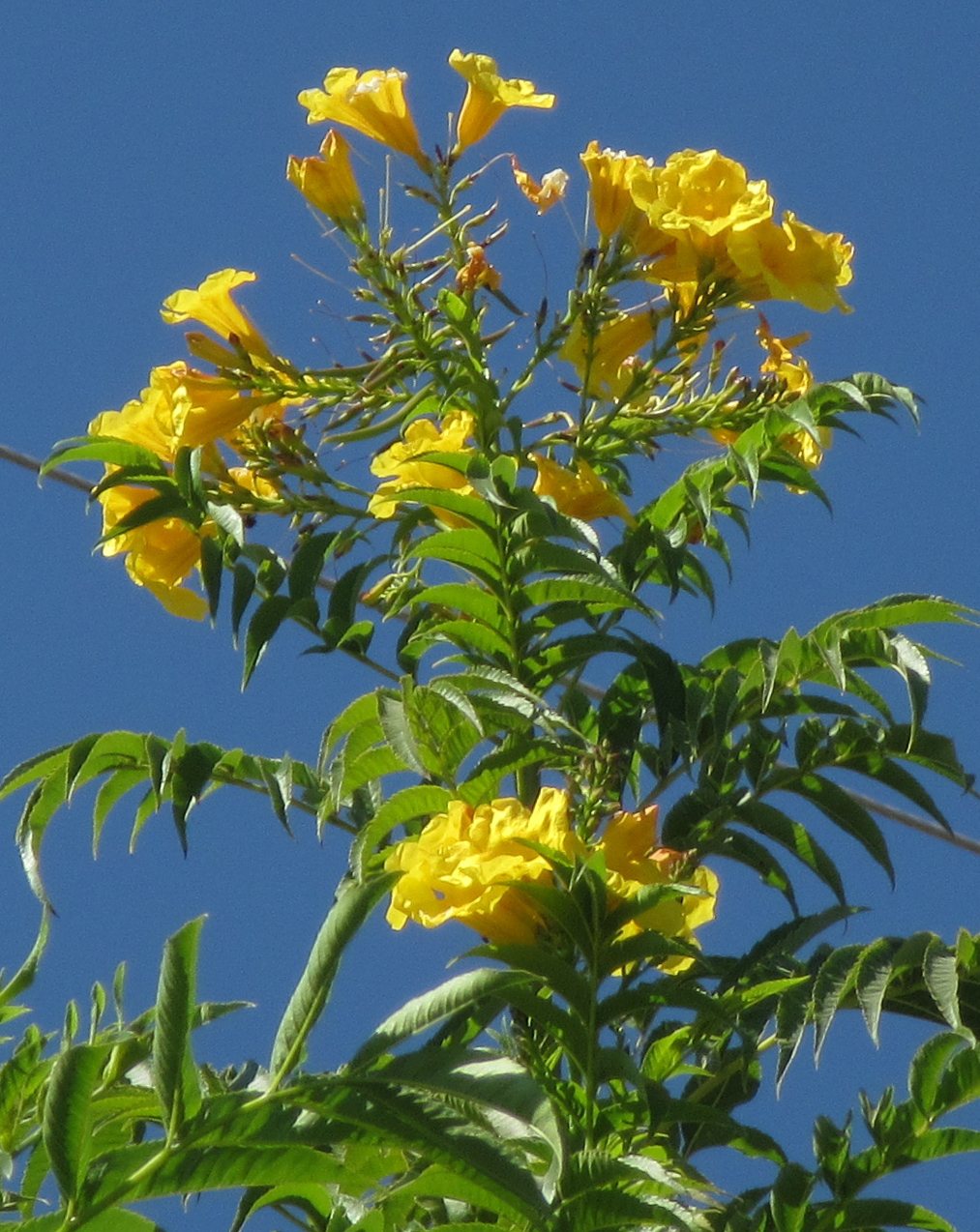
Yellow bells is a fast-growing shrub or small tree with clusters of yellow trumpet-shaped flowers over a long warm season. It suits sunny, frost-free gardens and large containers, but needs winter protection in most of the UK and Canada. Check local weed restrictions before planting, especially in Australia.
At a glance
- Sun
- Full sun for the strongest flowering; tolerates light shade but flowers less.
- Water
- Water regularly during establishment. Once established, allow the soil to dry between deep waterings; container plants need more frequent watering.
- Soil
- Well-drained sandy, loamy or stony soil; tolerates moderately alkaline soil. Avoid waterlogged ground.
- Height
- 10-20 ft (3-6 m)
- Spread
- 6-12 ft (1.8-3.7 m)
- Flowers
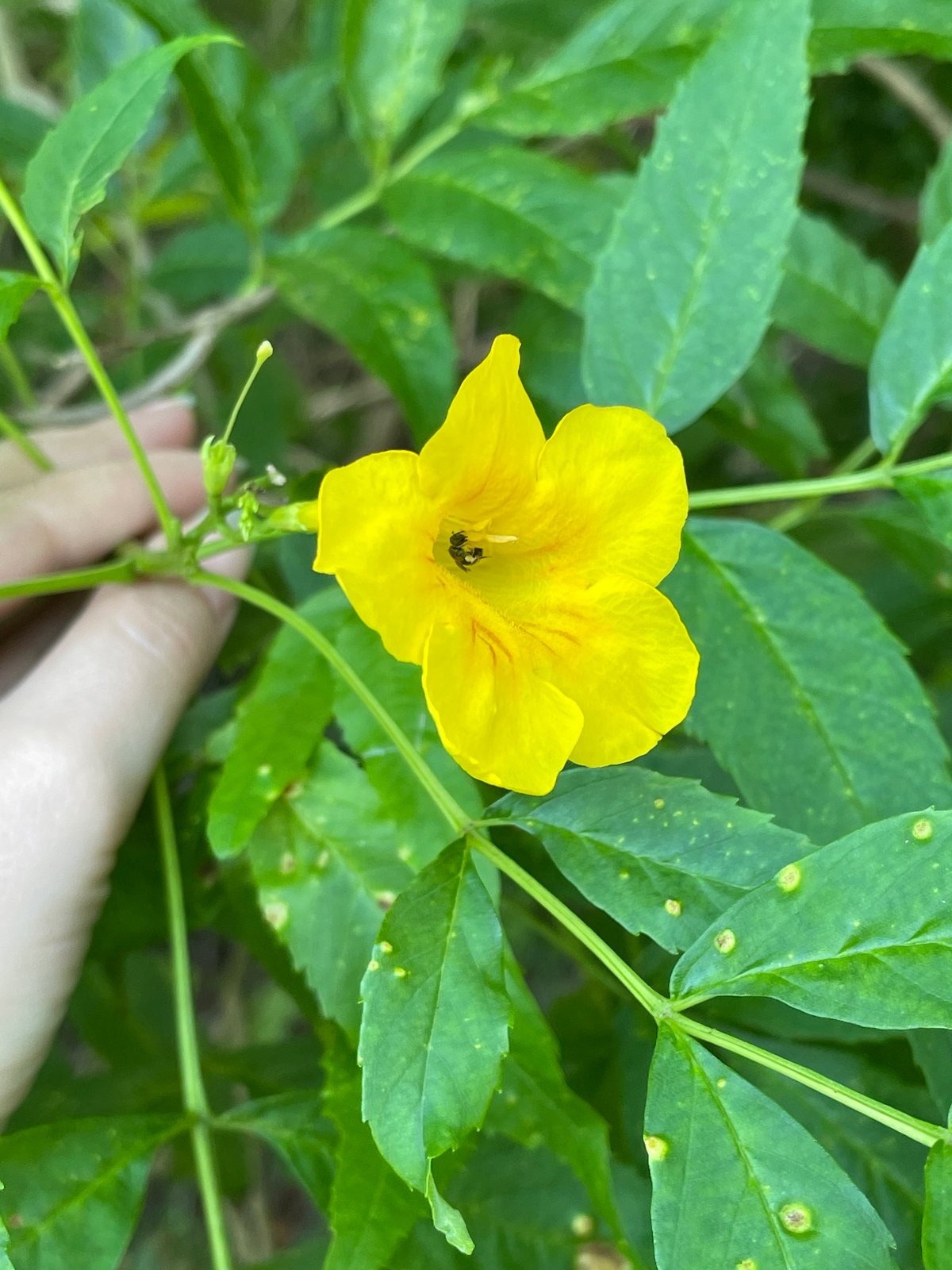
- Bright yellow trumpet-shaped flowers from late spring through autumn; flowering can continue intermittently year-round in tropical climates.
- Foliage
- Opposite, divided green leaves with pointed, toothed leaflets. Evergreen in frost-free conditions, but may lose leaves in cold or drought.
- Growth
- Fast in warm weather.
- Care needed
- Medium
The year at a glance
- Pollinators
- Drought tolerant
- Heat tolerant
- Low allergen
| J | F | M | A | M | J | J | A | S | O | N | D | |
|---|---|---|---|---|---|---|---|---|---|---|---|---|
| Flowers | ||||||||||||
| Fruit | ||||||||||||
| Plant |
Northern hemisphere months. In Australia, shift them by six.
- Difficulty
- Hard
- Toughness
- Needs looking after
Will it suit your garden?
Pick your zone, country, light and whether you have pets.
Full sun is 6 or more hours of direct sun a day, part shade 3 to 6 hours, shade under 3.
How it grows
Planting day
1.8 ft (0.54 m)
After 1 year
6 ft (1.8 m)
After 2 years
10 ft (3 m)
After 3 years
14 ft (4.2 m)
After 5 years
15 ft (4.5 m)
full size
About 3 years to full size.
From a typical nursery size, at an average rate for this kind of plant. A rule of thumb, not a forecast.
Good to know
- Cats and dogs
- Safe
- Invasive in
- the US and Australia
- In the garden
- Spreads vigorously: plan to contain it.
- Growth rate
- Fast
Care
Jobs through the year
- WaterMay, Sep, every 14 days
- For established summer bedding plants in the ground, water deeply if dry; young plants and pots need more frequent checks.
- WaterJun–Aug, every 7 days
- Water established plants in the ground during dry weather, letting soil dry between soakings; pots may need much more.
- WaterJan–Apr, Oct–Dec, every 21 days
- For frost-free overwintered pots only, check moisture and water sparingly if nearly dry.
- FeedApr–May
- Apply a light balanced feed only if growth is weak; excess nitrogen reduces flowering.
- MulchMay–Jun
- Apply 5–8 cm of mulch around outdoor plants, keeping stems clear.
- PruneMar–Apr
- Under frost-free cover, remove dead wood and shorten long shoots as spring growth resumes.
- DeadheadJul–Oct, every 14 days
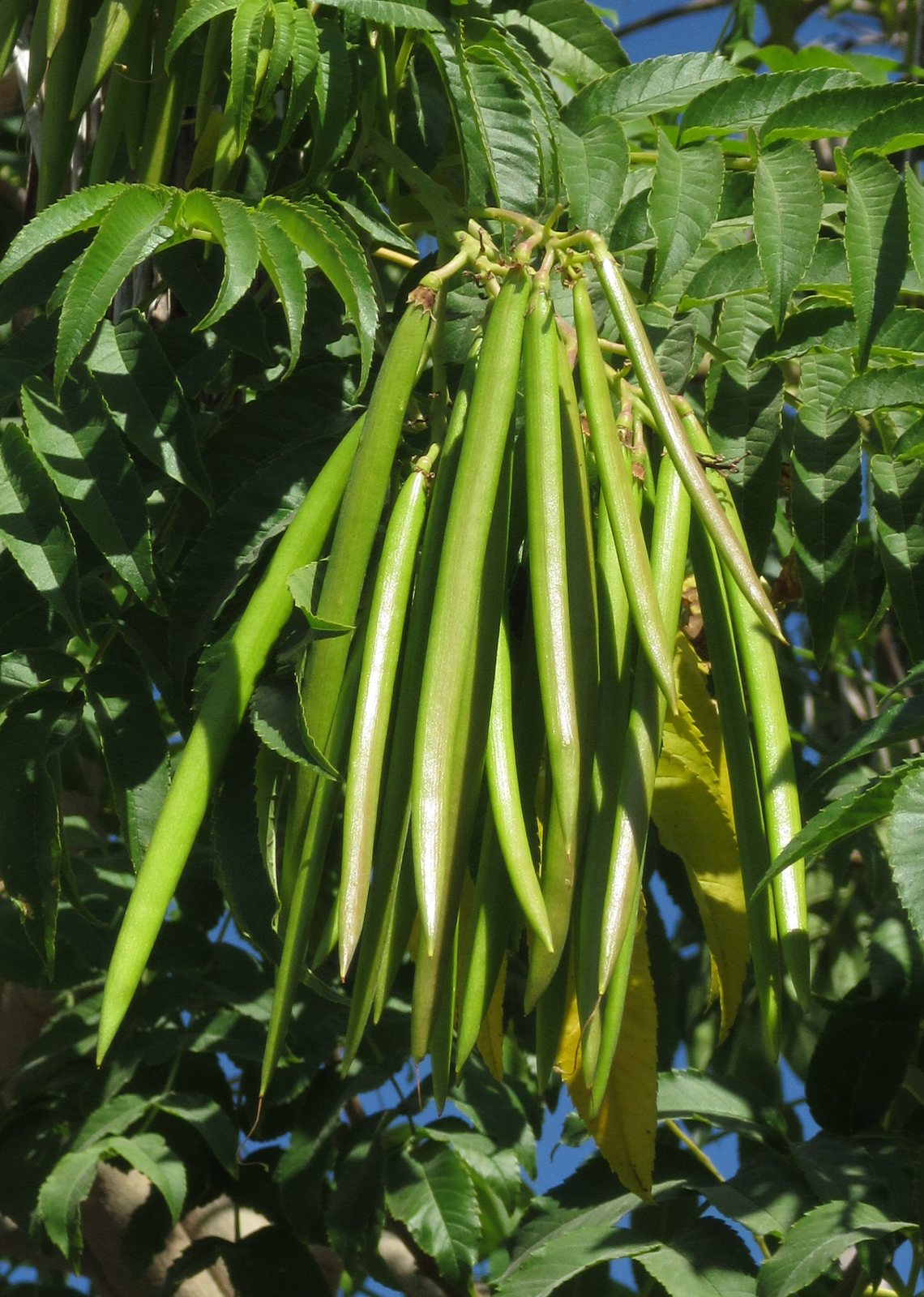
- Remove developing seed pods before they split and pull unwanted seedlings.
- ProtectSep–Oct
- Not winter-hardy in zones 6–7: bring pots or lifted plants into bright, frost-free shelter before the first frost.
- ProtectJan–Apr, Nov–Dec, every 14 days
- Keep sheltered plants frost-free and inspect leaf undersides for whitefly and spider mites.
- Plant after frost risk has passed, in a warm position with freely draining soil.
- Water deeply through the first growing season, then reduce watering once roots are established.
- Apply a light dose of balanced fertiliser in spring only if growth is weak; excessive nitrogen encourages leaves rather than flowers.
- Spread 2-3 in (5-8 cm) of mulch over the root area, keeping it clear of the stems.
- Remove developing seed pods and pull seedlings promptly where unwanted spread is a risk.
- Move container plants into bright, frost-free shelter before cold weather; water sparingly during winter.
Pruning. Prune in late winter or early spring, after the main frost risk, removing dead wood and shortening long shoots to maintain a branching framework. Flowers form on new growth, but repeated clipping during the growing season reduces the display.
Through the year
- Late winter
- Check sheltered container plants for whitefly and spider mites; keep the root ball only lightly moist.
- Early spring
- After frost risk has passed, remove dead or frost-damaged stems and shape the shrub.
- Spring
- Plant or repot into free-draining soil, refresh mulch and feed lightly if needed.
- Summer
- Water new plants deeply and check containers frequently during hot weather.
- Late summer
- Remove seed pods before they split and check nearby ground for seedlings.
- Autumn
- Bring containers under frost-free cover before cold nights and reduce watering as growth slows.
In the garden
- Use as a loose flowering screen along a sunny boundary where its mature width can be accommodated.
- Grow in a large patio container in cooler climates, with space to move it into winter shelter.
- Place behind salvias and ornamental grasses for a tall yellow backdrop in a hot-coloured border.
- Train as a small multi-stemmed tree in a warm courtyard, allowing room for its spreading crown.
Garden styles it suits: Modern tropical, Tropical, Southwestern, Mexican hacienda, Hot border and Pollinator garden.
Plant it with: Autumn sage, Mexican bush sage, Red yucca, Agapanthus and Society garlic.
Wildlife: Flowers attract bees and hummingbirds where hummingbirds occur. In regions where it is invasive, its spread can outweigh its value as a garden nectar plant.
Problems to watch for
- Frost damage: leaves and shoots blacken after freezing weather. Wait until spring growth starts before cutting back to healthy wood; shelter container plants.
- Root rot in wet soil: improve drainage, reduce watering and never leave a pot standing in water.
- Whitefly or spider mites, especially under cover: inspect leaf undersides, rinse foliage and use insecticidal soap labelled for the pest if needed.
- Poor flowering: move to a sunnier position, reduce nitrogen feeding and avoid repeatedly clipping new shoots.
Safety
Not known to be toxic to cats, dogs, horses or people, but reliable species-specific toxicity information is limited. No particular part is established as seriously poisonous; nevertheless, do not eat the leaves, flowers or seeds, or allow pets to chew them.
Where it spreads. Spreads by abundant wind-dispersed seed and can invade disturbed land and natural vegetation. It is invasive in Queensland and parts of New South Wales, Australia, as well as Hawaii, South Africa and several Pacific islands. Queensland lists it as a restricted invasive plant; check current state and local rules before buying, planting or moving it.
Easily confused with
Yellow trumpetbush (Tecoma castanifolia)
Has simple, undivided leaves rather than the divided leaves with several toothed leaflets found on Tecoma stans.
Cape honeysuckle (Tecomaria capensis)
Usually has orange or red flowers, although yellow forms exist. Its flowers are narrower and more curved, and its growth is often scrambling.
Yellow oleander (Cascabela thevetia)
Has narrow, leathery, undivided leaves and fleshy fruits rather than divided leaves and long, dry seed pods. Yellow oleander is highly poisonous.
The name
The Latin stans means 'standing' or 'upright', while 'yellow bells' describes the colour and bell-like shape of the flowers.
Propagation. Raise from seed in warmth in spring, or take semi-ripe cuttings in summer. Seed-grown plants may differ from named cultivars. Do not propagate where local weed regulations prohibit it.
Checked against open data
- Accepted botanical name
- Tecoma stans
- Native range
- Argentina Northeast, Argentina Northwest, Arizona, Bahamas, Bolivia, Cayman Is., Colombia, Costa Rica, Cuba, Dominican Republic, Ecuador and El Salvador.
- Measured
- Soil pH 6.5 to 8. Average height 610 cm.
Sources: GBIF (CC BY 4.0) and Trefle (CC BY 4.0). The care and design notes are LandscapeGPT's own.
See it in your own yard.
Upload a photo of your yard and see it redesigned with plants that suit your climate, each checked against your zone.