Yellow gum
Eucalyptus leucoxylon. Family Myrtaceae. Tree.
Also called South Australian blue gum, White ironbark.
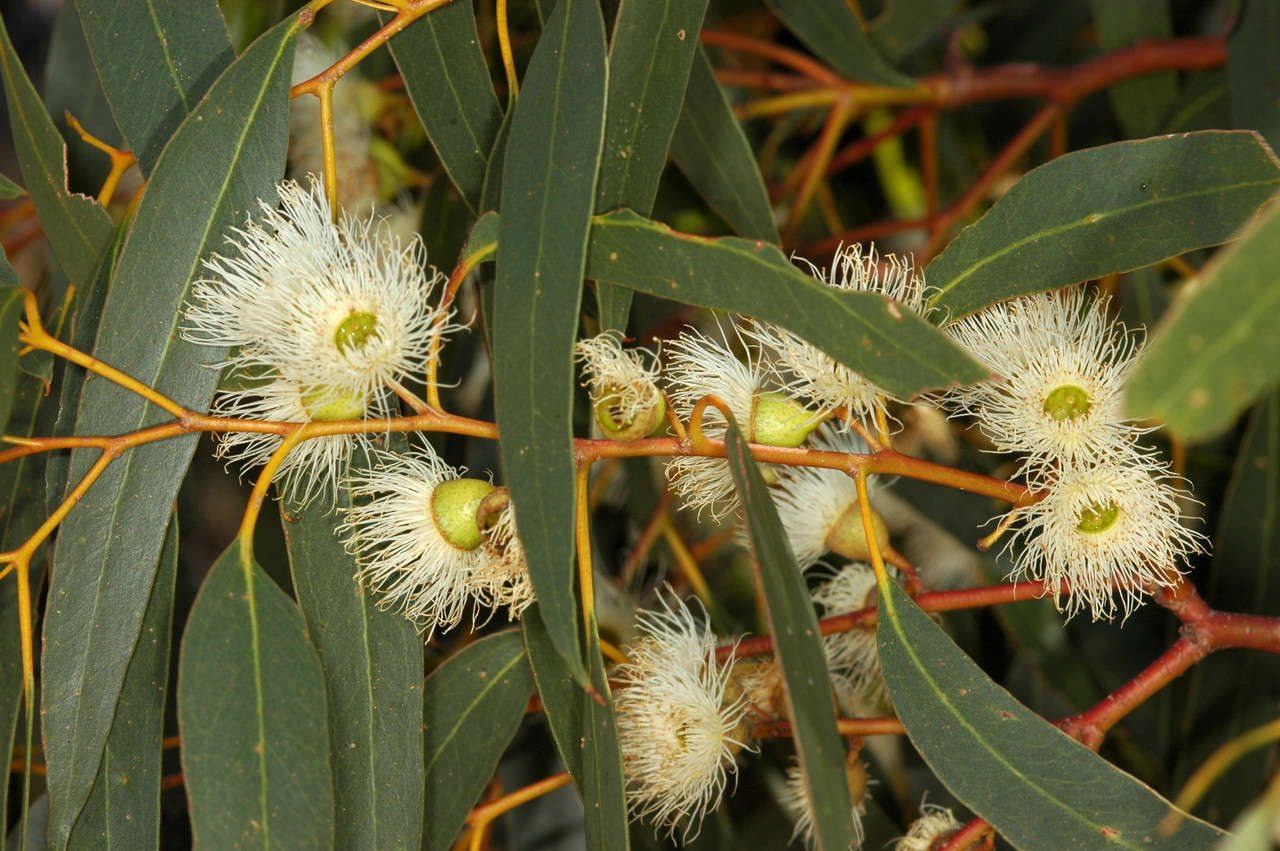
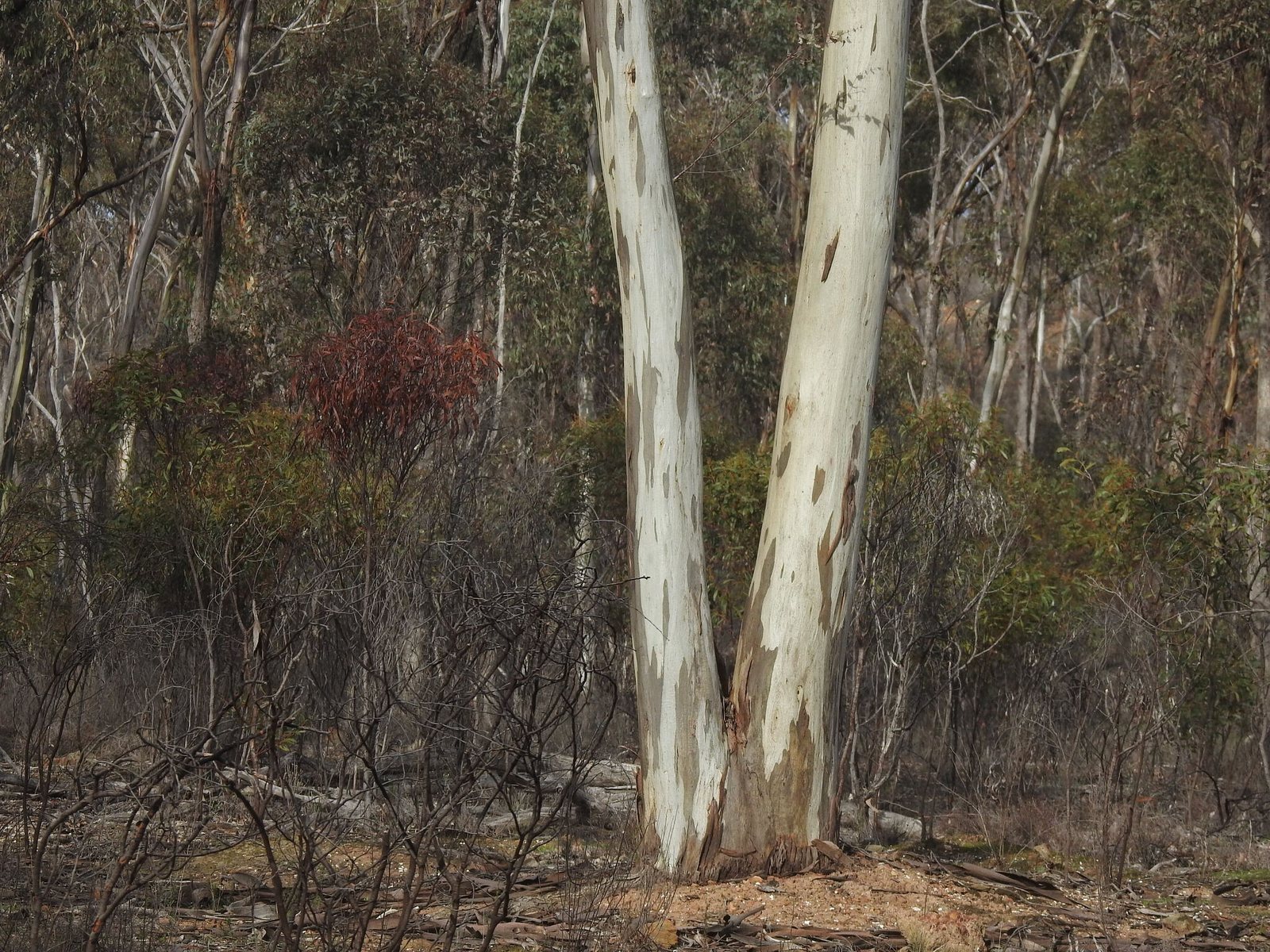
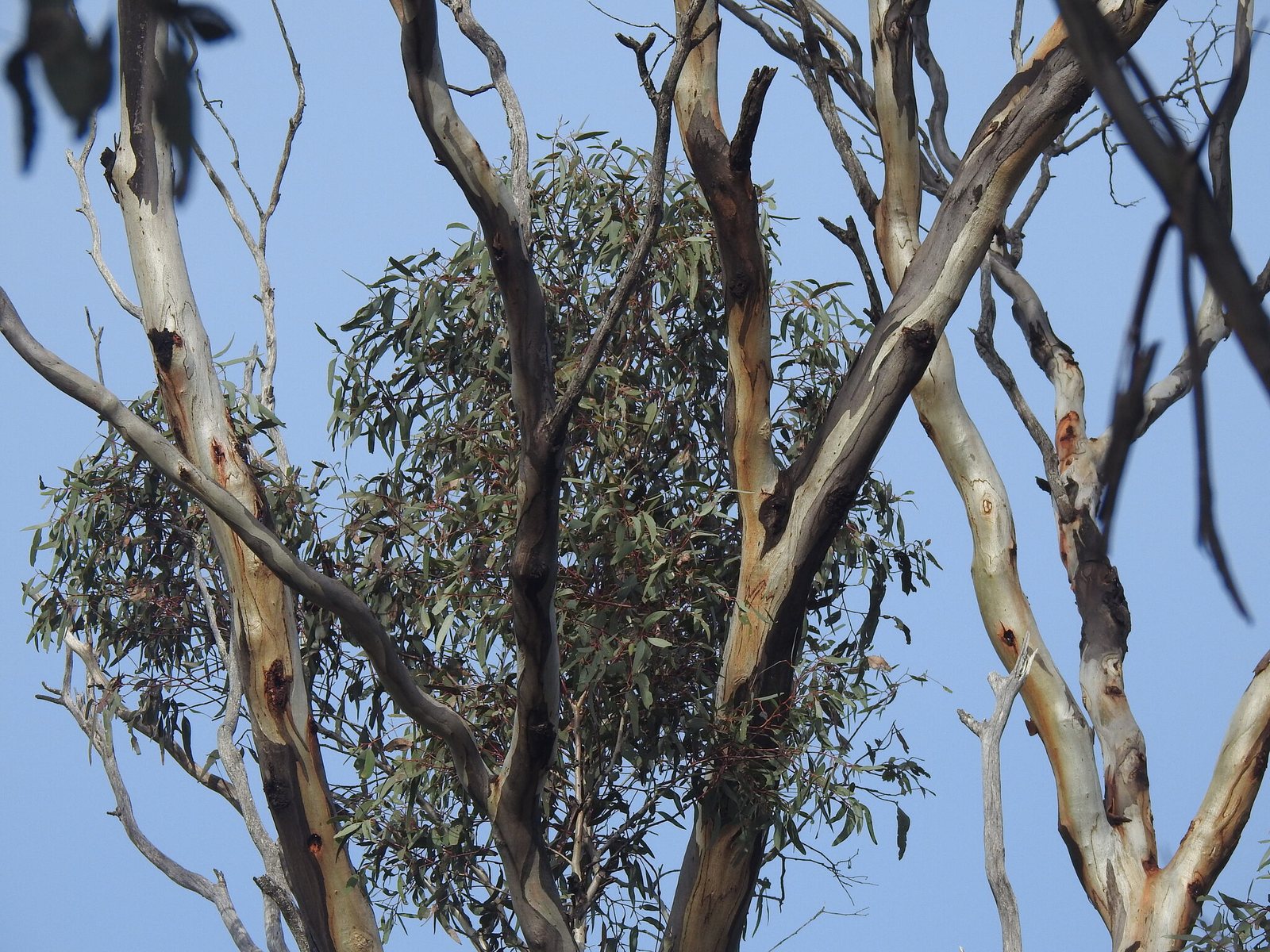
Yellow gum is an evergreen tree from southeastern Australia, grown for its smooth, patchy bark, grey-green canopy and nectar-rich flowers. Flowers may be cream, pink or red, depending on the plant; choose a named selection if colour matters. It needs a spacious site in a mild climate and is unsuitable for most small gardens.
At a glance
- Sun
- Full sun.
- Water
- Water deeply during establishment; drought tolerant once established. Avoid frequent shallow watering and persistently wet soil.
- Soil
- Well-drained sandy, loamy or clay soil; tolerates alkaline and limestone soils. Heavy clay is suitable only where water does not stand around the roots.
- Height
- 30-80 ft (9-24 m)
- Spread
- 20-50 ft (6-15 m)
- Flowers
- Usually autumn through spring, sometimes extending into summer; cream, pink or red flowers in clusters of three. Timing varies with subspecies and climate.
- Foliage
- Evergreen, narrow, lance-shaped adult leaves, usually dull green to grey-green; young leaves are broader and often bluish.
- Growth
- Moderate to fast, depending on rainfall, soil and climate.
- Care needed
- Medium
The year at a glance
- Pollinators
- Drought tolerant
- Heat tolerant
- Wildlife
| J | F | M | A | M | J | J | A | S | O | N | D | |
|---|---|---|---|---|---|---|---|---|---|---|---|---|
| Flowers | ||||||||||||
| Fruit | ||||||||||||
| Plant |
Northern hemisphere months. In Australia, shift them by six.
- Difficulty
- Hard
- Toughness
- Needs looking after
Will it suit your garden?
Pick your zone, country, light and whether you have pets.
Full sun is 6 or more hours of direct sun a day, part shade 3 to 6 hours, shade under 3.
How it grows
Planting day
7 ft (2 m)
After 1 year
10 ft (2.9 m)
After 2 years
13 ft (3.8 m)
After 3 years
15 ft (4.7 m)
After 5 years
21 ft (6.5 m)
About 16 years to full size.
From a typical nursery size, at an average rate for this kind of plant. A rule of thumb, not a forecast.
Good to know
- Cats and dogs
- Toxic
- Native to
- Australia
- Growth rate
- Fast
Care
Jobs through the year
- WaterApr–May, Sep–Oct, every 28 days
- Deep-water established ground-grown trees only in extended drought; young trees and containers need more frequent checks.
- WaterJun–Aug, every 21 days
- Deep-water established ground-grown trees during prolonged drought; avoid watering already-moist soil.
- MulchMay
- Maintain a 5–8 cm mulch layer, leaving the trunk base clear.
- PruneApr–May
- After severe frost risk, lightly train young trees and remove damaged or crossing branches; never top.
- ProtectJan–Apr, Oct–Dec
- Not reliably winter-hardy in zones 6–7; use bright frost-free winter accommodation for young container specimens.
- Plant in spring in frost-prone districts, or autumn in mild climates; choose a small, healthy tree without circling roots.
- Water deeply through the first two summers, allowing the surface soil to dry between waterings.
- Spread organic mulch 2-3 in (5-8 cm) deep over the root area, keeping it clear of the trunk.
- Avoid routine feeding; use a modest amount of low-phosphorus fertiliser only if growth is weak and soil fertility is poor.
- Stake only if the root ball moves in wind, use flexible ties and remove support once the tree is anchored.
- Allow room for mature roots and branches; keep well away from buildings, drains and heavily used seating areas.
Pruning. In late winter or early spring, remove dead, damaged or crossing branches and establish a sound framework while the tree is young. Avoid topping or repeated hard pruning; have a qualified arborist assess large limbs.
Through the year
- Spring
- Plant in frost-prone areas after severe frost risk has passed, and water the root ball thoroughly.
- Late spring
- Check young growth for sap-sucking insects and inspect stakes and ties.
- Summer
- Deep-water young trees during dry spells and maintain a mulch layer clear of the trunk.
- Autumn
- Plant in mild climates while the soil is warm and seasonal rain can help establishment.
- Winter
- Check drainage after prolonged rain and keep fallen bark and leaves off paths.
- Late winter
- Inspect the branch structure and arrange any necessary pruning before vigorous spring growth.
In the garden
- Use as a specimen tree in a large lawn or open gravel planting, where its pale trunk is visible.
- Provide light, shifting shade over drought-tolerant shrubs and grasses.
- Include in a spacious Australian native garden with wattles, correas and lomandras.
- Use flowering selections as a winter nectar source in a wildlife garden.
Garden styles it suits: Australian native, Mediterranean, Desert / xeriscape, Wildlife garden, Architectural minimal and Dry gravel garden.
Plant it with: Lomandra, Dianella, Correa, Westringia, Kangaroo paw and Burgundy bottlebrush.
Wildlife: Flowers provide nectar and pollen for bees and, in Australia, honeyeaters and lorikeets. Older trees can eventually develop hollows used by native birds and mammals.
Problems to watch for
- Psyllids and lerps can cause sticky deposits and leaf loss: maintain sensible watering for young trees, conserve insect predators and avoid unnecessary broad-spectrum sprays.
- Eucalyptus gall wasp can produce swollen, distorted new growth: check local biosecurity advice, especially in the UK, and remove lightly affected shoots only where practical.
- Waterlogging can cause root decline: improve site drainage before planting rather than trying to correct it around an established tree.
- Large limbs may fail, particularly on stressed or poorly structured trees: avoid planting over busy seating areas and have suspect branches assessed by an arborist.
Safety
Leaves and bark contain eucalyptus oils and should not be eaten by people, cats, dogs or horses. Ingestion can cause digestive upset and other poisoning symptoms; concentrated eucalyptus oil is especially dangerous and can cause severe poisoning if swallowed.
Where it spreads. Naturalised outside its native range in parts of Western Australia, where it can escape from plantings. Check local environmental-weed guidance before planting near bushland.
Easily confused with
Red ironbark (Eucalyptus sideroxylon)
Red ironbark retains dark, deeply furrowed bark over the trunk and larger branches; yellow gum has mostly smooth, pale bark, sometimes with rough bark near the base.
Yellow box (Eucalyptus melliodora)
Yellow box generally has buds in groups of seven and more persistent fibrous or flaky bark on the lower trunk; yellow gum normally has buds in groups of three.
The name
The species name leucoxylon means 'white wood', while yellow gum refers to the yellowish colour of its timber.
Propagation. Usually raised from seed sown on the surface of a free-draining seed mix and kept lightly moist in a warm, bright position. Seedlings may not retain a parent's flower colour; named colour selections are generally propagated by specialist grafting.
Checked against open data
- Accepted botanical name
- Eucalyptus leucoxylon
- Native range
- New South Wales, South Australia and Victoria.
- Measured
- Soil pH 6 to 8.5. Average height 580 cm.
Sources: GBIF (CC BY 4.0) and Trefle (CC BY 4.0). The care and design notes are LandscapeGPT's own.
See it in your own yard.
Upload a photo of your yard and see it redesigned with plants that suit your climate, each checked against your zone.