Yesterday, today and tomorrow
Brunfelsia pauciflora. Family Solanaceae. Shrub.
Also called Yesterday-today-and-tomorrow, Kiss-me-quick.
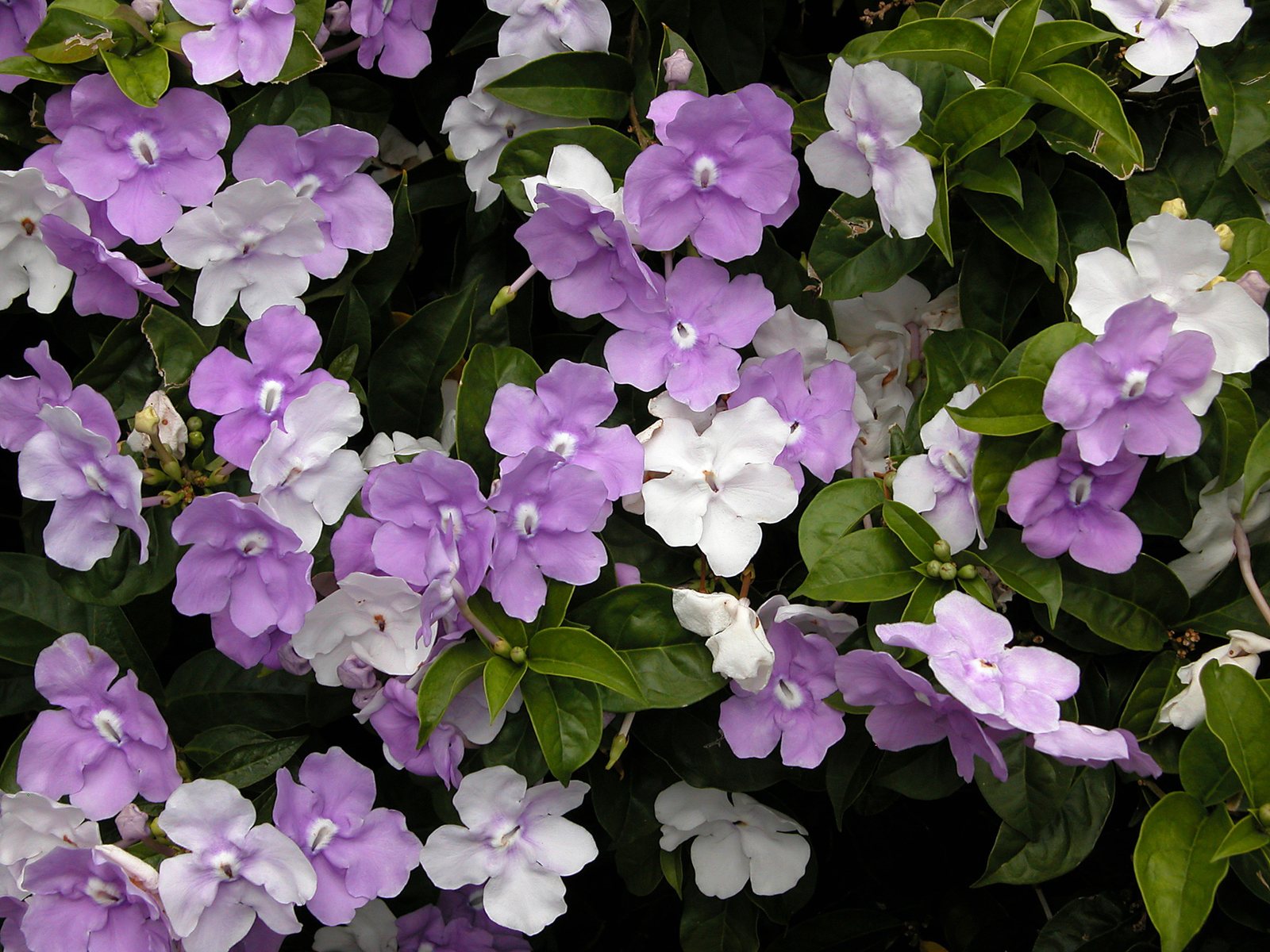
This Brazilian evergreen shrub carries flowers that open purple, fade to lavender and finish white, often showing all three colours together. Gardeners grow it for its spring display in sheltered, frost-free borders or containers that can be moved under cover in colder climates.
At a glance
- Sun
- Partial shade, ideally morning sun and afternoon shade; tolerates more sun where summers are mild and soil stays moist.
- Water
- Keep evenly moist during active growth without leaving the roots waterlogged. Water less in winter, but do not let container plants dry out completely.
- Soil
- Humus-rich, well-drained, acidic to slightly acidic soil; use ericaceous potting compost in containers where local soil or water is alkaline.
- Height
- 4-8 ft (1.2-2.4 m), occasionally taller in warm, sheltered gardens
- Spread
- 4-8 ft (1.2-2.4 m)
- Flowers
- Mainly spring to early summer, sometimes repeating later in warm climates; flowers change from purple through lavender to white.
- Foliage
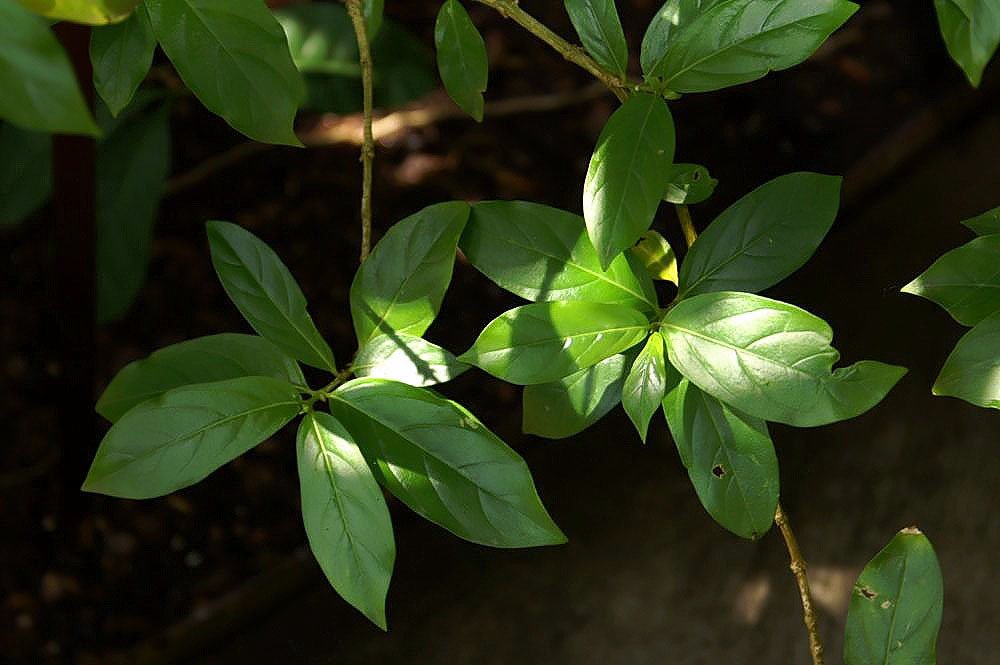
- Evergreen. Dark green, leathery, oval to oblong leaves; cold or drought can cause leaf loss.
- Growth
- Moderate
- Care needed
- Medium
The year at a glance
- Pollinators
- Heat tolerant
- Low allergen
- Fragrant
| J | F | M | A | M | J | J | A | S | O | N | D | |
|---|---|---|---|---|---|---|---|---|---|---|---|---|
| Flowers | ||||||||||||
| Plant |
Northern hemisphere months. In Australia, shift them by six.
- Difficulty
- Hard
- Toughness
- Needs looking after
Will it suit your garden?
Pick your zone, country, light and whether you have pets.
Full sun is 6 or more hours of direct sun a day, part shade 3 to 6 hours, shade under 3.
How it grows
Planting day
1.6 ft (0.5 m)
After 1 year
2.5 ft (0.76 m)
After 2 years
3 ft (1 m)
After 3 years
4 ft (1.3 m)
After 5 years
6 ft (1.8 m)
full size
About 5 years to full size.
From a typical nursery size, at an average rate for this kind of plant. A rule of thumb, not a forecast.
Good to know
- Cats and dogs
- Toxic
- Growth rate
- Moderate
Care
Jobs through the year
- WaterApr–May, Sep, every 7 days
- For established plants, water as the surface dries; young plants and pots need more frequent checks.
- WaterJun–Aug, every 3 days
- Check established plants and water deeply as the surface dries; keep evenly moist, never waterlogged.
- WaterJan–Mar, Oct–Dec, every 14 days
- Check overwintering pots and water sparingly when needed; never let the root ball dry completely.
- FeedApr
- Apply slow-release fertiliser for acid-loving shrubs at the label rate.
- MulchApr–May
- Apply leaf mould or fine bark, keeping it away from stems.
- PruneJun
- Lightly shorten long shoots immediately after the main flowering flush; remove dead or crossing wood.
- ProtectSep–Oct
- Move into bright, frost-free shelter before frost; this shrub cannot overwinter outdoors in zones 6–7.
- ProtectMay–Jun
- Acclimatise plants outdoors after frost; shelter from drying wind and strong afternoon sun.
- Water deeply when the soil surface begins to dry; check pots more often during hot weather.
- Apply a slow-release fertiliser suitable for acid-loving shrubs in spring, following the label rate.
- Mulch with leaf mould or fine bark, keeping it clear of the stems.
- Shelter from drying winds, harsh afternoon sun and frost.
- In cold climates, overwinter containers in a bright, frost-free greenhouse or conservatory and reduce watering.
Pruning. Prune just after the main flowering flush, shortening long shoots to maintain a balanced shape and removing dead or crossing branches. Avoid routine hard pruning or late-season clipping, which can reduce the next flower display.
Through the year
- Spring
- Plant once frost risk has passed, or repot container plants as growth begins.
- Spring
- Apply fertiliser for acid-loving shrubs and refresh the mulch.
- Late spring
- After the main flowering flush, lightly prune to shape; adjust timing to local flowering.
- Summer
- Check soil moisture regularly and inspect leaf undersides for mites and whitefly.
- Late summer
- Take semi-ripe cuttings from healthy, non-flowering shoots.
- Autumn
- Move containers under cover before frost in cool climates.
- Winter
- Keep sheltered plants bright and frost-free, watering sparingly without letting the root ball dry out.
In the garden
- Use as a flowering shrub beneath high tree canopies where it receives filtered light.
- Grow in a large container for a sheltered courtyard, with room to move it indoors for winter.
- Combine with camellias, azaleas and ferns in a moist, acidic border.
- Set against plain evergreen foliage so the purple, lavender and white flowers stand out.
Garden styles it suits: Tropical, Modern courtyard, Woodland, Romantic rose garden, Blues and silvers and Small-space.
Plant it with: Camellias, Azaleas, Gardenias, Clivias, Cast-iron plants and Bird's-nest ferns.
Wildlife: Flowers may be visited by butterflies and other insects in warm climates. It is not a native habitat plant in the United States, the United Kingdom, Canada or Australia.
Problems to watch for
- Yellow leaves with green veins often indicate iron deficiency in alkaline conditions; check soil pH and use an acidic growing medium, with chelated iron if needed.
- Root rot and wilting can follow waterlogging; improve drainage, empty pot saucers and let the surface begin to dry between waterings.
- Spider mites cause pale stippling and fine webbing, especially under cover; rinse leaf undersides and use a labelled insecticidal soap if necessary.
- Whitefly or scale can cause sticky honeydew and sooty mould; inspect regularly, remove small infestations and use an appropriate labelled treatment.
Safety
All parts should be treated as poisonous to people, cats, dogs and horses, especially the berries and seeds. Eating them can cause vomiting, tremors, seizures and potentially death. Keep away from children and grazing animals; seek urgent medical or veterinary advice after suspected ingestion.
Easily confused with
Yesterday, today and tomorrow (Brunfelsia australis)
Shares the same flower colour changes but generally has smaller leaves and smaller, often more strongly scented flowers. Nursery labels frequently confuse the species.
Lady of the night (Brunfelsia americana)
Has long-tubed flowers that open creamy white and age yellow, rather than changing from purple to white; their scent is strongest in the evening.
The name
Brunfelsia honours the German botanist Otto Brunfels, pauciflora means few-flowered, and the common name describes the successive colours of the ageing flowers.
Propagation. Take semi-ripe cuttings in summer and root them in a free-draining propagation mix with warmth and high humidity. Rooting can be slow; layering low branches is another option.
Checked against open data
- Accepted botanical name
- Brunfelsia pauciflora
- Native range
- Brazil South and Brazil Southeast.
Sources: GBIF (CC BY 4.0) and Trefle (CC BY 4.0). The care and design notes are LandscapeGPT's own.
See it in your own yard.
Upload a photo of your yard and see it redesigned with plants that suit your climate, each checked against your zone.