Yew pine
Podocarpus macrophyllus. Family Podocarpaceae. Tree.
Also called Buddhist pine, Japanese yew, Chinese yew, Fern pine.
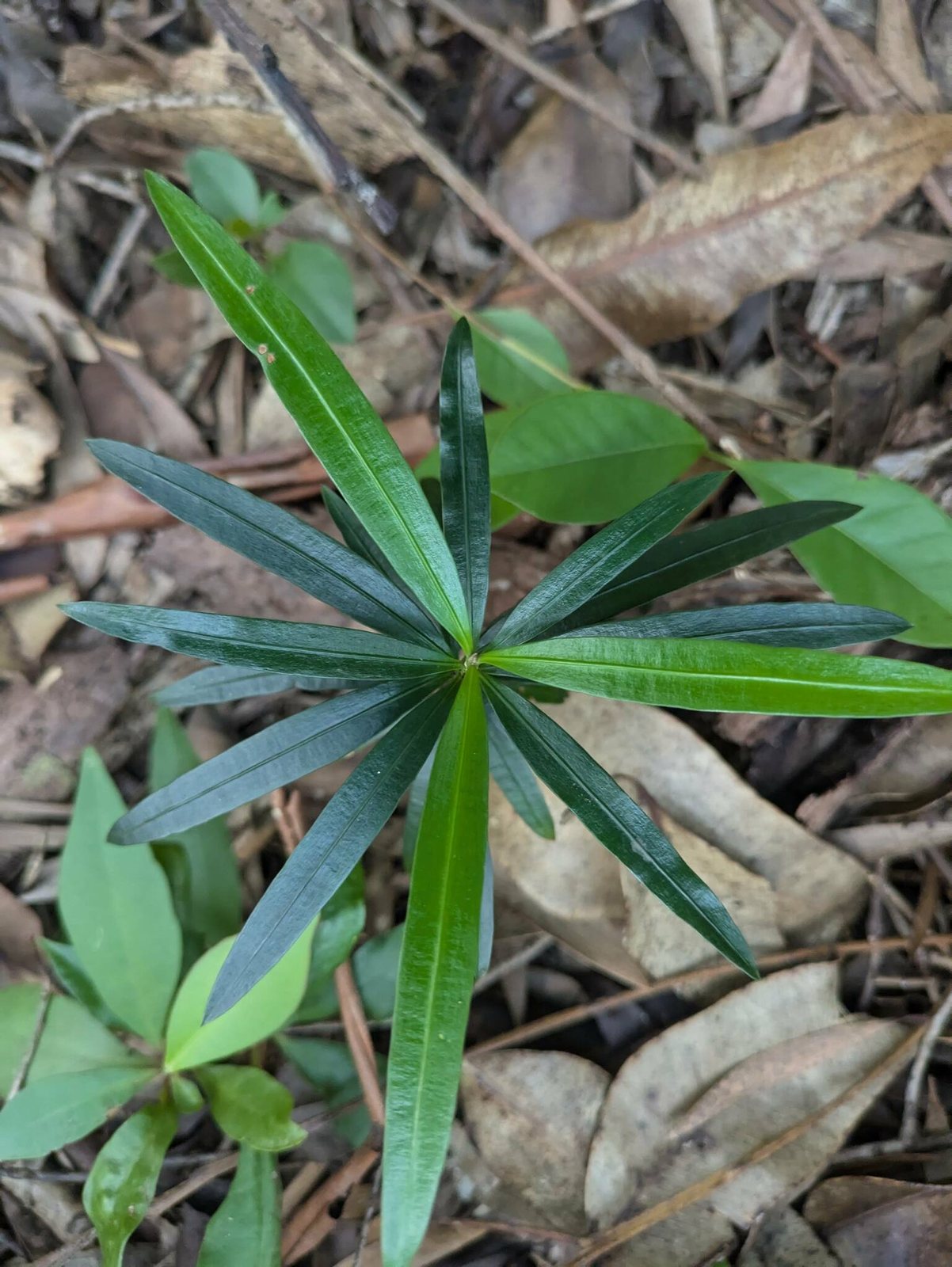
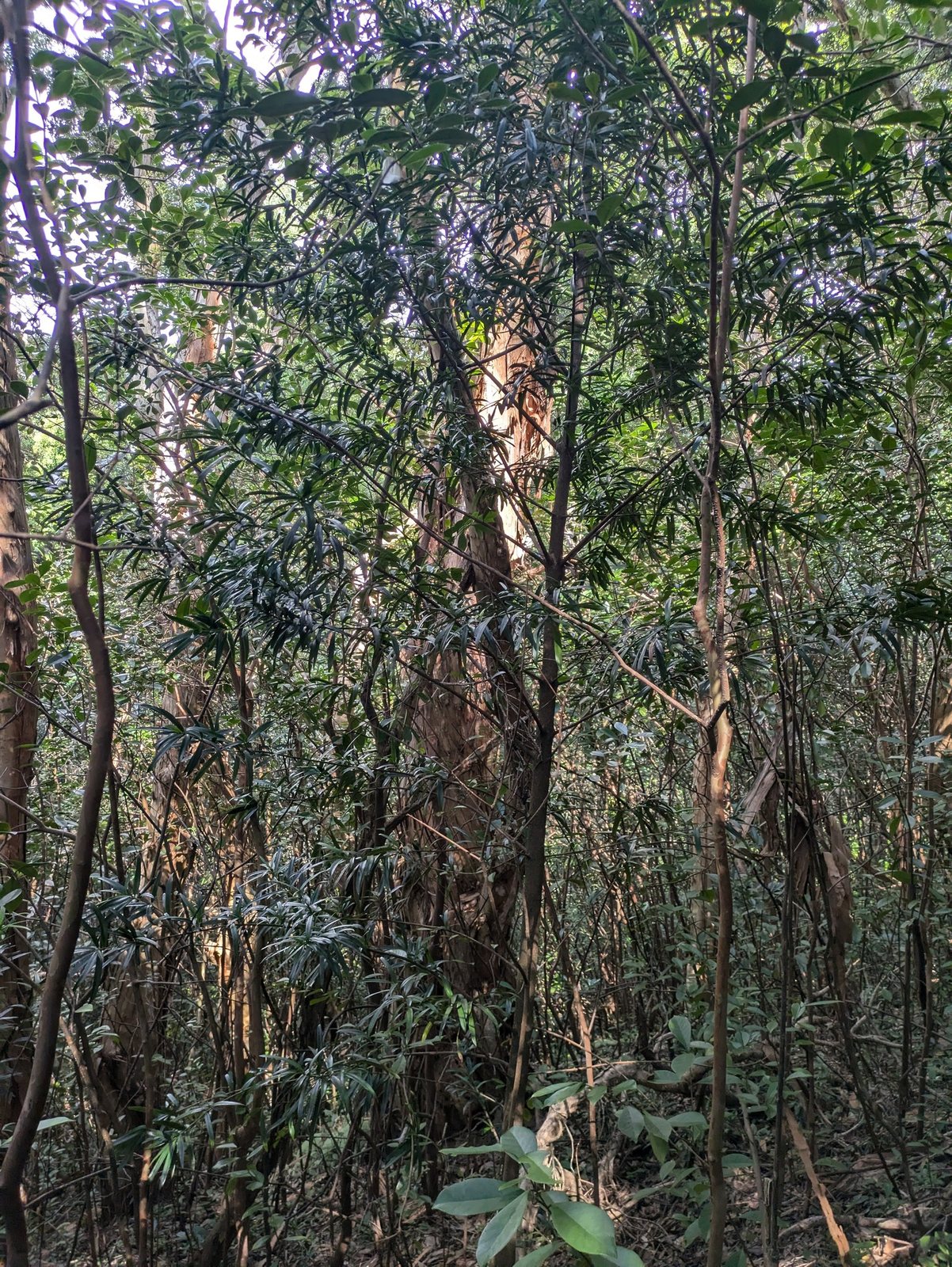
Yew pine is an evergreen conifer grown for its narrow, dark green leaves and tolerance of clipping. You can train it as a dense hedge, a formal specimen or a small tree with its lower branches removed. It needs a mild climate and well-drained soil; persistent wetness and severe frost can damage it.
At a glance
- Sun
- Full sun to partial shade; growth is generally denser in good light. Shelter from cold, drying winds.
- Water
- Water regularly while establishing. Established plants tolerate short dry spells, but container plants need watering whenever the surface of the compost starts to dry.
- Soil
- Well-drained loam or sandy soil, preferably slightly acidic. Avoid waterlogged ground; strongly alkaline soil can cause yellow leaves.
- Height
- 30-50 ft (9-15 m) if left unpruned; readily maintained much smaller
- Spread
- 15-25 ft (4.5-7.5 m) if left unpruned
- Foliage
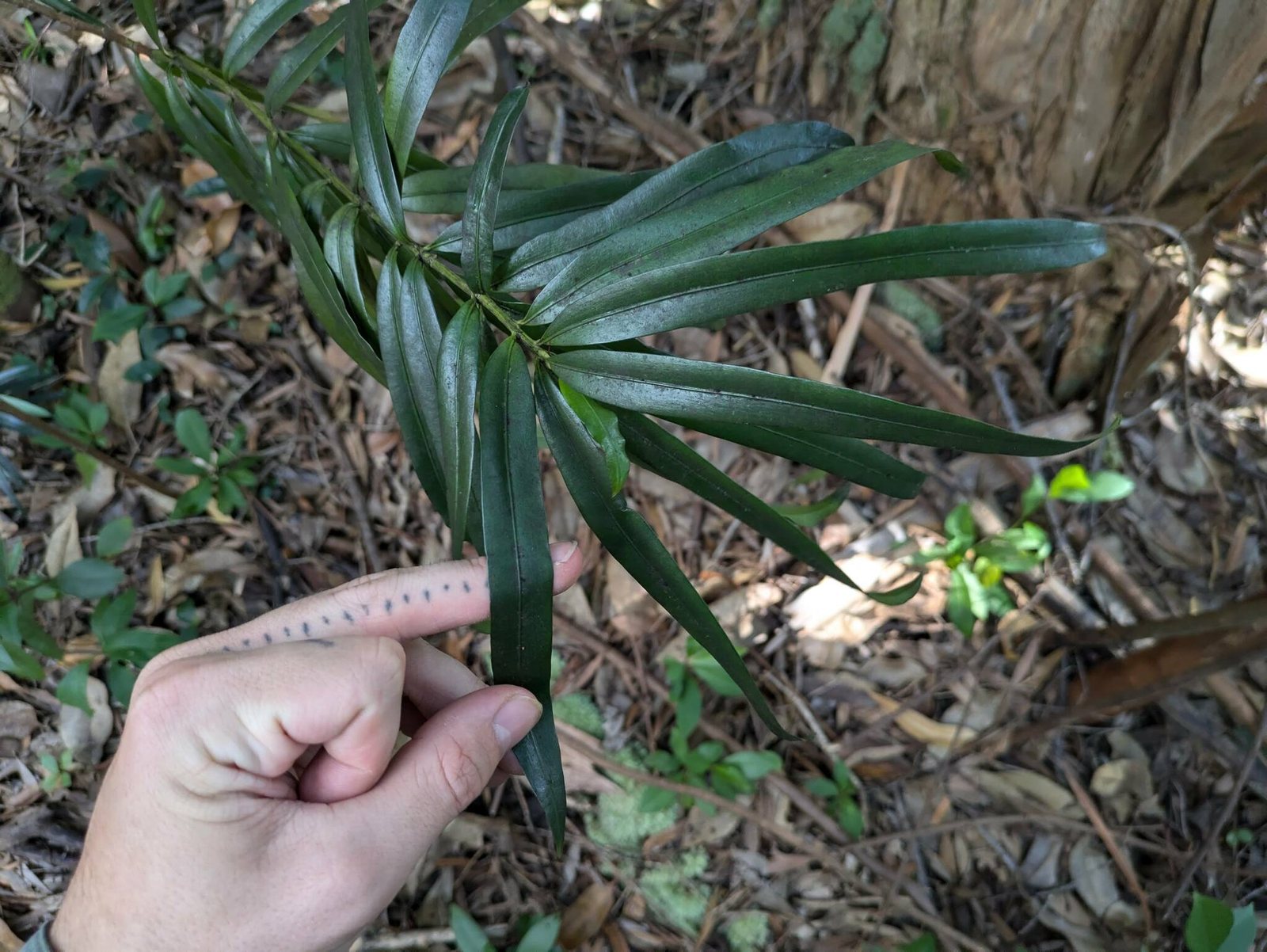
- Evergreen. Leathery, narrow, strap-shaped leaves, usually 2-5 in (5-13 cm) long, with a prominent central vein. New growth is lighter green before darkening.
- Growth
- Slow to moderate, depending on warmth, moisture and growing conditions.
- Care needed
- Low
The year at a glance
- Deer resistant
- Drought tolerant
- Heat tolerant
- Wildlife
| J | F | M | A | M | J | J | A | S | O | N | D | |
|---|---|---|---|---|---|---|---|---|---|---|---|---|
| Fruit | ||||||||||||
| Plant |
Northern hemisphere months. In Australia, shift them by six.
- Difficulty
- Hard
- Toughness
- Needs looking after
Will it suit your garden?
Pick your zone, country, light and whether you have pets.
Full sun is 6 or more hours of direct sun a day, part shade 3 to 6 hours, shade under 3.
How it grows
Planting day
7 ft (2 m)
After 1 year
8 ft (2.4 m)
After 2 years
9 ft (2.8 m)
After 3 years
10 ft (3.2 m)
After 5 years
13 ft (3.9 m)
About 26 years to full size.
From a typical nursery size, at an average rate for this kind of plant. A rule of thumb, not a forecast.
Good to know
- Cats and dogs
- Toxic
- Growth rate
- Slow
Care
Jobs through the year
- WaterApr–May, Sep–Oct, every 14 days
- For established in-ground plants, water only if soil is drying; young plants and pots need more frequent checks.
- WaterJun–Aug, every 7 days
- Water established plants deeply during dry weather; let soil drain and check pots more frequently.
- MulchMay
- Apply 5–8 cm of organic mulch, keeping it clear of the trunk.
- FeedMay
- Feed lightly only if growth is weak or soil is poor.
- PruneMay–Jun
- After frost risk passes, remove dead shoots and lightly shape only where needed.
- ProtectJan–Apr, Oct–Dec
- Not reliably hardy in zones 6–7; grow in a movable container and overwinter in bright, frost-free shelter.
- Water deeply through the first two growing seasons, letting the soil drain between waterings.
- Apply 2-3 in (5-8 cm) of organic mulch over the root area, keeping it clear of the trunk.
- Feed lightly in spring only if growth is weak or the soil is poor; avoid heavy feeding.
- Use a container with drainage holes and a free-draining potting mix; never leave it standing in water.
- Protect young plants from hard frost, and move containers under cover where winters exceed its hardiness.
Pruning. Prune in late spring or early summer, after the main risk of frost, to shorten shoots or remove unwanted branches. For hedges, clip lightly during active growth, keeping the base wider than the top; avoid late-season pruning in frost-prone areas.
Through the year
- Spring
- Plant once severe frost has passed, water thoroughly and mulch the root area.
- Late spring
- Remove frost-damaged shoots once new growth shows which wood is alive.
- Early summer
- Shape hedges and topiary, or selectively shorten branches on specimen plants.
- Summer
- Check soil moisture during dry weather, especially for new plants and containers.
- Autumn
- Stop clipping in frost-prone gardens so new shoots can harden before winter.
- Winter
- Protect container roots from freezing and check that pots and planting sites drain freely.
In the garden
- Clip into a tall evergreen hedge to screen neighbouring buildings or frame a courtyard.
- Train as a narrow, upright specimen beside an entrance, allowing enough room for its eventual spread.
- Use as a dark green backdrop for camellias, hydrangeas and shade-tolerant foliage plants.
- Grow in a large container as restrained topiary for a sheltered terrace.
- Prune selectively into cloud-like layers for a Japanese-inspired garden.
Garden styles it suits: Architectural minimal, Formal, Japanese, Modern courtyard, Topiary garden and Green on green.
Plant it with: Camellia, Japanese maple, Cast iron plant, Lilyturf, Japanese forest grass and Oakleaf hydrangea.
Wildlife: Female plants can produce seeds above fleshy, reddish-purple stalks when a male plant is nearby. Birds may eat these fleshy structures, and dense foliage provides cover and nesting shelter.
Problems to watch for
- Root rot in poorly drained soil: correct drainage and reduce watering; badly affected plants may need replacing.
- Scale insects and associated sooty mould: inspect stems and leaf undersides, prune heavily infested shoots and use a labelled horticultural oil where needed.
- Yellow leaves in alkaline soil: check soil pH and drainage before feeding; use chelated iron suitable for your soil if iron deficiency is confirmed.
- Frost scorch and shoot dieback: choose a sheltered position, protect young plants and wait until spring growth begins before pruning damaged wood.
Safety
Treat the foliage and especially the seeds as toxic to people, cats, dogs and horses. Swallowing them can cause vomiting, diarrhoea and abdominal discomfort; seek medical or veterinary advice after ingestion. Keep seeds and fallen reproductive structures away from children and animals. Despite its common names, this is not a true yew (Taxus).
Easily confused with
English yew (Taxus baccata)
English yew has much shorter needles, usually arranged in two flat ranks, and seeds partly enclosed in red, cup-shaped arils. Yew pine has longer, broader leaves and seeds sitting above fleshy stalks.
African fern pine (Afrocarpus gracilior)
African fern pine usually has finer, narrower, softer-looking foliage and a more airy crown. Its leaves lack the strongly raised central vein typical of yew pine.
Plum yew (Cephalotaxus harringtonia)
Plum yew has needles arranged in conspicuously flat ranks, with two pale bands beneath, and plum-like seeds. Yew pine leaves are more strap-shaped and arranged spirally around the shoots.
The name
Podocarpus comes from Greek words meaning 'foot' and 'fruit', referring to the stalked seed, while macrophyllus means 'large-leaved'.
Propagation. Take semi-ripe cuttings in summer, using a free-draining medium and gentle bottom heat if available; rooting can be slow. Fresh seed is another option, but seedlings vary and may take months to germinate.
Checked against open data
- Accepted botanical name
- Podocarpus macrophyllus
- In the US and Canada
- Introduced in the lower 48 states and Puerto Rico.
- Native range
- China South-Central, China Southeast, Japan, Myanmar and Taiwan.
- Measured
- Soil pH 5.5 to 7. Average height 914 cm.
Sources: GBIF (CC BY 4.0), USDA PLANTS and Trefle (CC BY 4.0). The care and design notes are LandscapeGPT's own.
See it in your own yard.
Upload a photo of your yard and see it redesigned with plants that suit your climate, each checked against your zone.