Zebra plant
Haworthiopsis attenuata. Family Asphodelaceae. Succulent.
Also called Zebra haworthia, Haworthia attenuata.
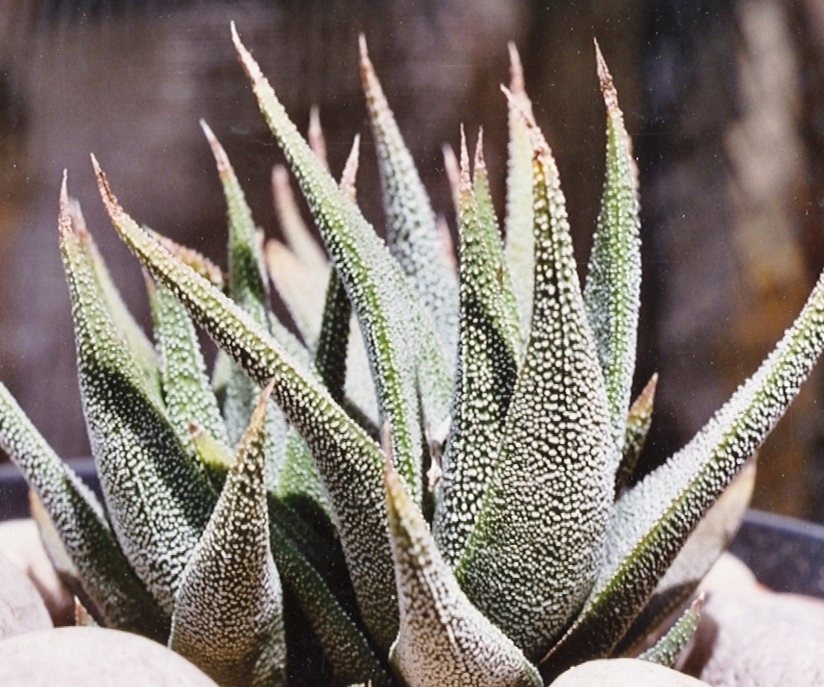
A small, evergreen succulent from South Africa, zebra plant forms pointed rosettes of dark green leaves marked with raised white bands. Grow it for its patterned foliage in pots, shallow succulent bowls or sheltered, frost-free rock gardens; elsewhere, keep it indoors over winter.
At a glance
- Sun
- Bright indirect light or partial shade; gentle morning sun is suitable. Protect from strong afternoon sun, especially behind glass.
- Water
- Let the potting mix dry between thorough waterings. Water much less in winter and during very hot spells when growth slows; never leave the pot standing in water.
- Soil
- A gritty, fast-draining succulent mix in a pot with drainage holes. Outdoors, use sharply drained sandy or gravelly soil, sheltered from prolonged winter rain.
- Height
- 0.3-0.7 ft (0.1-0.2 m), excluding flower stems
- Spread
- 0.5-1 ft (0.15-0.3 m) as an established clump
- Flowers
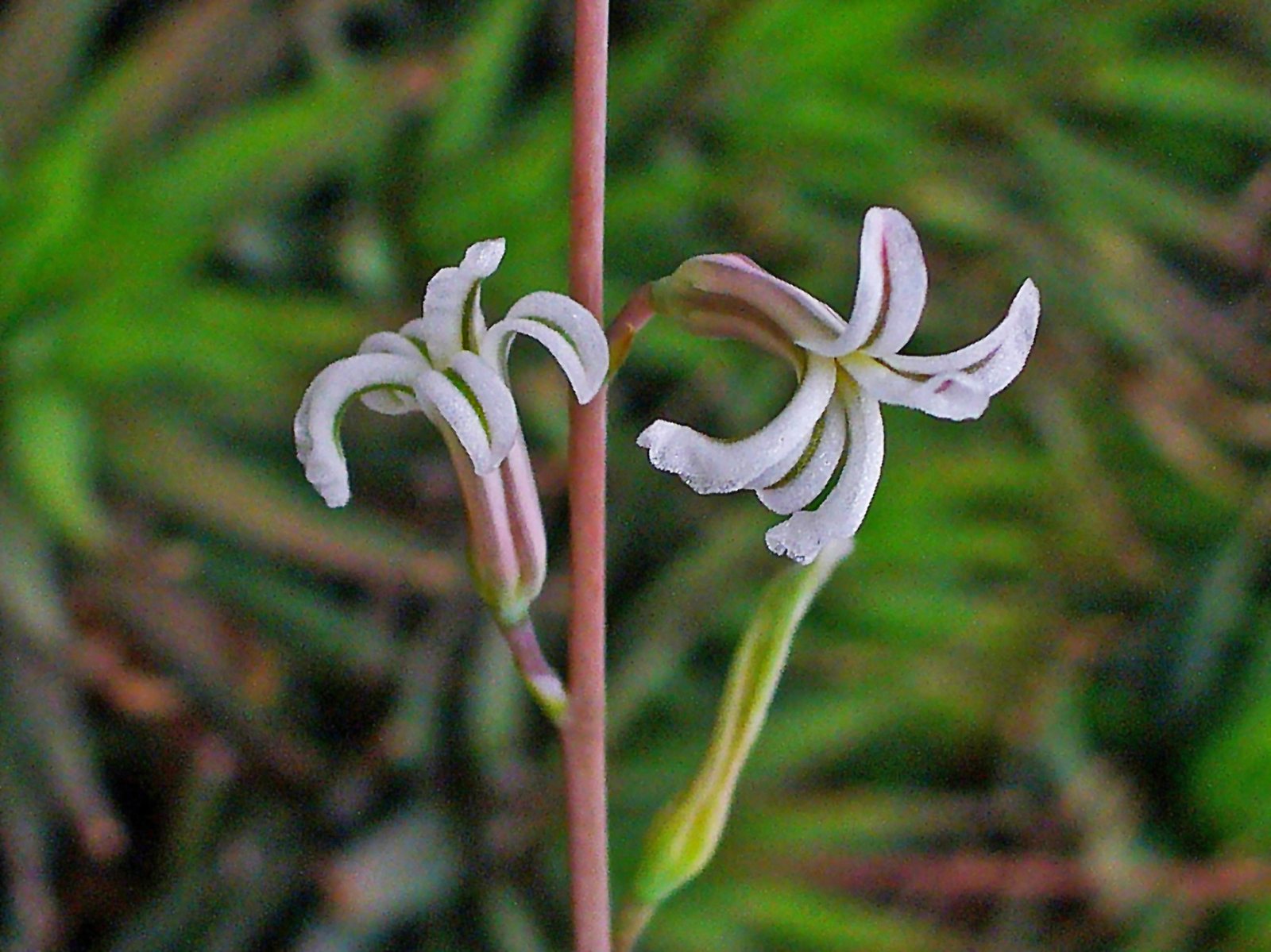
- Small white to pale pink, tubular flowers on slender stems, usually in spring or summer; flowering indoors is variable.
- Foliage
- Evergreen. Firm, pointed, dark green leaves arranged in rosettes, with raised white bumps forming bands across the outer surfaces; the inner surfaces also have white bumps.
- Growth
- Slow; gradually produces offsets around the parent rosette.
- Care needed
- Low
The year at a glance
- Drought tolerant
- Heat tolerant
- Low allergen
| J | F | M | A | M | J | J | A | S | O | N | D | |
|---|---|---|---|---|---|---|---|---|---|---|---|---|
| Plant |
Northern hemisphere months. In Australia, shift them by six.
- Difficulty
- Easy
- Toughness
- Very tough
Will it suit your garden?
Pick your zone, country, light and whether you have pets.
Full sun is 6 or more hours of direct sun a day, part shade 3 to 6 hours, shade under 3.
How it grows
Planting day
0.5 ft (0.15 m)
full size
About 10 years to full size.
From a typical nursery size, at an average rate for this kind of plant. A rule of thumb, not a forecast.
Good to know
- Cats and dogs
- Safe
- Growth rate
- Slow
Care
Jobs through the year
- WaterMar–Jun, Sep–Oct, every 14 days
- Grow in a pot; water thoroughly only when the mix is dry and avoid the rosette centre.
- WaterJul–Aug, every 21 days
- Water only when dry; reduce further during very hot spells when growth slows.
- WaterJan–Feb, Nov–Dec, every 30 days
- In bright indoor shelter, water sparingly only when the mix has dried.
- FeedApr, Jun
- Give dilute succulent fertiliser once in each listed month if actively growing.
- ProtectJan–Apr, Oct–Dec
- Keep indoors before frost and protect from cold draughts.
- ProtectMay–Sep
- Use a sheltered, partly shaded outdoor position and avoid harsh afternoon sun.
- Water the soil thoroughly when dry, then let excess water drain away.
- Keep water from sitting in the centre of the rosette, especially in cool conditions.
- Feed once or twice during active spring or early-summer growth with a dilute succulent fertiliser.
- Repot in spring only when crowded, using a slightly larger pot and fresh, gritty mix.
- Move outdoor pots under cover before frost; acclimatise plants gradually when returning them outdoors.
Pruning. No shaping is needed. Remove fully dry basal leaves gently and cut spent flower stems close to their base with clean scissors.
Through the year
- Spring
- Check roots and repot crowded plants; separate well-rooted offsets if wanted.
- Spring
- Increase watering as growth resumes and give a dilute feed.
- Late spring
- Once frost risk has passed, gradually acclimatise indoor plants to a sheltered outdoor position.
- Summer
- Protect from harsh afternoon sun and avoid watering an already moist pot during hot, slow-growth periods.
- Autumn
- Bring pots indoors before frost and reduce watering as light levels fall.
- Winter
- Keep in bright light, protect from cold draughts and water sparingly.
In the garden
- Use a single rosette in a small, plain pot to show off its striped leaves.
- Combine with other small, shade-tolerant succulents in a shallow bowl with drainage holes.
- Place pots on a bright windowsill or sheltered courtyard shelf for year-round foliage.
- Plant among rocks in a partly shaded, frost-free succulent garden, keeping the crown above wet soil.
Garden styles it suits: Contemporary minimal, Architectural minimal, Modern courtyard, Small-space, Desert modern and Low-maintenance.
Plant it with: Ox tongue, Fairy washboard, Window haworthia and Cooper's haworthia.
Wildlife: Flowers may attract small insect visitors outdoors, but this plant offers limited wildlife value in most gardens.
Problems to watch for
- Root or crown rot: soft, translucent leaves and a collapsing base usually indicate excess moisture. Remove rotten tissue, allow healthy offsets to dry at the cut, and replant in fresh, dry, gritty mix.
- Mealybugs: inspect leaf bases for white cottony deposits. Isolate the plant, remove visible insects and use a labelled treatment suitable for indoor succulents if needed.
- Sun scorch: pale or brown, dry patches follow sudden exposure to strong sun. Move to filtered light; damaged tissue will not turn green again.
- Stretched growth: widely spaced, leaning leaves indicate insufficient light. Move gradually to a brighter position without exposing it abruptly to hot sun.
Safety
Not known to be toxic to cats, dogs or people; no part is recognised as poisonous. Specific safety information for horses is limited. Chewing any houseplant can still cause mild digestive upset.
Easily confused with
Zebra haworthia (Haworthiopsis fasciata)
Its inner leaf surfaces are generally smooth, whereas Haworthiopsis attenuata has raised white bumps on both inner and outer surfaces. Nursery labels often confuse the two.
Fairy washboard (Haworthiopsis limifolia)
Has broader leaves with continuous transverse ridges, rather than the distinct white bumps and bands of zebra plant.
Zebra plant (Aphelandra squarrosa)
An unrelated tropical shrub with broad, soft leaves marked by white veins and conspicuous yellow flower bracts, not a succulent rosette.
The name
The common name refers to the white zebra-like leaf bands, while attenuata means narrowed or tapering, referring to the pointed leaves.
Propagation. Separate offsets in spring once they have their own roots. Let any cut surfaces dry for a few days, then pot into a small container of gritty succulent mix and water cautiously. Seed is possible but slower.
Checked against open data
- Accepted botanical name
- Haworthiopsis attenuata
- Native range
- Cape Provinces.
Sources: GBIF (CC BY 4.0) and Trefle (CC BY 4.0). The care and design notes are LandscapeGPT's own.
See it in your own yard.
Upload a photo of your yard and see it redesigned with plants that suit your climate, each checked against your zone.