Zhuzhou Fuchsia loropetalum
Loropetalum chinense 'Zhuzhou Fuchsia'. Family Hamamelidaceae. Shrub.
Also called Zhuzhou Fuchsia Chinese fringe flower, Chinese fringe flower.
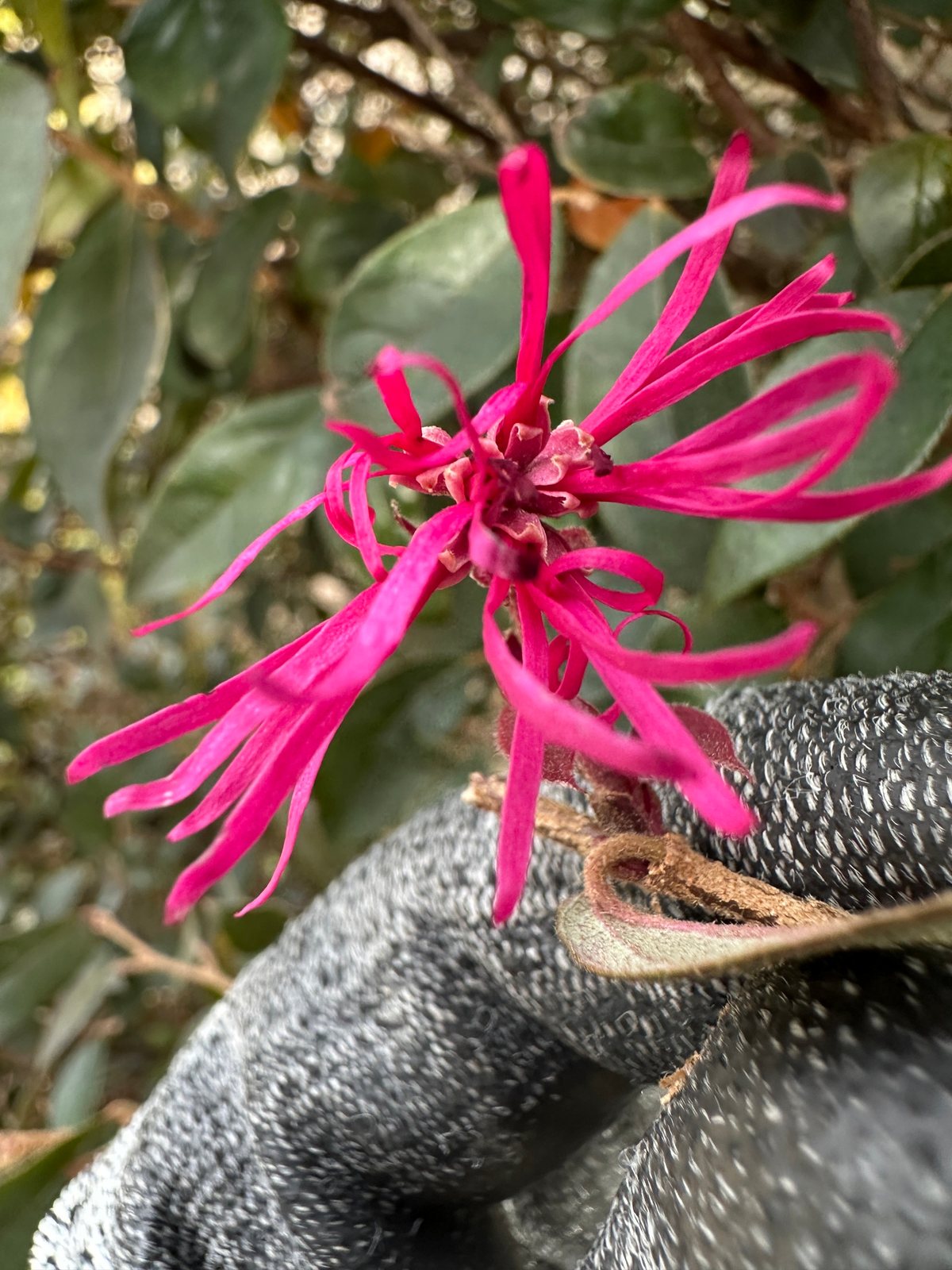
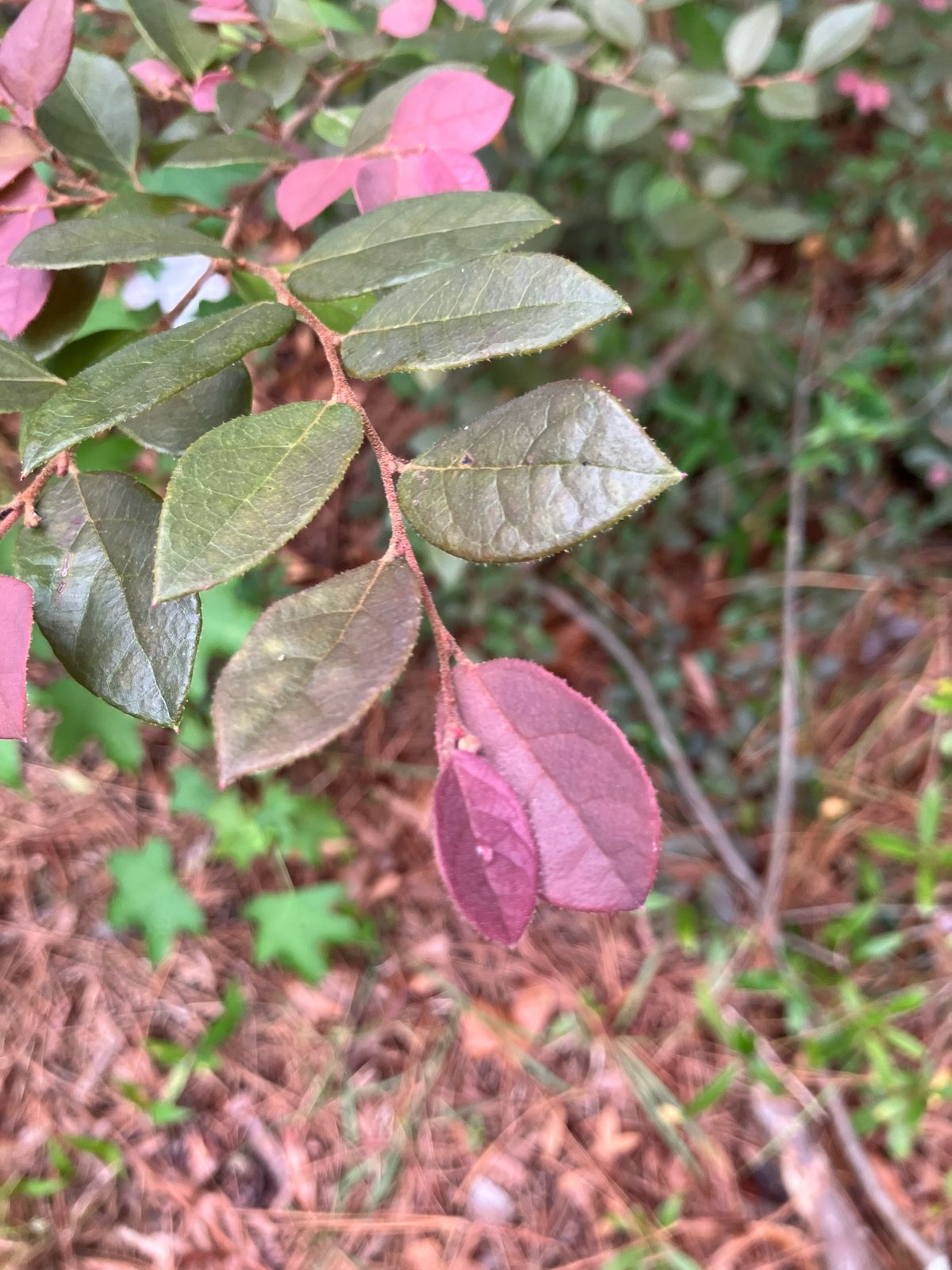
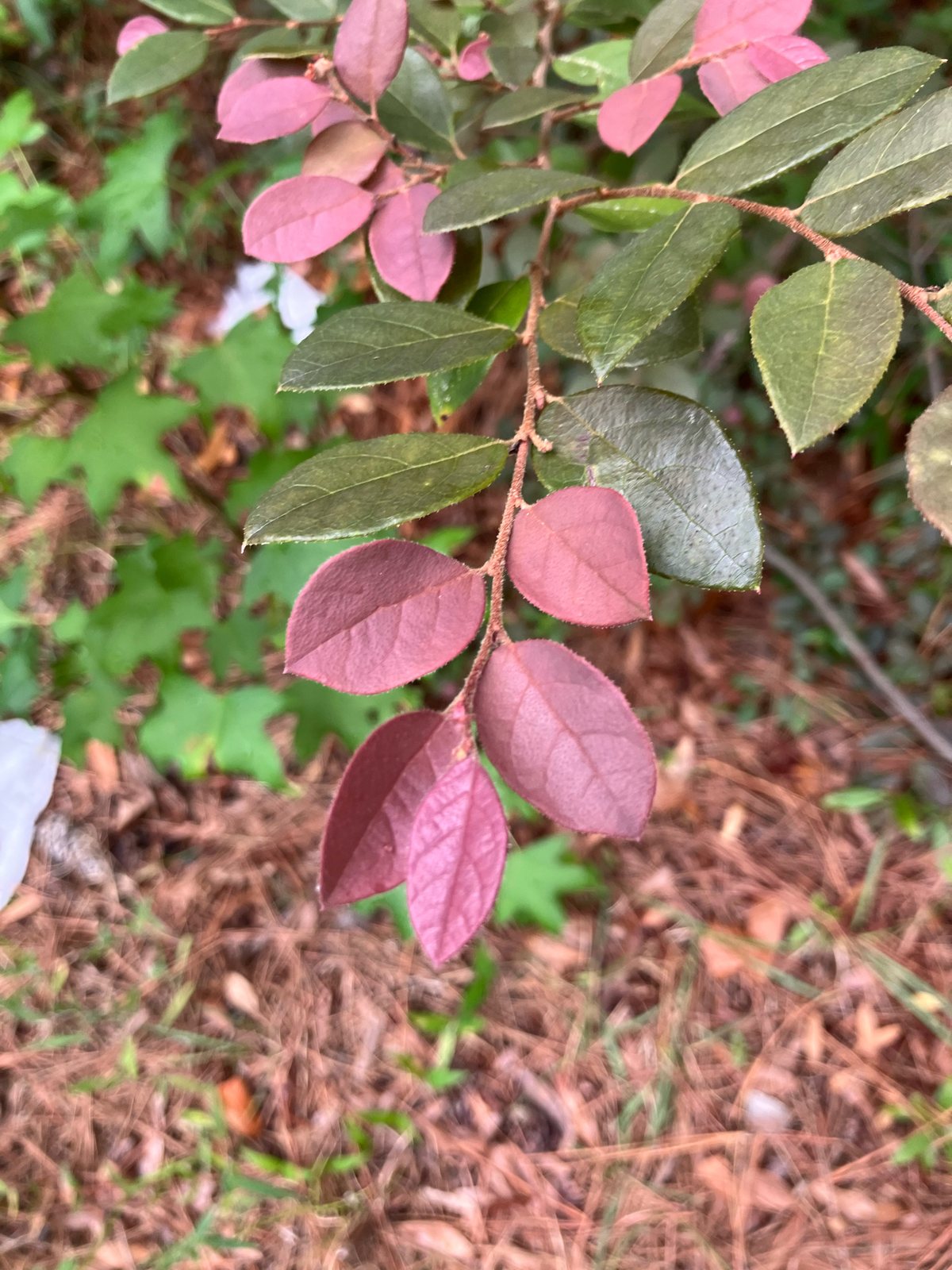
Zhuzhou Fuchsia is a large evergreen shrub grown for its dark burgundy leaves and bright pink, ribbon-like spring flowers. It makes a tall screen or substantial border specimen, rather than a compact foundation shrub. In colder gardens, winter weather can damage its leaves and shoot tips.
At a glance
- Sun
- Full sun to partial shade; the strongest leaf colour develops with good light. Afternoon shade helps in very hot, dry locations.
- Water
- Moderate; water deeply during establishment and prolonged dry spells. Established plants tolerate brief drought, but flowering and foliage are better with consistent moisture.
- Soil
- Moist, well-drained, humus-rich soil, preferably acidic. Avoid alkaline soil and sites that remain waterlogged.
- Height
- 10-20 ft (3-6 m)
- Spread
- 8-12 ft (2.4-3.7 m)
- Flowers
- Bright fuchsia-pink flowers with narrow, ribbon-like petals in spring, sometimes followed by scattered flowers later in the year.
- Foliage
- Evergreen. Small, oval leaves emerge reddish purple and mature to deep burgundy-purple; colour can become greener in shade. Some leaves may drop after severe cold.
- Growth
- Fast in warm climates with adequate moisture.
- Care needed
- Low
The year at a glance
- Pollinators
- Deer resistant
- Heat tolerant
- Wildlife
- Low allergen
| J | F | M | A | M | J | J | A | S | O | N | D | |
|---|---|---|---|---|---|---|---|---|---|---|---|---|
| Flowers | ||||||||||||
| Plant |
Northern hemisphere months. In Australia, shift them by six.
- Difficulty
- Moderate
- Toughness
- Fairly tough
Will it suit your garden?
Pick your zone, country, light and whether you have pets.
Full sun is 6 or more hours of direct sun a day, part shade 3 to 6 hours, shade under 3.
How it grows
Planting day
1.8 ft (0.54 m)
After 1 year
6 ft (1.8 m)
After 2 years
10 ft (3 m)
After 3 years
14 ft (4.2 m)
After 5 years
15 ft (4.5 m)
full size
About 3 years to full size.
From a typical nursery size, at an average rate for this kind of plant. A rule of thumb, not a forecast.
Good to know
- Cats and dogs
- Safe
- Growth rate
- Fast
Care
Jobs through the year
- WaterApr–May, Sep–Oct, every 14 days
- Water established plants deeply if soil is drying; young plants need more frequent watering.
- WaterJun–Aug, every 7 days
- Water established plants deeply during prolonged dry weather; skip when rainfall keeps roots moist.
- FeedApr
- Feed lightly with fertiliser for acid-loving shrubs only if growth is weak; avoid late feeding.
- MulchMar–Apr, Oct
- Maintain 5–8 cm of organic mulch over the roots, clear of the stems.
- PruneMay–Jun
- After spring flowering, thin crowded branches and shorten selected shoots; remove confirmed dead wood.
- ProtectJan–Mar, Nov–Dec
- Shield young plants from severe freezes; zone 6 is outside its reliable outdoor hardiness range.
- Water deeply through the first growing season, checking that the root ball does not dry out between waterings.
- Spread 2-3 in (5-8 cm) of organic mulch over the roots, keeping it clear of the stems.
- Feed lightly in spring with a fertiliser for acid-loving shrubs if growth is weak; avoid heavy or late-season feeding.
- Give it room to reach its mature size rather than relying on frequent shearing.
- In colder parts of its range, choose a sheltered position away from drying winter winds.
Pruning. Prune just after the main spring flowering, shortening selected shoots and removing crossing or crowded branches rather than shearing the whole shrub. Remove dead or frost-damaged wood once new growth shows which stems have survived.
Through the year
- Spring
- Plant when the soil is workable and severe frost has passed; water thoroughly and mulch.
- Spring
- Apply a light feed if needed and check pale leaves for possible iron deficiency.
- Late spring
- After the main flowers fade, thin crowded growth and reduce any branches that need shortening.
- Summer
- Water during prolonged dry weather, particularly while the shrub is establishing.
- Late summer
- Take semi-ripe cuttings from healthy, non-flowering shoots.
- Autumn
- Refresh mulch and water during dry weather before winter; avoid feeding or hard pruning.
- Winter
- Protect young plants during unusually severe freezes and check that the root area drains freely.
In the garden
- Grow as an informal evergreen screen where its full height and width can develop.
- Use as a dark-leaved backdrop to pale flowers and silver or lime-green foliage.
- Plant as a specimen in a spacious lawn or mixed shrub border.
- Train a mature plant as a small, multi-stemmed tree by gradually removing selected lower branches.
Garden styles it suits: Southern, Traditional, Woodland, Chinese scholar garden, Low-maintenance and Architectural minimal.
Plant it with: Camellias, Azaleas, Japanese pieris, Oakleaf hydrangeas, Lilyturf and Autumn ferns.
Wildlife: Flowers provide a seasonal food source for visiting insects, and the dense branches offer shelter for small birds.
Problems to watch for
- Yellow leaves with greener veins can indicate iron deficiency in alkaline soil; test the soil, use chelated iron as a temporary correction, and consider relocating the plant if the soil is strongly alkaline.
- Root rot can develop in poorly drained soil; improve drainage and avoid frequent watering of already wet ground.
- Winter leaf scorch and shoot dieback occur in exposed or cold sites; shelter young plants and wait until spring growth begins before removing damaged wood.
- Scale insects can weaken stems and leave sticky honeydew; inspect affected growth and use a labelled horticultural oil treatment when appropriate.
Safety
Not known to be toxic to people, cats or dogs. Reliable horse-specific information is limited. It is not an edible plant; discourage chewing any part, since eating plant material can cause stomach upset.
Easily confused with
Other purple-leaved Chinese fringe flowers (Loropetalum chinense var. rubrum)
Many have nearly identical pink flowers and purple leaves. Zhuzhou Fuchsia has a tall, vigorous habit, but young plants cannot reliably be identified by appearance alone; check the cultivar label.
Chinese witch hazel (Hamamelis mollis)
It also has ribbon-like petals, but its flowers are yellow and usually open on bare branches in winter. Its larger green leaves are deciduous.
White fringe tree (Chionanthus virginicus)
It has hanging clusters of white flowers rather than pink clusters close to the shoots, and larger, opposite leaves that fall in autumn.
The name
Loropetalum comes from Greek words meaning strap and petal, referring to the narrow flower petals, while chinense means from China.
Propagation. Take semi-ripe cuttings in late summer and root them in a free-draining medium with humidity and gentle bottom heat. Layering low branches is another option; seed will not reliably reproduce this cultivar.
Checked against open data
- Accepted botanical name
- Loropetalum chinense
- Native range
- Assam, China South-Central, China Southeast, Japan, Taiwan and Thailand.
- Measured
- Average height 820 cm.
Sources: GBIF (CC BY 4.0) and Trefle (CC BY 4.0). The care and design notes are LandscapeGPT's own.
See it in your own yard.
Upload a photo of your yard and see it redesigned with plants that suit your climate, each checked against your zone.