Acorn squash
Cucurbita pepo 'Table Queen'. Family Cucurbitaceae. Annual.
Also called Table Queen squash, Table Queen acorn squash.
'Table Queen' is a trailing winter squash grown as an annual for its small, ribbed, dark-green fruits with orange-yellow flesh. It needs warm soil, a frost-free growing season and room for its vines; the mature squash are useful for baking and short-term storage.
At a glance
- Sun
- Full sun, ideally at least 6-8 hours daily.
- Water
- Keep soil evenly moist, supplying about 1-2 in (2.5-5 cm) of water weekly during dry weather, especially while fruits develop. Water the soil rather than the leaves.
- Soil
- Fertile, well-drained soil enriched with compost; slightly acidic to neutral soil is ideal.
- Height
- 1-2 ft (0.3-0.6 m) without support
- Spread
- 6-10 ft (1.8-3 m)
- Flowers
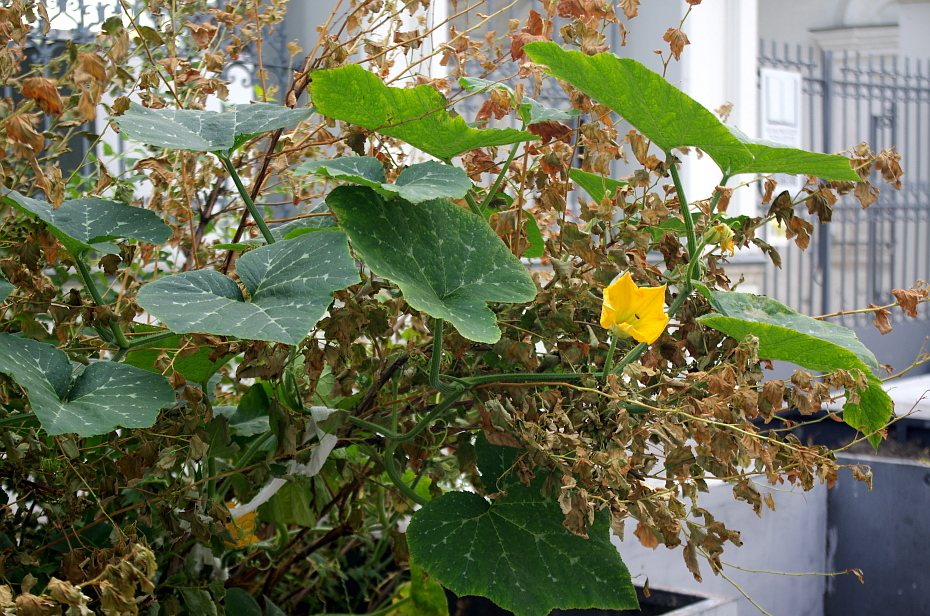
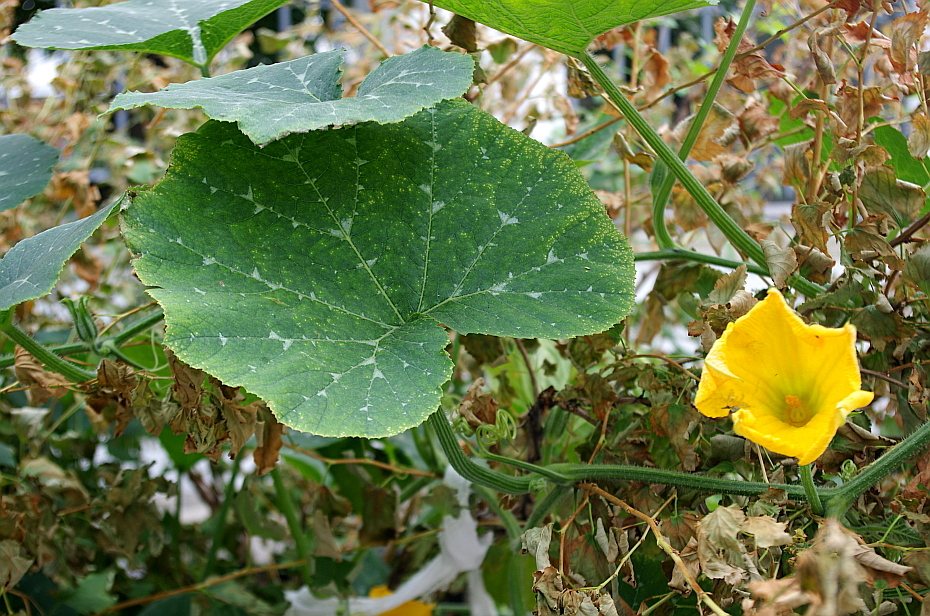
- Large yellow flowers from summer into early autumn; separate male and female flowers grow on the same plant.
- Foliage
- Large, rough, green, shallowly lobed leaves on prickly stems and trailing vines.
- Growth
- Fast in warm weather.
- Care needed
- Medium
The year at a glance
- Pollinators
- Heat tolerant
- Low allergen
- Edible
| J | F | M | A | M | J | J | A | S | O | N | D | |
|---|---|---|---|---|---|---|---|---|---|---|---|---|
| Flowers | ||||||||||||
| Fruit | ||||||||||||
| Plant |
Northern hemisphere months. In Australia, shift them by six.
- Difficulty
- Moderate
- Toughness
- Needs looking after
Will it suit your garden?
Pick your zone, country, light and whether you have pets.
Full sun is 6 or more hours of direct sun a day, part shade 3 to 6 hours, shade under 3.
How it grows
Planting day
0.5 ft (0.15 m)
After 1 year
1.5 ft (0.45 m)
full size
Full size in one season.
From a typical nursery size, at an average rate for this kind of plant. A rule of thumb, not a forecast.
Good to know
- Cats and dogs
- Safe
- Native to
- the US
- Growth rate
- Fast
Care
Jobs through the year
- WaterMay–Jun, every 7 days
- Supply about 2.5 cm weekly if rain is lacking; check newly planted seedlings more often.
- WaterJul–Aug, every 3 days
- Water the soil deeply, supplying 2.5–5 cm weekly including rain while fruits develop.
- WaterSep–Oct, every 7 days
- Water during dry weather while vines remain productive; avoid wetting leaves.
- FeedMay–Jun
- Incorporate mature compost and apply vegetable fertilizer according to its label.
- FeedJul
- Side-dress as fruits start developing if required by the fertilizer label; avoid excess nitrogen.
- MulchJun
- Mulch once soil is warm, keeping material clear of the stem.
- ProtectMay–Jun
- Protect seedlings from slugs and cold nights; remove insect covers when flowering begins.
- ProtectJul–Sep
- Keep developing squash off wet soil with straw or boards.
- HarvestAug–Oct, every 7 days
- Pick hard-rinded mature squash before frost, leaving a short stalk; avoid prolonged hot curing.
- Plant out after the last frost, once soil has warmed to at least 60°F (16°C); protect young plants from cold nights.
- Allow about 3-4 ft (0.9-1.2 m) between plants and leave space for vines to run.
- Mix compost into the planting area and feed according to a vegetable fertilizer's label; avoid excess nitrogen.
- Mulch once the soil is warm to retain moisture and suppress weeds, keeping mulch away from the stem base.
- Keep developing fruits off wet soil with straw or a board; support fruits with slings if training vines up a sturdy trellis.
Pruning. Routine pruning is unnecessary. During summer, guide vines into their allotted space and remove badly diseased leaves with clean tools, retaining healthy foliage to shade and feed the fruits.
Harvest
Pick mature squash in late summer or autumn, usually about 85-100 days from sowing, when the rind is hard enough to resist a thumbnail and the ground-facing patch has turned orange. Cut with secateurs before frost, leaving about 1-2 in (2.5-5 cm) of stalk, and handle gently. Unlike many winter squash, acorn squash do not benefit from prolonged hot curing;
Through the year
- Early spring
- Choose a sunny bed and work in mature compost.
- Mid to late spring
- Sow indoors in individual pots about 2-4 weeks before your expected last frost.
- Late spring to early summer
- Harden off and plant out after frost in warm soil, or sow directly outdoors.
- Summer
- Water consistently, mulch warm soil and guide growing vines away from paths and neighbouring crops.
- Summer
- Check flowers for pollinator visits; hand-pollinate newly opened female flowers if young fruits repeatedly fail to develop.
- Late summer to autumn
- Harvest hard-rinded fruits before frost and inspect stored squash regularly for soft spots.
- Autumn
- Remove spent vines and rotate squash and related crops to another bed next season.
In the garden
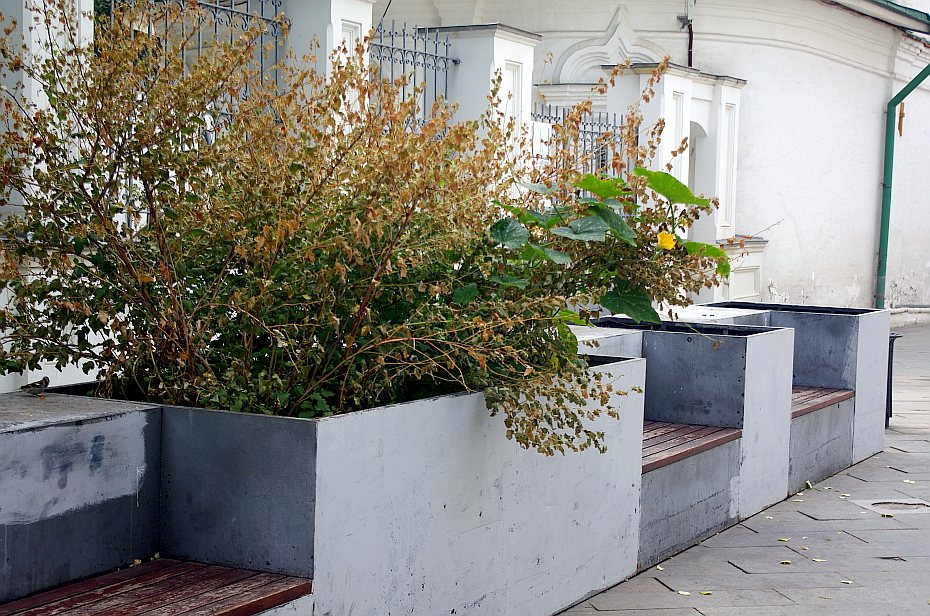
- Let vines trail along the sunny edge of a vegetable plot, away from paths.
- Train onto a strong trellis in a productive garden, using slings to support the fruits.
- Combine with upright crops in a large potager, keeping the squash foliage out of their immediate root area.
- Use as a broad-leaved seasonal crop in an edible landscape where its spreading habit has room.
Garden styles it suits: Potager (kitchen garden), Edible landscape, Homestead, Farmhouse, Cottage garden and Family-friendly.
Plant it with: Sweetcorn, Climbing beans, Nasturtiums, Borage and French marigolds.
Wildlife: Flowers provide pollen and nectar for bees. In North America, squash bees are important pollinators; avoid spraying flowers and do not use insecticides while bees are visiting.
Problems to watch for
- Powdery mildew: white patches develop on leaves, especially late in the season. Allow airflow, keep plants watered at the roots and remove heavily affected leaves without stripping the vine.
- Squash bugs and squash vine borers, especially in North America: inspect leaf undersides for egg clusters and stem bases for damage; remove pests promptly and use insect mesh before flowering, uncovering for pollination.
- Slugs and snails: protect seedlings with barriers, evening hand-picking or a locally approved iron-phosphate bait used as directed.
- Young fruits yellowing and dropping: poor pollination or weather stress is common. Maintain even moisture and transfer pollen from a fresh male flower to the centre of an open female flower in the morning.
Safety
Ordinary cultivated squash plants are not known to be toxic to people, cats, dogs or horses, and the normal flesh and seeds are edible. Exceptionally bitter fruits can contain poisonous cucurbitacins and cause severe vomiting and diarrhoea; discard them without eating or feeding them to animals, since cooking does not make them safe.
Easily confused with
Bush acorn squash (Cucurbita pepo)
Some bush cultivars produce almost identical ribbed fruits but have much shorter, compact growth. Check the cultivar name and growth habit rather than relying on fruit appearance.
Delicata squash (Cucurbita pepo)
Usually has elongated, cream-coloured fruits with green stripes rather than the short, dark-green, acorn-shaped fruits of 'Table Queen'.
Ornamental gourds (Cucurbita pepo)
Some resemble small acorn squash, but fruit shape alone cannot establish edibility. Use labelled edible squash seed and never eat bitter fruit.
The name
The common name acorn squash refers to the fruit's acorn-like shape, with broad shoulders tapering to a pointed end.
Propagation. Grow from seed, sown about 1 in (2.5 cm) deep in warm compost or soil. Use purchased seed for dependable 'Table Queen' plants: saved seed may cross with other Cucurbita pepo squash, courgettes or ornamental gourds and will not necessarily produce the same fruit.
Checked against open data
- Accepted botanical name
- Cucurbita pepo
- In the US and Canada
- Native in the lower 48 states. Introduced in the lower 48 states, Pacific Basin and Puerto Rico.
- Native range
- Mexico Central, Mexico Gulf, Mexico Northeast, Mexico Northwest, Mexico Southeast and Mexico Southwest.
- Measured
- Average height 63 cm.
Sources: GBIF (CC BY 4.0), USDA PLANTS and Trefle (CC BY 4.0). The care and design notes are LandscapeGPT's own.
See it in your own yard.
Upload a photo of your yard and see it redesigned with plants that suit your climate, each checked against your zone.