Borage
Borago officinalis. Family Boraginaceae. Annual.
Also called Starflower, Bee bread.
Borage is a fast-growing, bristly herb grown as an annual for its blue, star-shaped flowers and long flowering season. Bees visit it heavily, and it fits well among vegetables, herbs and informal flowers, though it often self-seeds freely.
At a glance
- Sun
- Full sun; tolerates light partial shade, with fewer flowers and looser growth.
- Water
- Water seedlings regularly. Once established, water during prolonged dry spells; avoid keeping the soil constantly wet.
- Soil
- Well-drained soil, including relatively poor ground. Avoid waterlogged sites and heavily fertilised soil.
- Height
- 2-3 ft (0.6-0.9 m)
- Spread
- 1-2 ft (0.3-0.6 m)
- Flowers
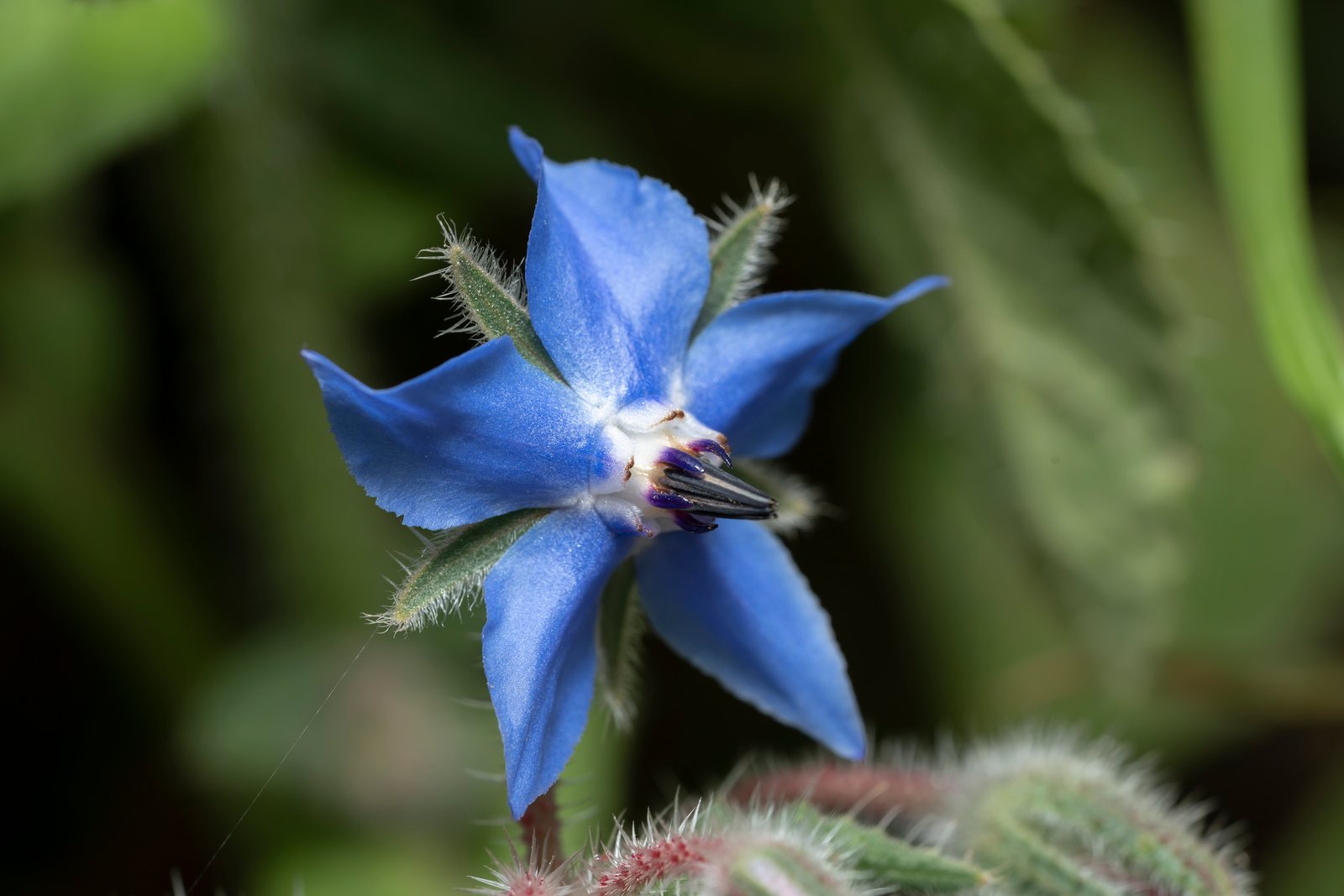
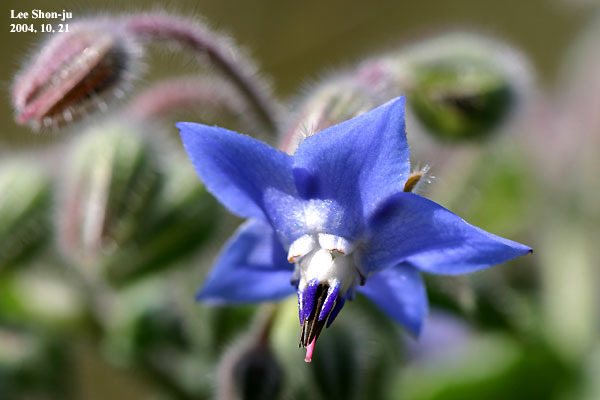
- Late spring to autumn, depending on sowing time and climate; usually blue, opening from pinkish buds. White-flowered forms also occur.
- Foliage
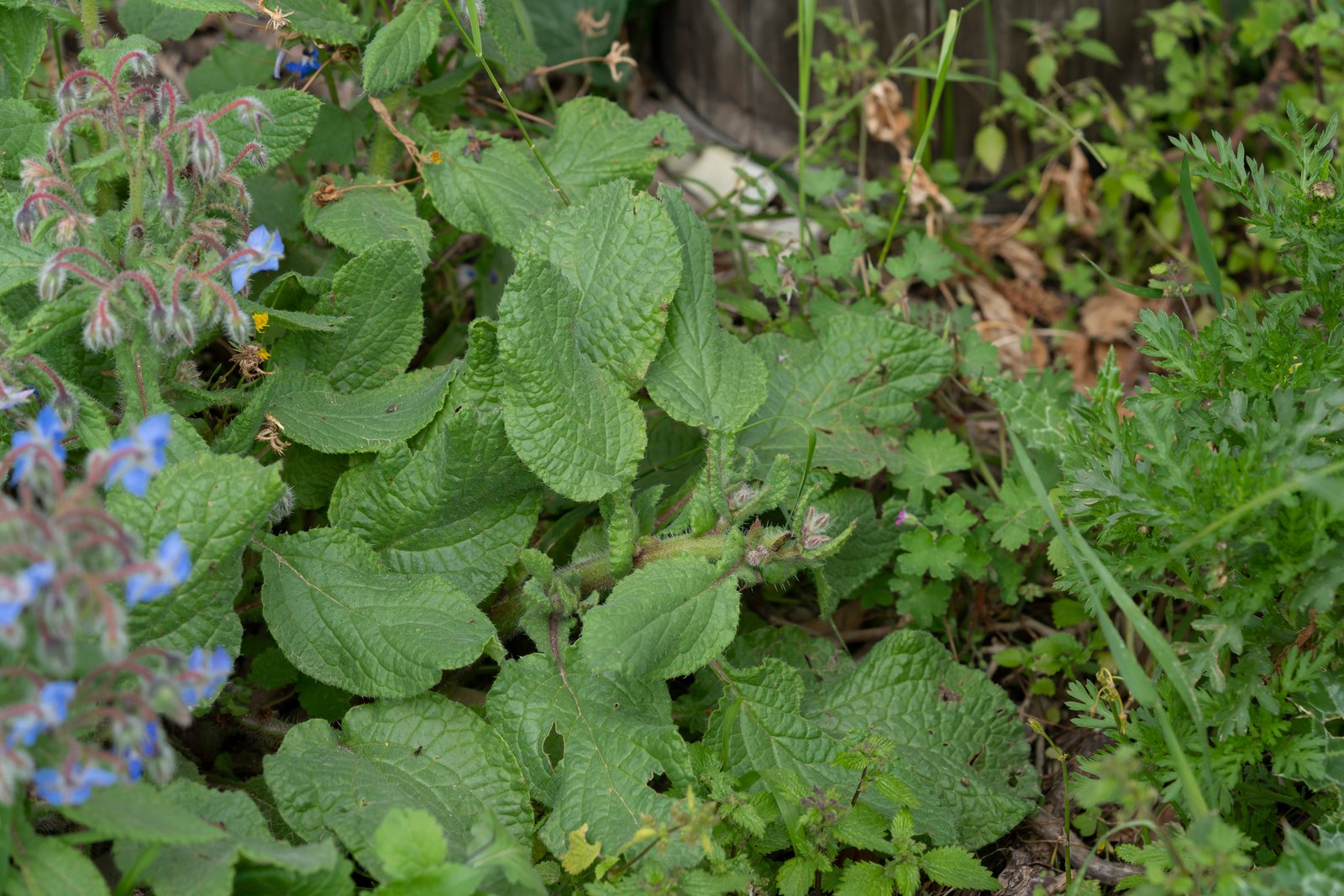
- Coarse, oval to lance-shaped green leaves covered with stiff, prickly hairs; upper leaves clasp the branching stems.
- Growth
- Fast; flowers within a few months of sowing.
- Care needed
- Low
The year at a glance
- Pollinators
- Drought tolerant
- Wildlife
- Low allergen
- Edible
| J | F | M | A | M | J | J | A | S | O | N | D | |
|---|---|---|---|---|---|---|---|---|---|---|---|---|
| Flowers | ||||||||||||
| Plant |
Northern hemisphere months. In Australia, shift them by six.
- Difficulty
- Easy
- Toughness
- Very tough
Will it suit your garden?
Pick your zone, country, light and whether you have pets.
Full sun is 6 or more hours of direct sun a day, part shade 3 to 6 hours, shade under 3.
How it grows
Planting day
0.5 ft (0.15 m)
After 1 year
2.5 ft (0.75 m)
full size
Full size in one season.
From a typical nursery size, at an average rate for this kind of plant. A rule of thumb, not a forecast.
Good to know
- Cats and dogs
- Toxic
- In the garden
- Spreads vigorously: plan to contain it.
- Growth rate
- Fast
Care
Jobs through the year
- WaterApr–May, Sep, every 14 days
- Water established plants only during dry spells; seedlings need more frequent watering.
- WaterJun–Aug, every 14 days
- Water established plants deeply during prolonged drought, allowing soil to dry between.
- ProtectMay–Jun
- Support tall plants with twiggy branches in windy sites.
- DeadheadMay–Oct, every 7 days
- Remove fading flower clusters to prolong flowering and limit self-seeding.
- HarvestMay–Oct, every 7 days
- Pick tender leaves and fresh flowers sparingly; liver-toxic alkaloids make regular consumption unsafe.
- PruneOct–Nov
- Pull up declining or frost-killed plants, wearing gloves against prickly hairs.
- Sow directly where plants are to grow; their taproots dislike disturbance.
- Thin seedlings to 12-18 in (30-45 cm) apart.
- Water young plants until established, then during extended dry weather.
- Avoid routine feeding; rich conditions encourage floppy growth.
- Support tall plants in exposed sites with twiggy branches or a discreet ring.
- Remove unwanted seedlings early and cut off fading flower clusters before seed ripens if spread is a concern.
Pruning. Remove faded flower clusters through the flowering season to reduce seeding and encourage further bloom. Pull up plants when they decline or are killed by frost; wear gloves to avoid the prickly hairs.
Harvest
Pick small, tender leaves before they become coarse and bristly, usually from about 4–6 weeks after sowing. Snip freshly opened flowers once flowering starts, often around 8–10 weeks after sowing, and keep picking until frost or the plants die back. Use borage sparingly rather than as a regular food, as it contains pyrrolizidine alkaloids that can harm the liver.
Through the year
- Early spring
- Prepare a sunny, well-drained patch and remove unwanted seedlings from the previous year.
- Spring
- Direct-sow once the soil is workable and warming; in cold regions, wait until severe frosts have passed.
- Late spring
- Thin seedlings to 12-18 in (30-45 cm) apart and add supports in windy positions.
- Early summer
- Make a second sowing if you want fresh plants flowering later in the season.
- Summer
- Water during prolonged drought and remove fading flower clusters before seeds drop.
- Autumn
- Remove declining plants, leaving a few seed heads only where you want seedlings next season.
In the garden
- Thread through vegetable beds to bring blue flowers and bee activity among crops.
- Plant in loose groups with calendulas and nasturtiums for an informal cottage-garden display.
- Use behind low-growing herbs, allowing room for its broad, coarse foliage.
- Fill temporary gaps in sunny borders while slower-growing plants establish.
Garden styles it suits: Cottage garden, Potager (kitchen garden), Pollinator garden, Wildlife garden, Homestead and English country.
Plant it with: Calendula, Nasturtium, Dill, Cosmos, Lavender and Strawberry.
Wildlife: Nectar-rich flowers are especially attractive to honeybees and bumblebees. It is introduced rather than native across much of the English-speaking gardening world, so combine it with locally native flowers for broader wildlife value.
Problems to watch for
- Powdery mildew can coat leaves in dry, crowded conditions; improve spacing, water at soil level and remove badly affected foliage.
- Aphids may gather on soft shoots; wash them off with water and allow ladybirds and other predators to feed.
- Root rot and collapse occur in waterlogged soil; improve drainage or sow elsewhere rather than watering more.
- Tall plants may flop in rich soil or wind; avoid excess fertiliser and provide early support.
Safety
Borage contains pyrrolizidine alkaloids, particularly in its leaves and stems, and seeds can also contain them. It is toxic to cats, dogs and horses if eaten; repeated or substantial ingestion can cause serious liver damage. People also risk liver damage from repeated consumption, especially as teas, supplements or large servings; its traditional culinary use does not establish safety. Keep it out of livestock forage. The stiff hairs can irritate skin.
Easily confused with
Green alkanet (Pentaglottis sempervirens)
Also has rough leaves and blue flowers, but its much smaller flowers have rounded petals and a white centre rather than borage's pointed star and prominent dark central cone. It is a persistent perennial.
Common comfrey (Symphytum officinale)
Has larger, elongated leaves and clusters of tubular, bell-shaped flowers, usually cream, pink or purple, rather than open blue stars. It returns from a substantial perennial root system.
The name
The species name officinalis refers to the plant's historical use in apothecaries and medicine.
Propagation. Propagate by seed, preferably sown directly about 0.5 in (1 cm) deep in spring. It often produces volunteer seedlings; move these only while very small, keeping the root intact.
Checked against open data
- Accepted botanical name
- Borago officinalis
- In the US and Canada
- Introduced in Alaska and the lower 48 states.
- Native range
- Algeria, Baleares, Corse, France, Greece, Italy, Kriti, Libya, Morocco, Portugal, Sardegna and Sicilia.
- Measured
- Soil pH 6.5 to 7. Average height 60 cm.
Sources: GBIF (CC BY 4.0), USDA PLANTS and Trefle (CC BY 4.0). The care and design notes are LandscapeGPT's own.
See it in your own yard.
Upload a photo of your yard and see it redesigned with plants that suit your climate, each checked against your zone.