Alpine strawberry
Fragaria vesca. Family Rosaceae. Perennial.
Also called Woodland strawberry, Wild strawberry, European strawberry.
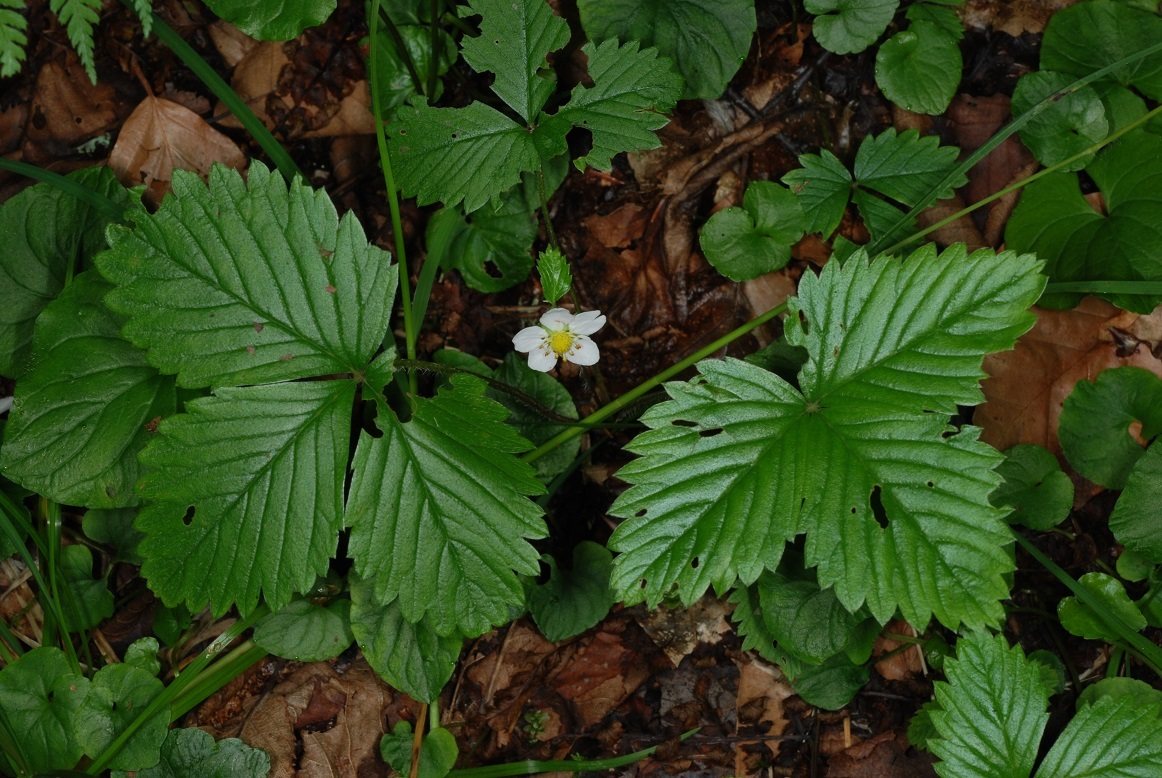
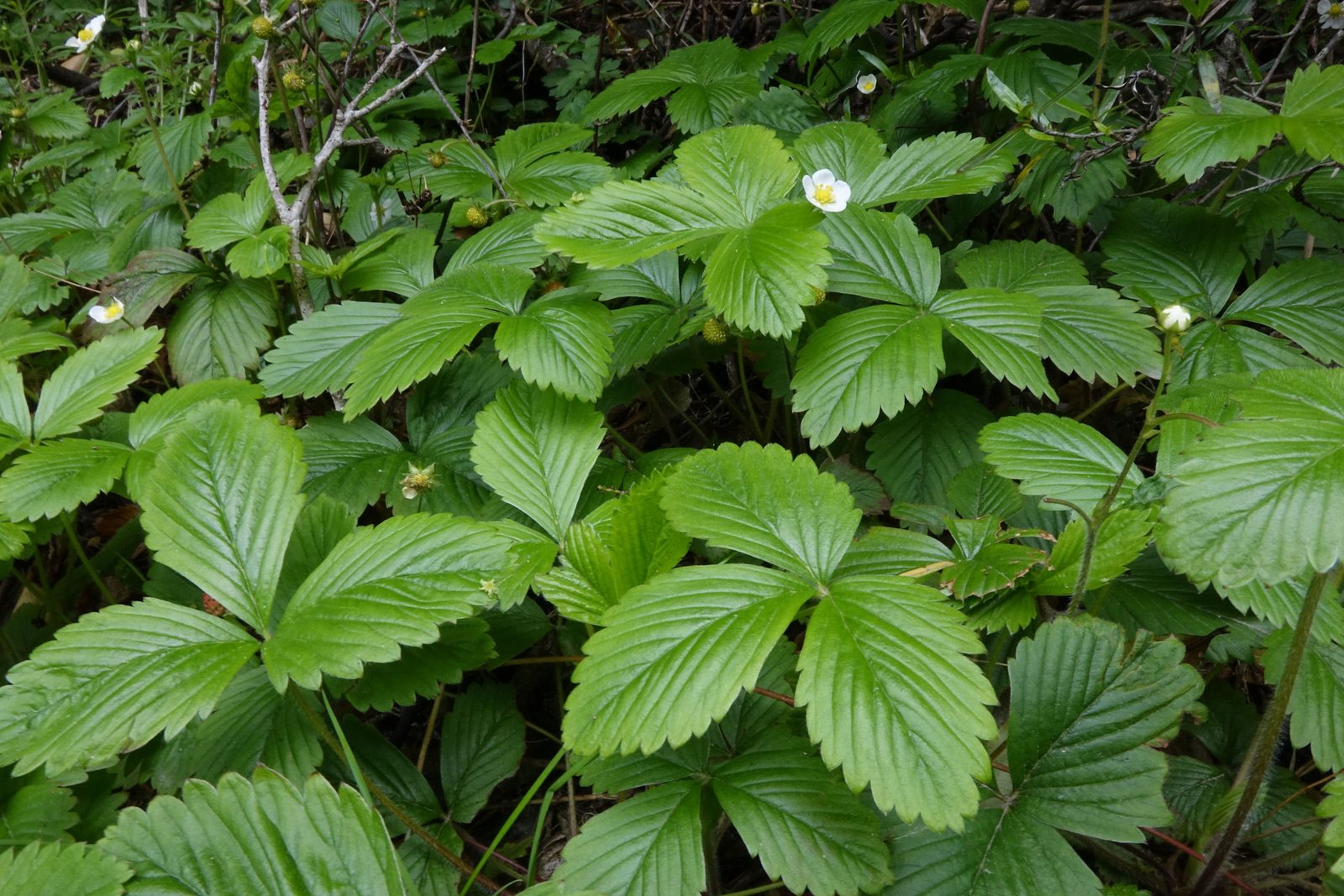
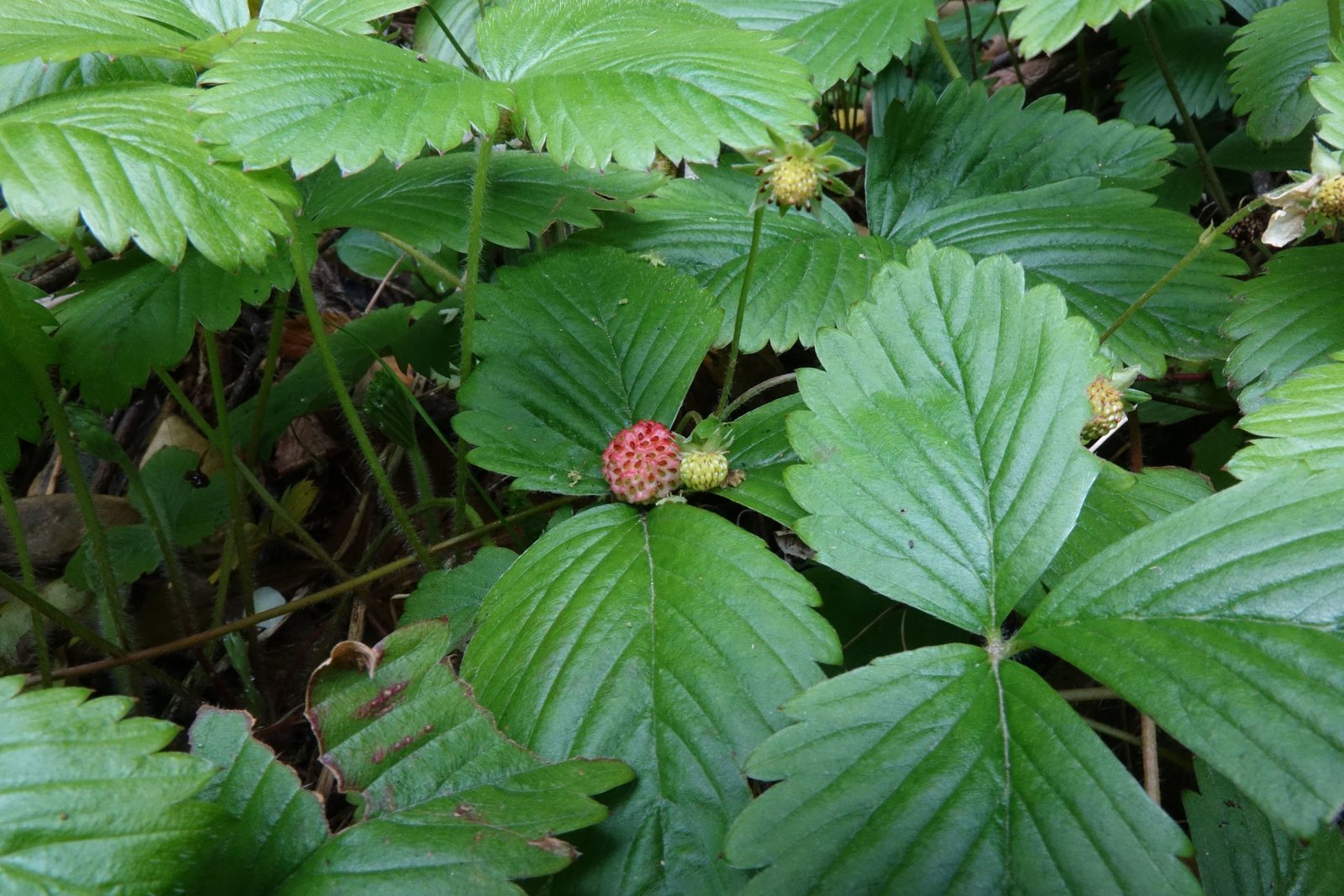
Alpine strawberry is a small perennial grown for its sweet, strongly scented fruit, white flowers and neat, three-part leaves. Most alpine selections form compact clumps and fruit repeatedly through summer; wild forms of Fragaria vesca often spread by runners.
At a glance
- Sun
- Full sun to partial shade; provide afternoon shade in hot climates. Deep shade reduces fruiting.
- Water
- Keep the root zone evenly moist, especially during flowering and fruiting, but avoid waterlogged soil.
- Soil
- Humus-rich, well-drained soil, preferably slightly acidic to neutral. Improve heavy soil with compost and grow in raised beds or containers if drainage remains poor.
- Height
- 0.3-0.7 ft (0.1-0.2 m)
- Spread
- 0.7-1 ft (0.2-0.3 m) per clump; runner-producing forms can spread much farther
- Flowers
- Small white flowers with yellow centres from spring into summer, often continuing into autumn in repeat-fruiting selections
- Foliage
- Green leaves divided into three toothed leaflets; usually deciduous in cold winters and semi-evergreen in mild climates
- Growth
- Moderate; runner-producing forms cover ground more quickly
- Care needed
- Low
The year at a glance
- Pollinators
- Cold hardy
- Wildlife
- Low allergen
- Edible
| J | F | M | A | M | J | J | A | S | O | N | D | |
|---|---|---|---|---|---|---|---|---|---|---|---|---|
| Flowers | ||||||||||||
| Fruit | ||||||||||||
| Plant |
Northern hemisphere months. In Australia, shift them by six.
- Difficulty
- Easy
- Toughness
- Fairly tough
Will it suit your garden?
Pick your zone, country, light and whether you have pets.
Full sun is 6 or more hours of direct sun a day, part shade 3 to 6 hours, shade under 3.
How it grows
Planting day
0.5 ft (0.15 m)
full size
About 3 years to full size.
From a typical nursery size, at an average rate for this kind of plant. A rule of thumb, not a forecast.
Good to know
- Cats and dogs
- Safe
- Native to
- the US, Canada and the UK
- Growth rate
- Moderate
Care
Jobs through the year
- WaterApr–May, Sep–Oct, every 7 days
- Water established plants if the surface dries; keep new plants consistently moist.
- WaterJun–Aug, every 4 days
- Keep established plants evenly moist during fruiting, allowing for rainfall.
- MulchMar–Apr
- Top-dress lightly with compost, keeping crowns uncovered.
- MulchMay
- Place clean straw beneath developing berries, clear of crowns.
- PruneMar
- Snip off dead or diseased leaves without damaging crowns.
- PruneMay–Sep, every 14 days
- Remove unwanted runners without shearing the plants.
- DivideMar–Apr, Sep
- Divide crowded clumps in spring or early autumn and replant at crown level.
- ProtectMay–Oct
- If birds take fruit, fit taut, supported wildlife-safe mesh and check it regularly.
- HarvestMay–Oct
- Pick fully ripe, aromatic berries by pinching the stalk; eat promptly.
- Plant with the crown at soil level, spacing clumps about 1 ft (0.3 m) apart.
- Water at soil level whenever the surface begins to dry; containers need more frequent checks.
- Apply a thin layer of compost in spring; avoid heavy nitrogen feeding, which encourages leaves rather than fruit.
- Mulch with clean straw to conserve moisture and keep berries off wet soil; leave crowns uncovered.
- Remove unwanted runners and divide crowded clumps in spring or early autumn.
Pruning. In early spring, snip off dead or diseased leaves without cutting into the crown. Remove unwanted runners as they appear; do not mow or shear alpine strawberries after harvest.
Harvest
Pick berries from late spring or early summer into autumn, depending on climate and selection, when they are fully coloured, fragrant and release easily; ripe yellow- or white-fruited selections soften and become aromatic rather than turning red. Pinch through the stalk rather than pulling the fruit, and eat promptly because the berries bruise and spoil quickly.
Through the year
- Late winter
- Sow seed indoors on the surface of moist seed compost in bright light; follow any chilling instructions supplied with the seed.
- Spring
- Plant or divide clumps, keeping crowns at soil level, and remove dead winter foliage.
- Late spring
- Mulch around plants with clean straw before developing berries touch the soil.
- Summer
- Water consistently, pick ripe berries frequently and remove unwanted runners.
- Early autumn
- Divide crowded plants while the soil is still warm, allowing time for roots to establish before hard frost.
- Winter
- Keep containers draining freely; in severe climates, shelter pots from repeated freezing and thawing.
In the garden
- Edge vegetable beds or potager paths with compact, edible clumps.
- Plant beneath open-canopied shrubs alongside primroses and small ferns for a woodland effect.
- Grow in patio pots or window boxes where ripe fruit is easy to reach.
- Use runner-producing forms as informal groundcover between widely spaced fruit bushes, keeping their crowns clear.
Garden styles it suits: Cottage garden, Potager (kitchen garden), Woodland, Edible landscape, Sensory garden and Small-space.
Plant it with: Chives, Lettuce, Thyme, Primroses, Violets and Soft shield fern.
Wildlife: Flowers provide pollen and nectar for small bees and other insects. Birds and small mammals eat the berries and can carry the seeds elsewhere.
Problems to watch for
- Slugs and snails eat ripe berries: remove hiding places, pick promptly and use wildlife-conscious slug controls where necessary.
- Birds take ripening fruit: cover plants with securely supported, taut wildlife-safe mesh and check it regularly.
- Grey mould rots flowers and berries in damp weather: space plants for airflow, water at soil level and remove affected fruit promptly.
- Crown or root rot causes wilting and plant loss in wet soil: improve drainage, keep crowns above buried mulch and replace affected plants in fresh soil.
Safety
Not known to be toxic to people, cats, dogs or horses. The ripe fruit is edible; strawberry allergy can occur in people, and large amounts may upset a pet's stomach.
Easily confused with
Mock strawberry (Potentilla indica)
Has yellow flowers rather than white ones, and round, upright red fruit with little strawberry fragrance or flavour.
Garden strawberry (Fragaria × ananassa)
Usually has larger, coarser leaves and much larger berries; most plants are more vigorous and produce substantial runners.
Barren strawberry (Potentilla sterilis)
Has white flowers with separated petals and grey-green, hairy leaves, but does not develop fleshy strawberry fruit.
The name
Fragaria comes from a Latin root referring to fragrance, while vesca means edible.
Propagation. Sow seed in late winter or spring, or divide established clumps in spring or early autumn. Root runners where produced; many alpine selections make few or none. Seedlings may differ from the parent, especially when several selections grow together.
Checked against open data
- Accepted botanical name
- Fragaria vesca
- In the US and Canada
- Native in Canada and the lower 48 states. Introduced in Hawaii.
- Native range
- Albania, Alberta, Altay, Arizona, Austria, Azores, Baltic States, Belarus, Belgium, British Columbia, Bulgaria and Buryatiya.
- Measured
- Soil pH 7 to 7.5. Average height 9 cm.
Sources: GBIF (CC BY 4.0), USDA PLANTS and Trefle (CC BY 4.0). The care and design notes are LandscapeGPT's own.
See it in your own yard.
Upload a photo of your yard and see it redesigned with plants that suit your climate, each checked against your zone.