American elm
Ulmus americana. Family Ulmaceae. Tree.
Also called White elm, Water elm.
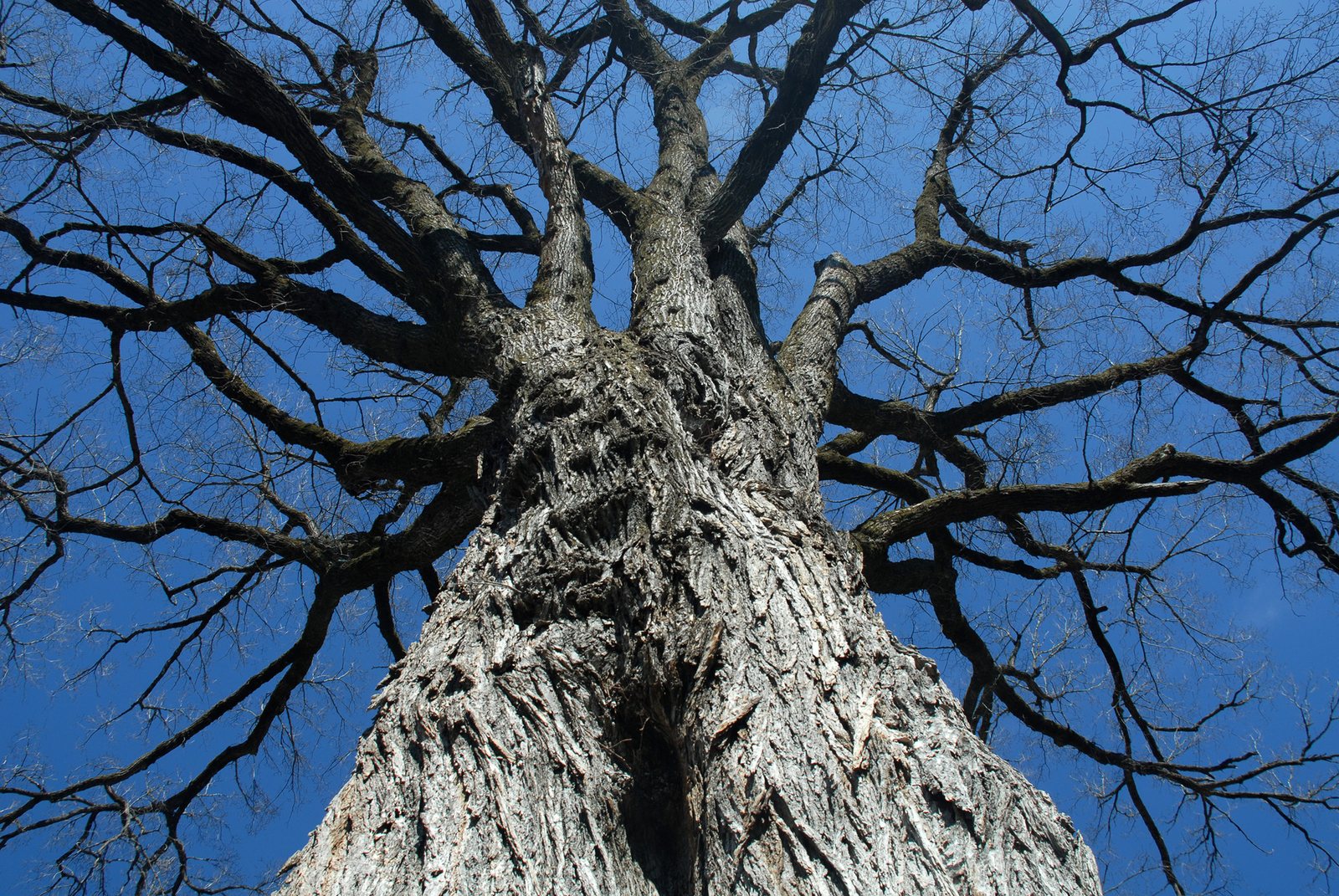
American elm is a large deciduous tree native to eastern and central North America, grown for its tall, vase-shaped crown, arching branches and yellow autumn foliage. It makes a substantial shade tree for a large garden, but Dutch elm disease makes planting a disease-resistant selection important; resistance does not mean immunity.
At a glance
- Sun
- Full sun; tolerates partial shade, but develops its best crown in an open position.
- Water
- Keep young trees evenly moist. Established trees tolerate some drought and occasional flooding, but grow best with reliable moisture.
- Soil
- Deep, fertile, well-drained soil is ideal. Tolerates clay, loam, sand and a broad pH range, including alkaline soil.
- Height
- 60-80 ft (18-24 m), occasionally taller
- Spread
- 40-70 ft (12-21 m)
- Flowers
- Late winter to early spring, before the leaves; small, inconspicuous reddish-purple flowers in clusters.
- Foliage
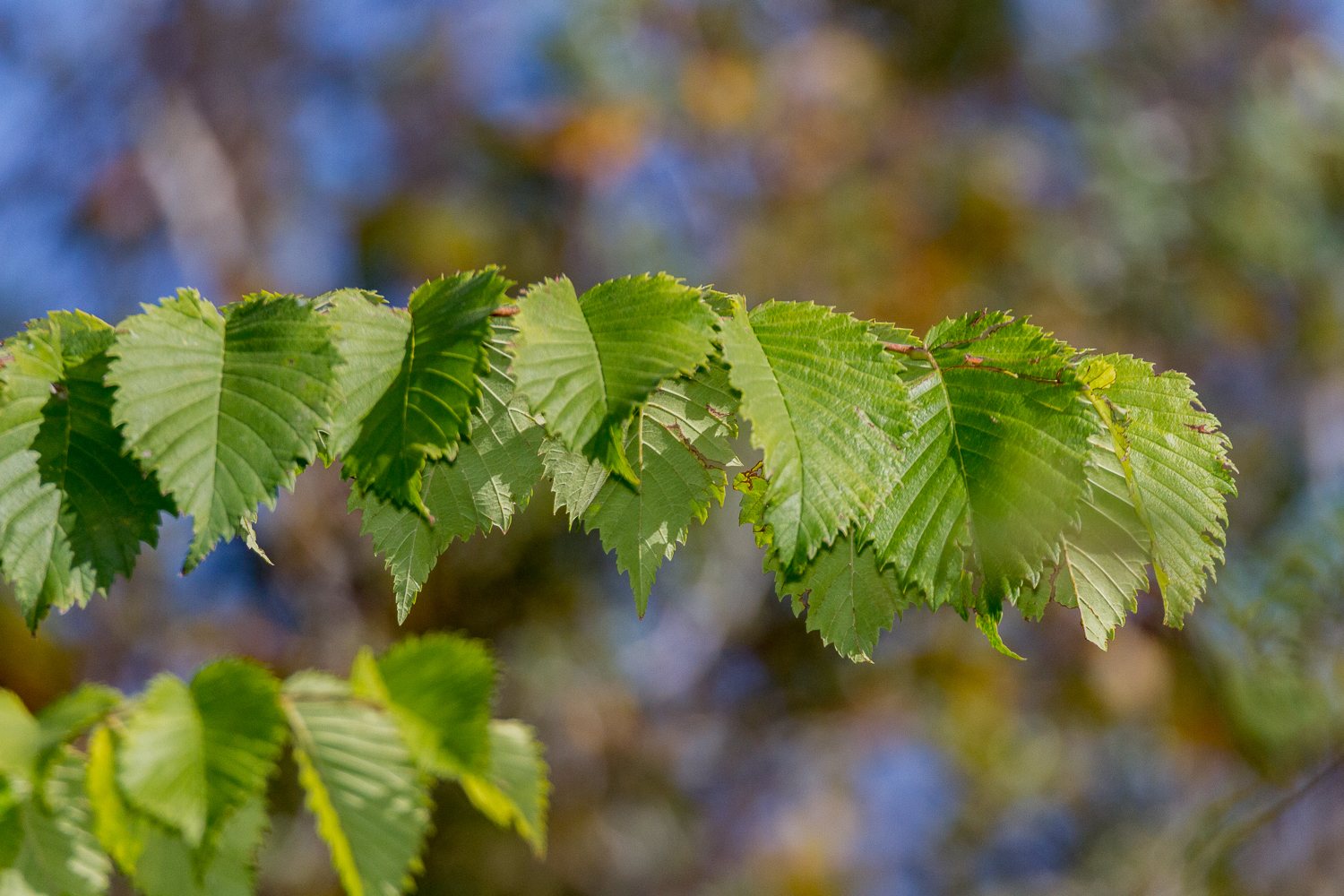
- Alternate, oval leaves with pointed tips, uneven bases and doubly toothed margins; green in summer, usually yellow in autumn.
- Growth
- Fast when young with adequate moisture; moderate as it matures.
- Care needed
- High
The year at a glance
- Drought tolerant
- Cold hardy
- Heat tolerant
- Wildlife
| J | F | M | A | M | J | J | A | S | O | N | D | |
|---|---|---|---|---|---|---|---|---|---|---|---|---|
| Flowers | ||||||||||||
| Fruit | ||||||||||||
| Plant |
Northern hemisphere months. In Australia, shift them by six.
- Difficulty
- Hard
- Toughness
- Fairly tough
Will it suit your garden?
Pick your zone, country, light and whether you have pets.
Full sun is 6 or more hours of direct sun a day, part shade 3 to 6 hours, shade under 3.
How it grows
Planting day
8 ft (2.5 m)
After 1 year
12 ft (3.7 m)
After 2 years
16 ft (4.8 m)
After 3 years
20 ft (6 m)
After 5 years
27 ft (8.3 m)
About 16 years to full size.
From a typical nursery size, at an average rate for this kind of plant. A rule of thumb, not a forecast.
Good to know
- Cats and dogs
- Safe
- Native to
- the US and Canada
- Growth rate
- Fast
Care
Jobs through the year
- WaterApr–May, Sep–Oct, every 14 days
- Check established trees and water deeply if dry; young trees need more frequent moisture checks.
- WaterJun–Aug, every 14 days
- Deep-water established trees during prolonged drought; keep young trees evenly moist.
- MulchMar, Nov
- Maintain 5–8 cm of organic mulch over roots, keeping the trunk clear.
- PruneJan–Feb
- Train young trees lightly during dormancy; follow local elm-pruning restrictions and use an arborist for large limbs.
- ProtectMay–Sep, every 14 days
- Check for sudden branch wilt or yellowing and obtain prompt arborist diagnosis.
- Choose a named Dutch elm disease-resistant selection, such as 'Valley Forge' or 'Princeton', from a reputable nursery.
- Allow room for a broad mature crown and spreading roots; keep it well away from buildings, overhead wires and narrow paved spaces.
- Water deeply during dry weather for the first two or three growing seasons, checking soil moisture rather than watering to a fixed schedule.
- Apply 2-3 in (5-8 cm) of organic mulch over the root area, keeping it clear of the trunk.
- Feed only if soil testing or poor growth indicates a deficiency; protect the trunk and surface roots from mower damage.
- Stake only if the root ball is unstable, and remove supports once the tree is firmly rooted.
Pruning. Train young trees during winter dormancy, retaining a strong central framework and removing competing leaders or weak branch unions gradually; never top the tree. Have large or suspect limbs assessed by an arborist, and follow local elm-pruning restrictions because fresh wounds can attract disease-carrying beetles.
Through the year
- Winter
- Inspect branch structure and arrange necessary dormant-season pruning, subject to local elm regulations.
- Early spring
- Plant container-grown trees once the ground is workable, water thoroughly and mulch the root area.
- Spring
- Check new leaves for chewing damage and watch for branches that fail to leaf out normally.
- Summer
- Water young trees deeply during dry spells and check for sudden wilting or yellowing on individual branches.
- Autumn
- Check ties and stakes, and spread fallen healthy leaves as mulch or compost them.
- Late autumn
- Refresh mulch and water young trees before winter if the soil is dry and not frozen.
In the garden
- Use as a specimen shade tree in a large lawn, allowing the arching crown to develop without crowding.
- Plant disease-resistant selections along a broad drive or avenue for a high, enclosing canopy, while mixing tree species to reduce disease risk.
- Place at the edge of a spacious woodland garden above shade-tolerant shrubs and perennials.
- Use in a large North American native planting with meadow or woodland-edge plants beyond the densest shade.
Garden styles it suits: Traditional, Grand estate, Woodland, Wildlife garden, New England and English manor.
Plant it with: Eastern redbud, Serviceberry, Wild geranium, Solomon's seal, Christmas fern and Pennsylvania sedge.
Wildlife: Leaves support several butterfly and moth larvae, including mourning cloak butterflies in North America. Birds eat the small winged seeds and use mature trees for nesting and shelter; flowers are wind-pollinated.
Problems to watch for
- Dutch elm disease causes wilting, yellowing and branch death, sometimes progressing rapidly. Plant resistant selections and obtain prompt arborist diagnosis; infected wood needs proper removal and disposal under local rules.
- Elm yellows causes widespread yellowing, premature leaf fall and decline. There is no cure; seek professional diagnosis and remove confirmed infected trees when advised.
- Elm leaf beetles can skeletonise leaves and cause premature leaf fall. Monitor damage, keep the tree watered during drought and seek targeted treatment if repeated defoliation weakens it.
- Weak branch unions and storm damage can develop in poorly trained trees. Establish a sound framework while young and have mature trees inspected rather than topping or heavily thinning them.
Safety
Not known to be toxic to cats, dogs, horses or people. No part is generally recognised as poisonous, though eating leaves, bark or seeds may still cause digestive upset. Windborne pollen can trigger hay fever.
Easily confused with
Slippery elm (Ulmus rubra)
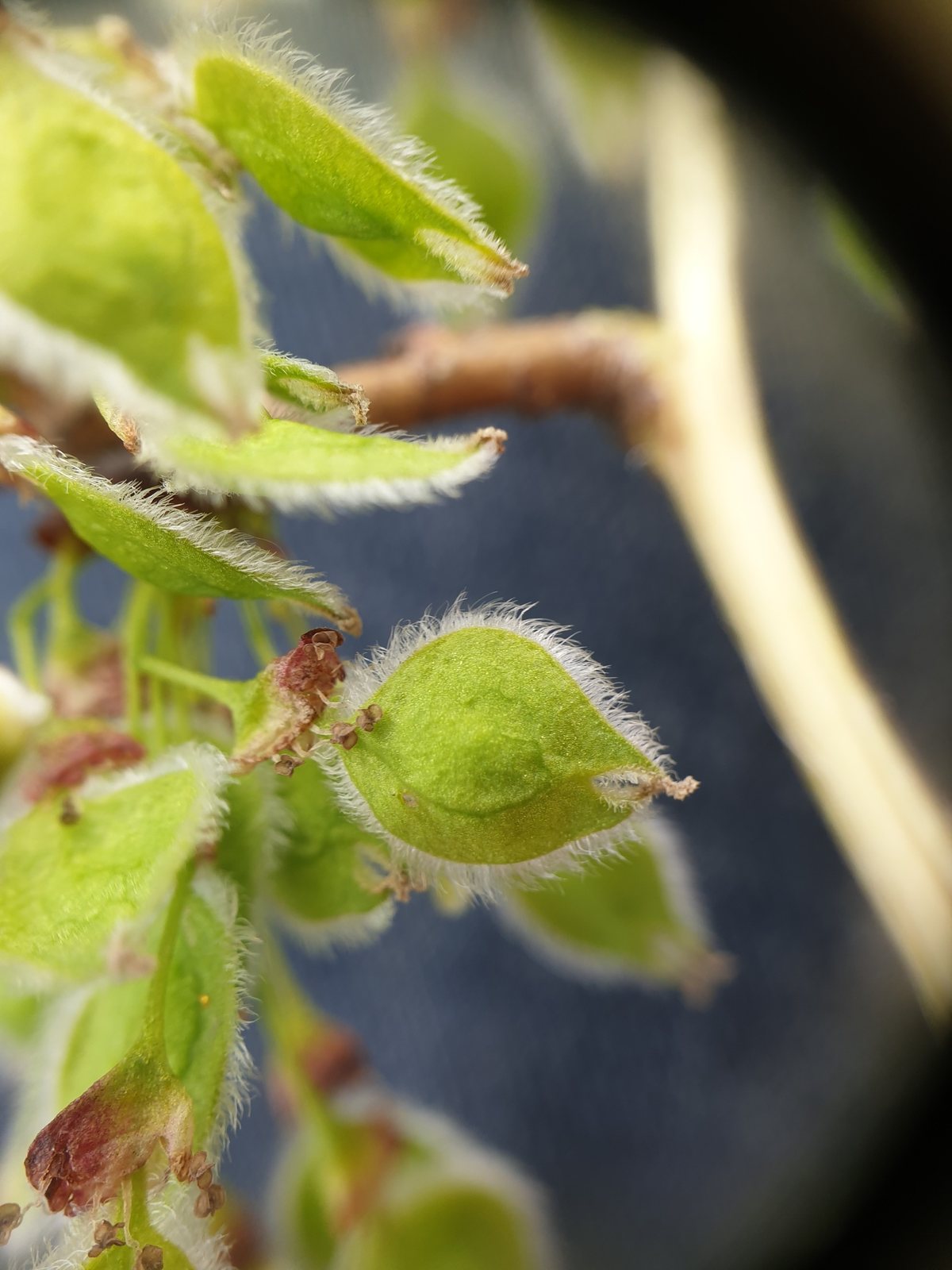
Usually has larger, distinctly rough upper leaf surfaces and rusty-hairy winter buds. Its winged fruits lack the conspicuously hairy outer margins typical of American elm fruits.
Siberian elm (Ulmus pumila)
Usually has much smaller leaves with mostly single teeth and a less strongly uneven leaf base. Its rounded winged fruits have hairless margins, unlike American elm.
The name
Ulmus is the Latin name for elm, and americana refers to the species' North American origin.
Propagation. Sow fresh seed soon after it ripens in spring; it loses viability quickly and usually germinates without cold treatment. Seedlings do not reliably retain a named selection's disease resistance, so named selections are propagated vegetatively, usually by specialist nurseries.
Checked against open data
- Accepted botanical name
- Ulmus americana
- In the US and Canada
- Native in Canada and the lower 48 states.
- Native range
- Alabama, Arkansas, Connecticut, Delaware, District of Columbia, Florida, Georgia, Illinois, Indiana, Iowa, Kansas and Kentucky.
- Measured
- Soil pH 5 to 8. Average height 1045 cm.
Sources: GBIF (CC BY 4.0), USDA PLANTS and Trefle (CC BY 4.0). The care and design notes are LandscapeGPT's own.
See it in your own yard.
Upload a photo of your yard and see it redesigned with plants that suit your climate, each checked against your zone.