American persimmon
Diospyros virginiana. Family Ebenaceae. Tree.
Also called Common persimmon, Eastern persimmon, Possumwood.
A deciduous tree native to the eastern and central United States, grown for its sweet, soft autumn fruit, yellow to orange autumn foliage and deeply blocky bark. It needs a long, warm growing season to ripen fruit reliably; trees may survive in cool parts of the UK and Canada without producing a dependable crop.
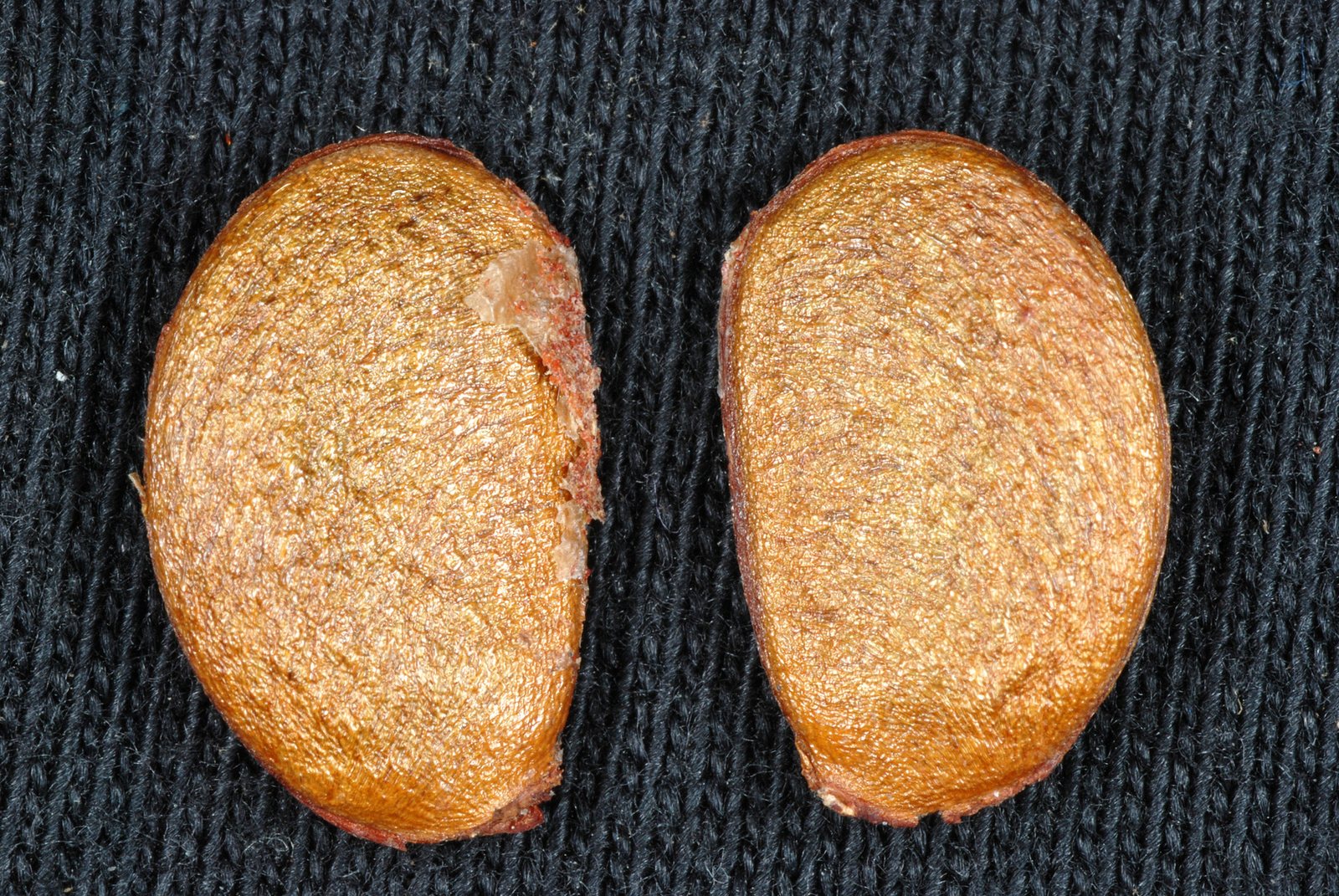
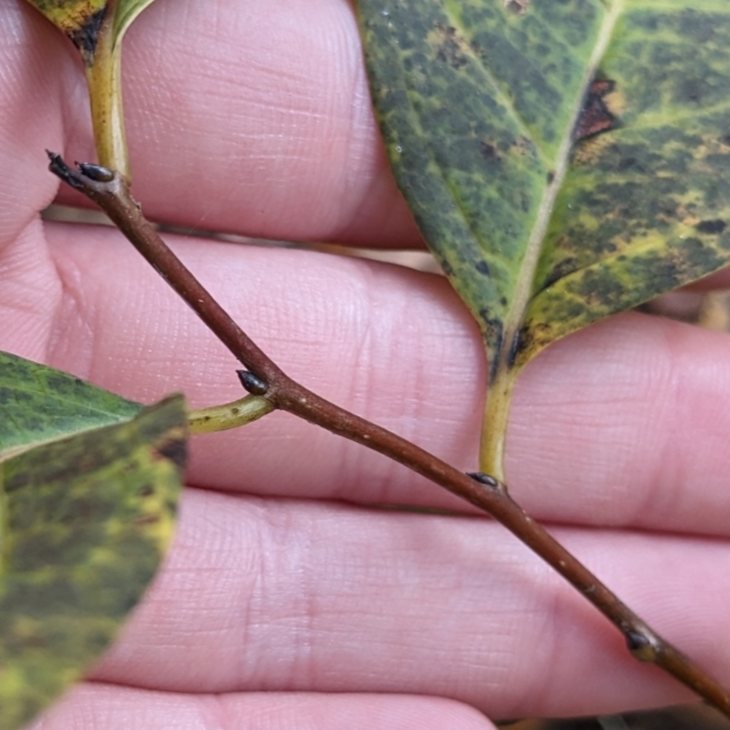
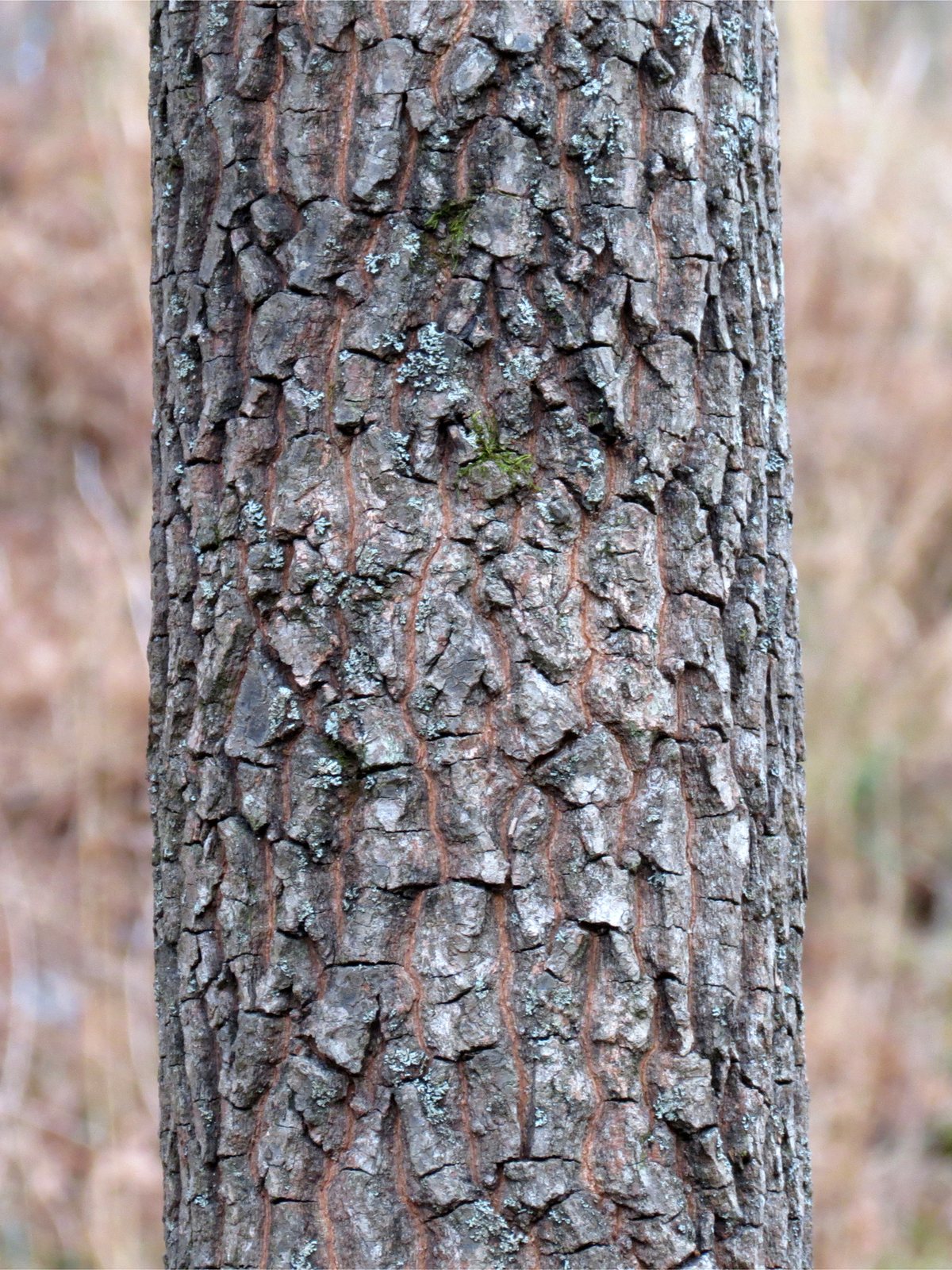
At a glance
- Sun
- Full sun for good fruiting; tolerates partial shade but crops less heavily.
- Water
- Moderate; water young trees regularly. Established trees tolerate some drought, but prolonged dryness can reduce fruit size and cause fruit drop.
- Soil
- Deep, well-drained loam is ideal, but it tolerates clay, sandy soil and occasional wet periods. Slightly acidic to neutral soil is preferred.
- Height
- 35-60 ft (10.7-18.3 m)
- Spread
- 20-35 ft (6.1-10.7 m)
- Flowers
- Late spring to early summer; small, cream to greenish-yellow, bell-shaped flowers.
- Foliage
- Oval, glossy dark green leaves, turning yellow, orange or sometimes reddish-purple in autumn.
- Growth
- Moderate, usually faster in deep soil with adequate moisture.
- Care needed
- Medium
The year at a glance
- Pollinators
- Drought tolerant
- Heat tolerant
- Wildlife
- Low allergen
- Edible
| J | F | M | A | M | J | J | A | S | O | N | D | |
|---|---|---|---|---|---|---|---|---|---|---|---|---|
| Flowers | ||||||||||||
| Fruit | ||||||||||||
| Plant |
Northern hemisphere months. In Australia, shift them by six.
- Difficulty
- Moderate
- Toughness
- Very tough
Will it suit your garden?
Pick your zone, country, light and whether you have pets.
Full sun is 6 or more hours of direct sun a day, part shade 3 to 6 hours, shade under 3.
How it grows
Planting day
7 ft (2 m)
After 1 year
9 ft (2.8 m)
After 2 years
12 ft (3.6 m)
After 3 years
14 ft (4.3 m)
After 5 years
19 ft (5.9 m)
About 16 years to full size.
From a typical nursery size, at an average rate for this kind of plant. A rule of thumb, not a forecast.
Good to know
- Cats and dogs
- Mildly toxic: may upset a stomach
- Native to
- the US
- Growth rate
- Fast
Care
Jobs through the year
- WaterApr–May, Sep–Oct, every 14 days
- Water established trees during prolonged dryness; young trees need regular deep watering for two growing seasons.
- WaterJun–Aug, every 7 days
- During dry spells, water deeply to support fruit development and reduce premature drop.
- FeedMar–Apr
- Feed lightly only if growth is weak; excess nitrogen reduces fruiting.
- PruneFeb–Mar
- Before growth starts, remove dead and crossing branches and maintain a strong, open framework.
- PruneMay–Aug
- Remove unwanted root suckers, especially below a graft.
- MulchMar–Apr
- Maintain 5–8 cm of organic mulch over the roots, leaving the trunk clear.
- ProtectOct–Nov
- Fit guards or cages around young trees where deer, rabbits or other browsing animals are present.
- HarvestSep–Nov
- Pick fully softened fruit or collect fresh, undamaged windfalls; frost is not needed for ripening.
- Plant a young, container-grown tree in its permanent position; its deep root system makes later transplanting difficult.
- Water deeply during dry spells for the first two growing seasons and during fruit development.
- Spread 2-3 in (5-8 cm) of organic mulch over the root area, keeping it clear of the trunk.
- Feed lightly in spring only if growth is weak; excess nitrogen encourages leafy growth at the expense of fruit.
- For reliable crops, plant a known female fruiting selection with a compatible male pollinator nearby, unless the selection is known to fruit without pollination.
- Remove unwanted root suckers promptly, especially those growing below a graft.
Pruning. Prune in late winter or early spring before growth begins, forming a strong framework with well-spaced branches. Remove dead, crossing or crowded growth and unwanted suckers; avoid heavy pruning because fruit forms on the current season's shoots.
Harvest
Gather orange to reddish-orange fruit in autumn when it is very soft and releases easily, or collect freshly fallen, undamaged fruit from a clean surface. Firm fruit is strongly astringent; frost is not needed for ripening. Grafted trees commonly produce a meaningful crop about 3-5 years after planting, while seedlings may take 7-15 years or longer.
Through the year
- Late winter
- Prune lightly to maintain a strong framework and remove dead or crossing branches.
- Spring
- Plant young trees when soil is workable, renew mulch and water thoroughly.
- Late spring
- Check flowering and whether a compatible male pollinator is available if your female tree requires one.
- Summer
- Water during prolonged dry spells and remove unwanted root suckers.
- Autumn
- Harvest fully softened fruit frequently and clear fallen fruit from paths.
- Late autumn
- Protect young trunks from browsing animals and mower damage.
In the garden
- Use as a fruiting shade tree in a large lawn, positioned away from paving where fallen fruit could become slippery.
- Plant at a sunny woodland edge with serviceberries and native shrubs for layered foliage and wildlife food.
- Include in a spacious orchard or food forest, allowing room for its mature canopy and any pollinator tree.
- Use as an autumn focal point, with ornamental grasses beneath the outer canopy to frame the colourful leaves and persistent fruit.
Garden styles it suits: Backyard orchard, Food forest, Edible landscape, Woodland, Wildlife garden and Homestead.
Plant it with: Serviceberry, Eastern redbud, Black chokeberry, Switchgrass, Little bluestem and Wild bergamot.
Wildlife: Flowers attract bees, and ripe fruit feeds birds and mammals, including opossums, raccoons and foxes in its native range. Deer may browse young trees, so use a protective cage where needed.
Problems to watch for
- Little or no fruit: check that the tree is female and has suitable pollination; young age, shade and cool summers also limit cropping.
- Fruit drop: some early shedding is normal, but drought and poor pollination can increase it; water consistently and check pollinator availability.
- Leaf spots: remove fallen infected leaves and improve air circulation; light spotting rarely needs chemical treatment.
- Persimmon psyllids: feeding can curl young leaves; established trees usually tolerate damage, so avoid routine spraying and support natural predators.
Safety
Ripe flesh is edible for people and is not known to be toxic to cats or dogs, but keep pets from swallowing whole fruit or seeds because these can cause choking or intestinal blockage. Unripe fruit is rich in tannins, and excessive consumption can cause digestive problems and, rarely, hard masses in the stomach. Horses can develop serious, potentially fatal intestinal obstruction after eating persimmons; keep fruiting trees and fallen fruit out of horse paddocks.
Easily confused with
Asian persimmon (Diospyros kaki)
Usually has much larger fruit and broader leaves; it is generally less cold-hardy. Some cultivars can be eaten firm, unlike typical American persimmon fruit.
Date-plum (Diospyros lotus)
Produces smaller, usually grape-sized fruit that turns blue-black when ripe, rather than the larger orange fruit of American persimmon.
The name
Diospyros is commonly translated from Greek as 'food of the gods', virginiana refers to Virginia, and persimmon comes from an Algonquian name for the fruit.
Propagation. Named fruiting selections are grafted onto seedling rootstocks. Seed requires a period of cold, moist stratification; seedlings vary in fruit quality and sex and take much longer to crop. The species also spreads locally by root suckers.
Checked against open data
- Accepted botanical name
- Diospyros virginiana
- In the US and Canada
- Native in the lower 48 states.
- Native range
- Alabama, Arkansas, Connecticut, Delaware, Florida, Georgia, Illinois, Indiana, Iowa, Kansas, Kentucky and Louisiana.
- Measured
- Soil pH 4.7 to 7.5. Average height 776 cm.
Sources: GBIF (CC BY 4.0), USDA PLANTS and Trefle (CC BY 4.0). The care and design notes are LandscapeGPT's own.
See it in your own yard.
Upload a photo of your yard and see it redesigned with plants that suit your climate, each checked against your zone.