American plum
Prunus americana. Family Rosaceae. Tree.
Also called Wild plum, American wild plum.
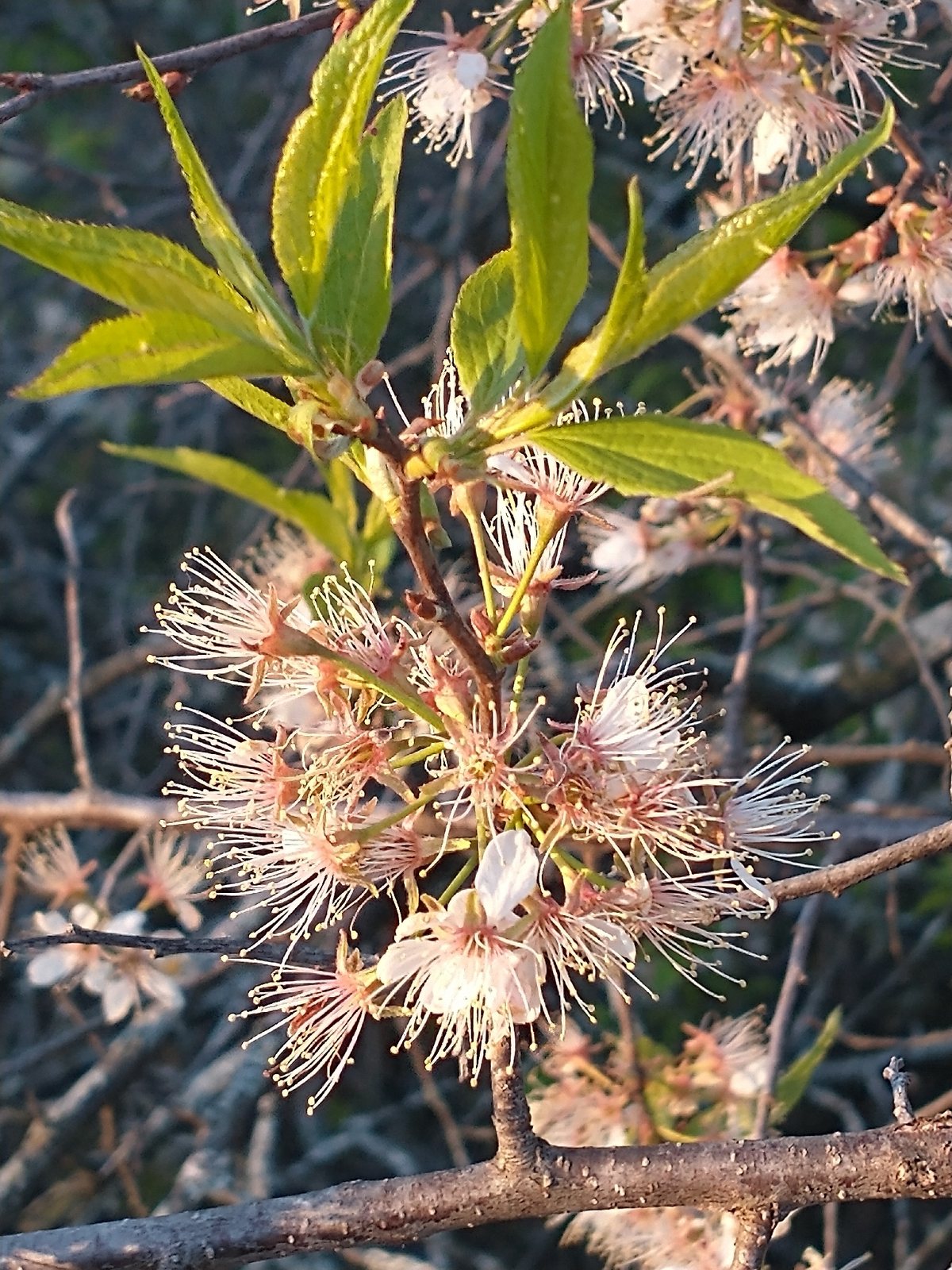
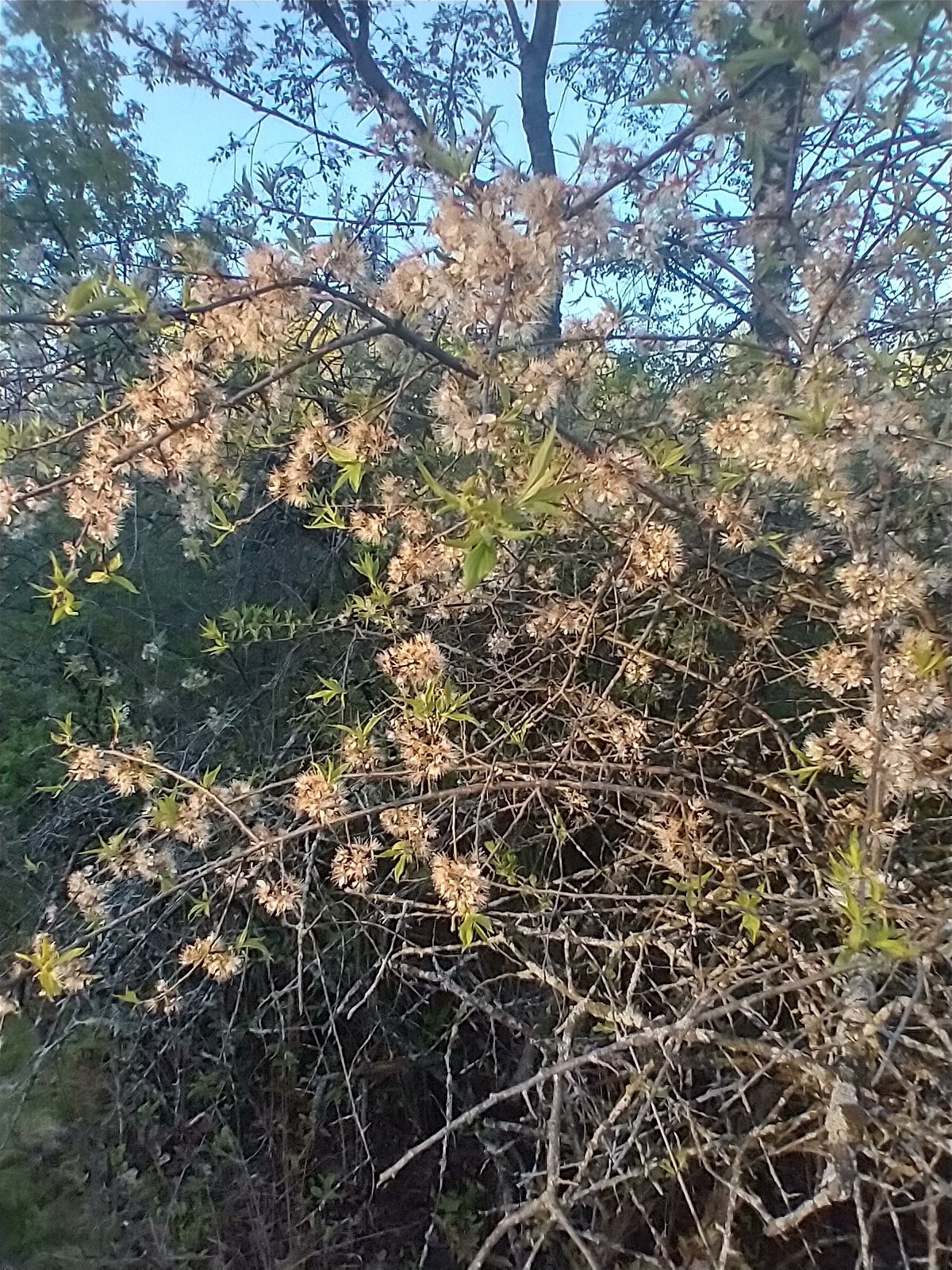
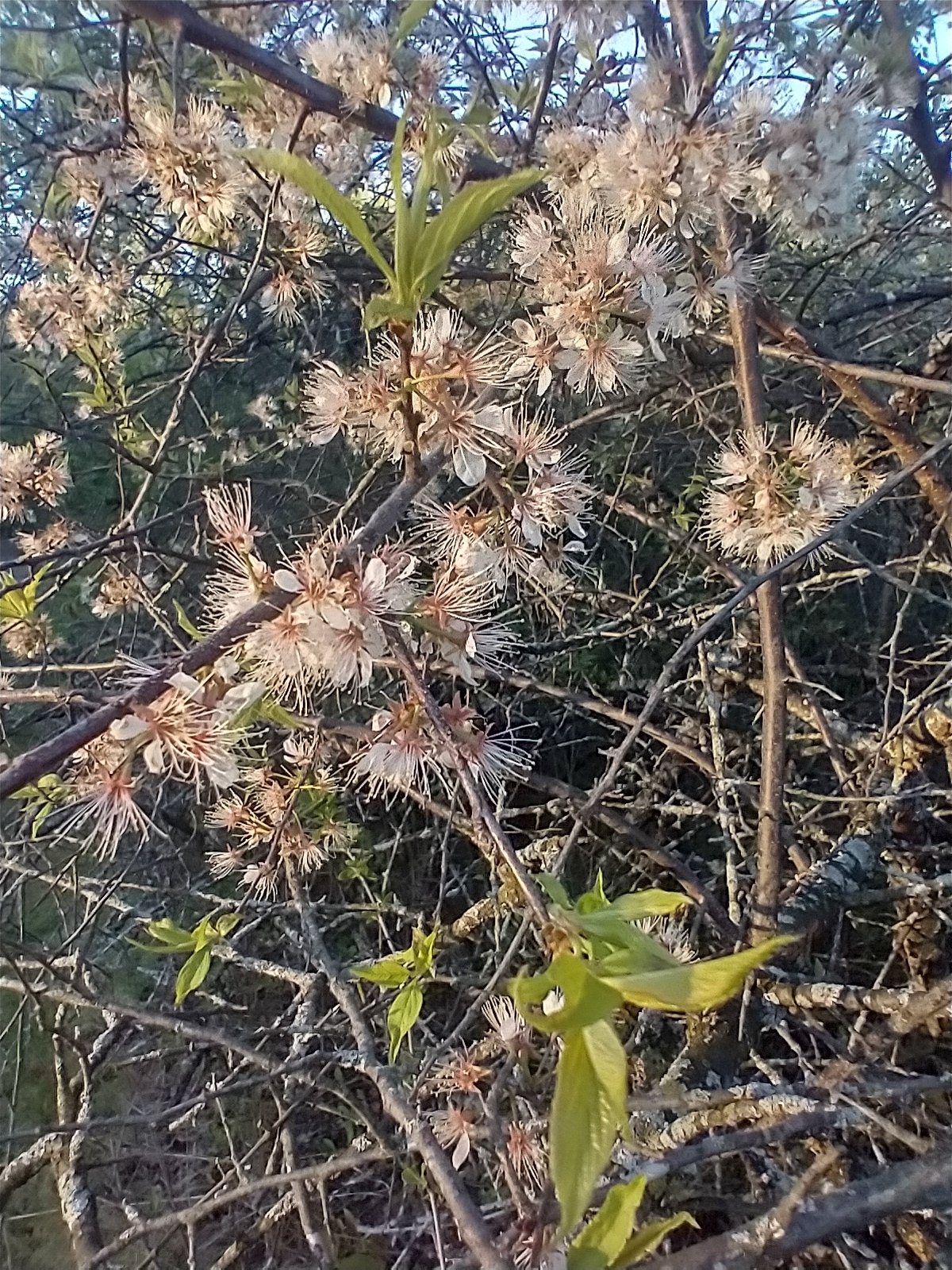
American plum (Prunus americana) is a small deciduous tree or thicket-forming shrub native to central and eastern North America. Gardeners grow it for clouds of white spring flowers, edible yellow to red plums, and valuable wildlife cover. Allow room for root suckers, and plant two genetically different American plums for more dependable fruiting.
At a glance
- Sun
- Full sun gives the best flowering and fruiting; tolerates partial shade.
- Water
- Moderate; water regularly while establishing. Established plants tolerate short dry periods, but prolonged drought reduces fruit quality.
- Soil
- Adaptable to sandy, loamy or clay soils with good drainage; tolerates a broad pH range. Avoid permanently wet ground.
- Height
- 15-25 ft (4.6-7.6 m)
- Spread
- 15-25 ft (4.6-7.6 m); suckering colonies can spread much farther.
- Flowers
- Clusters of white flowers in early to mid-spring, usually before the leaves open.
- Foliage
- Oval to oblong green leaves with sharply toothed edges; often yellow in autumn.
- Growth
- Moderate to fast when young.
- Care needed
- Medium
The year at a glance
- Pollinators
- Cold hardy
- Wildlife
- Low allergen
- Fragrant
- Edible
| J | F | M | A | M | J | J | A | S | O | N | D | |
|---|---|---|---|---|---|---|---|---|---|---|---|---|
| Flowers | ||||||||||||
| Fruit | ||||||||||||
| Plant |
Northern hemisphere months. In Australia, shift them by six.
- Difficulty
- Moderate
- Toughness
- Fairly tough
Will it suit your garden?
Pick your zone, country, light and whether you have pets.
Full sun is 6 or more hours of direct sun a day, part shade 3 to 6 hours, shade under 3.
How it grows
Planting day
7 ft (2 m)
After 1 year
7 ft (2.3 m)
After 2 years
8 ft (2.5 m)
After 3 years
9 ft (2.8 m)
After 5 years
11 ft (3.3 m)
About 16 years to full size.
From a typical nursery size, at an average rate for this kind of plant. A rule of thumb, not a forecast.
Good to know
- Cats and dogs
- Toxic
- Native to
- the US and Canada
- In the garden
- Spreads vigorously: plan to contain it.
- Growth rate
- Fast
Care
Jobs through the year
- WaterApr–May, Sep–Oct, every 14 days
- Water established trees deeply if soil is dry; water more often during the first two growing seasons.
- WaterJun–Aug, every 7 days
- Water deeply during dry spells, especially while fruit swells; skip when rainfall keeps soil moist.
- MulchMar–Apr
- Spread 5–8 cm of organic mulch over the roots, keeping it clear of the trunk.
- ProtectMar–Apr
- Provide a genetically different American plum for pollination and avoid insecticides during bloom.
- PruneMay–Aug
- In dry weather, remove crossing branches, unwanted suckers and diseased wood; disinfect tools after diseased cuts.
- ProtectMay–Nov
- Remove fallen, infested or rotting fruit and dried fruit remaining on branches.
- FeedMar–Apr
- Feed only if weak growth or a soil test indicates a deficiency; avoid excess nitrogen.
- HarvestAug–Sep
- Pick when fruit softens slightly and detaches easily; taste for ripeness and discard stones.
- Water deeply during dry spells for the first two growing seasons; thereafter, water during prolonged drought or fruit swelling.
- Spread 2-3 in (5-8 cm) of organic mulch over the root area, keeping it clear of the trunk.
- Plant two genetically different American plums with overlapping flowering times; suckers from one plant do not provide a different pollen source.
- Remove unwanted root suckers promptly, or leave them where a dense wildlife thicket is wanted.
- Feed only if growth is weak or a soil test shows a deficiency; excess nitrogen encourages leafy growth rather than fruit.
Pruning. Train young plants as a single-trunk tree or a multi-stemmed shrub, removing crossing branches and poorly placed shoots. Make routine cuts in dry weather in late spring or summer, rather than wet winter conditions, to reduce disease risk.
Harvest
Pick plums in late summer to early autumn when they develop their mature yellow, red or reddish-purple colour, soften slightly and detach easily; taste a sample because skin colour varies between plants. The flesh is edible fresh, though often tart, and is useful for preserves; discard the stones. Expect a first useful crop roughly 3-5 years after planting a young tree, with seed-grown plants sometimes taking longer.
Through the year
- Autumn
- Plant while dormant where winters are mild, leaving room for the mature crown and suckers.
- Early spring
- Plant in cold-winter areas once the soil is workable; renew mulch and check watering.
- Spring
- Watch flowering and pollinator activity; protect visiting insects by avoiding insecticide use during bloom.
- Late spring
- Check developing fruit for damage and remove fallen or infested fruit.
- Summer
- Prune in dry weather, remove unwanted suckers and water during prolonged dry spells.
- Late summer
- Check ripening fruit frequently and harvest as it softens; ripening may continue into early autumn.
- Late autumn
- Clear fallen fruit and remove dried fruit remaining on branches to reduce disease carryover.
In the garden
- Use in an informal boundary hedge where suckering growth can form a dense screen.
- Plant at a sunny woodland edge with serviceberries and native flowering perennials.
- Include in a mixed orchard or food forest, keeping access around plants for picking and sucker removal.
- Grow as a small flowering tree in a lawn or meadow, with space around its thorny branches.
Garden styles it suits: Wildlife garden, Native hedgerow, Food forest, Backyard orchard, Edible landscape and Homestead.
Plant it with: Serviceberry, Black chokeberry, Wild bergamot, Purple coneflower, Little bluestem and Butterfly weed.
Wildlife: Flowers provide early pollen and nectar for bees and other insects. Birds and mammals eat the fruit, while dense, sometimes thorny growth provides nesting sites and shelter; the foliage also supports caterpillars of several moths and butterflies.
Problems to watch for
- Black knot: hard black swellings develop on branches. Cut affected wood well below each knot in dry weather, remove it from the garden and disinfect tools between cuts.
- Brown rot: fruit rots and may remain as dried mummies. Remove affected fruit, clear fallen fruit and thin crowded branches to improve airflow.
- Plum curculio in eastern North America: beetles scar young fruit and larvae cause premature drop. Collect fallen fruit promptly and ask your local extension service about locally timed controls if damage is persistent.
- Poor fruit set: isolated plants, frost during flowering or poor pollinator activity can limit crops. Add a genetically different American plum, choose a site away from frost pockets and avoid spraying flowers.
Safety
Leaves, stems and the kernels inside the stones contain cyanogenic compounds and can seriously poison people, cats, dogs and horses if eaten. Wilted leaves are a particular livestock hazard. Ripe fruit flesh is edible, but do not chew or crush the stones; whole stones also pose choking and blockage risks.
Where it spreads. Spreads vigorously by root suckers and can form large thickets in gardens and pastures across its native central and eastern North American range. This is usually a management issue rather than non-native invasion; keep it away from boundaries where suckers would be unwelcome.
Easily confused with
Chickasaw plum (Prunus angustifolia)
Usually has much narrower, shinier leaves and smaller fruit; American plum has broader leaves with conspicuous, sharp teeth.
Beach plum (Prunus maritima)
Usually a lower shrub associated with coastal sand, with smaller, thicker leaves and small purple fruit; American plum commonly becomes a taller inland tree.
European plum (Prunus domestica)
Cultivated forms generally have larger fruit, often oval, and less thorny growth. American plum usually has smaller, rounder fruit and a strongly suckering habit; hybrids can make identification difficult.
The name
Prunus is the Latin name for plum, and americana refers to the species' American origin.
Propagation. Grow from cleaned seed given moist cold stratification; seedlings vary in fruit quality. Rooted suckers taken during dormancy reproduce an own-root plant, while grafting preserves selected fruiting forms; suckers from a grafted tree may belong to its rootstock.
Checked against open data
- Accepted botanical name
- Prunus americana
- In the US and Canada
- Native in Canada and the lower 48 states.
- Native range
- Alabama, Arkansas, Colorado, Connecticut, Delaware, District of Columbia, Florida, Georgia, Idaho, Illinois, Indiana and Kansas.
- Measured
- Soil pH 5 to 7. Average height 460 cm.
Sources: GBIF (CC BY 4.0), USDA PLANTS and Trefle (CC BY 4.0). The care and design notes are LandscapeGPT's own.
See it in your own yard.
Upload a photo of your yard and see it redesigned with plants that suit your climate, each checked against your zone.