American wisteria
Wisteria frutescens. Family Fabaceae. Climber.
Also called Atlantic wisteria.
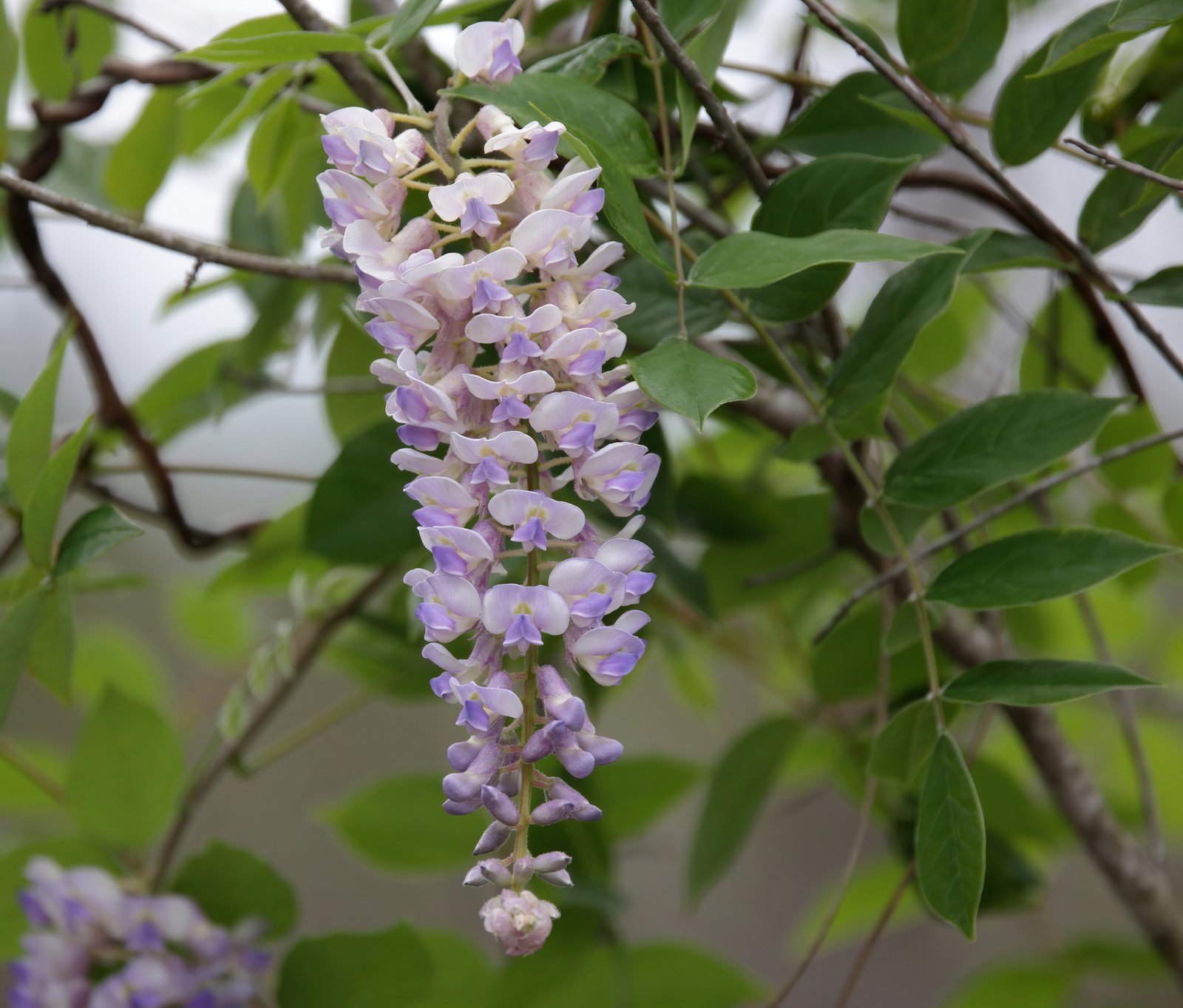
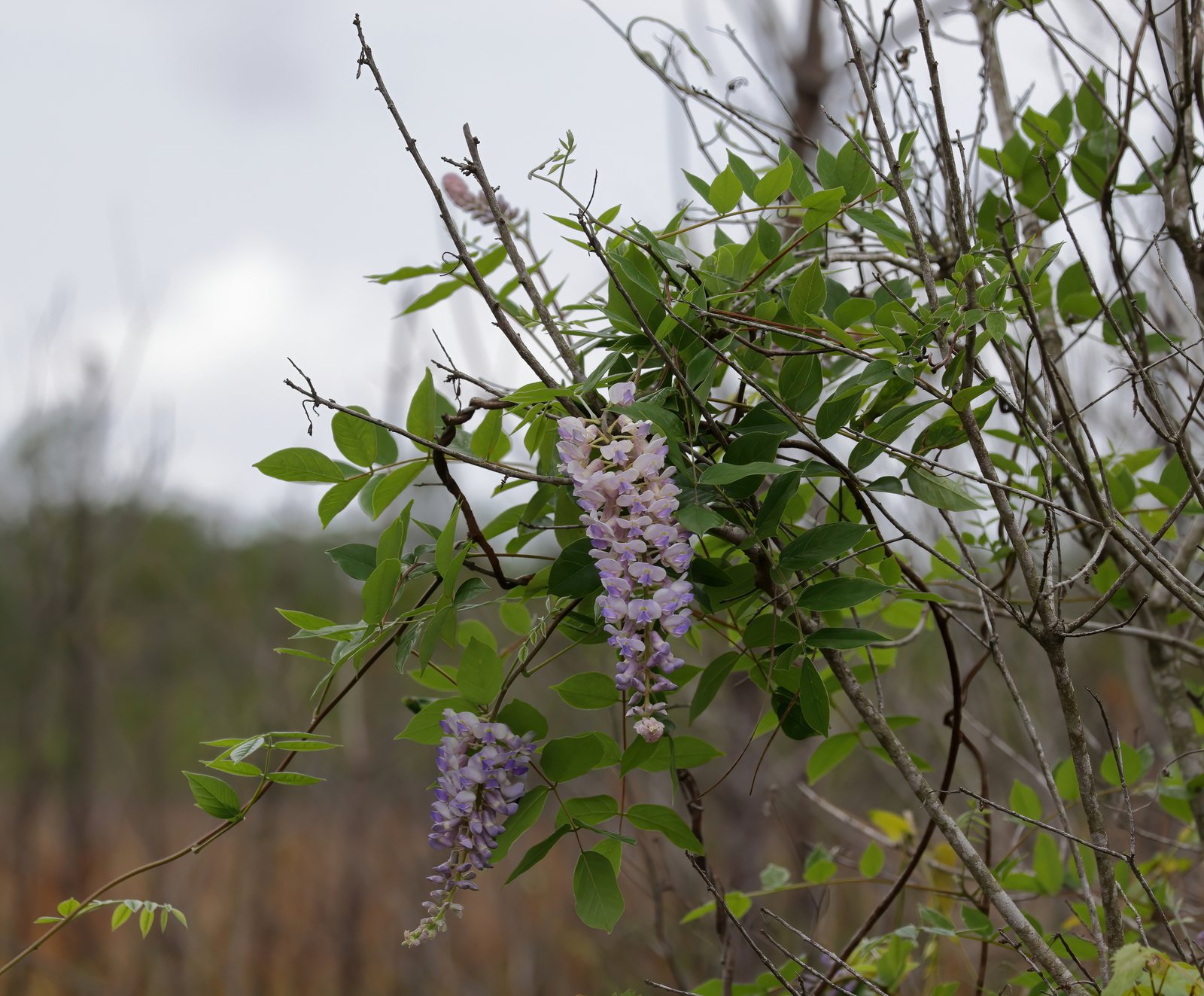
American wisteria is a deciduous, woody climber native to the eastern and south-central United States, grown for hanging clusters of lilac-purple flowers that open after the leaves. It is generally less aggressive than Chinese or Japanese wisteria, but still needs a strong support and regular pruning.
At a glance
- Sun
- Full sun for the best flowering; tolerates partial shade but flowers less.
- Water
- Keep the root zone evenly moist while establishing. Once established, water deeply during prolonged dry spells, especially while buds and flowers are developing.
- Soil
- Moist, well-drained soil enriched with organic matter; prefers slightly acidic to neutral conditions. Avoid very dry soil and permanently waterlogged sites.
- Height
- 15-30 ft (4.6-9.1 m), depending on support and pruning
- Spread
- 6-15 ft (1.8-4.6 m), depending on training
- Flowers
- Late spring to early summer, after the leaves emerge; compact, hanging clusters of lilac-purple flowers, sometimes followed by scattered summer flowers.
- Foliage
- Green, pinnate leaves made up of oval leaflets; may turn yellow in autumn before falling.
- Growth
- Moderate to fast once established
- Care needed
- Medium
The year at a glance
- Pollinators
- Deer resistant
- Heat tolerant
- Wildlife
- Low allergen
| J | F | M | A | M | J | J | A | S | O | N | D | |
|---|---|---|---|---|---|---|---|---|---|---|---|---|
| Flowers | ||||||||||||
| Fruit | ||||||||||||
| Plant |
Northern hemisphere months. In Australia, shift them by six.
- Difficulty
- Moderate
- Toughness
- Very tough
Will it suit your garden?
Pick your zone, country, light and whether you have pets.
Full sun is 6 or more hours of direct sun a day, part shade 3 to 6 hours, shade under 3.
How it grows
Planting day
2 ft (0.6 m)
After 1 year
3 ft (0.98 m)
After 2 years
4 ft (1.4 m)
After 3 years
6 ft (1.7 m)
After 5 years
6 ft (1.8 m)
full size
About 3 years to full size.
From a typical nursery size, at an average rate for this kind of plant. A rule of thumb, not a forecast.
Good to know
- Cats and dogs
- Toxic
- Native to
- the US
- Growth rate
- Fast
Care
Jobs through the year
- WaterApr–May, Sep–Oct, every 14 days
- Water established plants during dry spells; keep roots evenly moist for the first two growing seasons.
- WaterJun–Aug, every 7 days
- Water deeply if soil is drying in prolonged dry weather, especially during flowering.
- PruneFeb–Mar
- Retain the main framework, remove dead or crowded stems and shorten side shoots to a few buds.
- MulchMar–Apr
- Apply organic mulch over the root zone, leaving a gap around main stems.
- ProtectMay–Jun
- Tie young shoots loosely to sturdy supports and loosen ties before stems thicken.
- PruneJul–Aug
- After the main flowering, shorten unwanted long shoots and remove basal shoots.
- PruneSep–Oct
- Remove unwanted rooted runners before they establish separate plants.
- ProtectOct–Nov
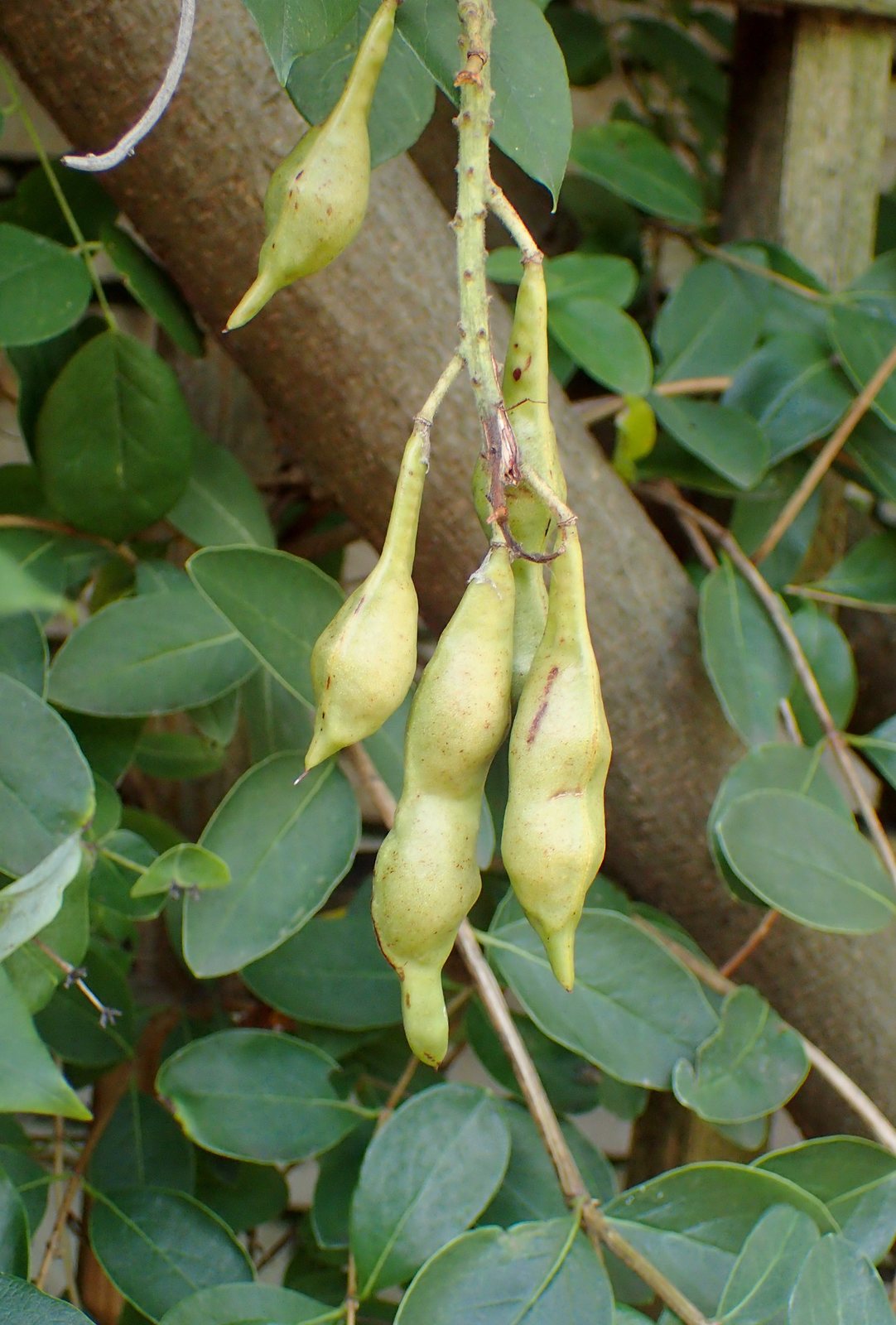
- Collect fallen poisonous pods where children or animals could reach them.
- Install a substantial pergola, arch or securely anchored wire framework before planting; keep stems away from gutters and roof edges.
- Water deeply through the first two growing seasons whenever the soil begins to dry.
- Apply an organic mulch in spring, keeping it clear of the main stems.
- Avoid high-nitrogen fertilisers, which encourage leafy growth at the expense of flowers.
- Tie young shoots loosely to the support and remove unwanted basal shoots or rooted runners.
Pruning. In late winter, remove dead or crowded stems and shorten side shoots to a few buds while retaining the main framework; flowers develop on new growth. After the main flowering, shorten long, unwanted shoots to keep the vine within its allotted space.
Through the year
- Late winter
- Prune side shoots, remove dead growth and check that supports and fixings remain secure.
- Spring
- Plant when the soil is workable, water thoroughly and mulch around the root zone.
- Late spring
- Guide new shoots onto the support and check ties before stems thicken.
- Summer
- Water during dry spells and shorten unwanted shoots after the main flowering.
- Autumn
- Remove unwanted rooted runners and collect fallen seed pods where children or animals have access.
In the garden
- Train over a sturdy pergola to provide summer shade and hanging flowers.
- Cover a substantial garden arch to frame a path or entrance.
- Train on wires against a sunny wall, keeping stems clear of windows, gutters and roof tiles.
- Use as a flowering vertical layer in an eastern North American native garden, with lower perennials beyond the shaded base.
Garden styles it suits: English country, Cottage garden, Romantic rose garden, Southern, Traditional and Pollinator garden.
Plant it with: Woodland phlox, Christmas fern, Wild geranium, Purple coneflower and Bee balm.
Wildlife: Flowers provide food for bees, particularly larger bees able to work the pea-like flowers. The foliage also supports some native moth and butterfly caterpillars within its North American range.
Problems to watch for
- Few or no flowers: provide more sun, avoid high-nitrogen feeding and allow young plants time to establish; seed-grown plants can take many years to flower.
- Yellow leaves with green veins: alkaline soil can limit iron uptake; check soil pH and seek a suitable iron treatment rather than adding general fertiliser.
- Root rot or dieback in wet soil: improve drainage and avoid leaving the root zone saturated.
- Unwanted shoots and spreading stems: remove basal shoots promptly and lift stems that have rooted where they touch the ground.
Safety
Toxic to people, cats, dogs and horses if eaten. All parts should be treated as poisonous, especially the seeds and pods; ingestion can cause vomiting, abdominal pain and diarrhoea, and substantial ingestion can be serious. Seek medical or veterinary advice promptly after suspected ingestion.
Easily confused with
Chinese wisteria (Wisteria sinensis)
Usually flowers before or as the leaves emerge, with longer flower clusters. Its seed pods are velvety, whereas American wisteria has smooth pods.
Japanese wisteria (Wisteria floribunda)
Usually has much longer, looser flower clusters that open progressively from the base, and typically more leaflets. Its pods are velvety rather than smooth.
The name
Wisteria honours the American physician Caspar Wistar, while frutescens means becoming shrubby or woody.
Propagation. Layer a low-growing stem or take softwood cuttings in late spring to early summer. Seed is possible, but seedlings vary and may take many years to flower; propagate named cultivars vegetatively.
Checked against open data
- Accepted botanical name
- Wisteria frutescens
- In the US and Canada
- Native in the lower 48 states.
- Native range
- Alabama, Arkansas, Connecticut, Delaware, Florida, Georgia, Illinois, Indiana, Iowa, Kentucky, Louisiana and Maryland.
- Measured
- Soil pH 4 to 7. Average height 1524 cm.
Sources: GBIF (CC BY 4.0), USDA PLANTS and Trefle (CC BY 4.0). The care and design notes are LandscapeGPT's own.
See it in your own yard.
Upload a photo of your yard and see it redesigned with plants that suit your climate, each checked against your zone.