American yellowwood
Cladrastis kentukea. Family Fabaceae. Tree.
Also called Yellowwood, Kentucky yellowwood.
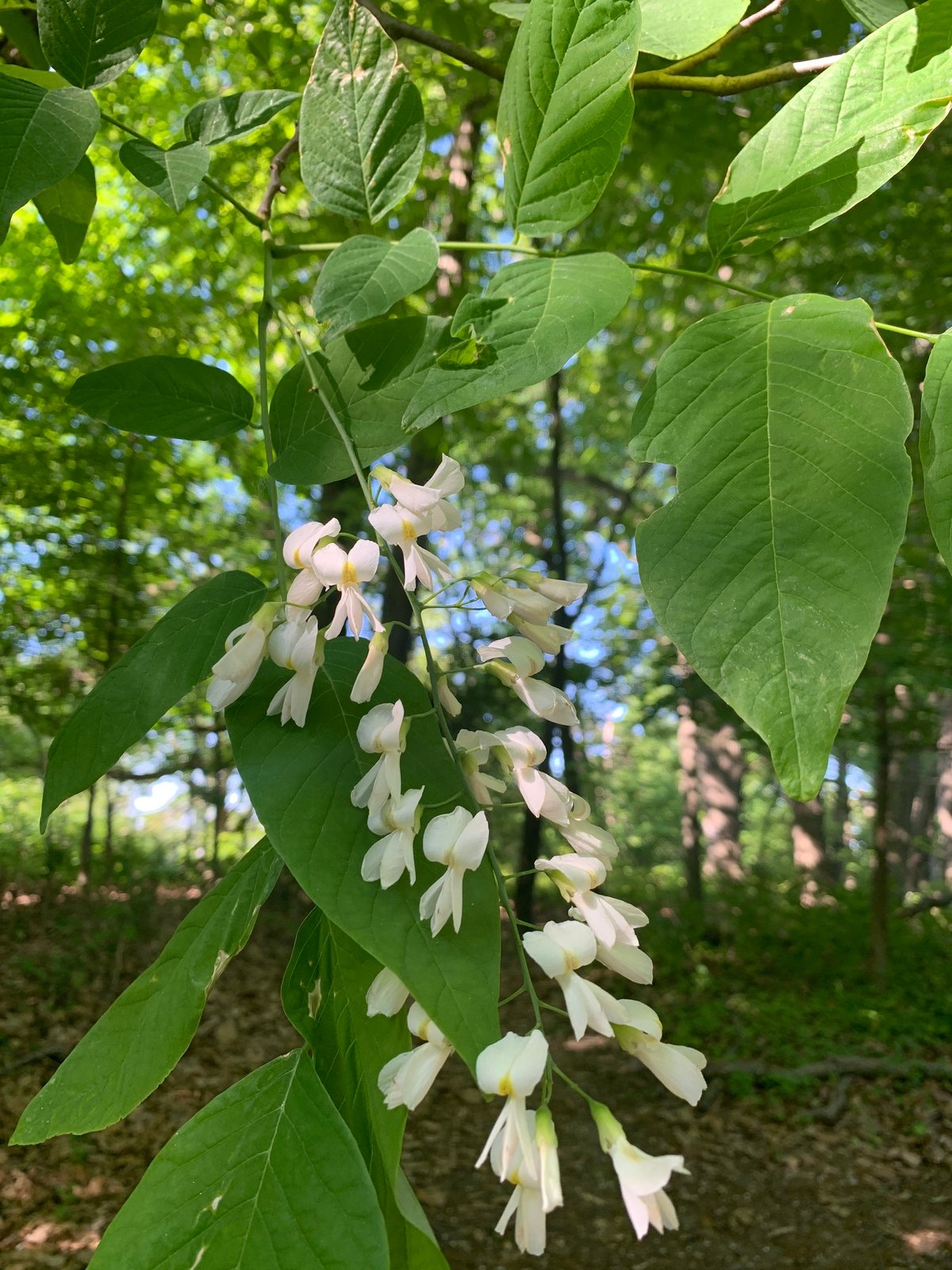
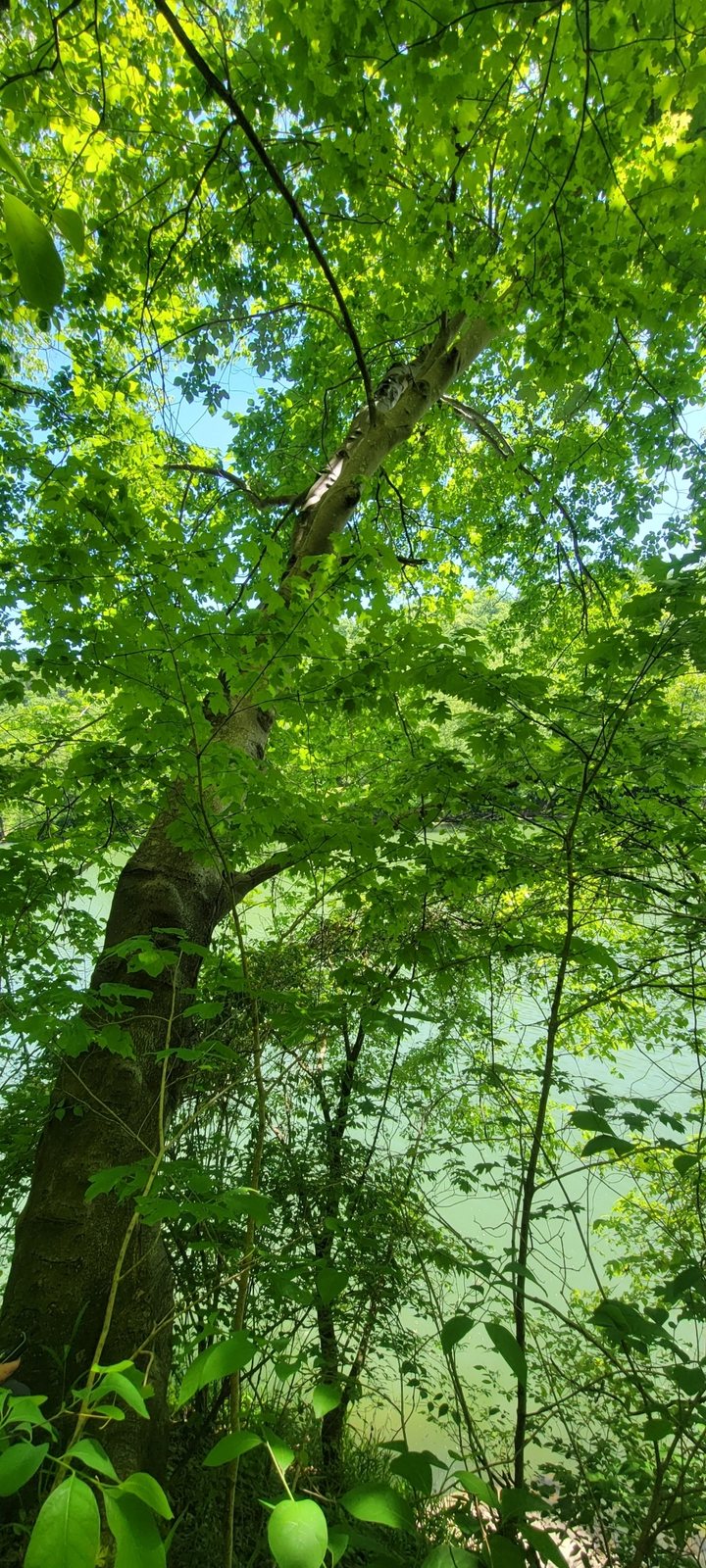
American yellowwood is a medium-sized deciduous tree native to the southeastern and central United States, grown for its broad crown, fragrant hanging clusters of white flowers and yellow autumn leaves. It makes a handsome shade or specimen tree, but young trees can take 10 years or more to flower, and established trees often bloom heavily only every second or third year.
At a glance
- Sun
- Full sun to partial shade; flowering is best in full sun.
- Water
- Moderate; keep young trees evenly moist. Established trees tolerate short dry spells but benefit from deep watering during prolonged drought.
- Soil
- Deep, well-drained soil with moderate fertility; tolerates acidic to alkaline conditions. Avoid waterlogged ground and heavily compacted soil.
- Height
- 30-50 ft (9-15 m)
- Spread
- 40-55 ft (12-17 m)
- Flowers
- Late spring to early summer; fragrant white flowers in long, hanging clusters. Flowering varies considerably from year to year.
- Foliage
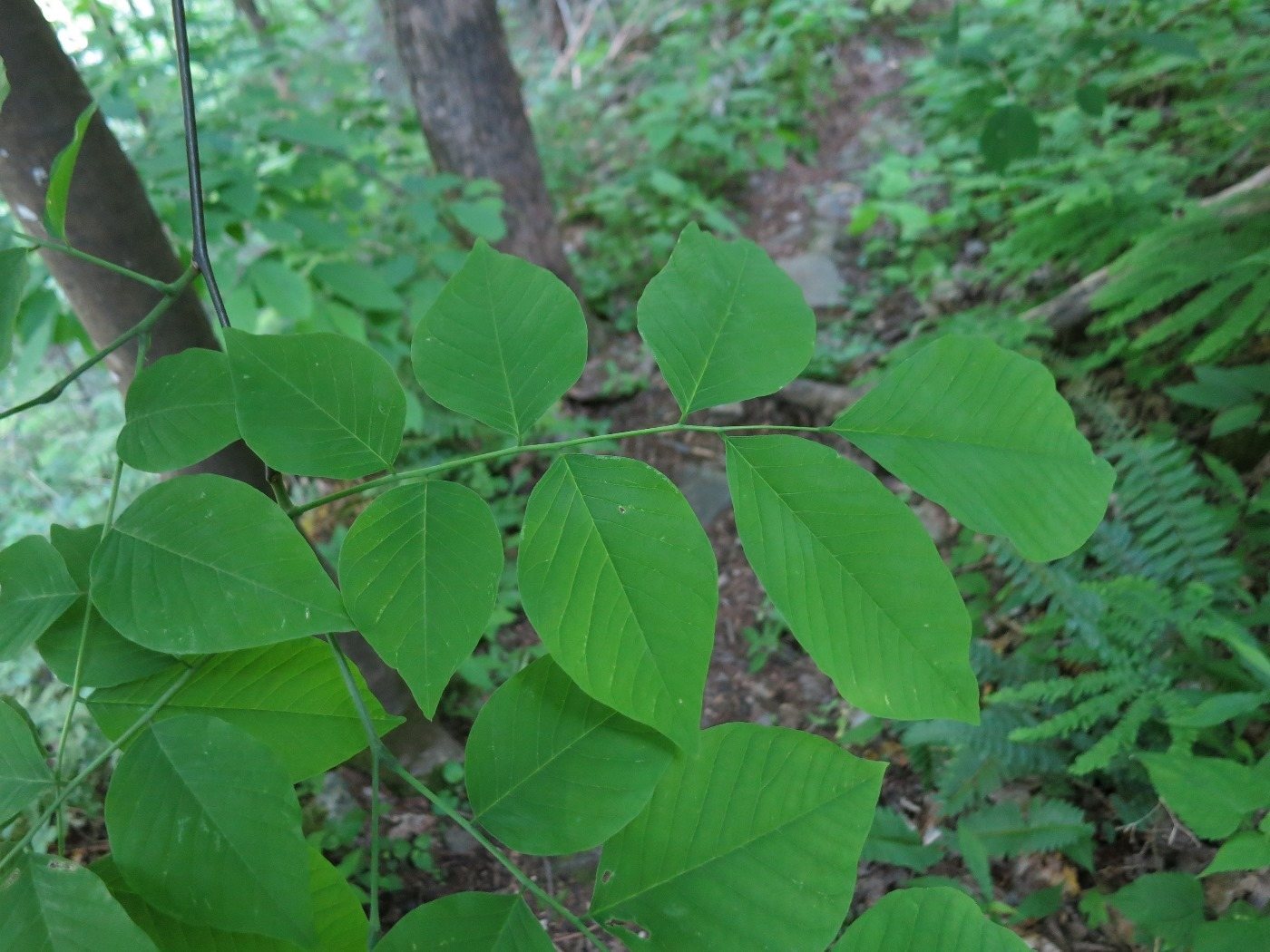
- Compound leaves with 7-11 broad leaflets, emerging yellow-green, becoming bright green and turning clear yellow in autumn.
- Growth
- Medium, usually slower while establishing.
- Care needed
- Low
The year at a glance
- Pollinators
- Cold hardy
- Disease resistant
- Wildlife
- Low allergen
- Fragrant
| J | F | M | A | M | J | J | A | S | O | N | D | |
|---|---|---|---|---|---|---|---|---|---|---|---|---|
| Flowers | ||||||||||||
| Fruit | ||||||||||||
| Plant |
Northern hemisphere months. In Australia, shift them by six.
- Difficulty
- Moderate
- Toughness
- Fairly tough
Will it suit your garden?
Pick your zone, country, light and whether you have pets.
Full sun is 6 or more hours of direct sun a day, part shade 3 to 6 hours, shade under 3.
How it grows
Planting day
7 ft (2 m)
After 1 year
8 ft (2.4 m)
After 2 years
9 ft (2.8 m)
After 3 years
10 ft (3.2 m)
After 5 years
13 ft (3.9 m)
About 26 years to full size.
From a typical nursery size, at an average rate for this kind of plant. A rule of thumb, not a forecast.
Good to know
- Cats and dogs
- Safe
- Native to
- the US
- Growth rate
- Slow
Care
Jobs through the year
- WaterApr–May, Sep–Oct, every 14 days
- Water established trees deeply during extended dry spells; keep young trees evenly moist for three years.
- WaterJun–Aug, every 14 days
- Deep-water during prolonged drought; newly planted trees may need weekly watering.
- MulchMar–Apr
- Maintain 5–8 cm of organic mulch, keeping the trunk flare uncovered.
- PruneJul–Aug
- Make small structural cuts only as needed; avoid dormant-season pruning, heavy cuts and weak competing leaders.
- ProtectJan, Dec
- Inspect forks and storm damage; consult an arborist about splits or large defective limbs.
- ProtectMar
- Check tree ties and remove supports after the first growing season.
- Plant with the root flare at soil level and allow room for the broad mature crown.
- Water deeply during dry weather for the first two to three growing seasons.
- Spread 2-3 in (5-8 cm) of organic mulch over the root zone, keeping it clear of the trunk.
- Do not feed routinely; use a soil test before adding fertiliser to a poorly growing tree.
- Stake only if the root ball moves in wind, and remove supports after the first growing season.
Pruning. Make necessary pruning cuts in mid- to late summer, as dormant-season and spring cuts can bleed heavily. Train young trees gradually to a strong framework, removing competing leaders and poorly attached branches while they are small; avoid heavy pruning.
Through the year
- Autumn
- Plant while the soil is workable and moist, or wait until spring in very cold areas.
- Early spring
- Check ties and renew mulch without burying the trunk flare.
- Late spring
- Watch for flower clusters, but do not assume a flowerless year means the tree needs feeding.
- Summer
- Water young trees deeply during dry spells and established trees during prolonged drought.
- Mid- to late summer
- Carry out light structural pruning if needed.
- Winter
- Inspect the bare framework for split forks or storm damage; seek an arborist's advice for large defects.
In the garden
- Use as a specimen in a generous lawn where its spreading crown and hanging flowers can be seen clearly.
- Place near a terrace for summer shade and flower fragrance, leaving ample space for mature branches.
- Plant at a sunny woodland edge with shade-tolerant perennials beneath the outer canopy.
- Use as a focal tree in a white-flowered garden, with yellow autumn foliage extending its season of interest.
Garden styles it suits: Traditional, Grand estate, Woodland, White garden, Autumn colour and English country.
Plant it with: Eastern redbud, Flowering dogwood, Oakleaf hydrangea, Christmas fern, Wild ginger and Foamflower.
Wildlife: Flowers provide nectar and pollen for bees. The spreading crown offers shelter and potential nesting sites for birds.
Problems to watch for
- Weak forks and storm breakage: establish well-spaced branches when young and have damaged mature limbs assessed by an arborist.
- Poor flowering: allow young trees time to mature, provide good sun and expect naturally irregular flowering; avoid unnecessary nitrogen fertiliser.
- Leaf scorch during drought: water deeply and maintain mulch, particularly around recently planted trees.
- Root stress in wet or compacted soil: choose a freely draining site and keep vehicles and repeated foot traffic away from the root zone.
Safety
Not known to be toxic to people, cats, dogs or horses, but species-specific safety information is limited. Do not treat its leaves, bark or seed pods as edible, and discourage pets and children from chewing them.
Easily confused with
Black locust (Robinia pseudoacacia)
Also has compound leaves and hanging white flowers, but typically has smaller, more numerous leaflets, paired spines on young shoots and deeply furrowed mature bark. Yellowwood is thornless with smoother grey bark.
Japanese pagoda tree (Styphnolobium japonicum)
Has compound leaves but flowers later, usually in summer, with upright or loose terminal clusters of creamy flowers rather than long hanging clusters. Its pods are distinctly constricted between seeds.
Golden chain tree (Laburnum anagyroides)
Has hanging clusters of yellow rather than white flowers and leaves divided into just three leaflets. Laburnum is poisonous, especially its seeds.
The name
Yellowwood refers to the yellow heartwood, while Cladrastis comes from Greek words meaning 'brittle branch' and kentukea refers to Kentucky.
Propagation. Usually grown from seed. The hard seed coat needs scarification before sowing; seed-grown trees take many years to reach flowering age. Named selections are generally propagated by specialist grafting.
Checked against open data
- Accepted botanical name
- Cladrastis kentukea
- In the US and Canada
- Native in the lower 48 states. Introduced in Canada.
- Native range
- Alabama, Arkansas, Georgia, Illinois, Indiana, Kentucky, Mississippi, Missouri, North Carolina, Oklahoma, South Carolina and Tennessee.
- Measured
- Average height 1500 cm.
Sources: GBIF (CC BY 4.0), USDA PLANTS and Trefle (CC BY 4.0). The care and design notes are LandscapeGPT's own.
See it in your own yard.
Upload a photo of your yard and see it redesigned with plants that suit your climate, each checked against your zone.