Wild ginger
Asarum canadense. Family Aristolochiaceae. Groundcover.
Also called Canadian wild ginger, Canada wild ginger.
Wild ginger is a deciduous woodland perennial native to eastern North America, grown for its soft, heart-shaped leaves and spreading ground cover. It suits cool, shaded gardens with moist, humus-rich soil; its small spring flowers sit beneath the foliage at ground level. Despite its name and ginger-scented rhizomes, it is not an edible substitute for culinary ginger.
At a glance
- Sun
- Partial to full shade; avoid hot afternoon sun.
- Water
- Keep evenly moist but not waterlogged. Water during dry spells, especially beneath trees where roots compete for moisture.
- Soil
- Humus-rich, well-drained soil, from slightly acidic to neutral; tolerates clay if drainage is adequate.
- Height
- 0.5-1 ft (0.15-0.3 m)
- Spread
- 1-1.5 ft (0.3-0.45 m) per plant initially, forming wider colonies over time
- Flowers
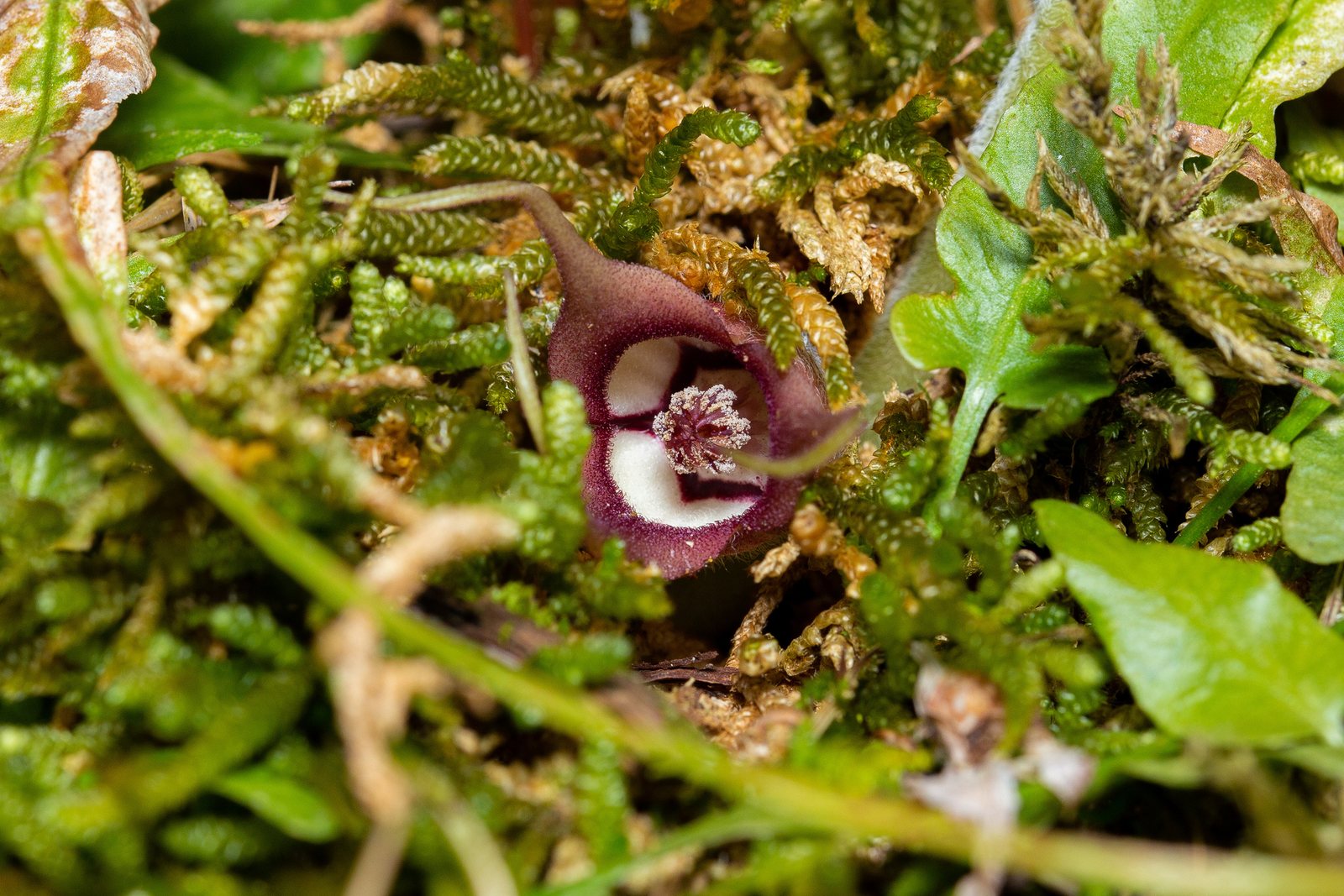
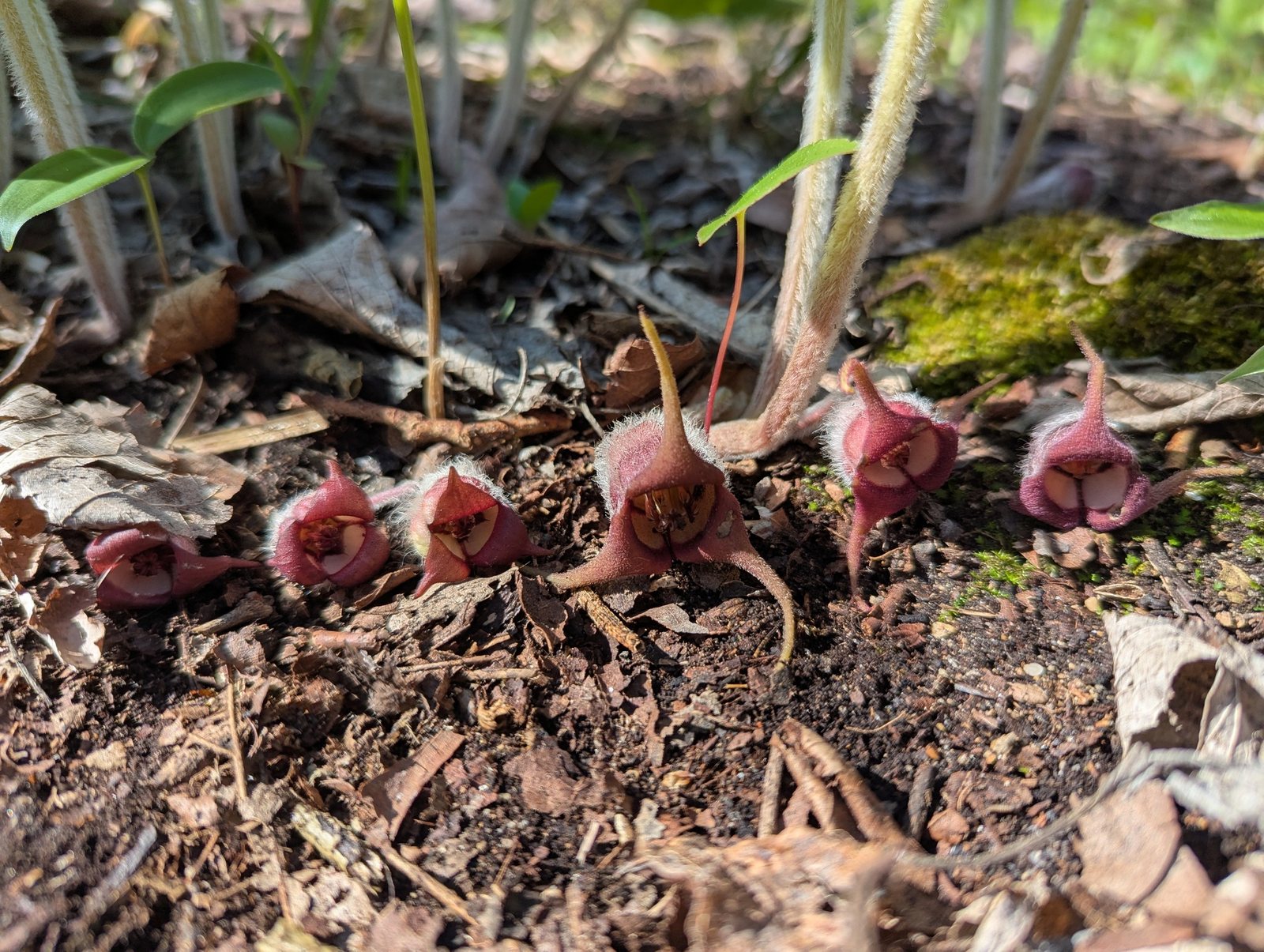
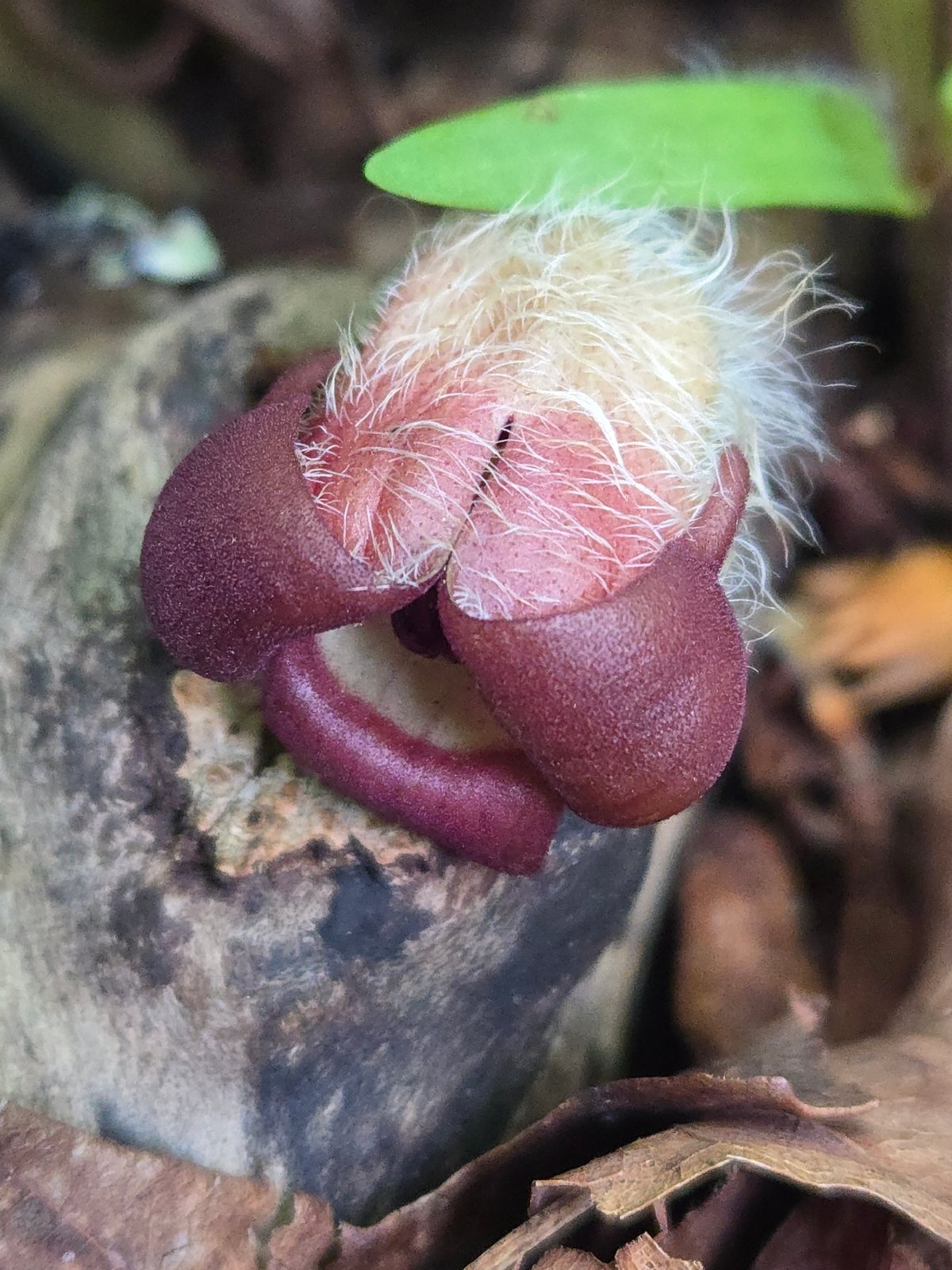
- Spring; small reddish-brown to purplish-brown flowers with three pointed lobes, usually hidden beneath the leaves.
- Foliage
- Broad, softly hairy, heart-shaped green leaves, usually held in pairs; dies back for winter.
- Growth
- Moderate in moist, fertile soil; slow in dry shade.
- Care needed
- Low
The year at a glance
- Deer resistant
- Cold hardy
- Wildlife
- Low allergen
| J | F | M | A | M | J | J | A | S | O | N | D | |
|---|---|---|---|---|---|---|---|---|---|---|---|---|
| Flowers | ||||||||||||
| Plant |
Northern hemisphere months. In Australia, shift them by six.
- Difficulty
- Easy
- Toughness
- Fairly tough
Will it suit your garden?
Pick your zone, country, light and whether you have pets.
Full sun is 6 or more hours of direct sun a day, part shade 3 to 6 hours, shade under 3.
How it grows
Planting day
0.2 ft (0.06 m)
After 1 year
0.4 ft (0.11 m)
After 2 years
0.5 ft (0.16 m)
After 3 years
0.7 ft (0.21 m)
After 5 years
0.7 ft (0.22 m)
full size
About 3 years to full size.
From a typical nursery size, at an average rate for this kind of plant. A rule of thumb, not a forecast.
Good to know
- Cats and dogs
- Toxic
- Native to
- the US and Canada
- Growth rate
- Slow
Care
Jobs through the year
- WaterMar–May, Sep–Oct, every 14 days
- Water established patches when soil starts drying; new rhizomes need more frequent checks.
- WaterJun–Aug, every 7 days
- Water deeply during dry spells, especially where tree roots compete for moisture.
- MulchApr–May
- Top-dress lightly with leaf mould or compost; keep emerging shoots uncovered.
- MulchNov
- Retain a loose covering of fallen leaves, removing thick, matted layers.
- DivideMar–Apr, Sep
- Divide established clumps only to propagate or limit spread; replant and water immediately.
- ProtectApr–May
- Check tender leaves for slugs and hand-pick pests if damage becomes significant.
- Plant in spring or early autumn, spacing plants about 1 ft (0.3 m) apart.
- Water deeply when the soil begins to dry; do not leave newly planted rhizomes dry.
- Apply a thin layer of leaf mould or compost each spring; routine fertiliser is usually unnecessary.
- Retain a loose mulch of fallen leaves, keeping thick, matted layers off emerging shoots.
- Divide established clumps in spring or early autumn if you want more plants or need to limit their spread.
Pruning. No regular pruning is needed. Remove damaged leaves during the growing season and clear collapsed foliage in late autumn only where it is smothering nearby plants.
Through the year
- Early spring
- Remove any dense, matted leaf litter carefully before new shoots expand.
- Spring
- Plant or divide clumps and water them in thoroughly.
- Late spring
- Top-dress with leaf mould and check tender leaves for slug damage.
- Summer
- Water during prolonged dry weather, particularly beneath mature trees.
- Early autumn
- Plant or divide while the soil is moist, allowing time for roots to establish before winter.
- Late autumn
- Leave a light covering of fallen leaves as winter mulch.
In the garden
- Plant beneath deciduous trees and shrubs to create a low, continuous woodland ground cover.
- Use beside shaded paths where the leaf shape can be appreciated at close range.
- Combine with ferns and sedges for contrasting leaf shapes in a green shade planting.
- Plant among spring woodland flowers to maintain foliage cover after the early flowers fade.
Garden styles it suits: Woodland, Wildlife garden, Secret garden, Green on green and Low-maintenance.
Plant it with: Christmas fern, Maidenhair fern, Foamflower, Solomon's seal, Virginia bluebells and Pennsylvania sedge.
Wildlife: Ground-level flowers attract small flies and other insects. Ants disperse the seeds by carrying away their fleshy appendages; spreading colonies also provide shelter for small ground-dwelling invertebrates.
Problems to watch for
- Slugs and snails can chew young leaves: check after dark, remove pests by hand and use an approved iron phosphate bait if needed.
- Hot sun and dry soil cause scorched leaves or early summer dieback: provide deeper shade, mulch and water during drought.
- Waterlogged soil can rot rhizomes: improve drainage or move plants to a better-drained site.
- New plants may establish poorly beneath thirsty trees: water the root zone regularly until established and avoid planting among dense surface roots.
Safety
Do not eat any part. Wild ginger contains aristolochic acids, which can cause serious kidney damage and cancer in people; the rhizomes are not safe culinary ginger. Species-specific poisoning information for cats, dogs and horses is limited, but all parts should be treated as potentially toxic and kept out of their food or grazing areas. Seek medical or veterinary advice after ingestion.
Easily confused with
European wild ginger (Asarum europaeum)
Has smaller, glossy, leathery leaves that usually remain evergreen, unlike the larger, softly hairy, deciduous leaves of Canadian wild ginger.
Western wild ginger (Asarum caudatum)
Its flowers have three conspicuously long, tail-like tips; Canadian wild ginger has much shorter pointed flower lobes. Western wild ginger is often evergreen in mild climates.
Culinary ginger (Zingiber officinale)
Produces upright leafy stems with long, narrow leaves rather than low pairs of heart-shaped leaves. It is unrelated to wild ginger and needs much warmer growing conditions.
The name
The common name refers to the ginger-like scent of its rhizomes, while canadense means 'of Canada'.
Propagation. Divide rooted rhizomes in spring or early autumn and replant at their original depth. Fresh seed can be sown outdoors promptly, but germination is slow and may require successive warm and cold periods; seedlings take several years to form substantial clumps.
Checked against open data
- Accepted botanical name
- Asarum canadense
- In the US and Canada
- Native in Canada and the lower 48 states.
- Native range
- Alabama, Arkansas, Connecticut, Delaware, District of Columbia, Georgia, Illinois, Indiana, Iowa, Kansas, Kentucky and Maine.
- Measured
- Average height 22 cm.
Sources: GBIF (CC BY 4.0), USDA PLANTS and Trefle (CC BY 4.0). The care and design notes are LandscapeGPT's own.
See it in your own yard.
Upload a photo of your yard and see it redesigned with plants that suit your climate, each checked against your zone.