Angel's trumpet
Brugmansia × candida. Family Solanaceae. Shrub.
Also called White angel's trumpet.
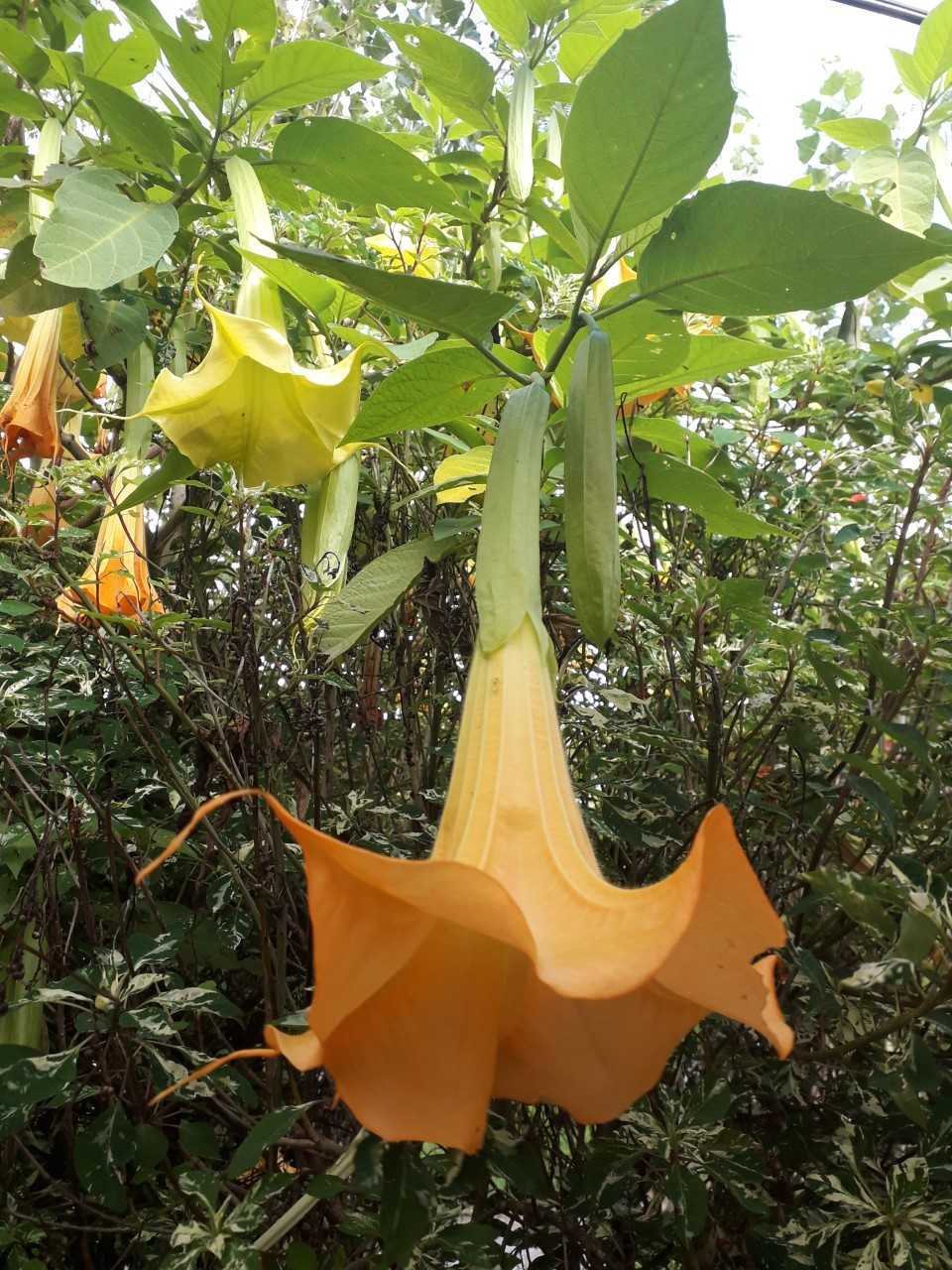
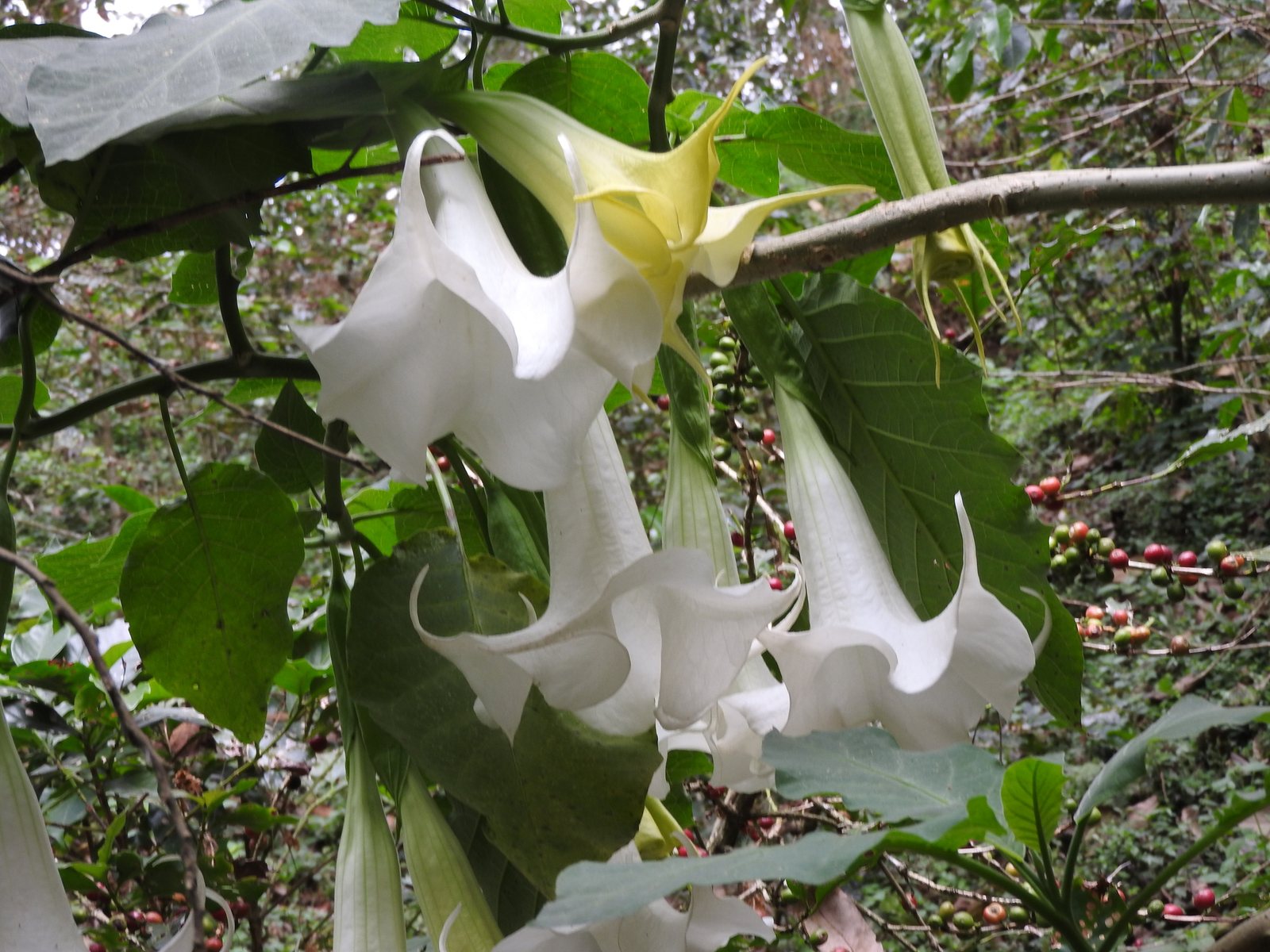
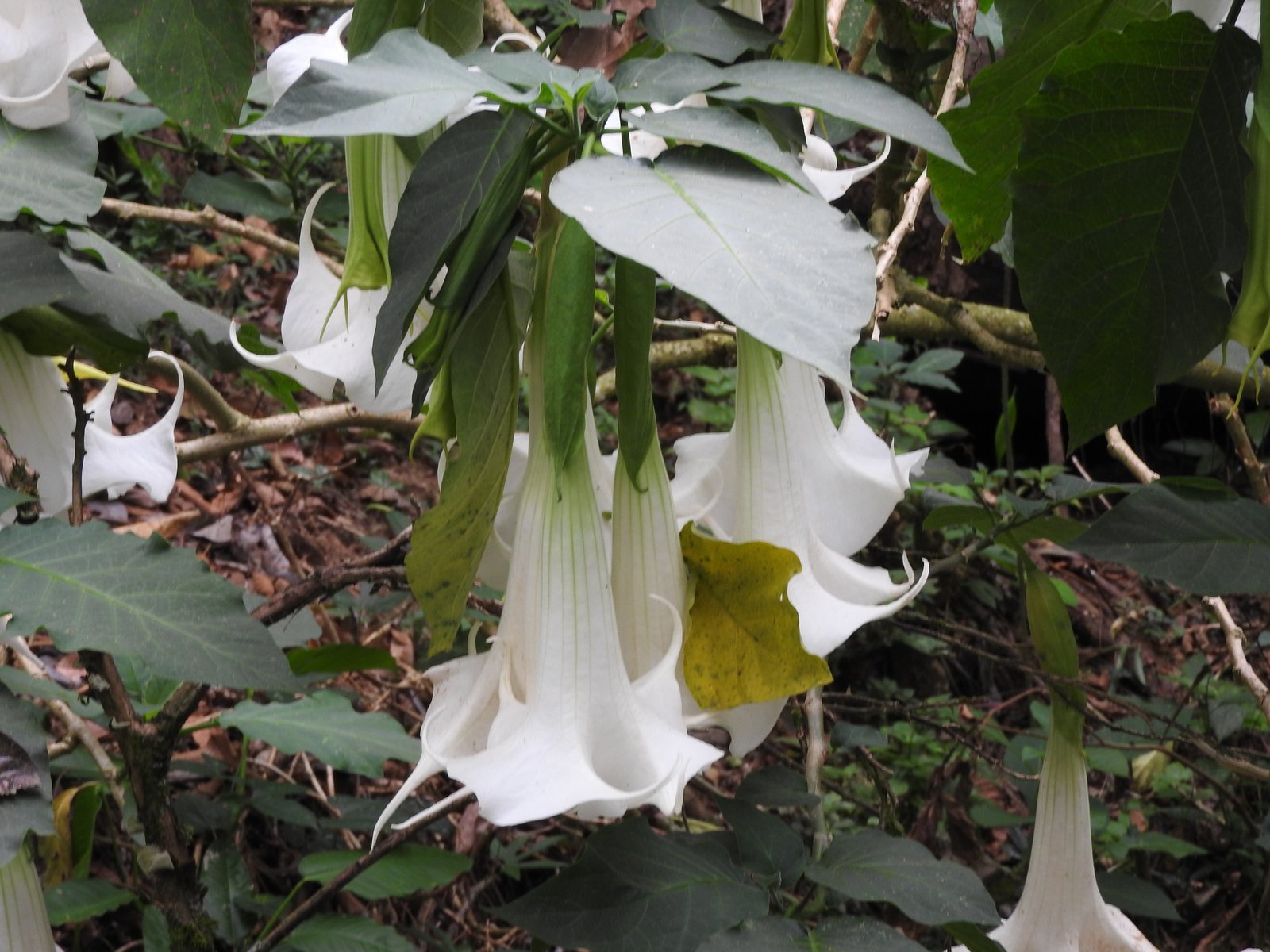
Angel's trumpet is a frost-tender, woody shrub grown for its large, hanging trumpet flowers, which become strongly fragrant in the evening. It makes a substantial garden specimen in frost-free climates; elsewhere, grow it in a large container and overwinter it under cover. All parts are highly poisonous.
At a glance
- Sun
- Full sun to partial shade; give afternoon shade in very hot climates and shelter from strong winds.
- Water
- Keep evenly moist during active growth. Large container plants may need daily watering in hot weather; reduce watering substantially during cool winter rest.
- Soil
- Fertile, moisture-retentive but well-drained soil; use a rich, free-draining container compost in pots.
- Height
- 6-12 ft (1.8-3.7 m)
- Spread
- 6-10 ft (1.8-3 m)
- Flowers
- Summer to autumn, often in repeated flushes; large, hanging white, cream, yellow or pink trumpets, depending on the selection.
- Foliage
- Evergreen. Large, soft green, oval leaves; leaves may drop during cool weather, drought or indoor winter storage.
- Growth
- Fast in warm weather with sufficient water and nutrients.
- Care needed
- High
The year at a glance
- Pollinators
- Deer resistant
- Heat tolerant
- Low allergen
- Fragrant
| J | F | M | A | M | J | J | A | S | O | N | D | |
|---|---|---|---|---|---|---|---|---|---|---|---|---|
| Flowers | ||||||||||||
| Plant |
Northern hemisphere months. In Australia, shift them by six.
- Difficulty
- Hard
- Toughness
- Needs looking after
Will it suit your garden?
Pick your zone, country, light and whether you have pets.
Full sun is 6 or more hours of direct sun a day, part shade 3 to 6 hours, shade under 3.
How it grows
Planting day
1.6 ft (0.5 m)
After 1 year
4 ft (1.2 m)
After 2 years
6 ft (1.9 m)
After 3 years
8 ft (2.6 m)
After 5 years
9 ft (2.8 m)
full size
About 3 years to full size.
From a typical nursery size, at an average rate for this kind of plant. A rule of thumb, not a forecast.
Good to know
- Cats and dogs
- Toxic
- Growth rate
- Fast
Care
Jobs through the year
- WaterApr–May, Sep, every 3 days
- Keep established ground plants evenly moist; containers and young plants need more frequent checks.
- WaterJun–Aug, every 2 days
- Water ground plants deeply as soil starts drying; large containers may need water daily.
- WaterJan–Mar, Oct–Dec, every 21 days
- For cool, frost-free overwintering, keep compost barely moist; leafy warm-kept plants need more.
- FeedMay–Aug, every 7 days
- Feed actively growing containers with balanced liquid fertilizer at the label rate.
- MulchMay–Jun
- Mulch summer bedding plants to retain moisture, keeping the main stem clear.
- PruneFeb–Mar
- Wear gloves; remove dead wood and retain growth above the first flowering Y-fork.
- ProtectMay–Jun
- Acclimatise to outdoor conditions after frost; keep all poisonous parts away from children and animals.
- ProtectSep–Oct
- Move containers or lift bedding plants into frost-free shelter before the first frost.
- Use a large, heavy container with drainage holes to support the top-heavy growth.
- Water thoroughly during active growth, but do not leave the pot standing in water.
- Feed container plants weekly with a balanced liquid fertiliser during vigorous growth, following the label rate.
- Mulch garden plants to conserve moisture, keeping mulch clear of the main stem.
- Move container plants into a frost-free shelter before the first frost; keep resting plants only lightly moist.
- Wear gloves when handling or pruning, and keep cuttings and fallen flowers away from children and animals.
Pruning. Prune in late winter or early spring to remove dead wood and shorten awkward branches. Retain some growth above the first Y-shaped flowering fork where possible, since cutting back below it can delay flowering.
Through the year
- Late winter
- Check overwintering plants for pests and rot, and prune before strong new growth begins.
- Spring
- Repot or refresh the surface compost, then increase watering as shoots develop.
- Late spring
- After frost risk has passed, gradually acclimatise sheltered plants to outdoor light and wind.
- Summer
- Water frequently, feed regularly and inspect leaf undersides for mites and whitefly.
- Early autumn
- Reduce feeding as growth slows and prepare a frost-free winter space.
- Late autumn
- Bring pots under cover before frost; reduce watering if the plant loses its leaves.
In the garden
- Use a large container as a seasonal focal point in a sheltered courtyard.
- Plant behind lower foliage plants to display the hanging flowers clearly.
- Combine with cannas and elephant ears for a lush, tropical border.
- Place within scent range of an evening seating area, but away from paths, food preparation areas and places used by children or pets.
Garden styles it suits: Tropical, Modern tropical, Modern courtyard, Sensory garden, Moon garden and Evening garden.
Plant it with: Cannas, Elephant ears, Coleus, Hardy banana, Fuchsias and New Guinea impatiens.
Wildlife: Fragrant flowers can attract long-tongued moths in warm climates, although double-flowered forms offer poorer access. This highly poisonous plant is not a suitable choice where livestock can reach it.
Problems to watch for
- Red spider mites cause pale stippling and webbing, especially under cover; inspect leaf undersides, rinse foliage and use an appropriate labelled treatment or biological control.
- Whitefly gathers beneath leaves and produces sticky honeydew; use insecticidal soap where labelled, repeating treatment as directed, or introduce greenhouse biological controls.
- Wilting and bud drop often follow dry roots or extreme heat; water deeply and provide afternoon shade in hot locations.
- Root rot develops in cold, waterlogged compost; improve drainage, empty saucers and water sparingly during winter rest.
Safety
Highly toxic to people, cats, dogs and horses. All parts, including leaves, flowers, seeds and nectar, contain tropane alkaloids; swallowing them can cause delirium, rapid heartbeat, seizures, coma and death. Never use it in food or drinks. Suspected ingestion needs immediate medical or veterinary attention.
Easily confused with
Jimsonweed (Datura stramonium)
An herbaceous annual with upright flowers and prickly seed capsules; angel's trumpet has woody stems and hanging flowers. Both are highly poisonous.
Scarlet angel's trumpet (Brugmansia sanguinea)
Usually has narrower, yellow-to-orange or red flowers with little or no fragrance, rather than the broad, strongly scented trumpets typical of Brugmansia × candida.
Golden angel's trumpet (Brugmansia aurea)
A parent of this hybrid with overlapping flower colours and forms; reliable separation can require detailed floral characters and known provenance rather than colour alone.
The name
Brugmansia honours Dutch naturalist Sebald Justinus Brugmans, candida means white, and angel's trumpet describes the shape of the flowers.
Propagation. Take stem cuttings in spring or summer and root them in moist, free-draining compost with warmth. Cuttings preserve the parent plant's characteristics; seedlings may differ. Wear gloves and dispose of trimmings securely.
Checked against open data
- Accepted botanical name
- Brugmansia candida
Sources: GBIF (CC BY 4.0). The care and design notes are LandscapeGPT's own.
See it in your own yard.
Upload a photo of your yard and see it redesigned with plants that suit your climate, each checked against your zone.