Anise
Pimpinella anisum. Family Apiaceae. Annual.
Also called Aniseed, Sweet cumin.
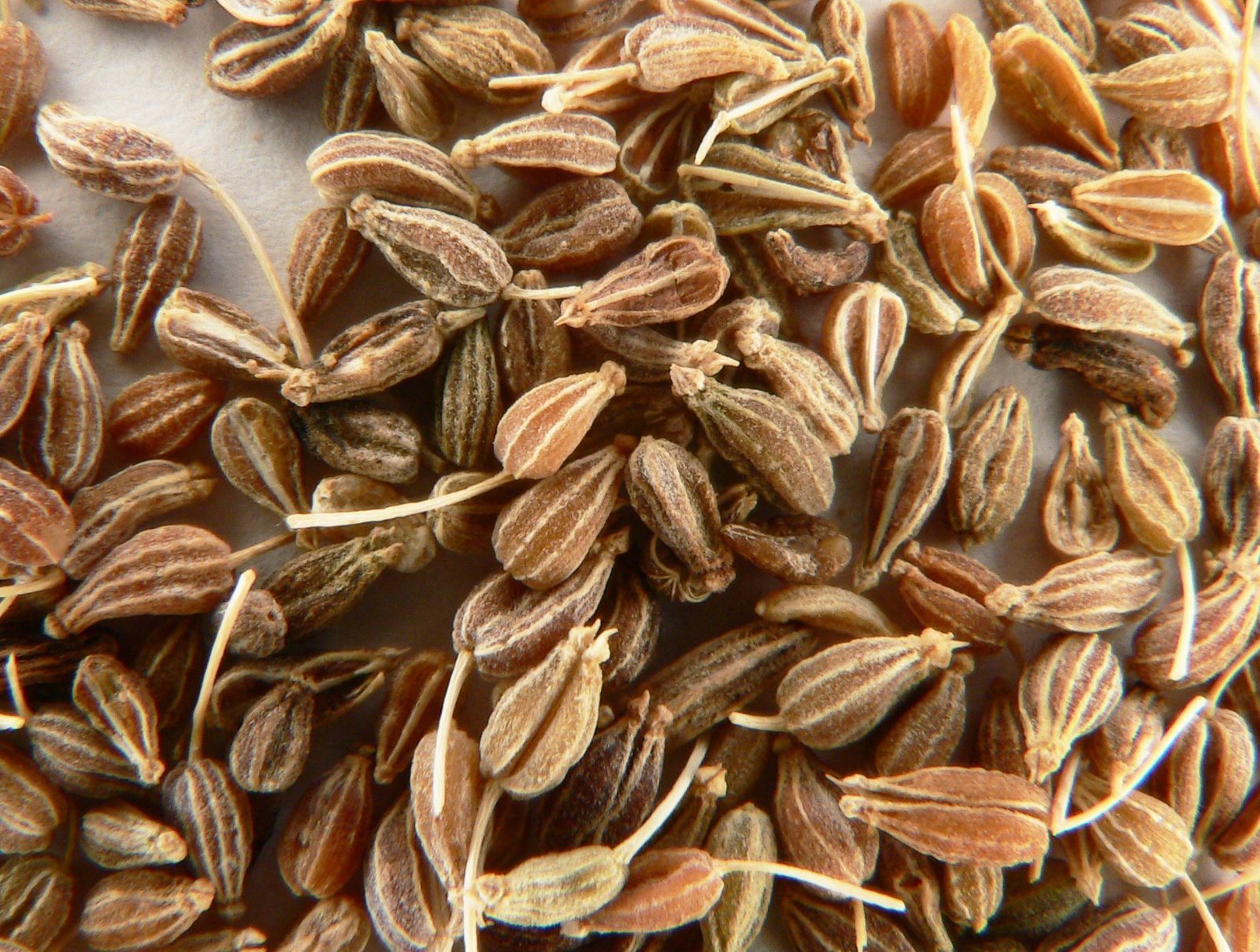
Anise is a small culinary herb grown as an annual for its liquorice-flavoured seeds and edible young leaves. Its loose clusters of white flowers attract beneficial insects, but a good seed harvest needs a long, warm growing season.
At a glance
- Sun
- Full sun; choose a warm, sheltered position, especially where summers are cool.
- Water
- Keep the seedbed evenly moist, then water established plants when the surface soil dries. Avoid waterlogged soil.
- Soil
- Well-drained, moderately fertile soil, preferably neutral to slightly alkaline; avoid heavy, wet ground.
- Height
- 1-2 ft (0.3-0.6 m)
- Spread
- 0.5-1 ft (0.15-0.3 m)
- Flowers
- Summer; small white flowers in loose, umbrella-shaped clusters.
- Foliage
- Green, aromatic leaves; lower leaves are broad and lobed, while upper leaves are finely divided.
- Growth
- Fast; flowers and sets seed in one growing season.
- Care needed
- Low
The year at a glance
- Pollinators
- Low allergen
- Fragrant
- Edible
| J | F | M | A | M | J | J | A | S | O | N | D | |
|---|---|---|---|---|---|---|---|---|---|---|---|---|
| Flowers | ||||||||||||
| Fruit | ||||||||||||
| Plant |
Northern hemisphere months. In Australia, shift them by six.
- Difficulty
- Easy
- Toughness
- Fairly tough
Will it suit your garden?
Pick your zone, country, light and whether you have pets.
Full sun is 6 or more hours of direct sun a day, part shade 3 to 6 hours, shade under 3.
How it grows
Planting day
0.5 ft (0.15 m)
After 1 year
1.5 ft (0.45 m)
full size
Full size in one season.
From a typical nursery size, at an average rate for this kind of plant. A rule of thumb, not a forecast.
Good to know
- Cats and dogs
- Safe
- Growth rate
- Fast
Care
Jobs through the year
- WaterApr–May, every 7 days
- Water established seedlings if the surface soil is dry; keep newly sown seedbeds evenly moist.
- WaterJun–Sep, every 7 days
- Water at soil level when the surface dries, especially around flowering; skip if rain keeps soil moist.
- FeedApr–May
- Work a little compost into the seedbed before sowing; avoid heavy nitrogen feeding.
- HarvestJun–Aug, every 14 days
- Pick a few young leaves without stripping stems needed for seed production.
- HarvestAug–Sep, every 7 days
- Check for grey-brown seeds; cut ripe heads before shedding and finish drying in paper bags.
- Sow directly after the last frost once the soil has warmed; its taproot dislikes transplanting.
- Thin seedlings to 6-9 in (15-23 cm) apart.
- Water during prolonged dry spells, particularly while plants establish and begin flowering.
- Add a little compost before sowing; avoid heavy nitrogen feeding, which encourages leaves rather than seed.
- Keep young plants weed-free and use twiggy supports if stems lean in exposed sites.
Pruning. No routine pruning is needed. Snip young leaves sparingly, and leave flower heads intact if you want seed.
Harvest
Pick a few young leaves once plants are established, without stripping the stems. Cut seed heads when the seeds turn grey-brown, usually about four months after sowing, before they begin falling; finish drying them in paper bags indoors, then rub out and store the fully dry seeds.
Through the year
- Early spring
- Choose a sunny, sheltered bed and prepare a fine seedbed with a little compost.
- Spring
- After frost risk has passed and soil has warmed, sow seeds about 0.25 in (6 mm) deep.
- Late spring
- Thin seedlings to 6-9 in (15-23 cm) apart and remove competing weeds.
- Summer
- Water during dry spells and pick young leaves sparingly.
- Late summer
- Check seed heads frequently and cut them as seeds turn grey-brown.
- Autumn
- Finish drying and cleaning seed, then remove spent plants.
In the garden
- Plant in a sunny herb bed near paths where leaves are easy to pick.
- Use small groups among vegetables to bring white flowers and beneficial insects into a kitchen garden.
- Combine with calendula and other annual herbs for an informal cottage-garden display.
- Grow in a deep container in a sheltered courtyard, sowing directly into the final pot.
Garden styles it suits: Cottage garden, Potager (kitchen garden), Herb parterre, Edible landscape, Sensory garden and Pollinator garden.
Plant it with: Calendula, Coriander, Parsley, Chamomile and Lettuce.
Wildlife: The small, open flowers provide nectar and pollen for bees, hoverflies and small beneficial wasps.
Problems to watch for
- Poor seed ripening in cool or short summers: sow promptly after frost in the warmest sheltered spot; grow mainly for leaves where summers are too short.
- Aphids on young shoots: wash off with water and encourage natural predators rather than spraying open flowers.
- Powdery mildew: space plants for airflow, water the soil rather than foliage, and remove badly affected growth.
- Root rot in wet soil: improve drainage or use a raised bed, and avoid frequent watering of already damp ground.
Safety
Leaves and seeds are not known to be toxic to people, cats, dogs or horses in ordinary culinary amounts, although allergies can occur. Concentrated anise essential oil is not equivalent to the culinary herb and can be harmful if swallowed; keep it away from children and pets.
Easily confused with
Fennel (Foeniculum vulgare)
Fennel is usually much taller, with yellow flower clusters and feathery leaves throughout; anise has white flowers and broad, lobed lower leaves.
Anise hyssop (Agastache foeniculum)
Anise hyssop has square stems, opposite toothed leaves and upright purple flower spikes, rather than anise's white umbrella-shaped flower clusters.
Star anise (Illicium verum)
Star anise is an evergreen woody tree with leathery leaves and star-shaped fruits; culinary anise is a small annual herb with individual ridged seeds.
The name
Anise and the botanical epithet anisum derive from the ancient Greek name anison for this aromatic herb.
Propagation. Grow from seed sown directly into its final position after frost. Use fresh seed for dependable germination; seedlings are slow to establish if their taproots are disturbed.
Checked against open data
- Accepted botanical name
- Pimpinella anisum
- In the US and Canada
- Introduced in the lower 48 states.
- Native range
- Cyprus, Lebanon-Syria, Palestine and Turkey.
- Measured
- Soil pH 7.5 to 8. Average height 45 cm.
Sources: GBIF (CC BY 4.0), USDA PLANTS and Trefle (CC BY 4.0). The care and design notes are LandscapeGPT's own.
See it in your own yard.
Upload a photo of your yard and see it redesigned with plants that suit your climate, each checked against your zone.