Coriander
Coriandrum sativum. Family Apiaceae. Annual.
Also called Cilantro, Chinese parsley.
Coriander is grown as an annual for its fresh leaves, usually called cilantro in North America, and its aromatic dried seeds. It grows best in cool weather and quickly flowers and sets seed in heat or long days; the small flowers also attract beneficial insects.
At a glance
- Sun
- Full sun in cool weather; light afternoon shade in hot climates.
- Water
- Keep the soil evenly moist while seeds germinate and plants establish. Water established plants when the soil surface begins to dry, without leaving the roots waterlogged.
- Soil
- Well-drained soil with moderate fertility; improve very sandy or heavy soil with compost.
- Height
- 1-2.5 ft (0.3-0.75 m), tallest when flowering
- Spread
- 0.5-1 ft (0.15-0.3 m)
- Flowers
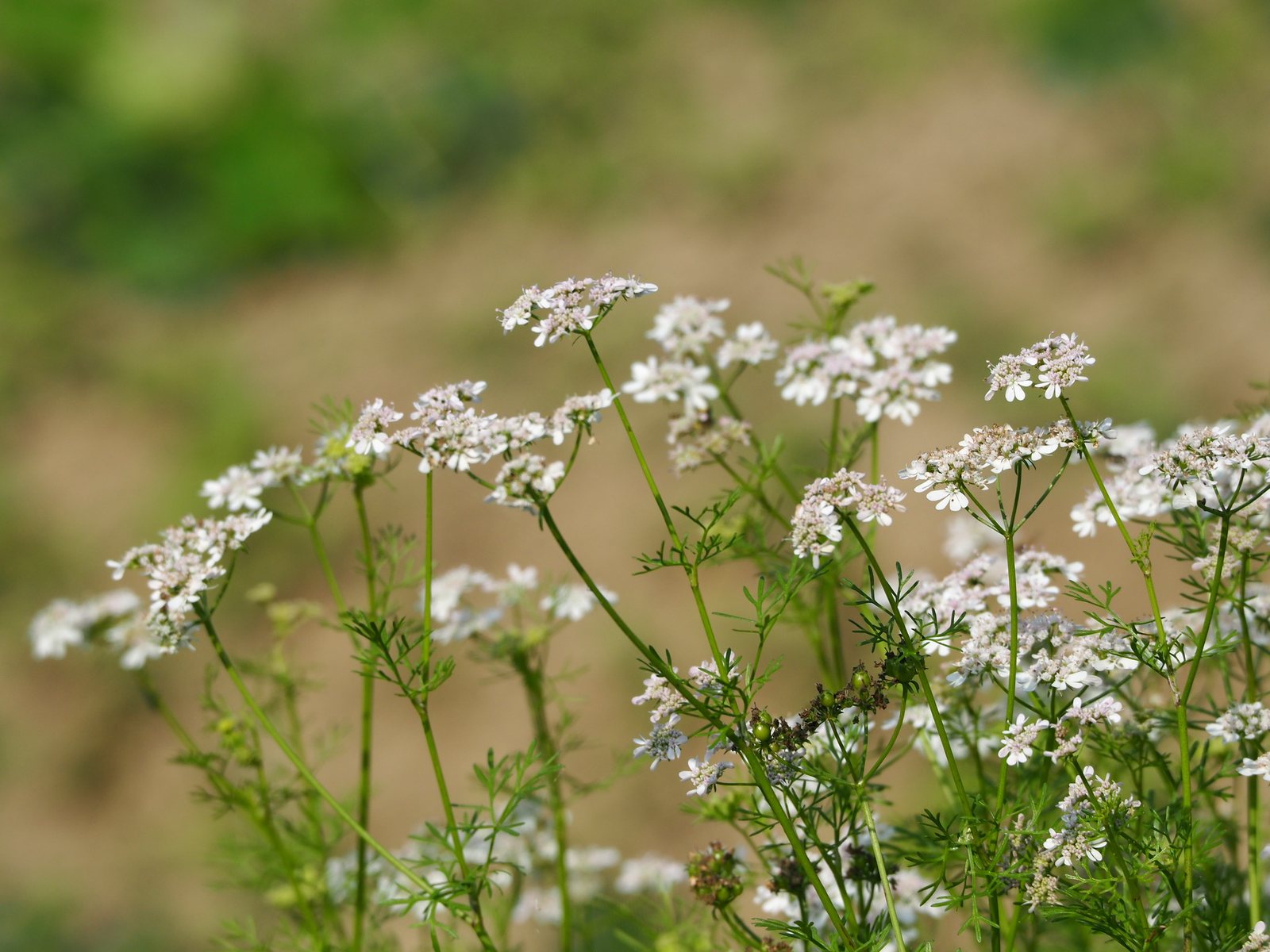
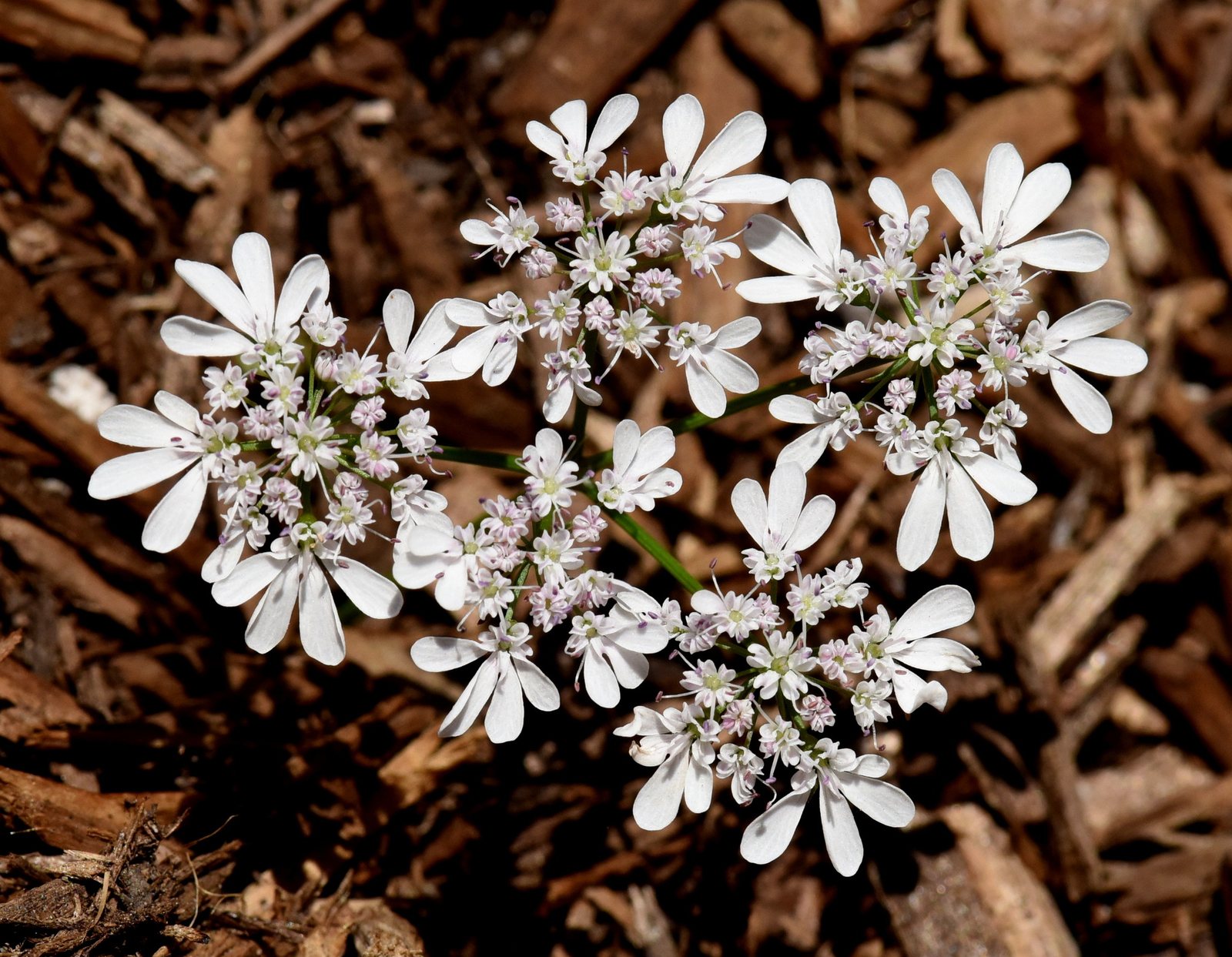
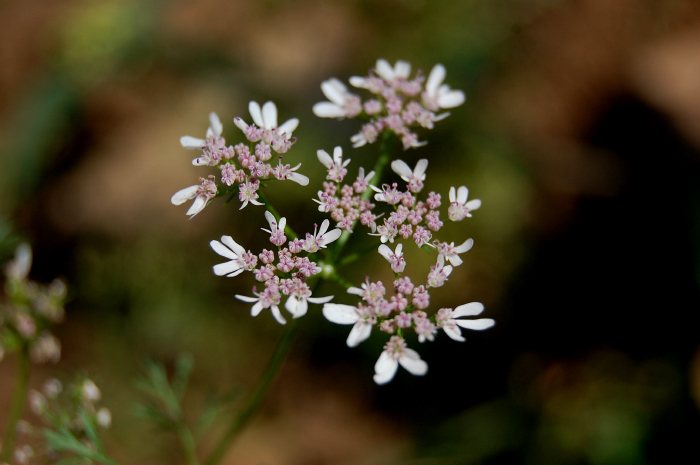
- Small white to pale pink flowers in flat-topped clusters, usually in late spring and summer; timing varies with sowing date and climate.
- Foliage
- Aromatic green leaves: broad and lobed near the base, becoming finely divided on flowering stems.
- Growth
- Fast; leaves are often ready to pick about 4-6 weeks after sowing.
- Care needed
- Low
The year at a glance
- Pollinators
- Wildlife
- Low allergen
- Fragrant
- Edible
| J | F | M | A | M | J | J | A | S | O | N | D | |
|---|---|---|---|---|---|---|---|---|---|---|---|---|
| Flowers | ||||||||||||
| Fruit | ||||||||||||
| Plant |
Northern hemisphere months. In Australia, shift them by six.
- Difficulty
- Easy
- Toughness
- Fairly tough
Will it suit your garden?
Pick your zone, country, light and whether you have pets.
Full sun is 6 or more hours of direct sun a day, part shade 3 to 6 hours, shade under 3.
How it grows
Planting day
0.5 ft (0.15 m)
After 1 year
1.7 ft (0.53 m)
full size
Full size in one season.
From a typical nursery size, at an average rate for this kind of plant. A rule of thumb, not a forecast.
Good to know
- Cats and dogs
- Safe
- Growth rate
- Fast
Care
Jobs through the year
- WaterMar–May, Sep–Oct, every 7 days
- Water established plants when the surface dries; keep germinating seed and young seedlings evenly moist.
- WaterJun–Aug, every 3 days
- Water if soil is drying to reduce drought stress and premature bolting; avoid saturation.
- MulchMay–Jun
- Apply a thin mulch around established plants, keeping it away from stems.
- ProtectMar–Apr, Sep–Oct
- Protect seedlings from severe frost with fleece and use wildlife-conscious slug controls.
- PruneMay–Aug
- Remove early flower stalks for leaf crops; leave selected plants flowering for seed and insects.
- HarvestApr–Oct, every 7 days
- Pick outer leaves once plants reach 10–15 cm, taking no more than a third at once.
- HarvestJun–Sep, every 7 days
- Cut seed heads when seeds turn tan-brown, before they fall, and finish drying in paper bags.
- Sow directly where it will grow; its taproot dislikes disturbance.
- Thin plants to 6-8 in (15-20 cm) apart, allowing more room for plants grown for seed.
- Water regularly during dry spells, especially in containers, to reduce stress and premature flowering.
- Mix compost into the soil before sowing; feed container plants lightly if growth becomes pale.
- Apply a thin mulch around established plants to conserve moisture, keeping it away from the stems.
Pruning. Pick outer leaves regularly once plants are established, leaving the central growing point intact. Remove early flower stalks if leaves are the priority, but this will not prevent eventual bolting; leave selected plants to flower for seed.
Harvest
Pick outer leaves and tender stems about 4–6 weeks after sowing, once plants are 10–15 cm (4–6 in) tall, taking no more than a third at once; leaves are best before flowering. For coriander seed, let plants flower, then cut the seed heads when the seeds turn tan to light brown, usually 3–4 months after sowing, before they fall.
Through the year
- Early spring
- Direct-sow once the soil is workable; protect seedlings from severe frost.
- Spring
- Thin seedlings and sow small batches every 2-3 weeks for a continuing leaf harvest.
- Late spring
- Harvest outer leaves regularly and keep the soil moist as temperatures rise.
- Summer
- Let selected plants flower. Collect seed heads when the seeds turn brown, then dry them in paper bags.
- Late summer
- Resume sowing as temperatures cool for an autumn leaf crop.
- Autumn
- In mild, largely frost-free climates, sow for winter harvests; elsewhere remove spent plants and save fully dried seed.
In the garden
- Sow short rows beside lettuce and radishes in a potager for repeated harvests of cool-season crops.
- Grow in deep containers near the kitchen, with afternoon shade where summers are hot.
- Let small groups flower among vegetables to provide nectar for hoverflies and small parasitic wasps.
- Use its fine flowering foliage and pale flower clusters as a temporary, airy layer in herb and cottage borders.
Garden styles it suits: Potager (kitchen garden), Herb parterre, Edible landscape, Cottage garden, Pollinator garden and Small-space.
Plant it with: Lettuce, Radish, Spinach, Peas, Dill and Sweet alyssum.
Wildlife: Flowers supply nectar and pollen to bees, hoverflies and small parasitic wasps. Allowing a few plants to bloom can support insects that help control vegetable pests.
Problems to watch for
- Premature bolting: heat, long days and dry roots bring on flowering. Sow in cooler seasons, water consistently and choose slow-bolting varieties for leaves.
- Aphids: wash colonies off with water and check tender shoot tips regularly; retain some flowers to support their natural predators.
- Slugs and snails: protect young seedlings with barriers or wildlife-conscious slug controls and remove nearby hiding places.
- Damping off and root rot: avoid crowded, persistently wet seedlings; use well-drained soil and water without saturating it.
Safety
Not known to be toxic to cats, dogs, horses or people. Leaves, roots and seeds are used as food; large amounts may cause digestive upset, and some people have allergic reactions. Concentrated essential oil is not equivalent to the culinary plant and should not be given to pets.
Easily confused with
Flat-leaf parsley (Petroselinum crispum)
Parsley generally has more sharply pointed, toothed leaf lobes and a different scent; coriander's lower leaves have rounder lobes, while its upper flowering leaves become finely divided.
Chervil (Anthriscus cerefolium)
Chervil has more finely divided, fern-like leaves and a mild anise scent, unlike coriander's broader lower leaves and distinctive pungent aroma.
The name
The species name sativum is Latin for cultivated or sown.
Propagation. Propagate from seed, preferably sown directly about 0.25-0.5 in (0.6-1.3 cm) deep. Germination commonly takes 1-3 weeks. It may self-seed where mature seeds fall onto suitable soil.
Checked against open data
- Accepted botanical name
- Coriandrum sativum
- In the US and Canada
- Introduced in Canada, Hawaii, the lower 48 states and Puerto Rico.
- Native range
- Afghanistan, Iran, Lebanon-Syria, North Caucasus, Pakistan, Palestine, Saudi Arabia, Sinai, Transcaucasus and Turkey.
- Measured
- Soil pH 7 to 7.5. Average height 56 cm.
Sources: GBIF (CC BY 4.0), USDA PLANTS and Trefle (CC BY 4.0). The care and design notes are LandscapeGPT's own.
See it in your own yard.
Upload a photo of your yard and see it redesigned with plants that suit your climate, each checked against your zone.