Radish
Raphanus sativus. Family Brassicaceae. Annual.
Also called Garden radish, Daikon, Mooli.
Radish is a cool-season vegetable grown as an annual for its crisp, peppery roots and edible leaves. Small salad radishes can be ready within about four weeks, while larger winter and daikon types need longer and are usually sown in late summer.
At a glance
- Sun
- Full sun; light afternoon shade can help in warm weather.
- Water
- Keep the root zone evenly moist without waterlogging; drought makes roots tougher and more pungent.
- Soil
- Loose, well-drained soil, ideally pH 6.0-7.0. Remove stones and compacted layers, especially for long-rooted types.
- Height
- 0.5-1.5 ft (0.15-0.45 m) in leaf; flowering stems can reach 3-4 ft (0.9-1.2 m).
- Spread
- 0.2-1 ft (0.06-0.3 m), depending on type and spacing.
- Flowers
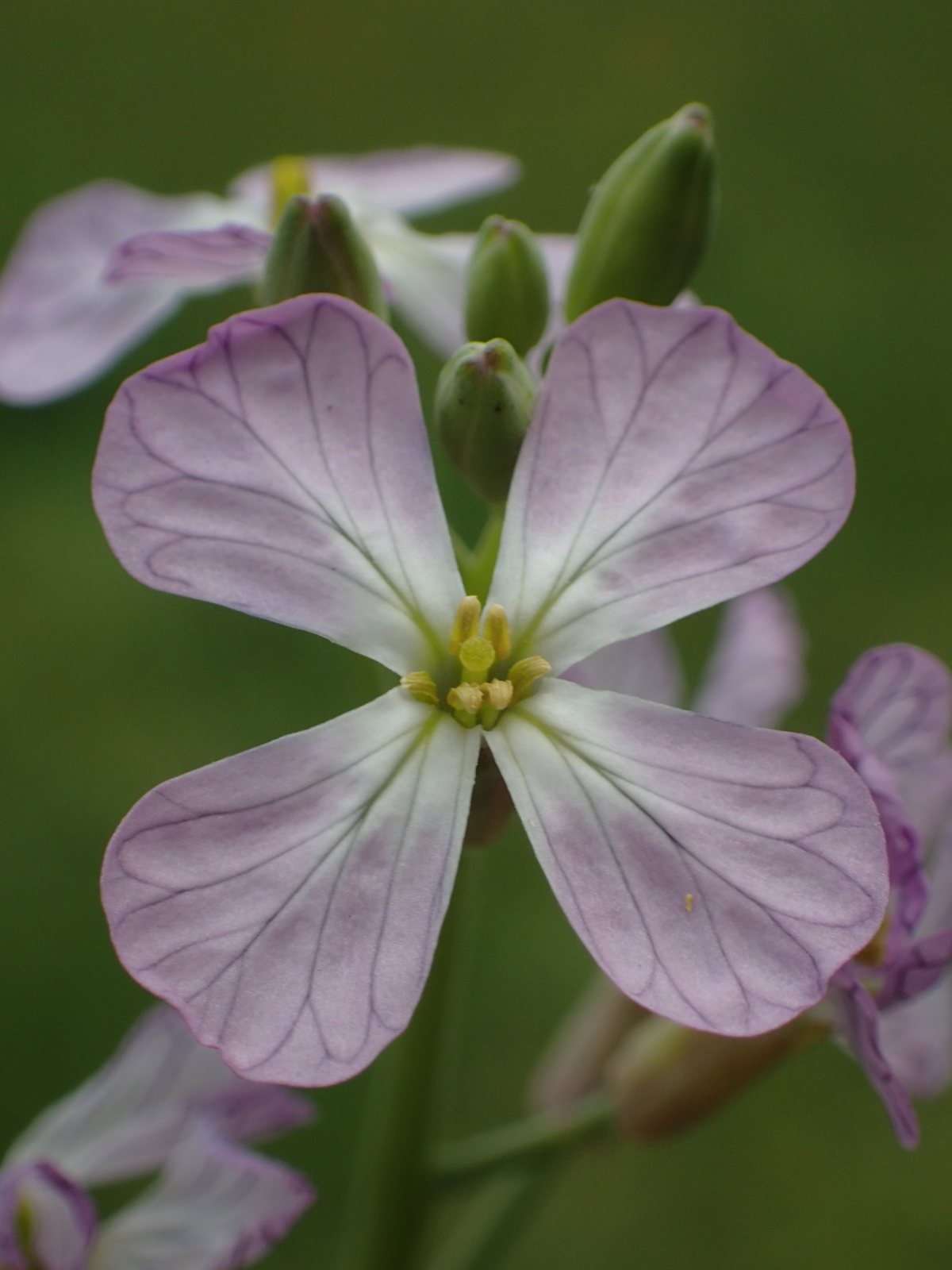
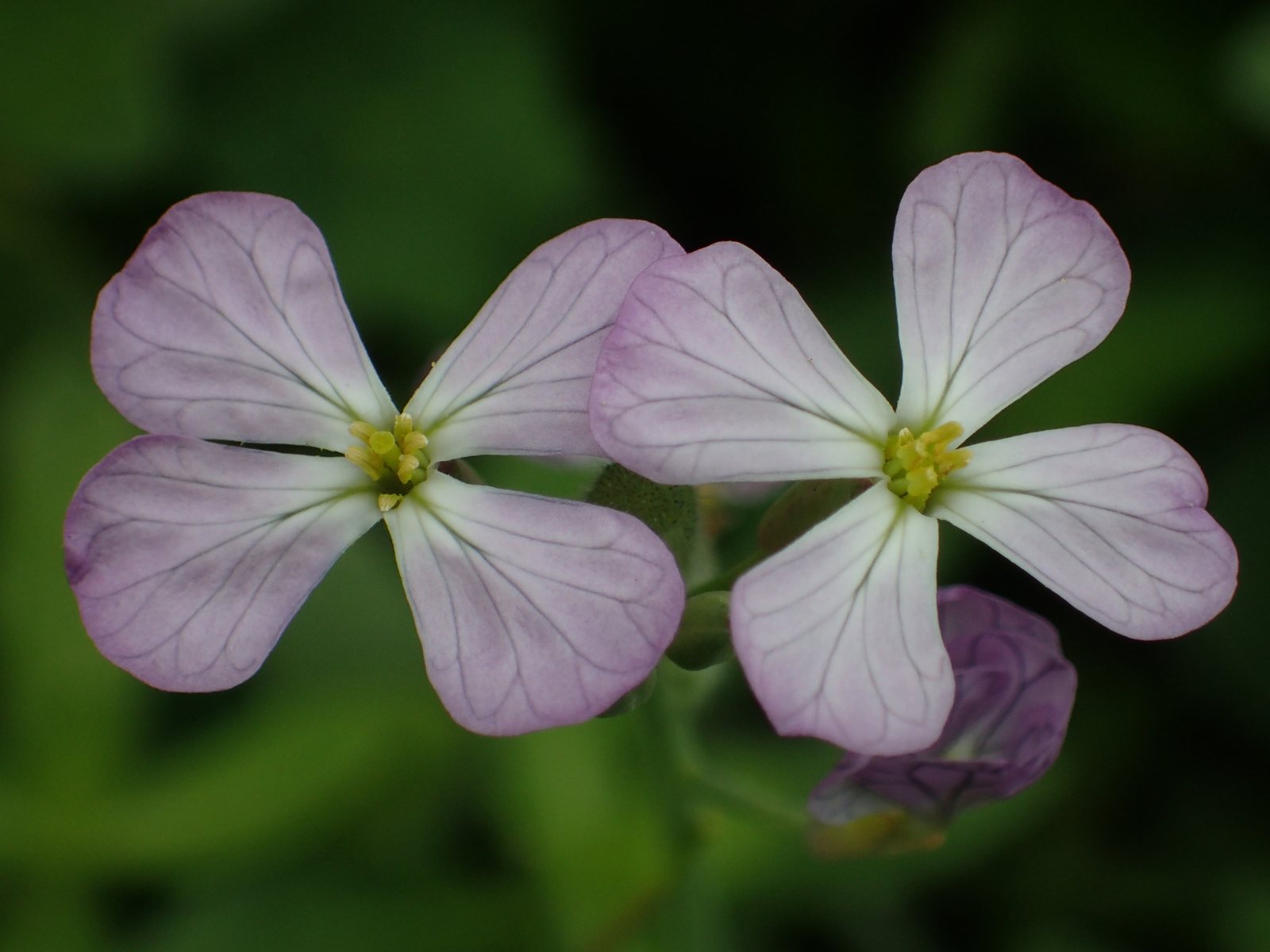
- White, pale pink or lilac four-petalled flowers if plants are left to bolt, usually in spring or summer.
- Foliage
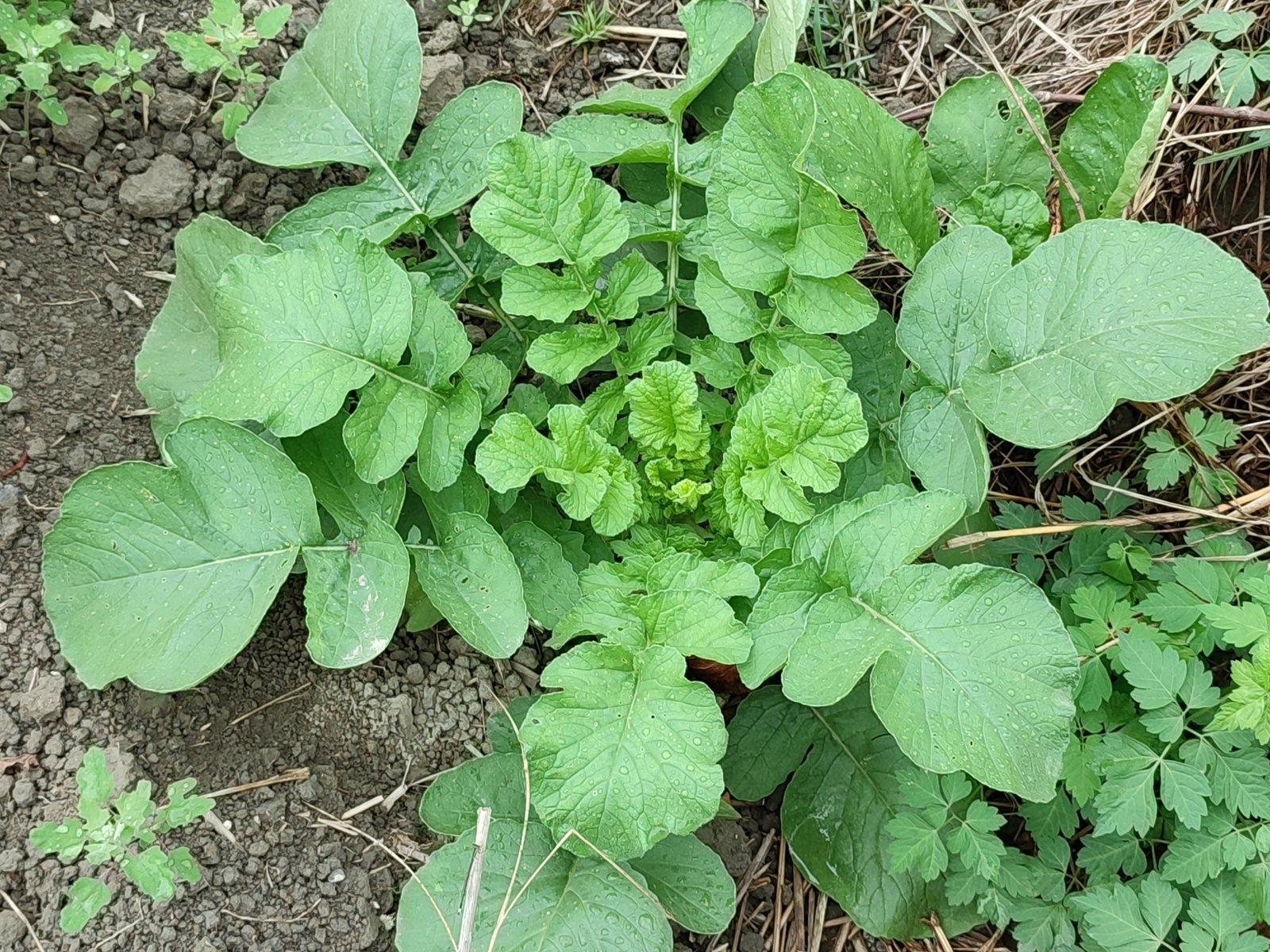
- Green, rough or bristly leaves in a basal rosette, usually deeply lobed with a larger terminal lobe.
- Growth
- Fast; small salad types often mature in 3-6 weeks, larger types in 6-12 weeks or longer.
- Care needed
- Low
The year at a glance
- Pollinators
- Low allergen
- Edible
| J | F | M | A | M | J | J | A | S | O | N | D | |
|---|---|---|---|---|---|---|---|---|---|---|---|---|
| Flowers | ||||||||||||
| Fruit | ||||||||||||
| Plant |
Northern hemisphere months. In Australia, shift them by six.
- Difficulty
- Easy
- Toughness
- Fairly tough
Will it suit your garden?
Pick your zone, country, light and whether you have pets.
Full sun is 6 or more hours of direct sun a day, part shade 3 to 6 hours, shade under 3.
How it grows
Planting day
0.5 ft (0.15 m)
After 1 year
1 ft (0.3 m)
full size
Full size in one season.
From a typical nursery size, at an average rate for this kind of plant. A rule of thumb, not a forecast.
Good to know
- Cats and dogs
- Mildly toxic: may upset a stomach
- Invasive in
- the US
- Growth rate
- Fast
Care
Jobs through the year
- WaterMar–May, Sep–Nov, every 4 days
- Keep the crop root zone evenly moist; check germinating seed more often and skip after rain.
- WaterJun–Aug, every 2 days
- Water growing crops if soil begins drying; avoid saturation and pause sowing during heat.
- FeedMar, Aug
- Add modest mature compost before sowing only if needed; avoid heavy nitrogen feeding.
- ProtectMar–Jun, Aug–Sep
- Cover from sowing with fine insect mesh; use fleece for early sowings in cold weather.
- HarvestApr–Jul, Sep–Nov
- Check roots at packet maturity and pull promptly while crisp; lift winter types before hard freezes.
- Thin salad radishes to about 1-2 in (2.5-5 cm) apart; follow packet spacing for larger types.
- Water before the soil dries out, particularly while roots are swelling.
- Use modest amounts of mature compost; avoid fresh manure and heavy nitrogen feeding.
- Cover seedlings with fine insect mesh to exclude flea beetles and cabbage root flies.
- Harvest promptly at the recommended size rather than waiting for larger roots.
Pruning. No pruning is needed for root crops. Remove bolting plants unless you want flowers, edible young pods or seed.
Harvest
Harvest salad radish roots about 3–6 weeks after sowing, usually when they are ¾–1 in (2–2.5 cm) across; winter radishes and daikon commonly need 8–12 weeks and should reach the size stated on the seed packet. Pull one to check: it should be firm and crisp, not spongy or woody, and lift salad radishes promptly before they become tough or bolt.
Through the year
- Early spring
- Direct-sow salad radishes once the soil is workable; use fleece or a cloche in cold conditions.
- Spring
- Sow short rows every 1-2 weeks, thin seedlings promptly and begin checking roots after about three weeks.
- Summer
- Pause sowing during hot weather; harvest existing roots promptly before they become woody or bolt.
- Late summer
- Sow winter radishes and daikon early enough to mature before severe frost; check variety-specific sowing advice.
- Autumn
- Harvest mature winter radishes and lift roots before the ground freezes hard.
- Winter
- In mild, frost-light climates, continue cool-season sowings; elsewhere, store sound roots somewhere cool, humid and frost-free.
In the garden
- Edge potager beds with short rows of red, pink, purple or white-rooted varieties for quick seasonal crops.
- Fill temporary gaps between slower-growing vegetables, harvesting before neighbouring plants need the space.
- Grow salad types in containers near the kitchen for easy picking.
- Leave a few plants at the back of an edible bed to flower for insects and produce young edible pods.
Garden styles it suits: Potager (kitchen garden), Edible landscape, Cottage garden, Homestead, Small-space and Family-friendly.
Plant it with: Lettuce, Carrots, Spinach, Spring onions, Peas and Nasturtiums.
Wildlife: Flowers provide nectar and pollen for bees, hoverflies and other insects. Seedlings and leaves also attract slugs and brassica-feeding insects.
Problems to watch for
- Flea beetles pepper leaves with small holes: protect seedlings with fine insect mesh, securing the edges before beetles reach the crop.
- Cabbage root fly larvae tunnel into roots: use insect mesh from sowing and rotate crops away from previous brassica beds.
- Clubroot causes swollen, distorted roots and poor growth: improve drainage, test soil pH and avoid growing brassicas in affected ground.
- Bolting, woody roots or leafy plants with little root swelling: sow in cool weather, thin promptly, avoid excess nitrogen and harvest on time.
Safety
Roots, leaves, flowers and young pods are edible for people. Radish is not known to be poisonous to cats, dogs or horses in small amounts, although its pungent compounds can cause digestive upset. Do not use it as a substantial horse feed; large quantities of brassica crops can be harmful.
Where it spreads. Escaped Raphanus sativus is listed as invasive in California, where it can establish in disturbed ground and grassland. It can also hybridize with wild radish; prevent unwanted seed production.
Easily confused with
Wild radish (Raphanus raphanistrum)
Usually lacks the fleshy garden-radish root and has seed pods strongly constricted between individual seeds. Flowers are often yellow or cream with darker veins; hybrids can make identification difficult.
Turnip (Brassica rapa)
Turnips usually have broader, less deeply divided leaves and yellow flowers. Their seed pods split open lengthwise, unlike the thick, non-splitting pods of radish.
The name
Radish comes from the Latin radix, meaning root, while sativus means cultivated or sown.
Propagation. Direct-sow seed where the crop will grow, usually about 0.5 in (1 cm) deep. Avoid transplanting root crops. Radishes cross-pollinate readily, so saved seed may not reproduce the parent variety faithfully.
Checked against open data
- Accepted botanical name
- Raphanus sativus
- In the US and Canada
- Introduced in Alaska, Canada, Greenland, Hawaii, the lower 48 states, Pacific Basin and Puerto Rico.
Sources: GBIF (CC BY 4.0) and USDA PLANTS. The care and design notes are LandscapeGPT's own.
See it in your own yard.
Upload a photo of your yard and see it redesigned with plants that suit your climate, each checked against your zone.