Aromatic aster
Symphyotrichum oblongifolium. Family Asteraceae. Perennial.
Also called Fall aster, Oblong-leaved aster, Aster oblongifolius.
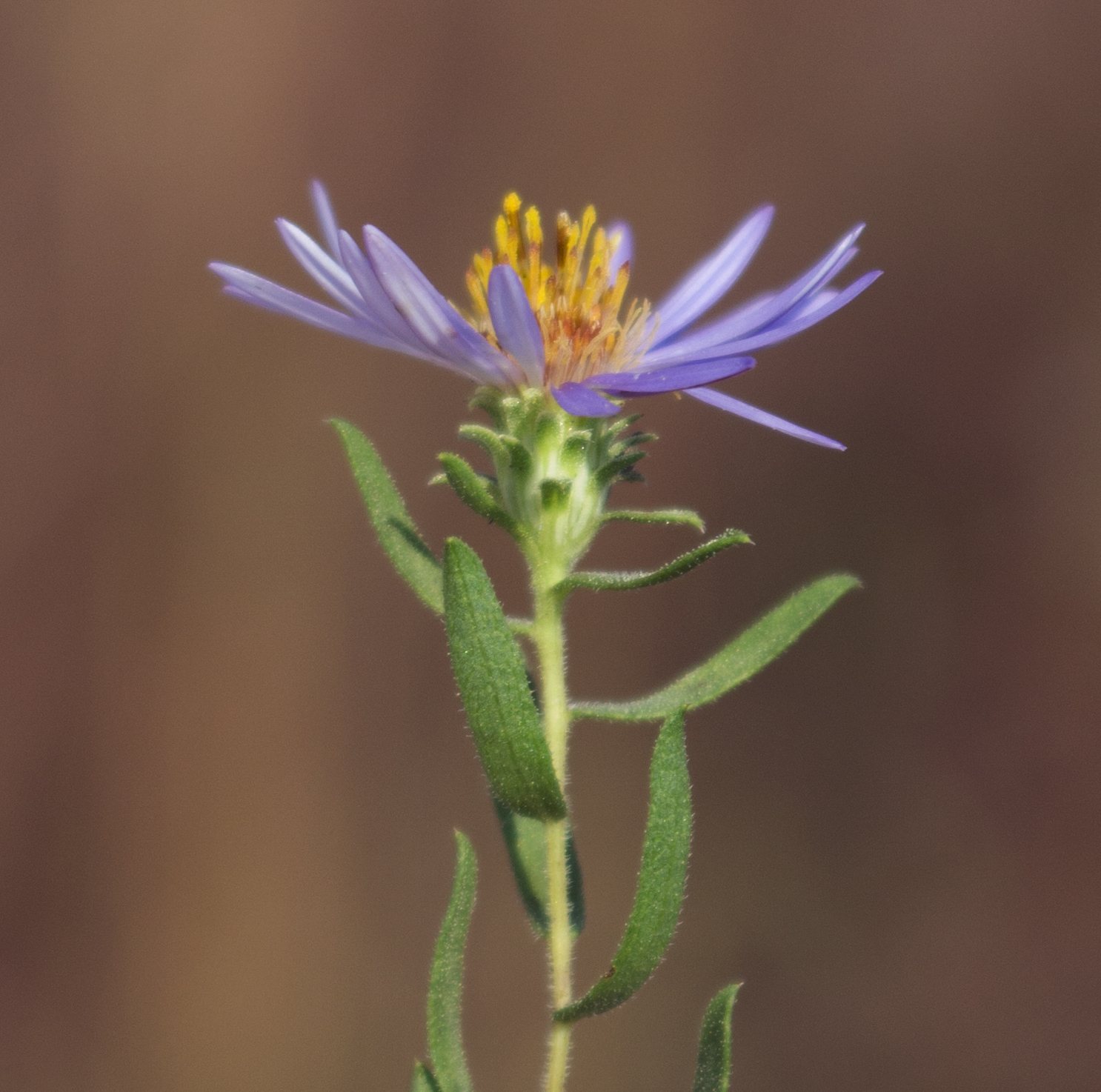
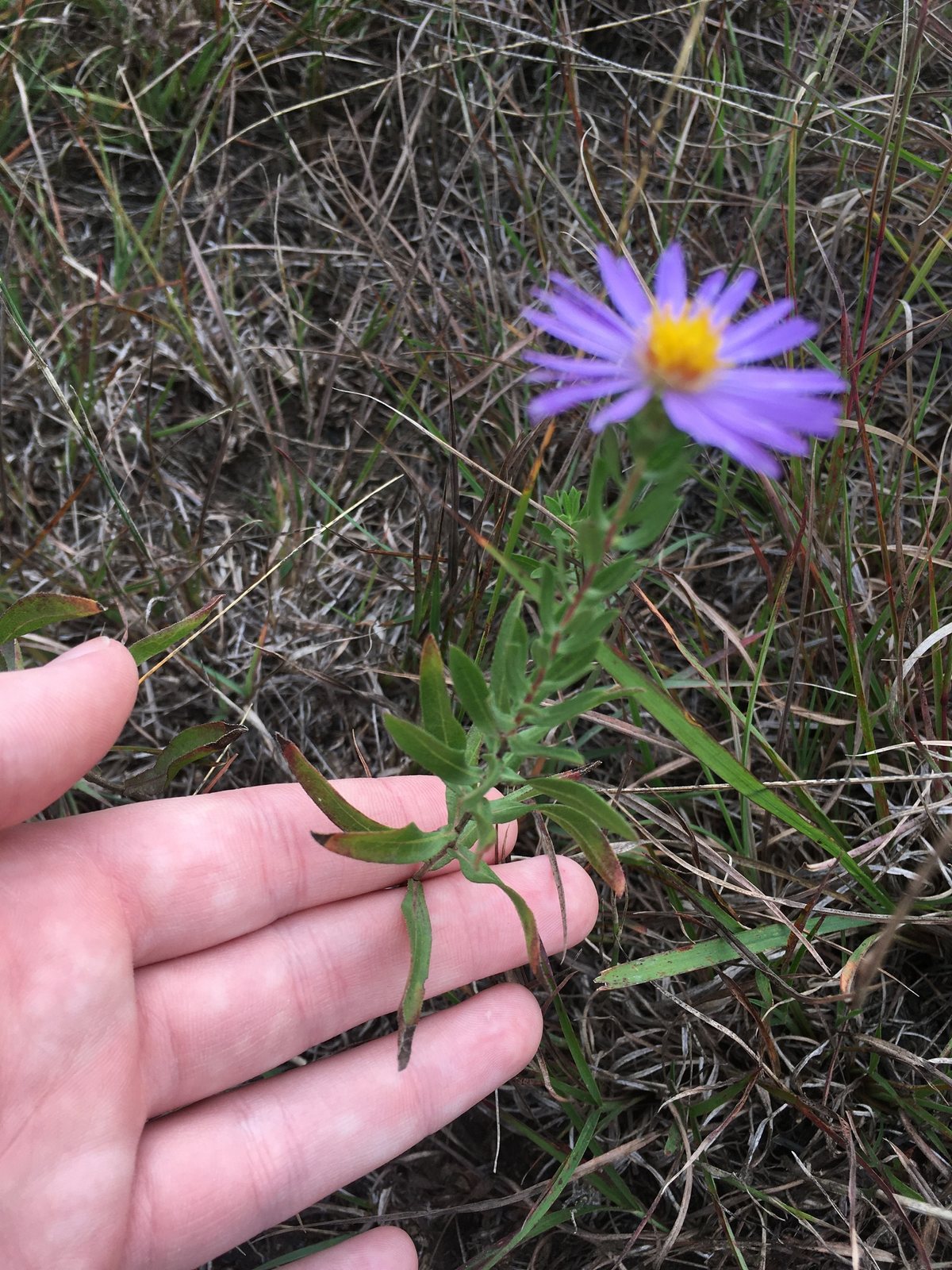
Aromatic aster is a bushy, herbaceous perennial native to central and eastern North America, grown for its masses of violet-blue flowers late in the gardening year. Its scented foliage, drought tolerance once established and value to late-season pollinators make it useful in sunny borders and meadow-style planting.
At a glance
- Sun
- Full sun; tolerates light shade but flowers less and may become floppy.
- Water
- Low to moderate once established; water regularly during the first growing season.
- Soil
- Well-drained sandy, gravelly or loamy soil; tolerates clay if drainage is good. Accepts mildly acidic to alkaline conditions and does not need rich soil.
- Height
- 1-3 ft (0.3-0.9 m)
- Spread
- 1-3 ft (0.3-0.9 m), widening over time
- Flowers
- Late summer through autumn; violet-blue to lavender rays around yellow centres that age reddish-purple.
- Foliage
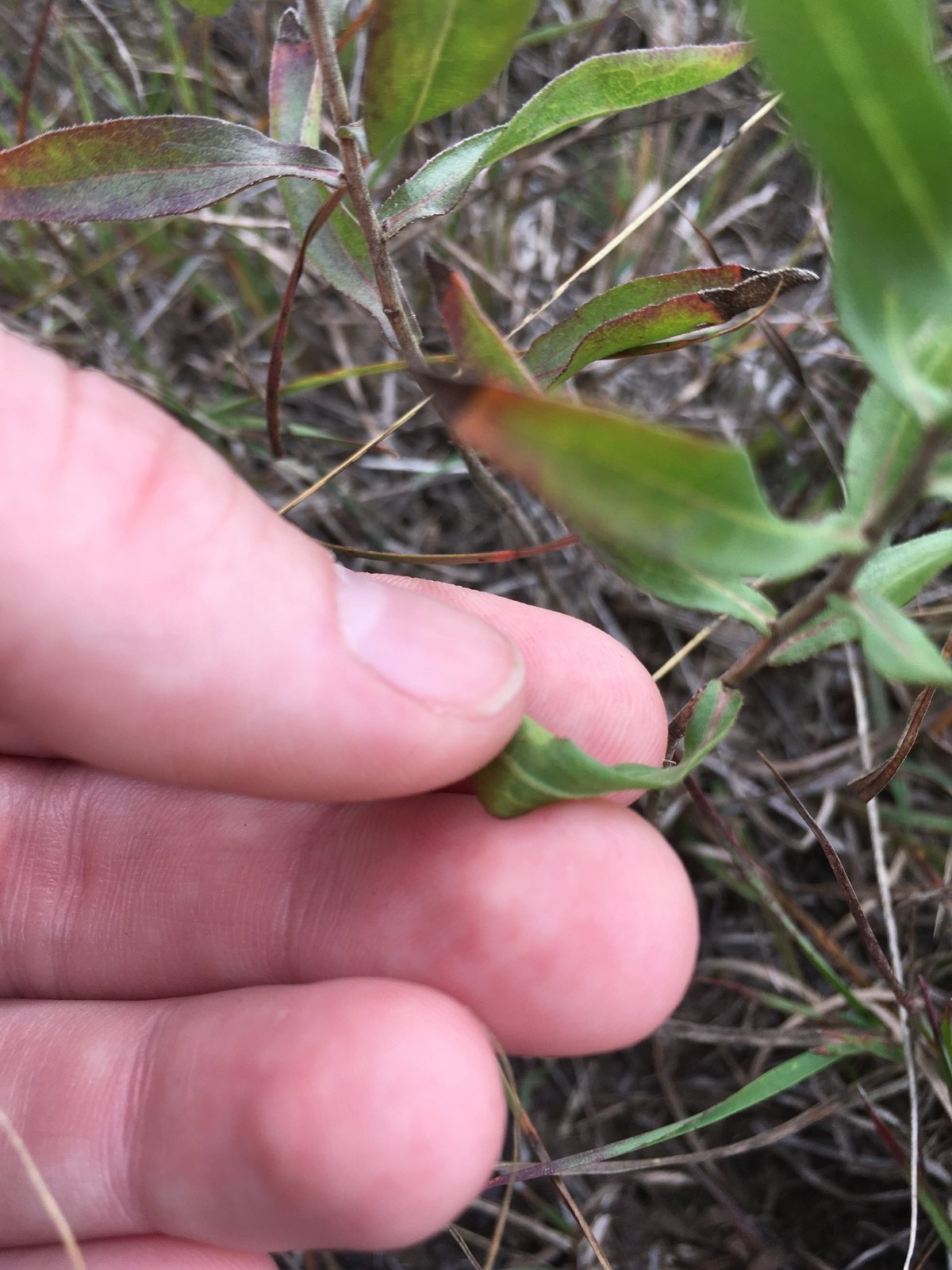
- Small, oblong green leaves on densely branched stems; the leaves release an aromatic scent when crushed.
- Growth
- Moderate
- Care needed
- Low
The year at a glance
- Pollinators
- Deer resistant
- Drought tolerant
- Cold hardy
- Wildlife
- Low allergen
- Fragrant
| J | F | M | A | M | J | J | A | S | O | N | D | |
|---|---|---|---|---|---|---|---|---|---|---|---|---|
| Flowers | ||||||||||||
| Fruit | ||||||||||||
| Plant |
Northern hemisphere months. In Australia, shift them by six.
- Difficulty
- Easy
- Toughness
- Very tough
Will it suit your garden?
Pick your zone, country, light and whether you have pets.
Full sun is 6 or more hours of direct sun a day, part shade 3 to 6 hours, shade under 3.
How it grows
Planting day
1 ft (0.3 m)
After 1 year
1.3 ft (0.4 m)
After 2 years
1.6 ft (0.5 m)
After 3 years
2 ft (0.6 m)
full size
About 3 years to full size.
From a typical nursery size, at an average rate for this kind of plant. A rule of thumb, not a forecast.
Good to know
- Cats and dogs
- Safe
- Native to
- the US
- In the garden
- Spreads vigorously: plan to contain it.
- Growth rate
- Moderate
Care
Jobs through the year
- WaterApr–May, Sep–Oct, every 21 days
- Water established clumps only during prolonged drought; first-year plants need more frequent watering.
- WaterJun–Aug, every 14 days
- Deep-water established clumps only if drought persists; skip watering when soil remains moist.
- PruneMar
- Cut old stems close to the ground; leave occupied hollow stems nearby for emerging insects.
- PruneMay–Jun
- Optionally shorten shoots by one-third before buds form for denser growth.
- DivideMar–Apr
- Divide congested clumps every three to four years or when flowering declines.
- ProtectNov
- Leave stems and seedheads for wildlife and ensure water cannot collect around crowns.
- Water newly planted clumps deeply whenever the root zone starts to dry; established plants need extra water mainly during prolonged drought.
- Avoid routine feeding in ordinary garden soil; rich soil and excess nitrogen encourage floppy growth.
- Keep mulch clear of the crown, especially where winters are wet.
- Divide congested clumps in spring every three to four years, or when flowering declines.
- Remove unwanted seedlings and dig out spreading shoots where space is limited.
Pruning. For shorter, denser plants, shorten stems by about one-third in late spring or early summer, before flower buds form. Leave spent stems through winter for wildlife, then cut them close to ground level in early spring before new growth develops.
Through the year
- Early spring
- Cut back old stems, leaving any occupied hollow stems nearby for emerging insects.
- Spring
- Plant or divide clumps and water thoroughly.
- Late spring
- Optionally shorten shoots by one-third to encourage compact growth.
- Summer
- Water young plants during dry spells and check shaded or crowded plants for mildew.
- Autumn
- Leave flowers for pollinators; remove spent heads before seed ripens only if seedlings are unwanted.
- Winter
- Leave stems and seedheads standing, and check that water is not collecting around the crown.
In the garden
- Plant in drifts with little bluestem and prairie dropseed for a low, late-flowering meadow effect.
- Use at the front or middle of a sunny border with coneflowers and black-eyed Susans to extend the flowering season.
- Repeat clumps through a gravel garden for autumn colour without frequent irrigation.
- Place beside a sunny path where its flowers can be seen closely and its foliage brushed lightly.
Garden styles it suits: Native meadow, New perennial (prairie), Pollinator garden, Dry gravel garden, Cottage garden and Autumn colour.
Plant it with: Little bluestem, Prairie dropseed, Purple coneflower, Black-eyed Susan, Butterfly weed and Showy goldenrod.
Wildlife: Flowers provide late-season nectar and pollen for bees, butterflies and other insects. Seedheads may feed small birds, and standing stems provide overwintering shelter for insects.
Problems to watch for
- Powdery mildew can affect crowded or shaded plants: increase sunlight and airflow, divide dense clumps and avoid drought stress.
- Root or crown rot in waterlogged soil: improve drainage or move the plant to a raised position rather than watering on a fixed schedule.
- Floppy stems in shade or rich soil: move to full sun, stop nitrogen feeding and shorten shoots in late spring.
- Lace bugs can cause pale stippling on leaves: inspect leaf undersides and use insecticidal soap if damage is substantial, avoiding open flowers and visiting insects.
Safety
Not known to be toxic to people, cats, dogs or horses; no particular part is recognised as poisonous. Species-specific safety information is limited, so do not treat it as an edible plant or encourage pets to eat it.
Easily confused with
New England aster (Symphyotrichum novae-angliae)
Usually taller, with conspicuously hairy stems and leaves whose bases clasp the stem; aromatic aster is generally lower and bushier, with smaller, non-clasping, aromatic leaves.
Smooth aster (Symphyotrichum laeve)
Has smooth, often blue-green leaves with clasping bases and a more upright habit; aromatic aster has smaller, rougher leaves with a noticeable scent when crushed.
Heath aster (Symphyotrichum ericoides)
Usually carries many smaller white flowers and very narrow, heath-like leaves, rather than the broader leaves and larger violet-blue flowers of aromatic aster.
The name
The epithet oblongifolium refers to the oblong leaves, while the common name describes their scent when crushed.
Propagation. Divide clumps in spring or take basal shoot cuttings in spring. Sow seed outdoors in autumn, or give spring-sown seed a period of cold, moist stratification; seedlings may differ from named cultivars.
Checked against open data
- Accepted botanical name
- Symphyotrichum oblongifolium
- In the US and Canada
- Native in the lower 48 states.
- Native range
- Alabama, Arkansas, Colorado, Illinois, Indiana, Iowa, Kansas, Kentucky, Maryland, Mexico Northeast, Minnesota and Mississippi.
- Measured
- Average height 43 cm.
Sources: GBIF (CC BY 4.0), USDA PLANTS and Trefle (CC BY 4.0). The care and design notes are LandscapeGPT's own.
See it in your own yard.
Upload a photo of your yard and see it redesigned with plants that suit your climate, each checked against your zone.