Showy goldenrod
Solidago speciosa. Family Asteraceae. Perennial.
Showy goldenrod is a clump-forming perennial native to central and eastern North America, grown for its upright plumes of golden-yellow flowers in late summer and autumn. It brings late-season colour to sunny borders and meadow plantings and provides nectar and pollen for many insects.
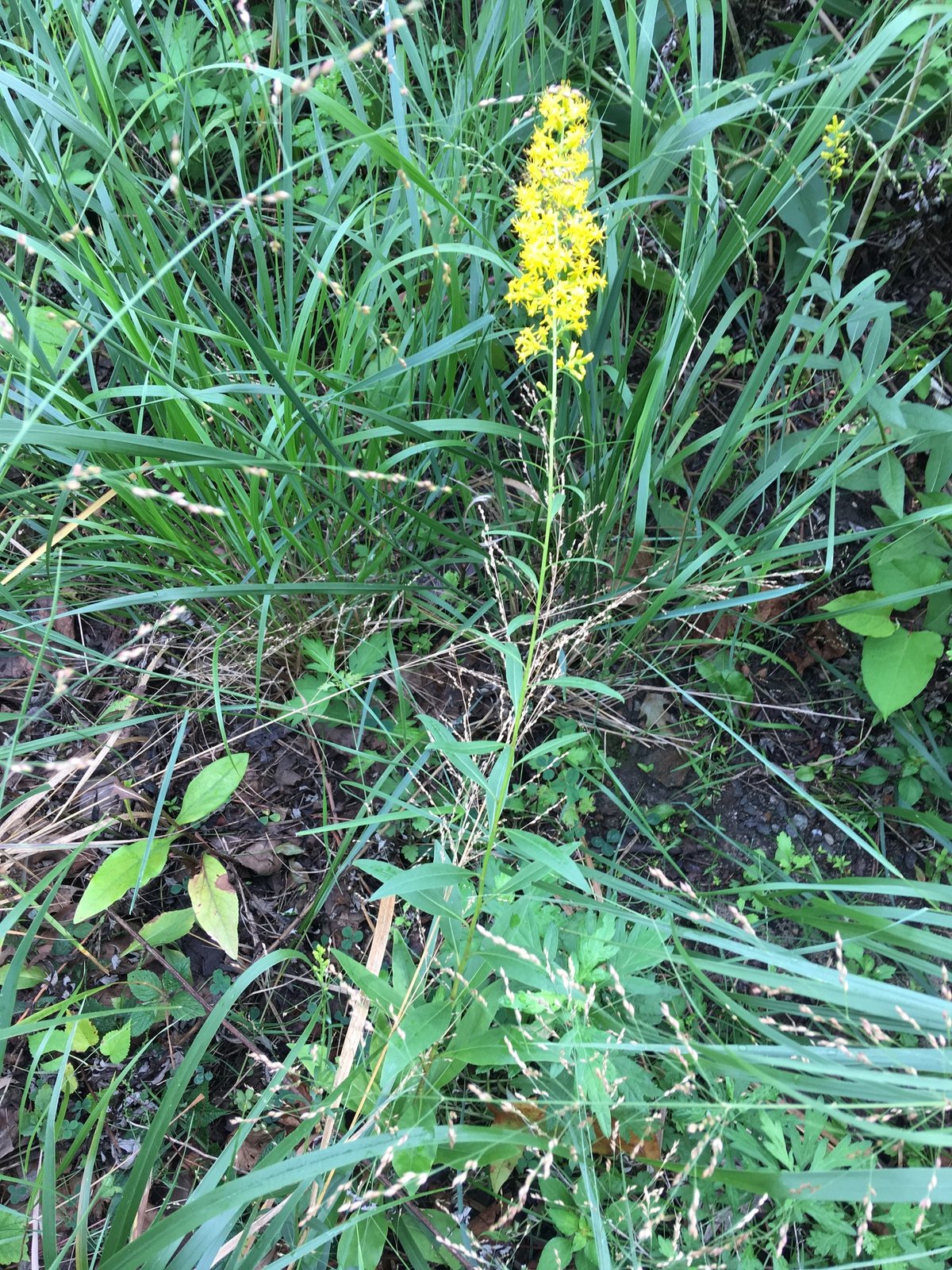
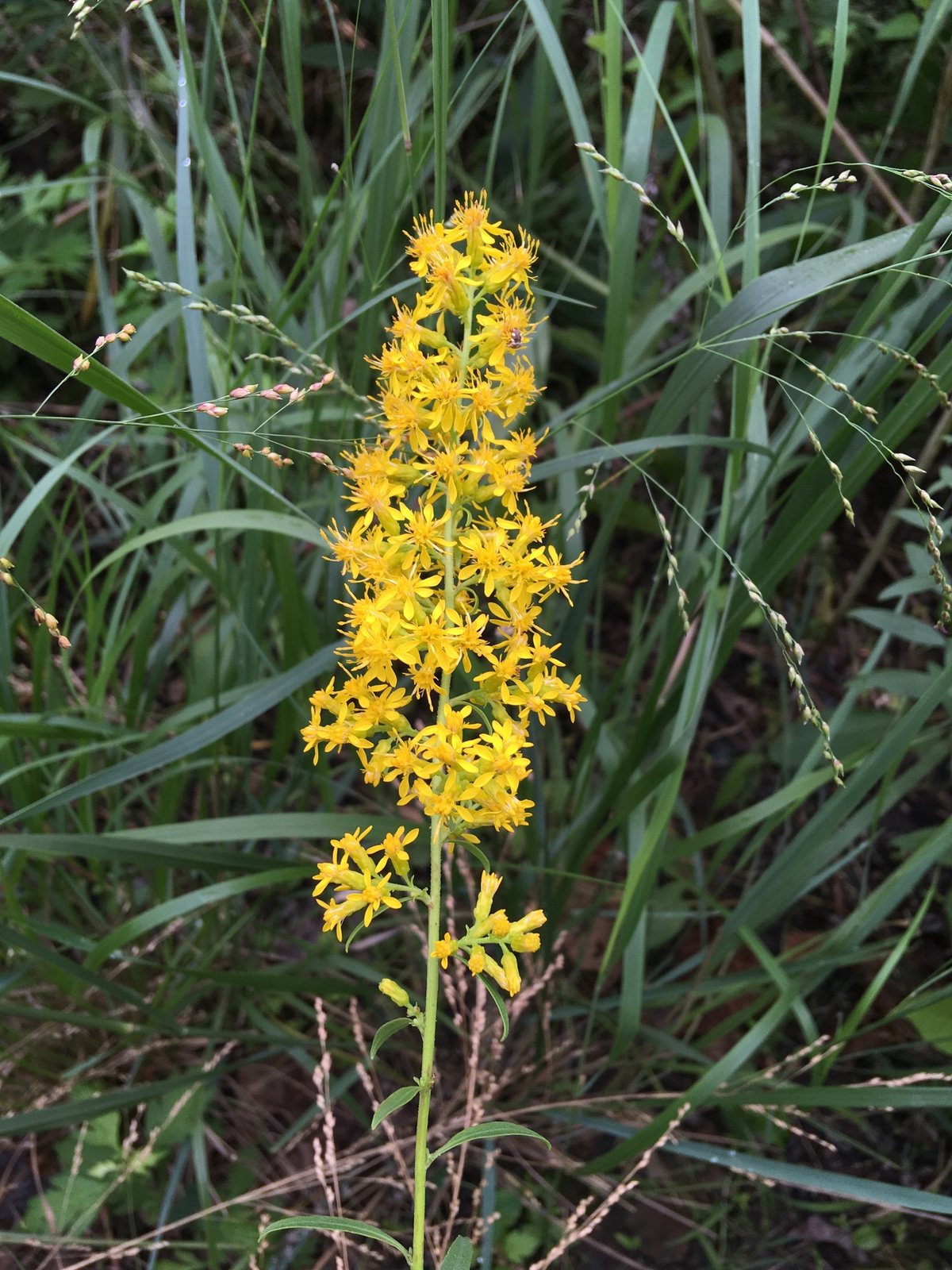
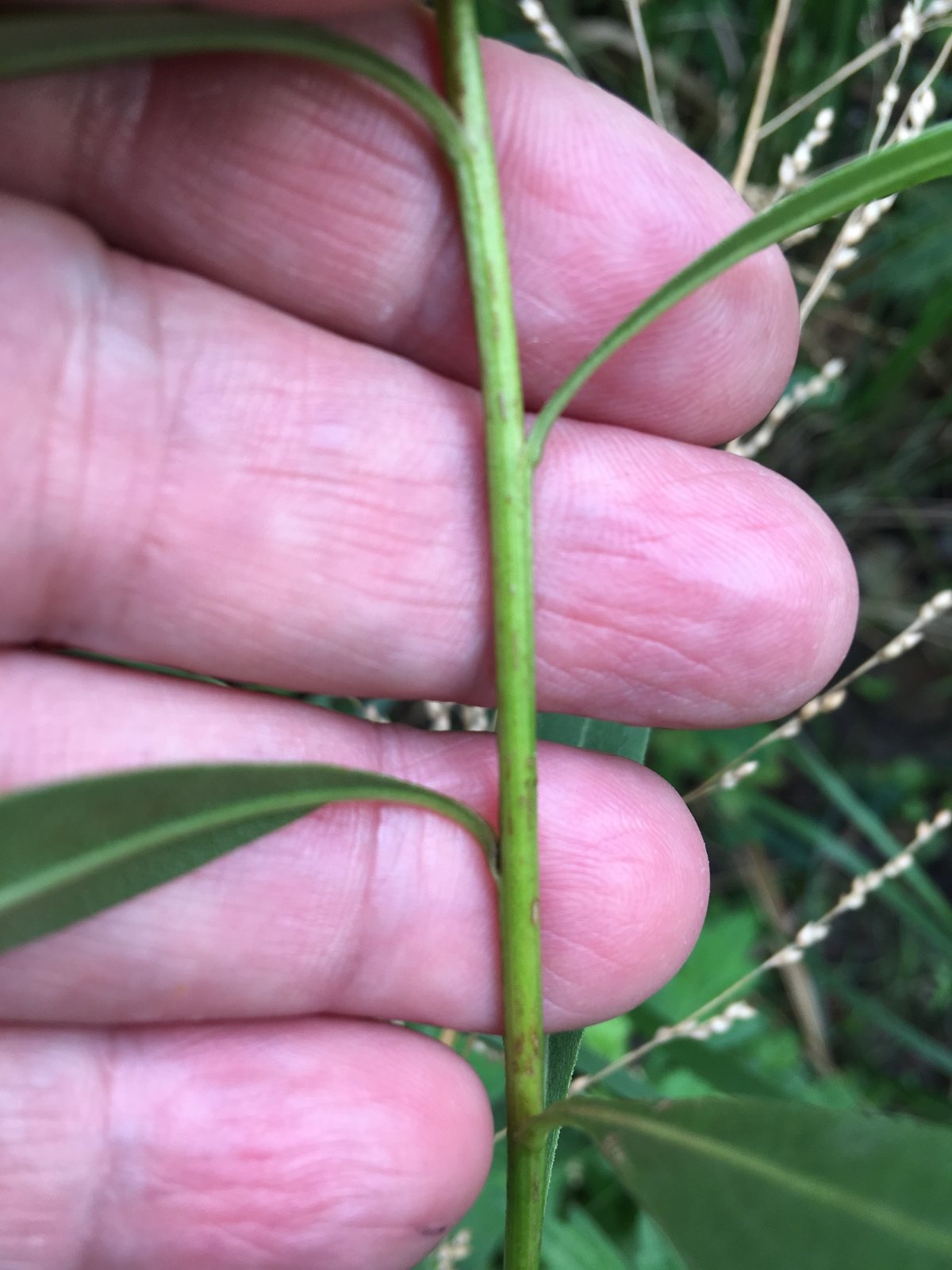
At a glance
- Sun
- Full sun; tolerates light shade but may flower less and lean.
- Water
- Dry to moderately moist conditions once established; water regularly during the first growing season. Avoid persistently wet soil.
- Soil
- Well-drained sandy, gravelly or loamy soil; tolerates clay if drainage is good. Lean to moderately fertile soil is best.
- Height
- 2-5 ft (0.6-1.5 m)
- Spread
- 1-3 ft (0.3-0.9 m)
- Flowers
- Late summer to autumn; golden-yellow flowers in dense, upright, branching plumes.
- Foliage
- Green, alternate, lance-shaped leaves on stiff stems; lower leaves are larger and may drop before flowering.
- Growth
- Moderate
- Care needed
- Low
The year at a glance
- Pollinators
- Deer resistant
- Drought tolerant
- Cold hardy
- Wildlife
- Low allergen
| J | F | M | A | M | J | J | A | S | O | N | D | |
|---|---|---|---|---|---|---|---|---|---|---|---|---|
| Flowers | ||||||||||||
| Fruit | ||||||||||||
| Plant |
Northern hemisphere months. In Australia, shift them by six.
- Difficulty
- Easy
- Toughness
- Very tough
Will it suit your garden?
Pick your zone, country, light and whether you have pets.
Full sun is 6 or more hours of direct sun a day, part shade 3 to 6 hours, shade under 3.
How it grows
Planting day
1 ft (0.3 m)
After 1 year
1.8 ft (0.55 m)
After 2 years
2.6 ft (0.8 m)
After 3 years
3 ft (1.1 m)
full size
About 3 years to full size.
From a typical nursery size, at an average rate for this kind of plant. A rule of thumb, not a forecast.
Good to know
- Cats and dogs
- Safe
- Native to
- the US and Canada
- Growth rate
- Moderate
Care
Jobs through the year
- WaterApr–May, Sep–Oct, every 21 days
- Water established plants only during prolonged drought; water first-year plants regularly.
- WaterJun–Aug, every 14 days
- Water established plants deeply only during extended dry spells; avoid persistently wet soil.
- PruneMar
- Cut old stems close to ground level and stack them loosely nearby for insects.
- DivideMar–Apr
- Divide crowded clumps in spring when growth or flowering declines.
- ProtectMay–Jun
- Support leaning stems early if plants grow in rich soil or partial shade.
- DeadheadSep–Oct, every 14 days
- Remove spent plumes before seed dispersal if seedlings are unwanted; otherwise leave for wildlife.
- Water deeply during dry spells in the first growing season; established plants usually need little extra water.
- Avoid routine feeding, especially nitrogen-rich fertiliser, which encourages tall, floppy growth.
- Keep mulch away from the crown and avoid sites that stay wet through winter.
- Support stems early if they lean in rich soil or partial shade.
- Divide crowded clumps in spring and remove unwanted seedlings while small.
Pruning. Leave stems standing through winter for seed-eating birds and overwintering insects, then cut them close to the ground in early spring before new growth develops. To limit self-seeding, remove flower heads after flowering instead.
Through the year
- Early spring
- Cut back old stems before new shoots grow; leave cut stems loosely stacked in a quiet garden corner for insects.
- Spring
- Plant or divide clumps in a sunny, well-drained position and water them in thoroughly.
- Early summer
- Check young plants for drought stress and add discreet supports if stems begin to lean.
- Late summer
- Enjoy the flowers and avoid insecticide sprays while pollinators are visiting.
- Autumn
- Remove spent flower heads if seedlings would be unwelcome; otherwise leave them for birds.
- Winter
- Check that water is not collecting around the crowns and leave standing stems undisturbed.
In the garden
- Plant in groups through a sunny perennial border, pairing the yellow flowers with purple asters.
- Mix with little bluestem and prairie dropseed for an upright, late-season meadow planting.
- Use behind lower-growing perennials, which help conceal bare lower stems.
- Include in a pollinator border to extend the supply of nectar and pollen into autumn.
Garden styles it suits: Native meadow, Midwest prairie, New perennial (prairie), Pollinator garden, Wildlife garden and Cottage garden.
Plant it with: New England aster, Aromatic aster, Little bluestem, Prairie dropseed, Purple coneflower and Butterfly weed.
Wildlife: Flowers attract native bees, honeybees, butterflies, beetles and other beneficial insects. The foliage supports some moth and other insect larvae, and small birds may eat the seeds. Goldenrod pollen is carried mainly by insects; wind-pollinated ragweed flowering at the same time is a much more common cause of seasonal hay fever.
Problems to watch for
- Flopping stems: provide full sun, avoid fertiliser and support plants if needed.
- Powdery mildew or leaf spots: improve airflow, water at soil level and remove badly affected fallen foliage.
- Root or crown rot: improve drainage or move the plant to a drier position; avoid frequent watering once established.
- Unwanted seedlings: remove spent flower heads before seed disperses and pull seedlings while young.
Safety
Solidago speciosa is not known to be toxic to people, cats, dogs or horses, and no part is generally recognised as poisonous. It is an ornamental rather than a food plant; eating substantial amounts may cause digestive upset. Do not confuse it with unrelated poisonous plants also called goldenrod, such as rayless goldenrod.
Easily confused with
Canada goldenrod (Solidago canadensis)
Canada goldenrod usually has broad, arching flower sprays and forms spreading colonies. Showy goldenrod has denser, more upright flower plumes and a more clearly clumping habit.
Stiff goldenrod (Solidago rigida)
Stiff goldenrod has broad, rough or hairy leaves and a relatively flat-topped flower cluster. Showy goldenrod has narrower, smoother leaves and an elongated, upright plume.
The name
Solidago comes from Latin words meaning to make whole, referring to historical medicinal use, while speciosa means showy or handsome.
Propagation. Divide established clumps in spring. Sow seed outdoors in autumn, or give spring-sown seed a period of cold, moist stratification; press seed onto the surface rather than burying it deeply.
Checked against open data
- Accepted botanical name
- Solidago speciosa
- In the US and Canada
- Native in Canada and the lower 48 states.
- Native range
- Alabama, Connecticut, Delaware, Georgia, Kentucky, Maryland, Masachusettes, Minnesota, New Jersey, New York, North Carolina and Ohio.
- Measured
- Average height 75 cm.
Sources: GBIF (CC BY 4.0), USDA PLANTS and Trefle (CC BY 4.0). The care and design notes are LandscapeGPT's own.
See it in your own yard.
Upload a photo of your yard and see it redesigned with plants that suit your climate, each checked against your zone.