Aubergine
Solanum melongena. Family Solanaceae. Annual.
Also called Eggplant, Brinjal.
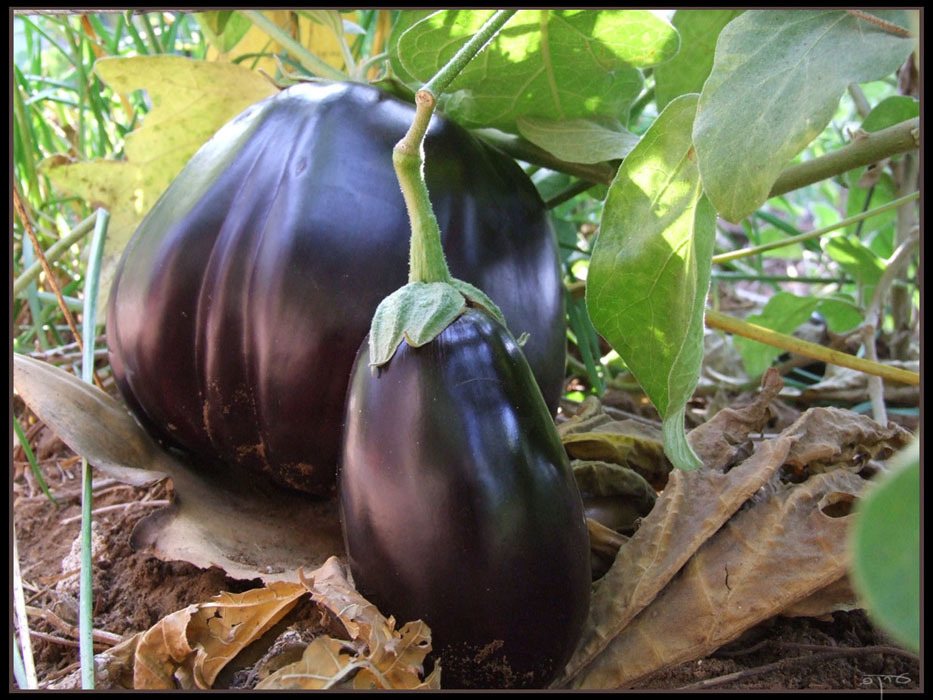
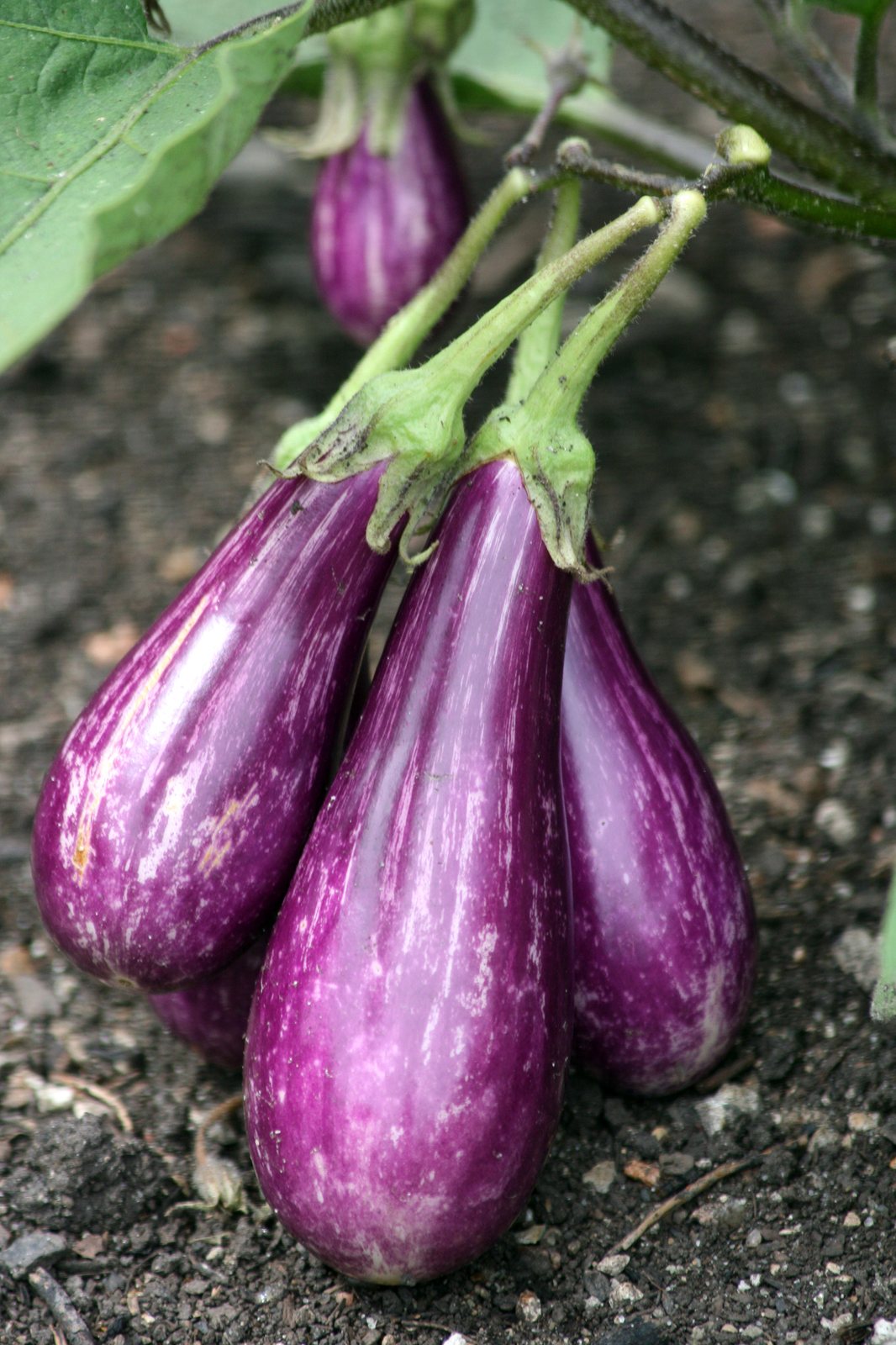
Aubergine is a frost-tender, short-lived perennial grown as an annual for its edible fruits, which may be purple, white, green or striped. It needs a long, warm growing season; in cool districts, a greenhouse or sheltered container usually gives a more reliable crop than an open bed.
At a glance
- Sun
- Full sun, with at least 6-8 hours of direct light and shelter from cold winds.
- Water
- Keep the root zone evenly moist but not waterlogged. Containers may need daily watering in hot weather.
- Soil
- Fertile, moisture-retentive but well-drained soil, ideally pH 6.0-7.0.
- Height
- 2-4 ft (0.6-1.2 m)
- Spread
- 1.5-3 ft (0.45-0.9 m)
- Flowers
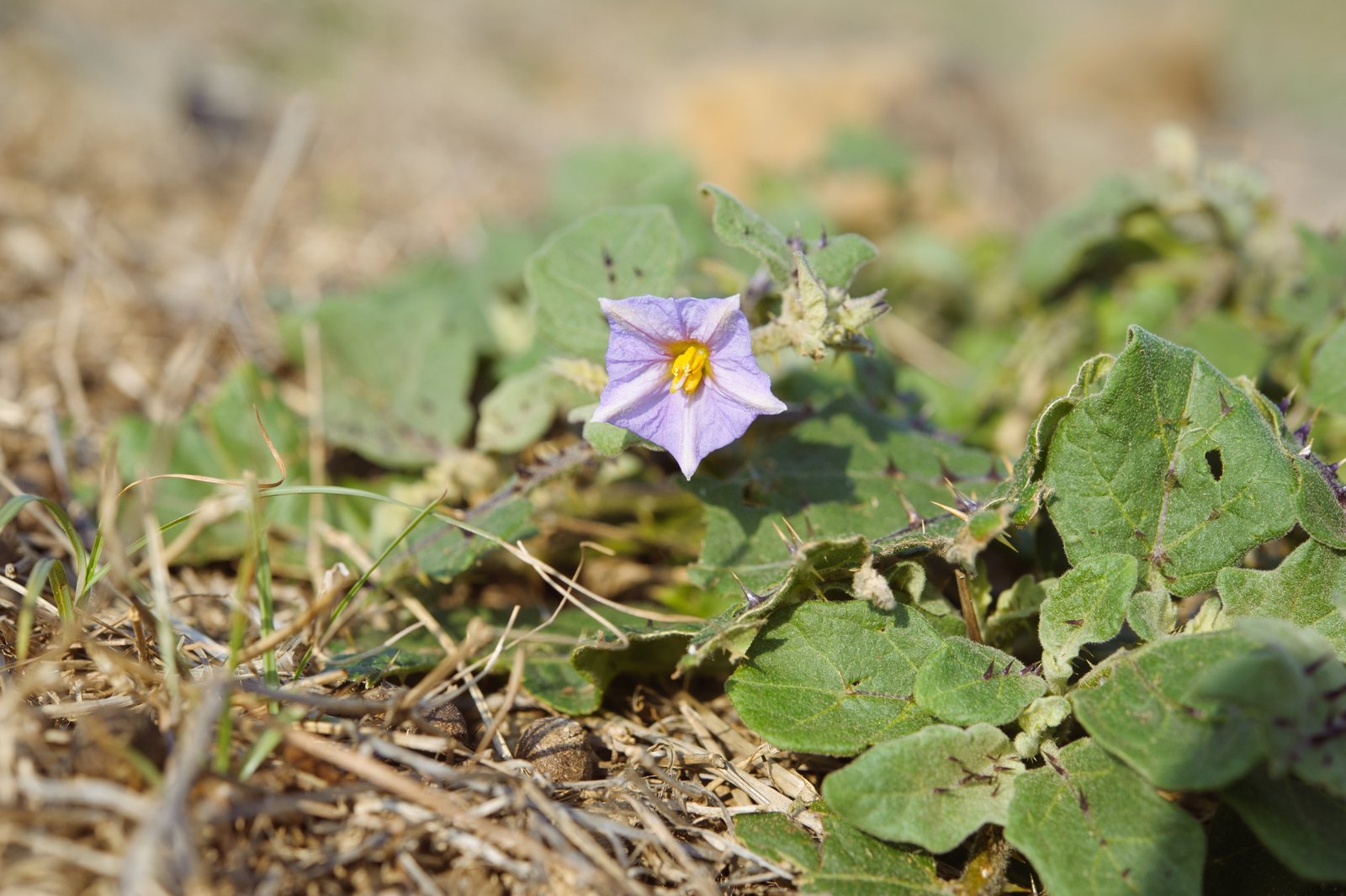
- Summer into autumn; usually purple, sometimes white, star-shaped flowers.
- Foliage
- Large, softly hairy, green to grey-green leaves, sometimes purple-tinged; some varieties have prickles on stems and leaf veins.
- Growth
- Fast in sustained warmth; slow in cool conditions.
- Care needed
- Medium
The year at a glance
- Pollinators
- Heat tolerant
- Low allergen
- Edible
| J | F | M | A | M | J | J | A | S | O | N | D | |
|---|---|---|---|---|---|---|---|---|---|---|---|---|
| Flowers | ||||||||||||
| Fruit | ||||||||||||
| Plant |
Northern hemisphere months. In Australia, shift them by six.
- Difficulty
- Moderate
- Toughness
- Needs looking after
Will it suit your garden?
Pick your zone, country, light and whether you have pets.
Full sun is 6 or more hours of direct sun a day, part shade 3 to 6 hours, shade under 3.
How it grows
Planting day
0.5 ft (0.15 m)
After 1 year
3 ft (0.9 m)
full size
Full size in one season.
From a typical nursery size, at an average rate for this kind of plant. A rule of thumb, not a forecast.
Good to know
- Cats and dogs
- Toxic
- Growth rate
- Moderate
Care
Jobs through the year
- WaterMay–Jun, every 3 days
- Water in-ground plants when the surface starts drying; newly planted roots need close checks.
- WaterJul–Aug, every 2 days
- Keep the root zone evenly moist, adjusting for rain; containers may need daily watering.
- WaterSep–Oct, every 4 days
- Water while plants remain productive, reducing frequency as weather cools.
- FeedMay–Jun
- Incorporate compost before planting into warm soil.
- FeedJun–Sep, every 14 days
- Feed fruiting plants with tomato fertiliser as needed, following the label; especially important in pots.
- MulchJun
- Mulch after soil warms, keeping the stem base clear.
- ProtectMay–Jun
- Harden off and plant only after frost when nights stay above 15°C; use a greenhouse in cool sites.
- ProtectJun–Jul
- Stake tall plants and tie stems loosely before heavy fruits develop.
- HarvestJul–Oct
- Cut firm, glossy fruits before seeds harden; wear gloves if stalks are prickly.
- Plant out only after frost risk has passed and nights remain reliably above 15°C (59°F). Harden plants off first.
- Water at soil level whenever the surface begins to dry; avoid repeated drying out during flowering and fruit growth.
- Mix compost into the bed before planting, then feed container plants regularly with a tomato fertiliser according to its label.
- Mulch once the soil has warmed, keeping mulch clear of the stem.
- Stake tall plants early and tie stems loosely as heavy fruits develop.
- Harvest with secateurs while the skin is glossy and the fruit feels firm; dull skin and hard seeds indicate overmaturity.
Pruning. Little pruning is needed outdoors: remove damaged leaves and shoots that touch the soil. Under glass, pinch out the main growing tip at about 1 ft (0.3 m) to encourage branching, and retain three or four strong shoots if space is limited.
Harvest
Pick aubergines (eggplants) through summer and autumn, before frost, when fruits reach the size typical of the variety, have glossy skin and feel firm with a slight give under gentle pressure. Harvest while seeds are still soft and pale; dull skin and hard, dark seeds indicate overripe fruit. Cut the stalk with secateurs, leaving a short stem attached, and wear gloves if the stalk or calyx is prickly.
Through the year
- Late winter
- Sow indoors about 8-10 weeks before your intended planting date, using warmth of roughly 24-29°C (75-84°F) for germination.
- Early spring
- Pot seedlings individually and provide strong light and steady warmth.
- Late spring
- Harden off and plant into warm soil after frost, or move plants into their final greenhouse containers.
- Early summer
- Fit stakes, mulch warm soil and begin regular feeding as flowers and fruits develop.
- Summer
- Check leaf undersides for pests, maintain even watering and ventilate greenhouses in hot weather.
- Late summer to autumn
- Pick fruits regularly while glossy; remove plants once cold stops growth or frost kills the foliage.
In the garden
- Grow in a sunny potager with basil and low flowers, using the broad leaves and glossy fruits as contrasting textures.
- Use a compact variety in a large patio container where its flowers and fruit can be seen close up.
- Plant in orderly rows within raised vegetable beds, allowing enough space for air circulation and harvesting.
- Place among ornamental edible plants in a sheltered border for bold summer foliage and colourful fruit.
Garden styles it suits: Potager (kitchen garden), Edible landscape, Modern courtyard, Small-space, Homestead and Mediterranean.
Plant it with: Basil, French marigold, Lettuce and Dwarf French bean.
Wildlife: Bumblebees and other bees visit the flowers for pollen and can improve pollination. The plant is not a larval food plant for most garden butterflies.
Problems to watch for
- Red spider mite: fine webbing and pale, stippled leaves are common under hot, dry glasshouse conditions. Inspect leaf undersides, avoid drought stress and introduce suitable predatory mites early.
- Aphids and whiteflies: check young shoots and leaf undersides; wash off small colonies or use an insecticidal soap labelled for edible crops.
- Verticillium wilt: yellowing and wilting may affect one side first. Remove affected plants, avoid moving contaminated soil and use fresh container compost or a different growing area.
- Poor fruit set: cool nights, extreme heat or drought can cause flowers to drop. Maintain steady moisture, improve warmth in cool climates and gently tap flowering stems under glass to help release pollen.
Safety
Leaves and stems contain glycoalkaloids and should not be eaten by people or fed to cats, dogs or horses. Significant ingestion can cause digestive upset and potentially more serious poisoning. The cultivated fruit is edible for people and is normally cooked; food portions of the fruit are not generally considered poisonous.
Easily confused with
Tomato (Solanum lycopersicum)
Tomatoes have divided leaves and yellow flowers; aubergines have broad, mostly undivided leaves and usually purple flowers.
Apple of Sodom (Solanum linnaeanum)
This poisonous, prickly shrub has deeply lobed leaves and round fruits that turn yellow when ripe. Do not identify an unknown plant as an edible aubergine from fruit shape alone.
The name
The name 'eggplant' refers to white, egg-shaped fruits of some early cultivated forms, while 'aubergine' reached English through French from Arabic and Persian names for the plant.
Propagation. Usually grown from seed sown indoors with bottom heat. Seed saved from hybrid varieties will not reliably produce matching plants; vegetative cuttings are possible but need warm, protected conditions.
Checked against open data
- Accepted botanical name
- Solanum melongena
- In the US and Canada
- Introduced in the lower 48 states, Pacific Basin and Puerto Rico.
- Native range
- China South-Central, Laos, Malaya, Myanmar, Thailand and Vietnam.
- Measured
- Average height 85 cm.
Sources: GBIF (CC BY 4.0), USDA PLANTS and Trefle (CC BY 4.0). The care and design notes are LandscapeGPT's own.
See it in your own yard.
Upload a photo of your yard and see it redesigned with plants that suit your climate, each checked against your zone.