Austrian pine
Pinus nigra. Family Pinaceae. Tree.
Also called European black pine, Black pine.
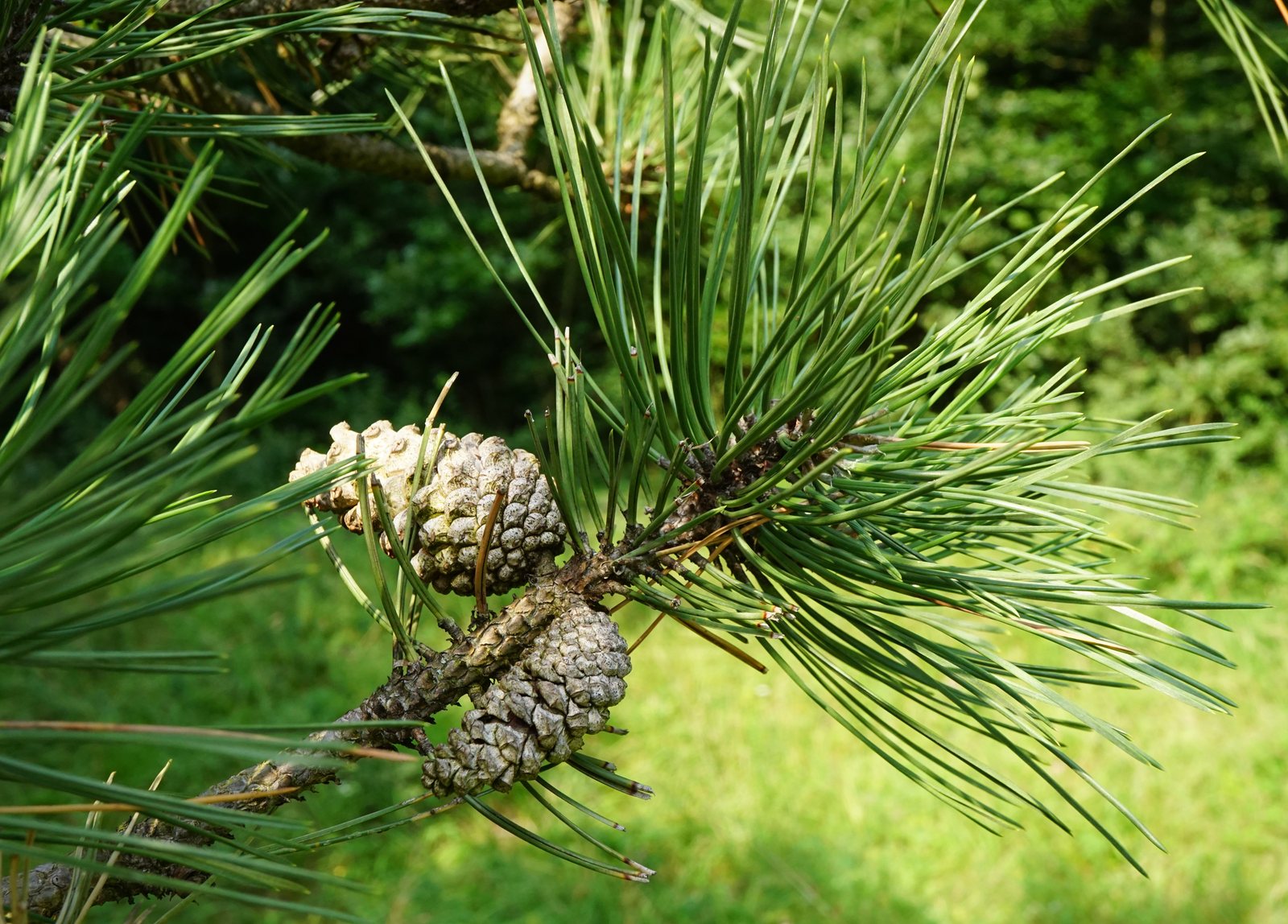
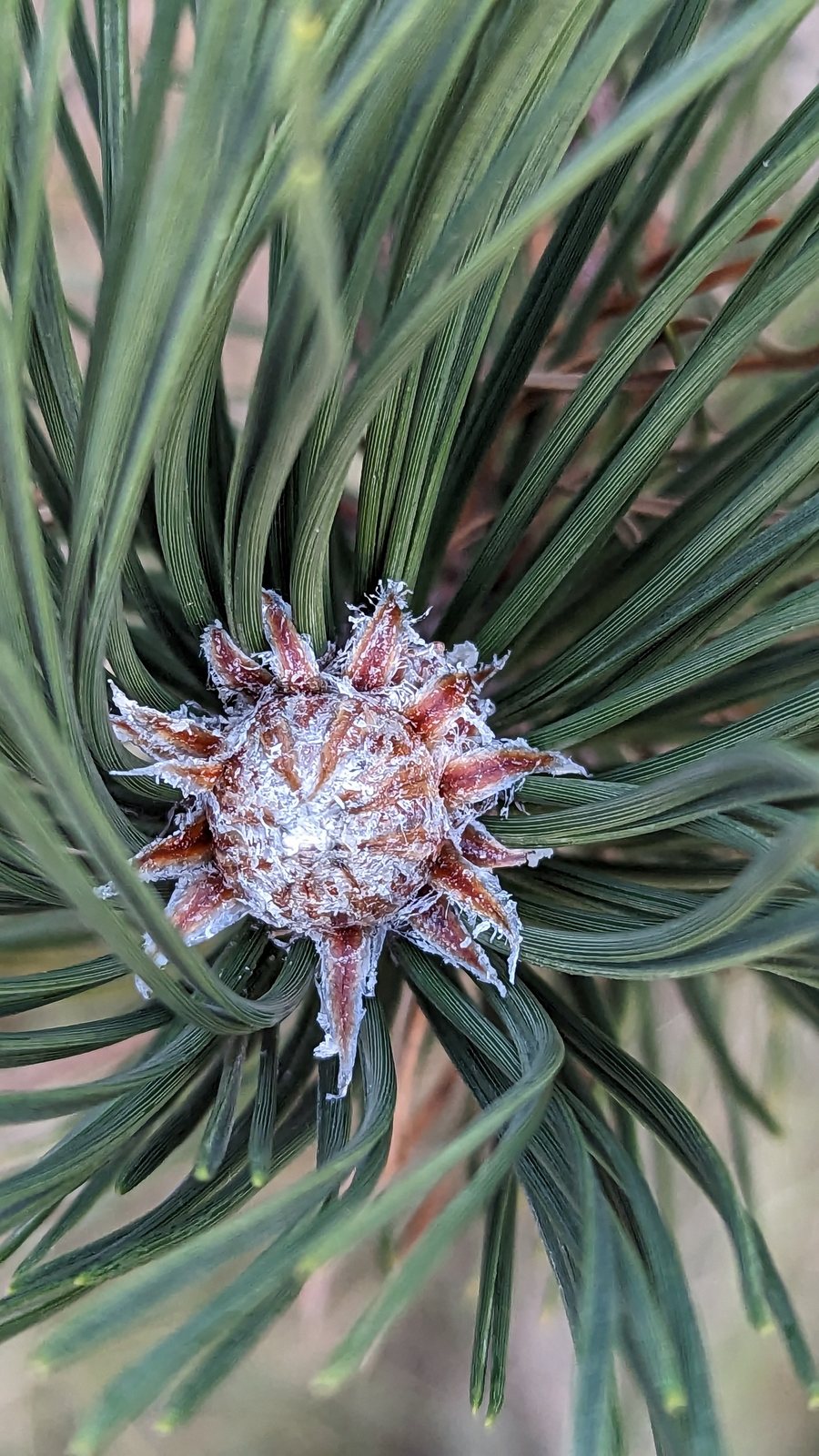
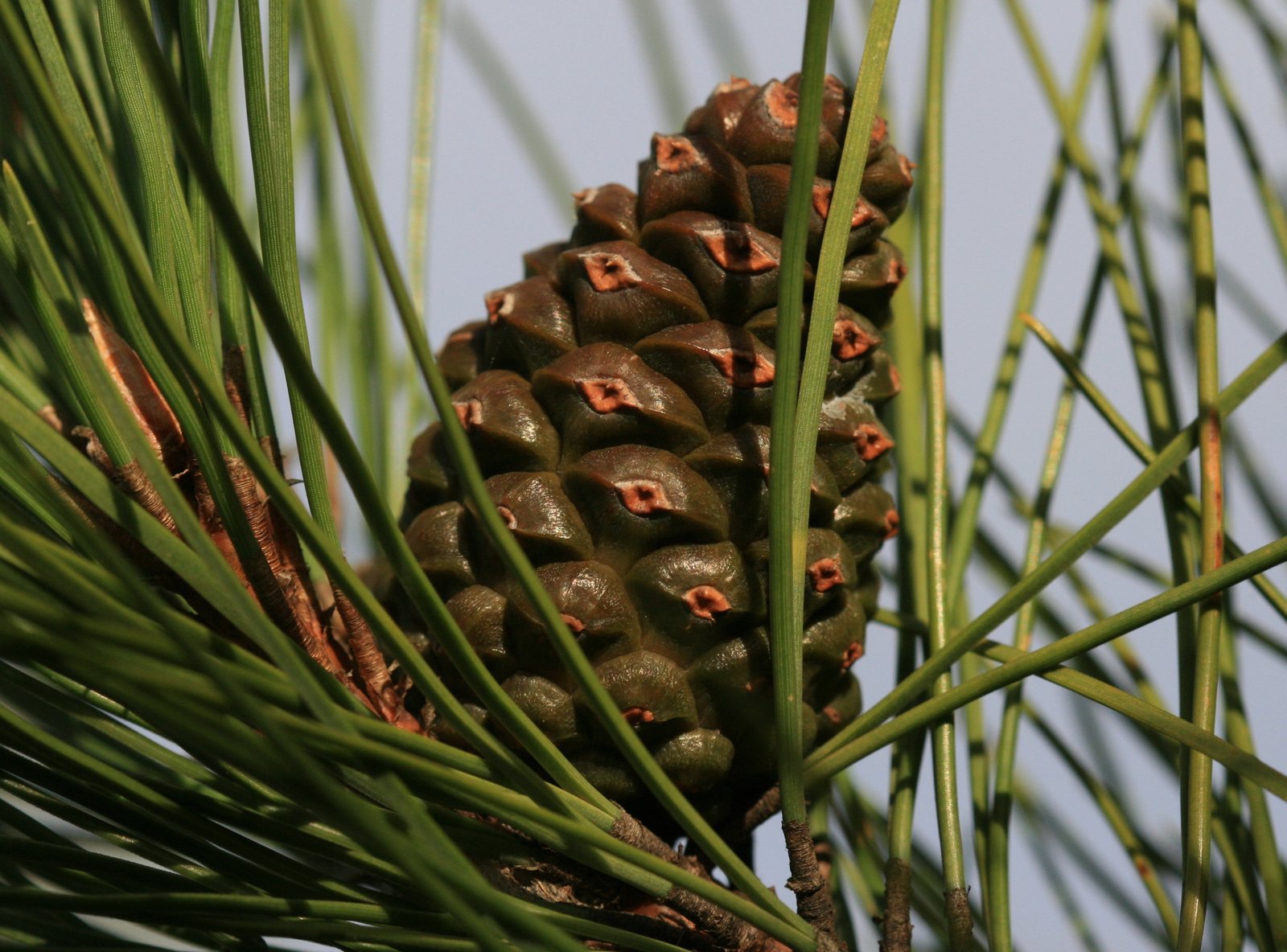
Austrian pine is a large evergreen conifer with stiff, dark green needles, a dense young crown and deeply fissured bark as it ages. Gardeners grow it for year-round screening, wind shelter and a strong outline in spacious gardens. It tolerates limestone soils, exposure and some drought, but serious disease problems make it a poor choice in some regions, especially parts of the central and eastern United States.
At a glance
- Sun
- Full sun; avoid shaded sites where the crown becomes thin and needles stay wet.
- Water
- Water regularly while establishing; moderately drought-tolerant once established. Avoid persistently wet roots.
- Soil
- Well-drained sandy, loamy or clay soil; tolerates alkaline and limestone soils. Avoid waterlogged ground.
- Height
- 40-60 ft (12-18 m), occasionally taller
- Spread
- 20-40 ft (6-12 m)
- Foliage
- Evergreen. Stiff, dark green needles, usually 3-6 in (8-15 cm) long, held in pairs and retained for several years.
- Growth
- Moderate, commonly 12-24 in (30-60 cm) a year when young and well established.
- Care needed
- Medium
The year at a glance
- Deer resistant
- Drought tolerant
- Cold hardy
- Wildlife
| J | F | M | A | M | J | J | A | S | O | N | D | |
|---|---|---|---|---|---|---|---|---|---|---|---|---|
| Fruit | ||||||||||||
| Plant |
Northern hemisphere months. In Australia, shift them by six.
- Difficulty
- Moderate
- Toughness
- Fairly tough
Will it suit your garden?
Pick your zone, country, light and whether you have pets.
Full sun is 6 or more hours of direct sun a day, part shade 3 to 6 hours, shade under 3.
How it grows
Planting day
7 ft (2 m)
After 1 year
9 ft (2.7 m)
After 2 years
11 ft (3.3 m)
After 3 years
13 ft (4 m)
After 5 years
17 ft (5.3 m)
About 20 years to full size.
From a typical nursery size, at an average rate for this kind of plant. A rule of thumb, not a forecast.
Good to know
- Cats and dogs
- Safe
- Growth rate
- Moderate
Care
Jobs through the year
- WaterApr–May, Sep–Oct, every 21 days
- Deep-water established trees only in prolonged dry weather; water young trees more frequently.
- WaterJun–Aug, every 14 days
- During drought, soak the roots and let soil begin drying between waterings; keep needles dry.
- WaterNov, every 21 days
- Water only if autumn is dry and soil is unfrozen, particularly for young trees.
- MulchApr, Oct
- Maintain 5–8 cm of organic mulch over roots without touching the trunk.
- PruneMar–Apr
- Remove dead or diseased branches in dry weather, cutting outside the branch collar.
- PruneMay–Jun
- Only if shaping is necessary, lightly shorten soft candles; never top or cut into bare old wood.
- ProtectMar–May
- Inspect for tip dieback, needle bands and scale; identify disease before choosing treatment.
- Plant with the root flare at soil level and allow room for the full mature crown, well away from buildings and overhead wires.
- Water deeply during dry spells for the first two or three growing seasons; let the soil begin to dry between waterings.
- Spread 2-3 in (5-8 cm) of organic mulch over the root area, keeping it clear of the trunk.
- Do not feed routinely; use a soil test before correcting suspected nutrient deficiencies.
- Keep lawn sprinklers off the needles and inspect the crown each spring for dead shoots or needle spotting.
Pruning. Remove dead, damaged or diseased branches in dry weather, cutting just outside the branch collar. If necessary, lightly shorten soft new candles in late spring to restrain growth; never top the tree or cut back into bare old wood expecting it to regrow.
Through the year
- Early spring
- Inspect for dead shoot tips, spotted needles and scale insects; have unexplained dieback identified before treating.
- Spring
- Plant where the soil is workable and well drained; water thoroughly and mulch.
- Late spring
- If shaping is necessary, lightly shorten soft candles before the needles fully expand.
- Summer
- Deep-water young trees during dry spells and keep irrigation off the foliage.
- Autumn
- Check mulch depth and remove fallen infected needles and cones where practical if disease has been diagnosed.
- Late autumn
- In cold climates, water young trees before the ground freezes if autumn has been dry.
In the garden
- Use as a specimen in a large lawn, allowing its broad, irregular mature crown to develop.
- Plant a loose windbreak on an exposed site, with enough spacing for airflow and mature branches.
- Use the dark foliage as a backdrop to pale grasses and sun-loving perennials beyond the crown.
- Combine with junipers and boulders in a large gravel garden for year-round structure.
Garden styles it suits: Architectural minimal, Grand estate, Traditional, Dry gravel garden, Winter interest and Mediterranean.
Plant it with: Common juniper, Smoke bush, Russian sage, Catmint, Yarrow and Blue fescue.
Wildlife: Provides evergreen shelter and nesting cover for birds. Seeds feed some birds and small mammals, although its wildlife value outside its native range is generally lower than that of suitable local native pines.
Problems to watch for
- Diplodia tip blight causes stunted, brown new shoots, often on older or stressed trees. Prune affected shoots in dry weather, remove infected debris where practical and reduce drought stress; seek local advice about preventive treatment.
- Dothistroma needle blight causes reddish bands, browning and premature needle loss. Improve airflow, avoid overhead watering and obtain a diagnosis before using locally approved fungicides.
- Pine wilt can rapidly kill trees in warm regions, particularly parts of the central United States. There is no practical cure for an infected tree; arrange prompt removal and appropriate disposal before beetles emerge, and choose a less susceptible replacement.
- Pine needle scale appears as small white encrustations and can thin the foliage. Encourage natural predators; treat damaging infestations with an approved horticultural oil timed to crawler emergence.
Safety
Not known to be toxic to cats, dogs, horses or people. Needles, cones and resin are not food: chewing or swallowing them can irritate the mouth or digestive tract, and resin may irritate skin.
Where it spreads. A wilding conifer in New Zealand, particularly in parts of the South Island, where seedlings can spread into open grassland and other natural habitats. Check local restrictions before planting near open country.
Easily confused with
Scots pine (Pinus sylvestris)
Usually has shorter, twisted, blue-green needles in pairs and conspicuous orange bark on the upper trunk; Austrian pine has longer, darker needles and darker bark.
Red pine (Pinus resinosa)
Also has long needles in pairs, but they characteristically snap cleanly when bent; Austrian pine needles generally bend rather than snap.
Corsican pine (Pinus nigra subsp. laricio)
A closely related subspecies rather than a separate species, usually with finer, more flexible, often twisted needles and a straighter, more slender habit. Young trees can be difficult to distinguish.
The name
Pinus is the Latin name for pine, nigra means black and refers to its dark appearance, and Austrian pine reflects the central European origin of trees widely introduced into cultivation.
Propagation. Usually grown from seed sown in a protected seedbed or deep pots; a period of moist chilling can improve germination. Named cultivars are generally grafted to preserve their characteristics.
Checked against open data
- Accepted botanical name
- Pinus nigra
- In the US and Canada
- Introduced in Canada and the lower 48 states.
- Native range
- Albania, Algeria, Austria, Bulgaria, Corse, Cyprus, East Aegean Is., France, Greece, Italy, Krym and Morocco.
- Measured
- Average height 1270 cm.
Sources: GBIF (CC BY 4.0), USDA PLANTS and Trefle (CC BY 4.0). The care and design notes are LandscapeGPT's own.
See it in your own yard.
Upload a photo of your yard and see it redesigned with plants that suit your climate, each checked against your zone.