Baby's tears
Soleirolia soleirolii. Family Urticaceae. Groundcover.
Also called Mind-your-own-business, Mother of thousands, Helxine.
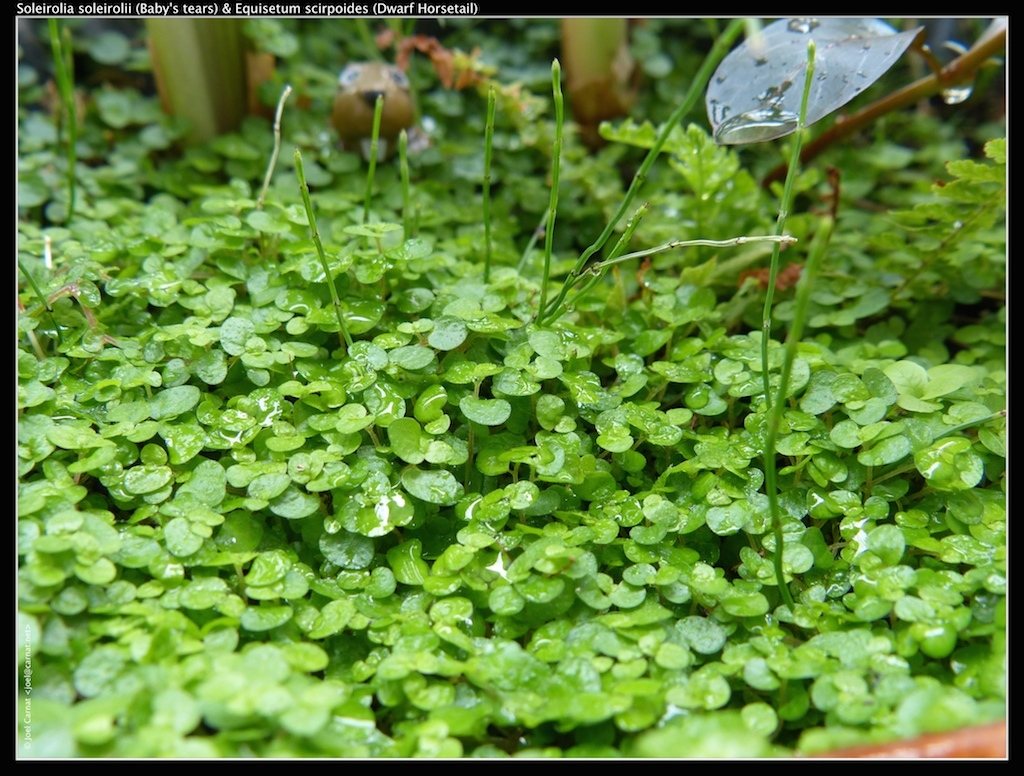
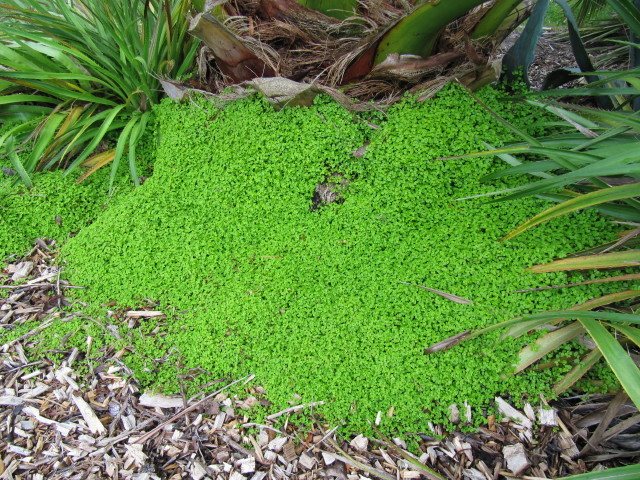
Baby's tears is a creeping perennial that forms a dense, moss-like carpet of tiny green leaves. Gardeners grow it to soften shady paving edges, cover moist soil beneath larger plants, or trail over pots. It needs steady moisture and can spread beyond its intended space in mild climates.
At a glance
- Sun
- Partial shade or bright, indirect light; tolerates deeper shade. Protect from strong afternoon sun, especially in hot climates.
- Water
- Keep the root zone consistently moist but not waterlogged. Its shallow roots dry out quickly, particularly in containers.
- Soil
- Humus-rich, moisture-retentive soil with good drainage; tolerates a range of soil pH.
- Height
- 0.1-0.3 ft (0.03-0.09 m)
- Spread
- 1-3 ft (0.3-0.9 m), eventually wider where conditions suit
- Foliage
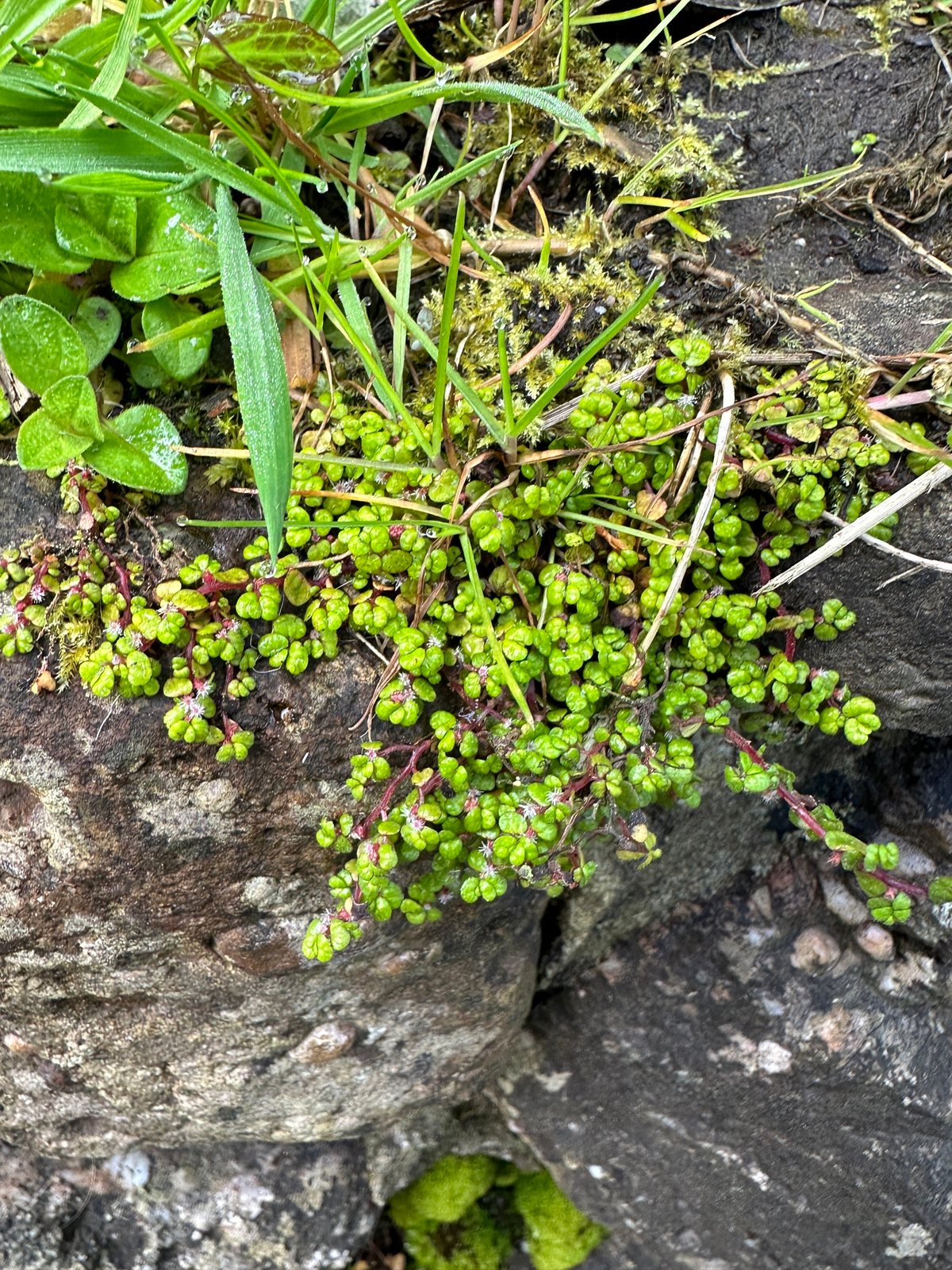
- Evergreen. Tiny, rounded, bright green leaves on fine creeping stems that root where they touch moist soil.
- Growth
- Fast in moist, mild conditions
- Care needed
- Medium
The year at a glance
- Low allergen
| J | F | M | A | M | J | J | A | S | O | N | D | |
|---|---|---|---|---|---|---|---|---|---|---|---|---|
| Plant |
Northern hemisphere months. In Australia, shift them by six.
- Difficulty
- Moderate
- Toughness
- Needs looking after
Will it suit your garden?
Pick your zone, country, light and whether you have pets.
Full sun is 6 or more hours of direct sun a day, part shade 3 to 6 hours, shade under 3.
How it grows
Planting day
0 ft (0.02 m)
After 1 year
0.1 ft (0.04 m)
After 2 years
0.2 ft (0.06 m)
full size
About 2 years to full size.
From a typical nursery size, at an average rate for this kind of plant. A rule of thumb, not a forecast.
Good to know
- Cats and dogs
- Safe
- In the garden
- Spreads vigorously: plan to contain it.
- Growth rate
- Fast
Care
Jobs through the year
- WaterApr–May, Sep–Oct, every 4 days
- Water established patches before the surface dries; skip when rain keeps soil moist.
- WaterJun–Aug, every 2 days
- Keep established shallow roots moist, not saturated; new plants may need daily checks.
- PruneApr–May
- Remove winter-damaged growth once fresh shoots reveal surviving patches.
- PruneMay–Sep, every 30 days
- Trim or lift spreading edges before they smother neighbouring plants.
- DivideMay–Jun
- Divide established mats as needed and replant rooted pieces in moist shade.
- ProtectJun–Aug
- Provide shade from hot afternoon sun.
- ProtectSep–Oct
- Lift a rooted portion before frost and overwinter frost-free; outdoor patches may die in zone 6–7.
- Water before the surface dries completely; check pots frequently during warm weather.
- Improve poor soil with compost, but avoid sites that remain saturated.
- Give container plants a dilute balanced liquid feed monthly during active growth; established garden patches usually need little feeding.
- Lift spreading edges regularly to keep stems out of neighbouring pots, lawns and small plants.
- Keep containers frost-free in cold regions; outdoor foliage may die back after frost even where the roots survive.
Pruning. Trim or lift unwanted growth during the growing season to keep the patch within bounds. Remove frost-damaged or brown growth in spring once fresh shoots appear.
Through the year
- Spring
- Remove winter-damaged growth and check whether outdoor patches have survived.
- Mid-spring
- Plant or divide into moist, prepared soil once severe frost has passed.
- Late spring
- Begin light feeding of container plants and trim spreading edges.
- Summer
- Check moisture frequently and protect plants from hot afternoon sun.
- Autumn
- Lift unwanted runners and bring pots under cover before frost in cold regions.
- Winter
- Keep sheltered pots lightly moist, with less watering as growth slows.
In the garden
- Carpet moist, shaded ground beneath ferns and larger shade plants, keeping it away from small, slow-growing specimens.
- Soften the edges of shaded paving where foot traffic is light.
- Trail over the rims of pots containing moisture-loving plants.
- Create a fine-textured green surface in sheltered courtyard or moss-style gardens.
Garden styles it suits: Woodland, Moss and fern garden, Modern courtyard, Japanese, Green on green and Small-space.
Plant it with: Japanese painted fern, Hart's tongue fern, Hosta, Astilbe, Rodgersia and Japanese forest grass.
Wildlife: The dense mat provides shelter for small invertebrates, but its tiny flowers offer little conspicuous value for pollinators. It does not tolerate regular foot traffic.
Problems to watch for
- Brown, crisp patches usually indicate drying out or hot sun: water thoroughly and provide more shade.
- Yellowing or collapsing growth can follow waterlogging and root rot: improve drainage and let excess water escape from pots.
- Slugs and snails may damage tender growth: inspect damp hiding places and use wildlife-conscious controls where needed.
- Unwanted spread can smother small plants: lift rooted stems promptly and contain it in pots where necessary.
Safety
Not known to be toxic to cats, dogs, horses or people; no part is recognised as poisonous. It is an ornamental plant, not a food crop.
Where it spreads. Can spread aggressively in mild, damp gardens in the UK and Ireland, coastal California, New Zealand and temperate parts of Australia. Rooted stem fragments establish readily; keep it away from natural vegetation and do not dump garden waste.
Easily confused with
Irish moss (Sagina subulata)
Has narrow, needle-like leaves and visible white, star-shaped flowers rather than rounded leaves on trailing stems.
Corsican mint (Mentha requienii)
Also forms a tiny-leaved carpet, but its leaves release a strong mint scent when gently rubbed.
Creeping pilea (Pilea depressa)
Often sold under similar common names; its leaves are generally larger and thicker, with more noticeably scalloped edges.
The name
The botanical name honours Joseph-François Soleirol, who collected plants in Corsica, while baby's tears refers to the tiny, rounded leaves.
Propagation. Divide rooted patches in spring or early summer and replant immediately into moist soil or potting mix. Small pieces of rooted stem also establish readily if kept shaded and consistently moist.
Checked against open data
- Accepted botanical name
- Soleirolia soleirolii
- In the US and Canada
- Introduced in the lower 48 states.
- Native range
- Baleares, Corse, Italy and Sardegna.
- Measured
- Soil pH 6.5 to 7. Average height 9 cm.
Sources: GBIF (CC BY 4.0), USDA PLANTS and Trefle (CC BY 4.0). The care and design notes are LandscapeGPT's own.
See it in your own yard.
Upload a photo of your yard and see it redesigned with plants that suit your climate, each checked against your zone.