Balsam fir
Abies balsamea. Family Pinaceae. Tree.
Also called Canadian balsam, Eastern fir.
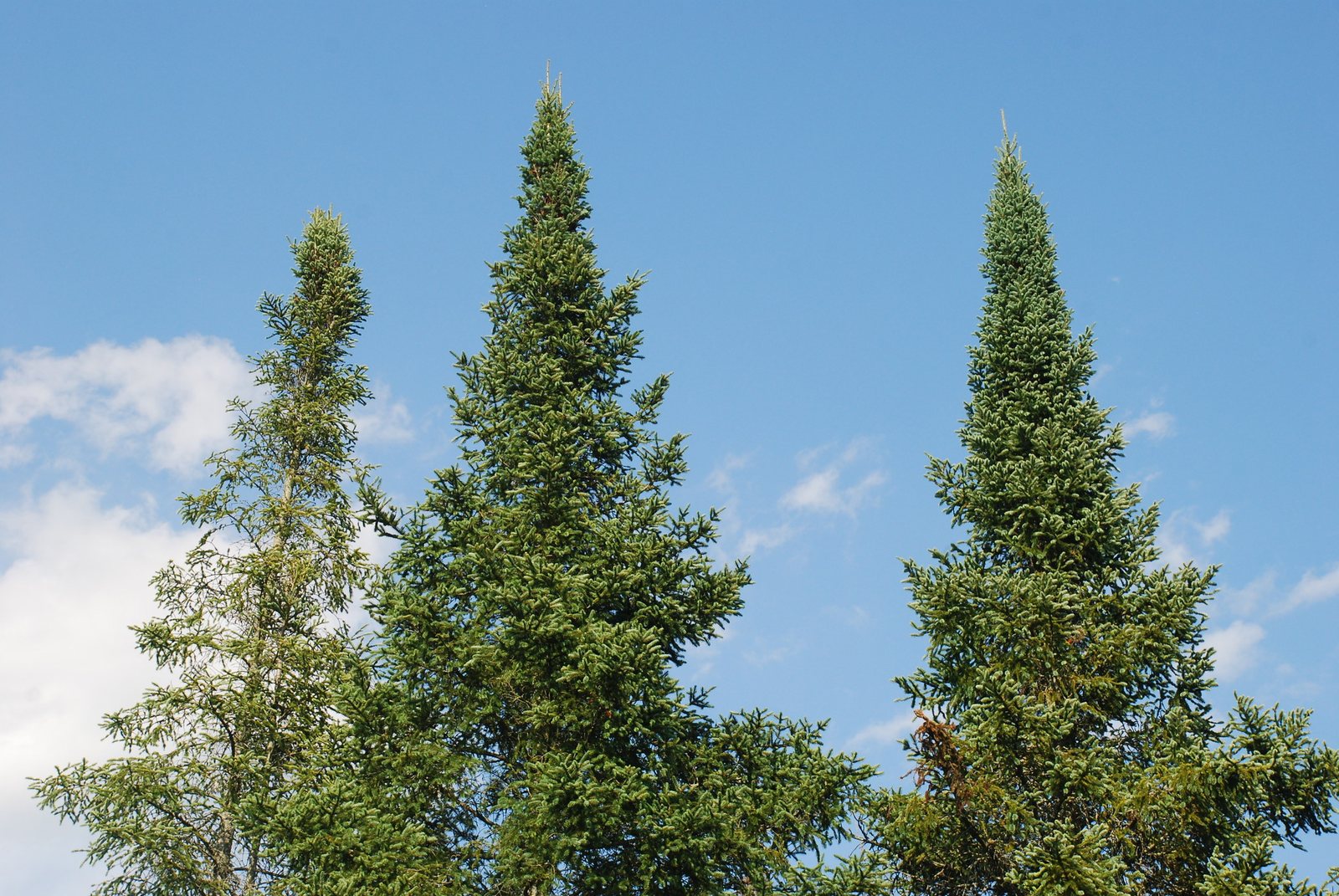
Balsam fir is a narrowly pyramidal evergreen native to northeastern North America, grown for its fragrant needles, dense outline and winter greenery. It suits spacious gardens with cold winters, cool summers and consistently moist soil; heat, drought and urban conditions often shorten its life.
At a glance
- Sun
- Full sun to partial shade; light afternoon shade can help in the warmer part of its range.
- Water
- Moderate to high; keep the root zone evenly moist but not waterlogged, especially during establishment.
- Soil
- Cool, moist, well-drained, acidic soil rich in organic matter. Avoid chalky, compacted, drought-prone or poorly drained ground.
- Height
- 45-75 ft (14-23 m)
- Spread
- 20-25 ft (6-7.6 m)
- Foliage
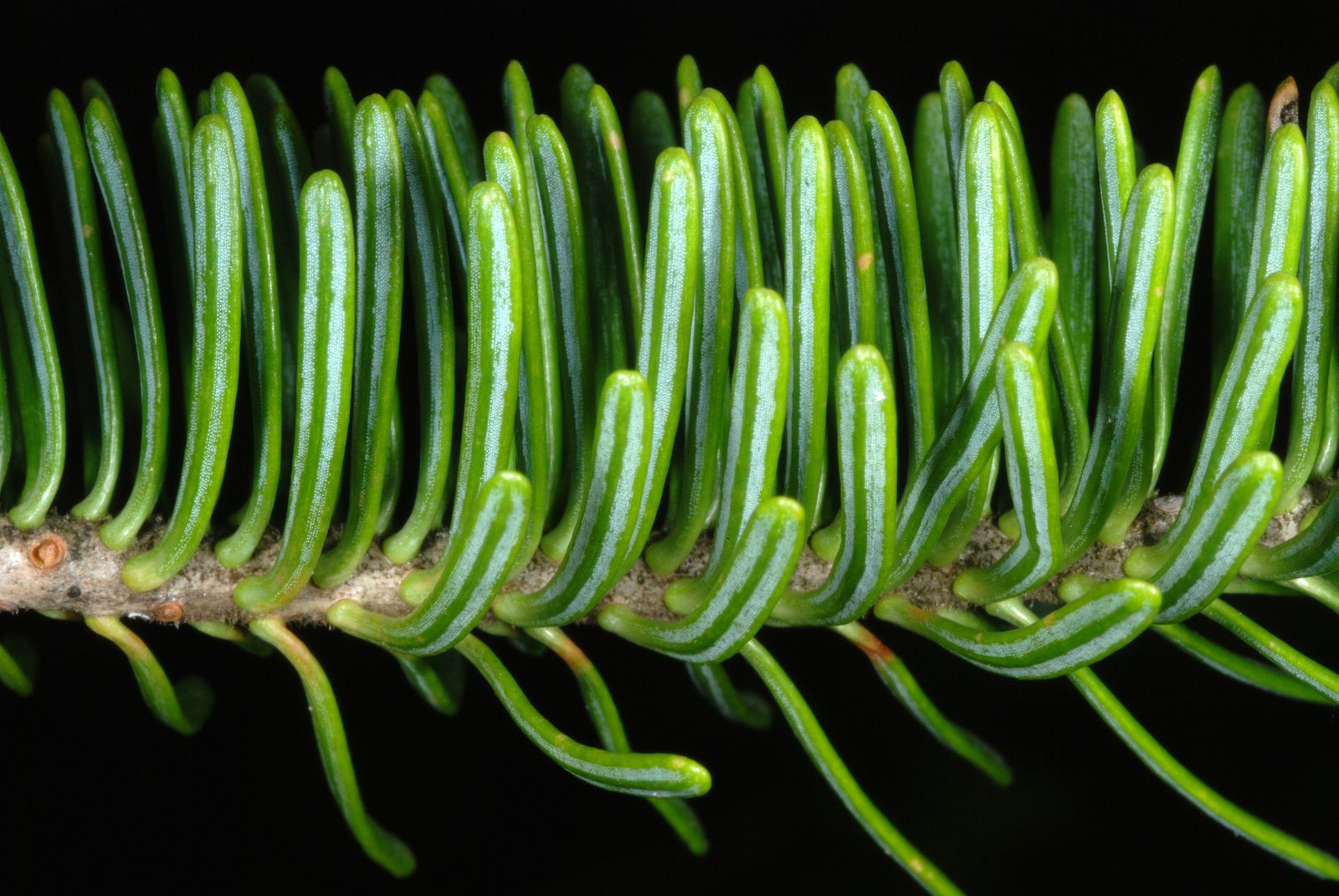
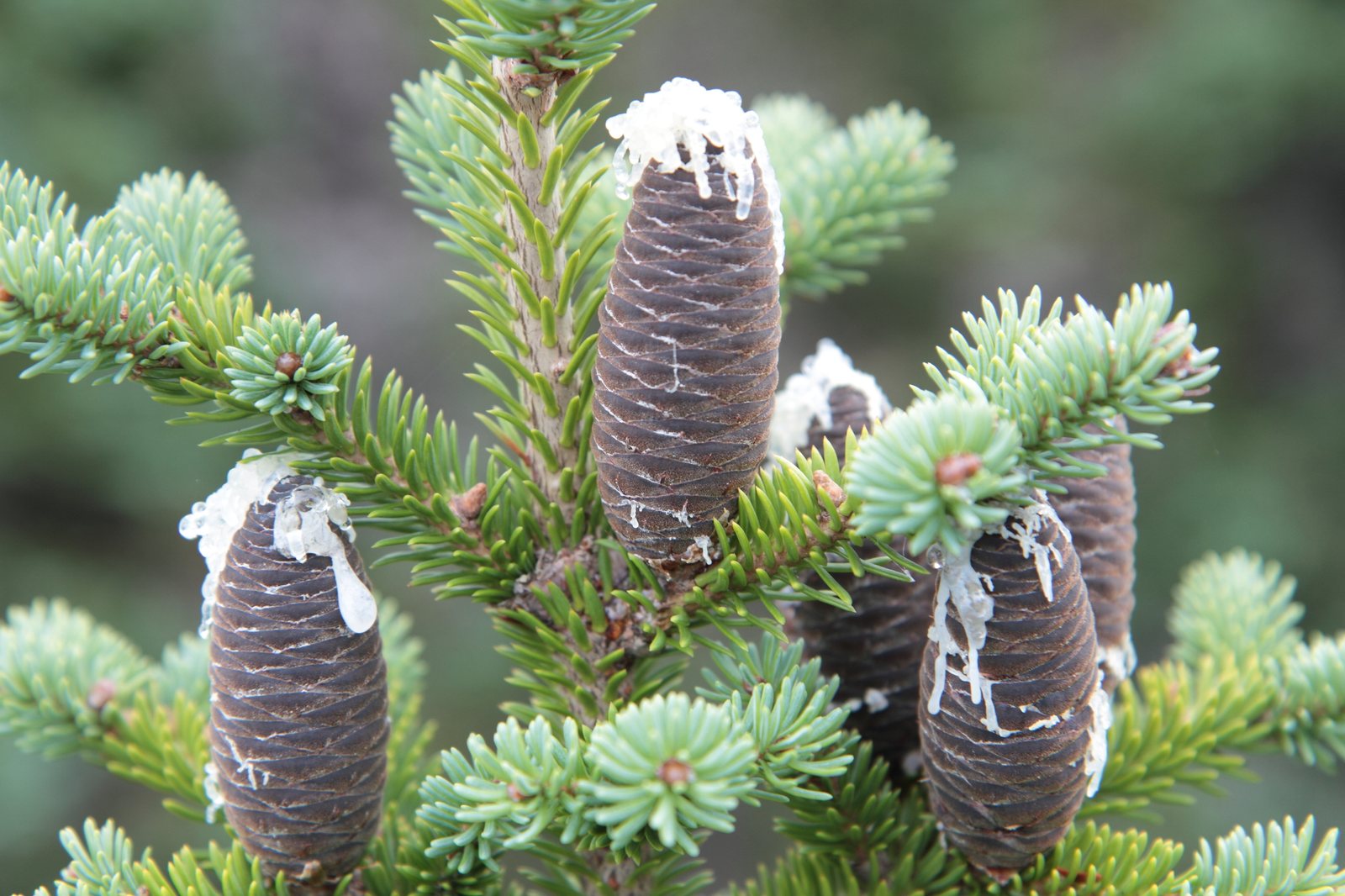
- Evergreen. Short, flat, aromatic, dark green needles with two pale bands underneath. Young trees have smooth grey bark with resin blisters; upright purple cones mature brown and break apart on the branches.
- Growth
- Slow to moderate, depending on moisture and summer temperatures.
- Care needed
- Medium
The year at a glance
- Cold hardy
- Wildlife
- Fragrant
| J | F | M | A | M | J | J | A | S | O | N | D | |
|---|---|---|---|---|---|---|---|---|---|---|---|---|
| Fruit | ||||||||||||
| Plant |
Northern hemisphere months. In Australia, shift them by six.
- Difficulty
- Moderate
- Toughness
- Needs looking after
Will it suit your garden?
Pick your zone, country, light and whether you have pets.
Full sun is 6 or more hours of direct sun a day, part shade 3 to 6 hours, shade under 3.
How it grows
Planting day
7 ft (2.2 m)
After 1 year
9 ft (2.8 m)
After 2 years
11 ft (3.5 m)
After 3 years
13 ft (4.1 m)
After 5 years
18 ft (5.4 m)
About 26 years to full size.
From a typical nursery size, at an average rate for this kind of plant. A rule of thumb, not a forecast.
Good to know
- Cats and dogs
- Mildly toxic: may upset a stomach
- Native to
- the US and Canada
- Growth rate
- Slow
Care
Jobs through the year
- WaterApr–May, Sep–Nov, every 14 days
- Water established trees if soil is drying and unfrozen; check young trees more often.
- WaterJun–Aug, every 7 days
- Water deeply during dry spells without saturating roots; young trees need closer checks.
- MulchMar–Apr
- Maintain 5–8 cm of organic mulch, keeping it away from the trunk.
- PruneFeb–Mar
- Remove dead, damaged or crossing branches as needed; preserve one leader and avoid bare old wood.
- Plant with the root flare at soil level, leaving enough room for the mature canopy.
- Water deeply during dry spells for the first two or three growing seasons; established trees also need help during prolonged drought.
- Apply 2-3 in (5-8 cm) of organic mulch over the root zone, keeping it clear of the trunk.
- Avoid routine feeding; use a soil test before correcting nutrient deficiencies.
- Protect the shallow roots from digging, heavy foot traffic and nearby construction.
Pruning. Prune in late winter or early spring to remove dead, damaged or crossing branches, retaining a single central leader. Avoid topping or cutting into bare old wood, which rarely produces useful new growth.
Through the year
- Early spring
- Plant when the soil is workable and not waterlogged; water thoroughly and mulch.
- Spring
- Check new shoots for distorted growth, aphids and feeding damage before treating anything.
- Summer
- Check soil moisture beneath the mulch and water deeply during dry weather.
- Early autumn
- Plant in mild districts while the soil is still warm; in very cold districts, favour spring planting.
- Late autumn
- Water before the ground freezes if autumn has been dry, and renew mulch where needed.
- Late winter
- Remove damaged branches and check that young trees still have one sound central leader.
In the garden
- Use as a specimen in a large lawn where its symmetrical outline and lower branches have room to develop.
- Plant in loose groups with birches and other cold-climate trees for a woodland edge.
- Use as an evergreen backdrop to shade-tolerant shrubs and ferns on moist, acidic ground.
- Place where its dark foliage provides winter structure and contrasts with pale bark or snow.
Garden styles it suits: Woodland, Wildlife garden, Winter interest, Mountain lodge, New England and Traditional.
Plant it with: Paper birch, Red maple, Rhododendrons, Mountain laurel, Foamflower and Christmas fern.
Wildlife: Provides year-round shelter and nesting cover for birds. Seeds feed squirrels and seed-eating birds, and the foliage supports several native moths in its North American range.
Problems to watch for
- Heat and drought stress cause thinning, browning and decline: mulch, water during dry spells and avoid planting in hot, exposed sites.
- Root rot develops in waterlogged soil: improve drainage before planting and avoid repeated irrigation of already wet ground; severely affected trees may need removal.
- Balsam woolly adelgid produces white woolly patches on bark and can cause swollen shoots and decline: have the pest identified and consult an arborist about treatment or removal.
- Spruce budworm caterpillars damage buds and new needles: monitor spring growth; small trees may be treated with a locally approved Bacillus thuringiensis product while larvae are young.
Safety
Not known to be toxic to people, cats, dogs or horses. Chewing needles or bark may cause mouth irritation or stomach upset, and sticky resin can irritate sensitive skin. Do not allow pets to drink Christmas-tree stand water, especially if additives have been used.
Easily confused with
Fraser fir (Abies fraseri)
Very similar, but Fraser fir usually has conspicuous bracts projecting beyond the cone scales; balsam fir generally has bracts hidden within the cone.
White spruce (Picea glauca)
White spruce has stiff, four-sided needles that roll between your fingers and cones that hang down. Balsam fir has flat needles and upright cones.
Eastern hemlock (Tsuga canadensis)
Eastern hemlock has finer, shorter needles, a usually nodding leader and small hanging cones. Balsam fir has a more rigid upright outline and much larger upright cones.
The name
The name balsamea and the common name balsam fir refer to the fragrant resin, traditionally known as Canada balsam, held in blisters in the bark.
Propagation. Grow from seed collected from mature cones before they break apart. Seed usually benefits from cold, moist stratification before spring sowing; named dwarf selections are generally propagated by grafting.
Checked against open data
- Accepted botanical name
- Abies balsamea
- In the US and Canada
- Native in Canada, the lower 48 states and St. Pierre and Miquelon.
- Native range
- Alberta, Connecticut, Iowa, Labrador, Maine, Manitoba, Maryland, Masachusettes, Michigan, Minnesota, New Brunswick and New Hampshire.
- Measured
- Soil pH 4 to 6. Average height 660 cm.
Sources: GBIF (CC BY 4.0), USDA PLANTS and Trefle (CC BY 4.0). The care and design notes are LandscapeGPT's own.
See it in your own yard.
Upload a photo of your yard and see it redesigned with plants that suit your climate, each checked against your zone.