Paper birch
Betula papyrifera. Family Betulaceae. Tree.
Also called Canoe birch, White birch, American white birch.
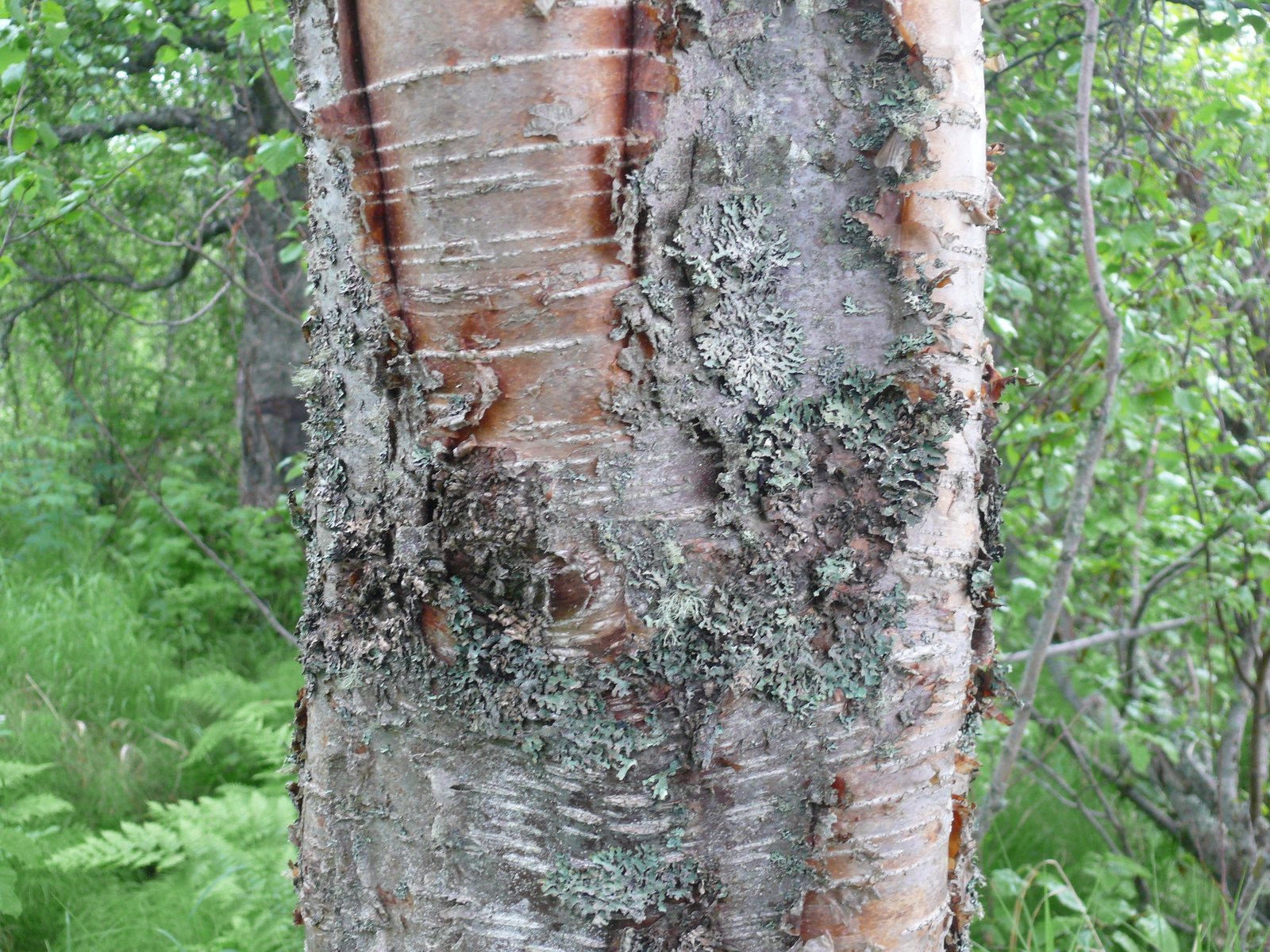
Paper birch is a deciduous North American tree grown for its peeling white bark, light canopy and yellow autumn leaves. It suits cool-climate gardens with room for its roots and crown; prolonged heat and drought weaken it, so it is generally unsuitable for warm Australian districts and hot urban sites.
At a glance
- Sun
- Full sun to light partial shade; keep the root area cool.
- Water
- Moderate to high; needs consistent moisture but not permanently waterlogged soil.
- Soil
- Moist, well-drained, acidic to neutral soil, preferably loamy or sandy. Avoid compacted ground and strongly alkaline soil.
- Height
- 50-70 ft (15-21 m)
- Spread
- 25-40 ft (7.5-12 m)
- Flowers
- Spring: yellow-brown male catkins and smaller green female catkins, appearing around leaf emergence.
- Foliage
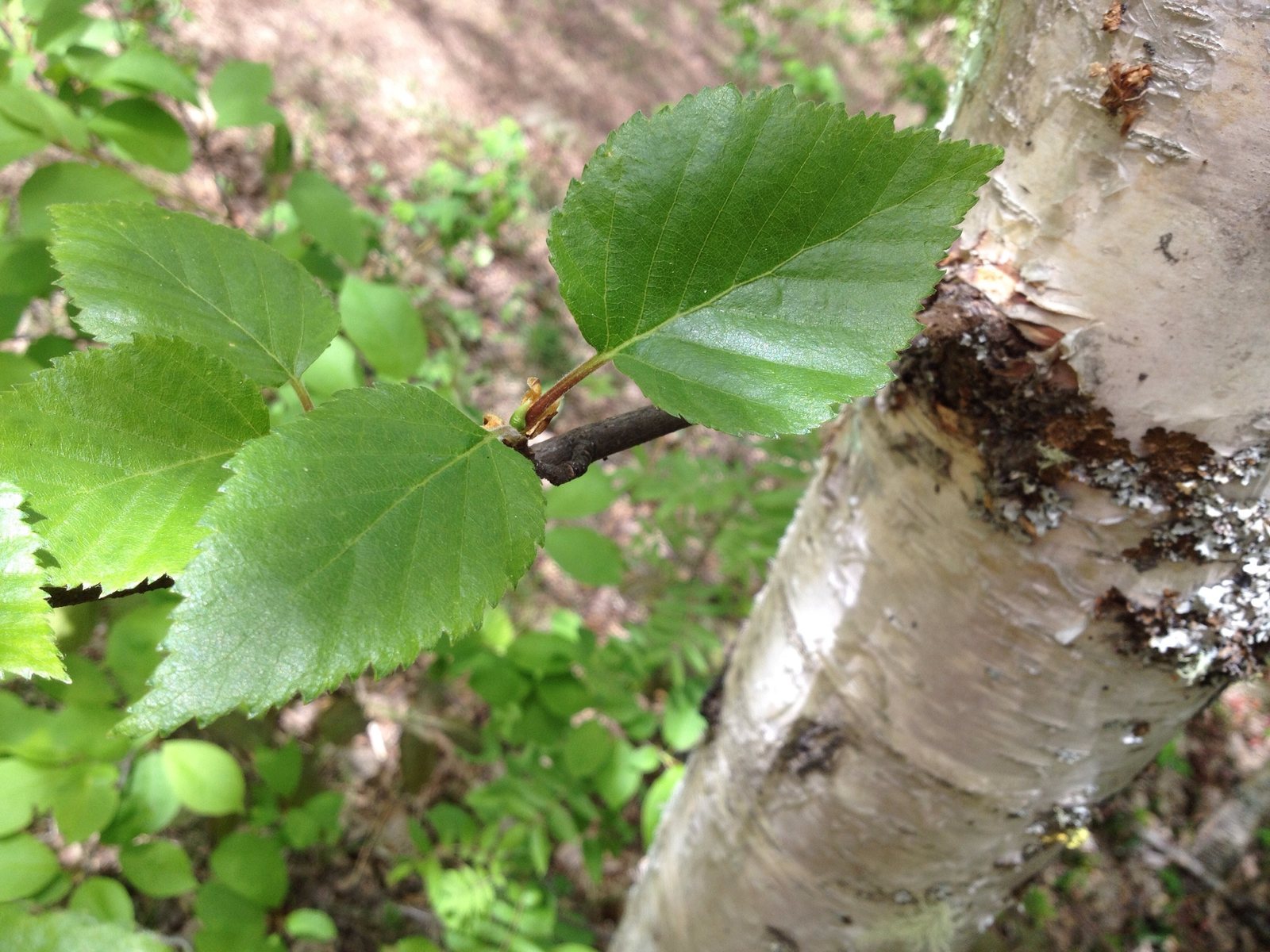
- Green, oval to triangular leaves with pointed tips and toothed edges; turns yellow in autumn. Young bark is brown before developing the characteristic white, peeling surface.
- Growth
- Moderate to fast in cool, moist conditions.
- Care needed
- Medium
The year at a glance
- Cold hardy
- Wildlife
| J | F | M | A | M | J | J | A | S | O | N | D | |
|---|---|---|---|---|---|---|---|---|---|---|---|---|
| Flowers | ||||||||||||
| Fruit | ||||||||||||
| Plant |
Northern hemisphere months. In Australia, shift them by six.
- Difficulty
- Moderate
- Toughness
- Needs looking after
Will it suit your garden?
Pick your zone, country, light and whether you have pets.
Full sun is 6 or more hours of direct sun a day, part shade 3 to 6 hours, shade under 3.
How it grows
Planting day
7 ft (2.2 m)
After 1 year
10 ft (3.2 m)
After 2 years
14 ft (4.1 m)
After 3 years
17 ft (5.1 m)
After 5 years
23 ft (7.1 m)
About 16 years to full size.
From a typical nursery size, at an average rate for this kind of plant. A rule of thumb, not a forecast.
Good to know
- Cats and dogs
- Safe
- Native to
- the US and Canada
- Growth rate
- Fast
Care
Jobs through the year
- WaterApr–May, Sep–Oct, every 14 days
- For established trees, soak deeply if rainfall is insufficient; water young trees more often.
- WaterJun–Aug, every 7 days
- For established trees, water deeply during dry weather; never let the root zone dry completely.
- MulchMar–Apr
- Maintain 5–8 cm of organic mulch over the roots, clear of the trunk and root flare.
- PruneNov–Dec
- Remove only small dead, damaged or crossing branches; avoid topping and large cuts.
- ProtectJan–Feb, Nov–Dec
- Protect young trunks from browsing with loose guards and check for trapped debris.
- Plant in autumn or early spring with the root flare at soil level, away from hot paving and reflected heat.
- Water deeply during dry spells, especially through the first two or three growing seasons; do not let the root zone dry out completely.
- Spread 2-3 in (5-8 cm) of organic mulch over the root area, leaving a clear gap around the trunk.
- Keep lawn competition, digging and heavy foot traffic away from the shallow roots.
- Feed only if a soil test or poor growth indicates a deficiency; avoid routine high-nitrogen feeding.
- Do not pull off attached bark or damage the trunk with mowing equipment.
Pruning. Prune sparingly in late autumn or early winter, removing dead, damaged or crossing branches while retaining the natural shape. Avoid late-winter and spring pruning, when cuts can bleed sap heavily, and never top the tree.
Through the year
- Early spring
- Plant while dormant if the soil is workable, and water thoroughly.
- Spring
- Refresh the mulch without burying the root flare; check new growth for leaf damage.
- Summer
- Water deeply during dry weather and inspect the upper crown for thinning or dieback.
- Autumn
- Plant container-grown or suitable dormant nursery trees once conditions are cool and moist.
- Late autumn
- Remove small dead or crossing branches if needed; have large or declining limbs assessed by an arborist.
- Winter
- Check young trunks for browsing damage and keep protective guards loose and clear of trapped debris.
In the garden
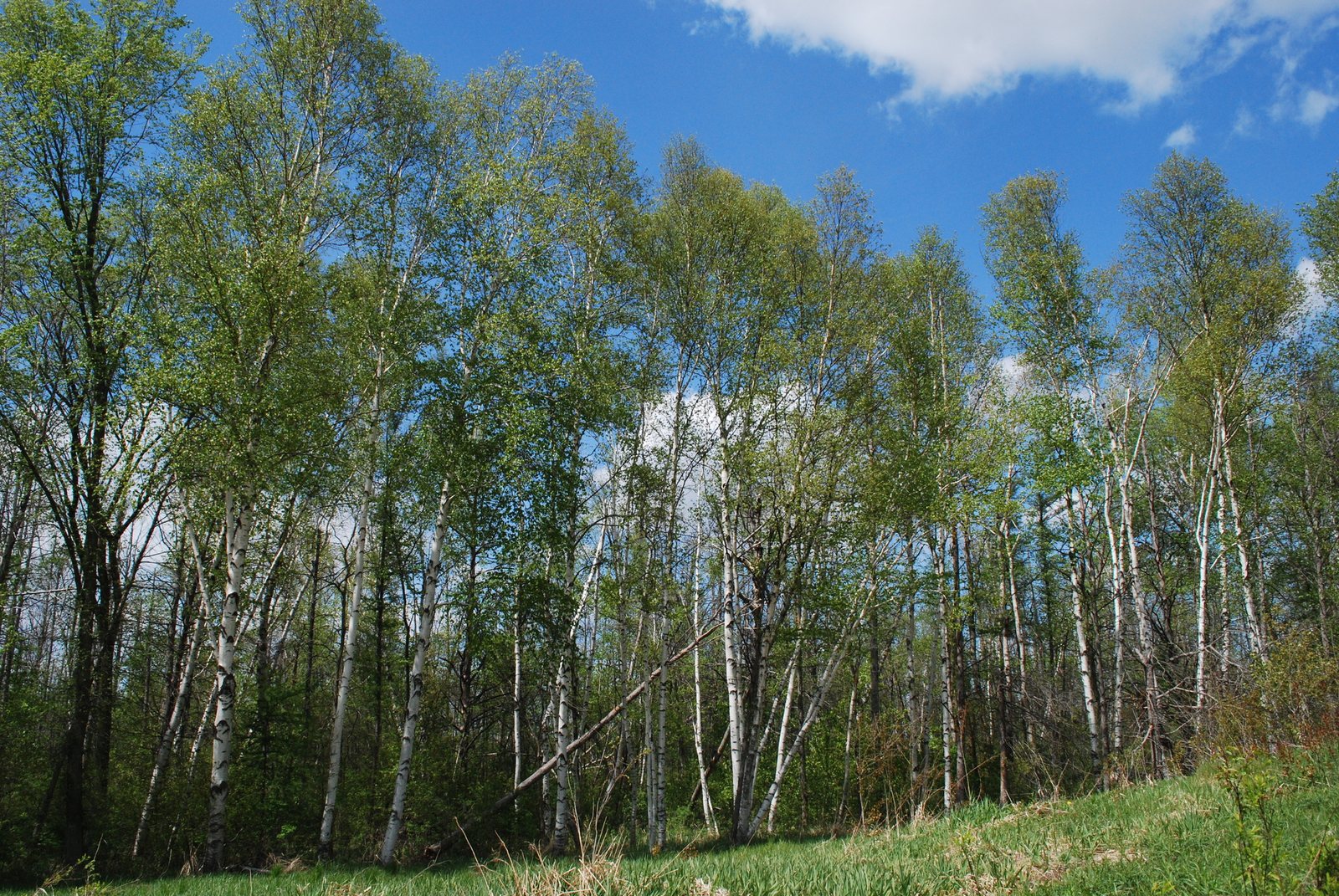
- Use as a specimen against dark evergreen planting to show the white bark.
- Plant a loose group in a large lawn or woodland edge for repeated pale trunks and filtered shade.
- Combine with ferns, sedges and spring woodland flowers in a cool, lightly shaded border.
- Place where the bark can be seen from a window in winter, allowing enough space for the mature crown.
Garden styles it suits: Woodland, Wildlife garden, Winter interest, Scandinavian, New England and Mountain lodge.
Plant it with: Christmas fern, Lady fern, Foamflower, Wild ginger, Pennsylvania sedge and Red-osier dogwood.
Wildlife: Supports many moth and butterfly caterpillars in its native range. Small birds eat the seeds, and the canopy provides nesting and shelter; deer and other browsing mammals may damage young trees.
Problems to watch for
- Bronze birch borer in North America: upper-crown dieback and D-shaped exit holes are warning signs. Prevent drought stress and seek an arborist's assessment promptly; severely affected trees may need removal.
- Birch leafminers: pale blotches develop inside leaves. Healthy trees usually tolerate light damage; conserve beneficial insects and seek locally approved treatment only for repeated severe attacks.
- Heat and drought stress: leaf scorch, early leaf drop and crown decline can follow hot, dry summers. Water deeply, mulch broadly and avoid planting in climates or sites that remain too hot.
- Iron chlorosis on alkaline soil: leaves turn yellow while veins remain greener. Test the soil and address the cause; choosing a suitable site is more reliable than repeated corrective treatments.
Safety
Not known to be toxic to cats, dogs, horses or people. No part is generally recognised as poisonous, although eating bark or other plant material can cause digestive upset. Windborne pollen can trigger allergies.
Easily confused with
Silver birch (Betula pendula)
Usually has more pendulous young branches, smaller triangular leaves and dark, deeply fissured bark at the base of older trunks; paper birch develops broader papery peeling sheets.
Grey birch (Betula populifolia)
Usually smaller, with long-pointed triangular leaves, conspicuous dark triangular marks beneath branches and grey-white bark that does not peel in broad sheets.
Himalayan birch (Betula utilis)
White-barked garden forms can look very similar, but commonly have more oval, coarsely toothed leaves and smoother, bright white trunks. Bark colour alone is not a reliable distinction.
The name
The epithet papyrifera means 'paper-bearing', referring to the bark that peels into thin, papery sheets.
Propagation. Usually grown from seed. Collect ripe seed in autumn and surface-sow in a protected outdoor seedbed or pots; cold, moist stratification can improve germination. Keep the fine seed moist and exposed to light.
Checked against open data
- Accepted botanical name
- Betula papyrifera
- In the US and Canada
- Native in Alaska, Canada, the lower 48 states and St. Pierre and Miquelon.
- Native range
- Alaska, Alberta, British Columbia, Colorado, Connecticut, Idaho, Illinois, Indiana, Iowa, Labrador, Maine and Manitoba.
- Measured
- Average height 1053 cm.
Sources: GBIF (CC BY 4.0), USDA PLANTS and Trefle (CC BY 4.0). The care and design notes are LandscapeGPT's own.
See it in your own yard.
Upload a photo of your yard and see it redesigned with plants that suit your climate, each checked against your zone.