Beach plum
Prunus maritima. Family Rosaceae. Shrub.
Beach plum is a deciduous, suckering shrub native to the Atlantic coast of eastern North America, grown for its white spring flowers and small, tart, edible plums. It tolerates coastal wind, salt spray and sandy soil, making it useful for informal coastal gardens and edible hedges. Plant two genetically different beach plums for reliable pollination and fruiting.
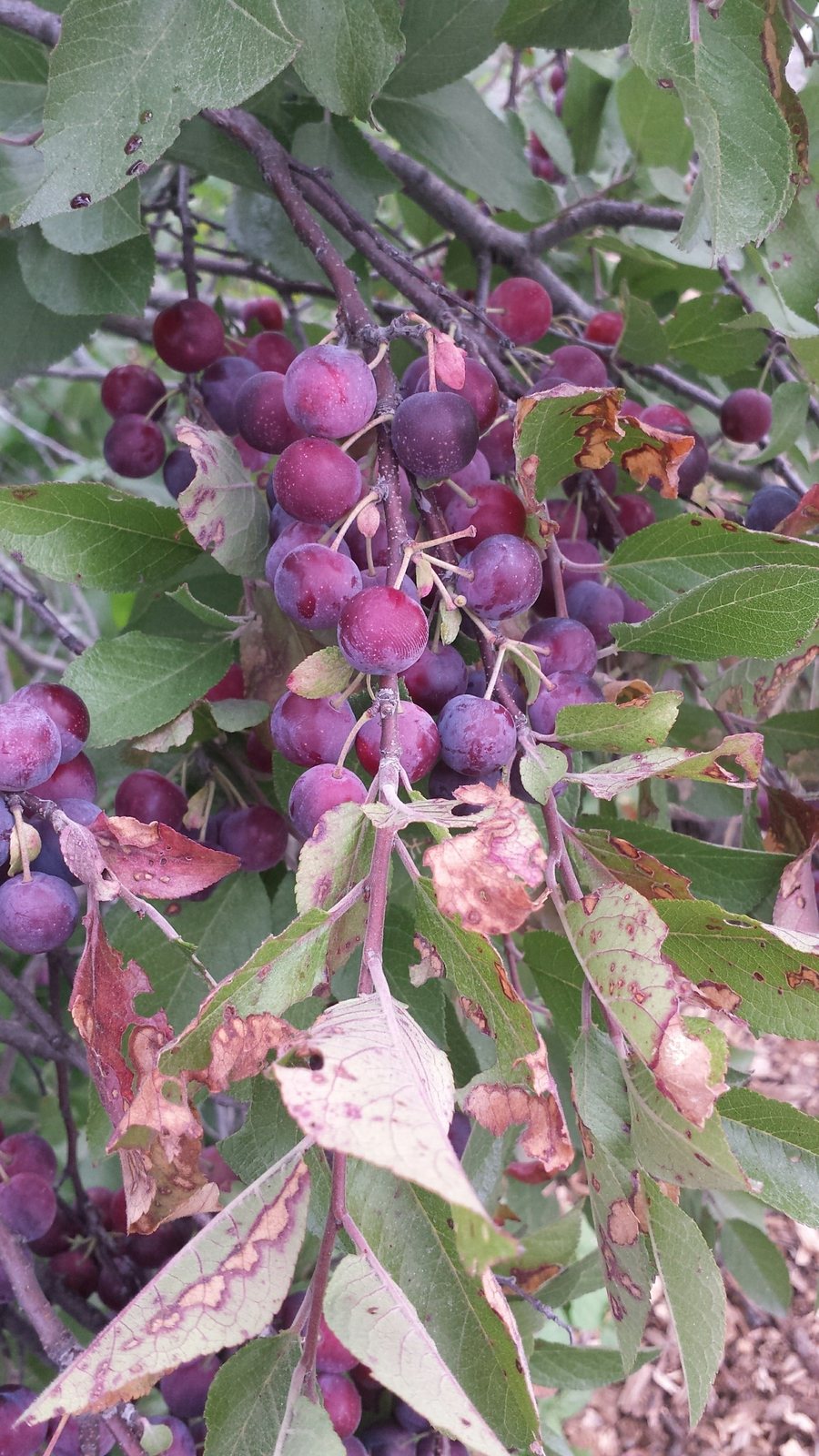
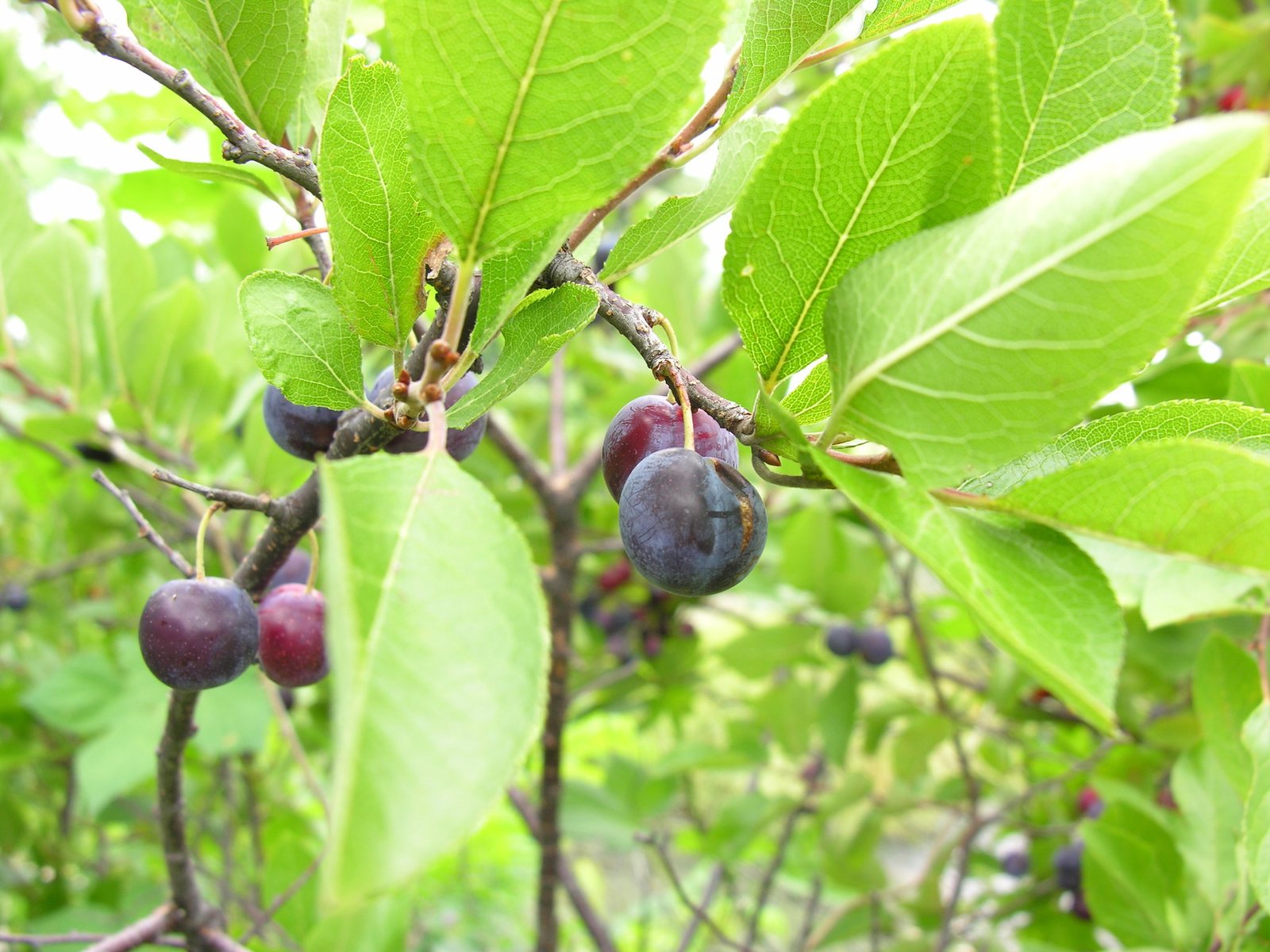
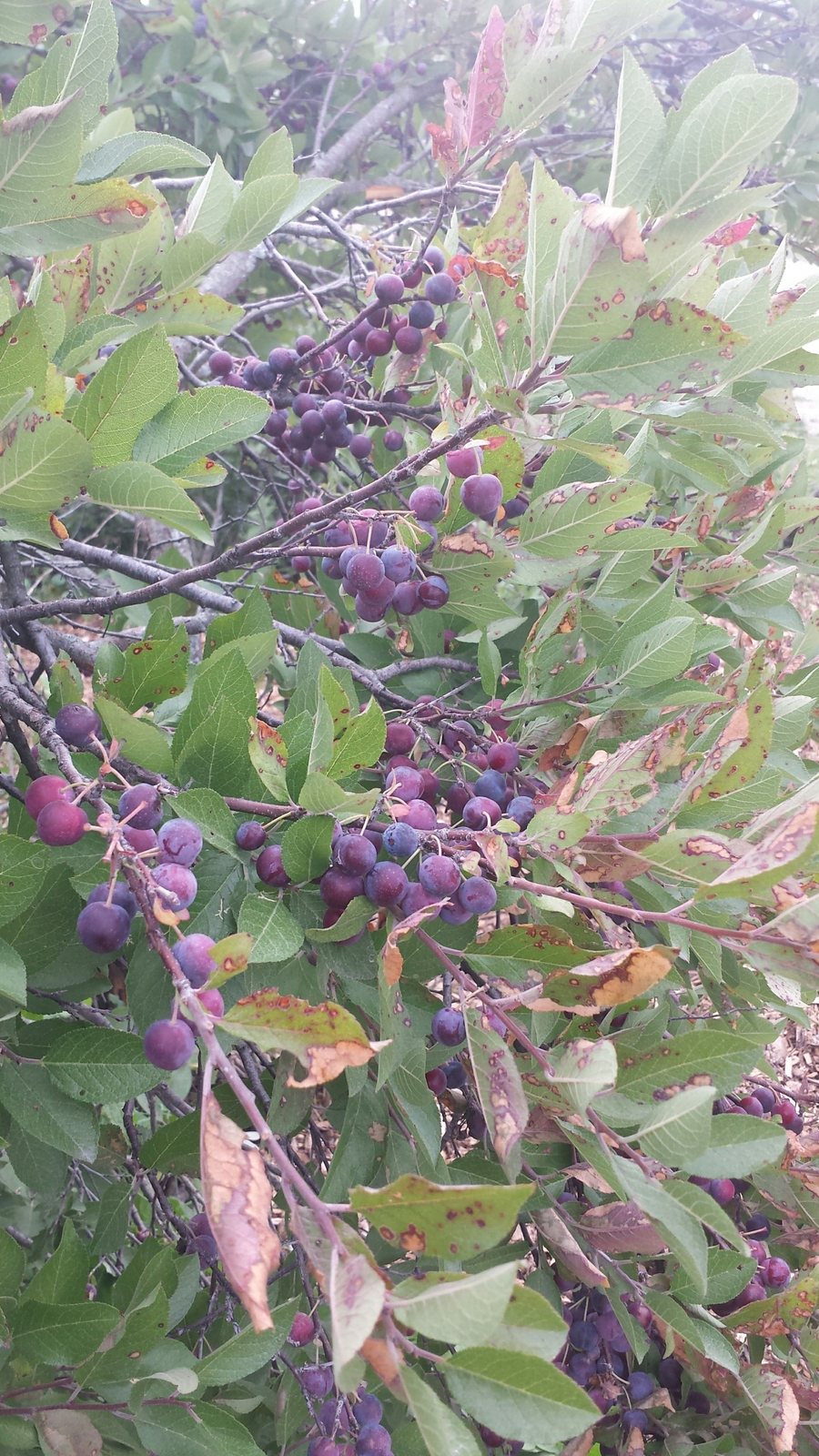
At a glance
- Sun
- Full sun for the best flowering and fruiting; tolerates light shade.
- Water
- Water regularly while establishing; moderately drought-tolerant once rooted. Water during prolonged dry spells if growing it for fruit.
- Soil
- Well-drained sandy or gravelly soil, preferably acidic to neutral. Avoid waterlogged ground; salt-spray tolerance does not mean tolerance of regular seawater flooding.
- Height
- 4-8 ft (1.2-2.4 m), occasionally taller in sheltered, fertile soil
- Spread
- 4-8 ft (1.2-2.4 m), widening into a colony through suckers
- Flowers
- Mid- to late spring; small white flowers appear before or with the emerging leaves.
- Foliage
- Small, oval, finely toothed green leaves with paler, slightly hairy undersides; autumn colour is usually yellow.
- Growth
- Moderate
- Care needed
- Medium
The year at a glance
- Pollinators
- Drought tolerant
- Cold hardy
- Wildlife
- Low allergen
- Edible
| J | F | M | A | M | J | J | A | S | O | N | D | |
|---|---|---|---|---|---|---|---|---|---|---|---|---|
| Flowers | ||||||||||||
| Fruit | ||||||||||||
| Plant |
Northern hemisphere months. In Australia, shift them by six.
- Difficulty
- Moderate
- Toughness
- Very tough
Will it suit your garden?
Pick your zone, country, light and whether you have pets.
Full sun is 6 or more hours of direct sun a day, part shade 3 to 6 hours, shade under 3.
How it grows
Planting day
1.6 ft (0.5 m)
After 1 year
2.5 ft (0.76 m)
After 2 years
3 ft (1 m)
After 3 years
4 ft (1.3 m)
After 5 years
6 ft (1.8 m)
full size
About 5 years to full size.
From a typical nursery size, at an average rate for this kind of plant. A rule of thumb, not a forecast.
Good to know
- Cats and dogs
- Toxic
- Native to
- the US
- Growth rate
- Moderate
Care
Jobs through the year
- WaterApr–May, Sep, every 14 days
- Water established shrubs during dry spells for good fruiting; water young plants more often.
- WaterJun–Aug, every 7 days
- During prolonged drought, water established fruiting shrubs deeply, allowing the soil surface to dry between waterings.
- MulchMar–Apr
- Apply 5–8 cm of organic mulch, keeping it clear of stems.
- PruneMar–Apr
- Remove unwanted suckers at their point of origin without cutting the main framework.
- ProtectJul–Sep
- If birds threaten the crop, fit taut wildlife-safe netting over a frame and check it daily.
- HarvestAug–Sep
- Pick fully coloured, slightly soft plums that detach easily; remove stones before cooking.
- PruneAug–Sep
- After harvest where practical, prune lightly in dry weather and remove diseased or crossing wood.
- Plant two unrelated seedlings or two different fruiting selections with overlapping bloom; two plants of the same clone are not a reliable pollination pair.
- Water deeply during dry weather in the first two growing seasons, allowing the soil surface to dry between waterings.
- Apply 2-3 in (5-8 cm) of mulch over the root area, keeping it clear of the stems.
- Avoid heavy nitrogen feeding, which encourages leafy growth at the expense of fruit.
- Remove unwanted suckers at their point of origin if you do not want a spreading thicket.
Pruning. Prune lightly in dry weather in summer, after harvest where practical, to reduce the risk of silver leaf infection. Remove dead, diseased and crossing branches, and occasionally take an old stem back to ground level; avoid shearing off the fruiting wood.
Harvest
Pick the plums in late summer to early autumn when fully coloured, slightly soft and easily detached; ripe fruit is usually purple to nearly black, though some plants bear red or yellow fruit. Expect a first substantial crop about 3-5 years after planting, sometimes longer for small seedlings, with yields varying between years. Remove the stones before cooking;
Through the year
- Autumn
- Plant in well-drained ground while the soil is workable, or defer planting until spring in very cold regions.
- Early spring
- Refresh mulch, check soil moisture and remove unwanted suckers.
- Spring
- Check that both pollination partners flower together; avoid insecticides while bees are visiting.
- Summer
- Water during prolonged drought and inspect fruit for rot or insect damage.
- Late summer
- Pick ripe fruit in several passes and use taut, wildlife-safe netting if birds are taking the crop.
- Late summer to early autumn
- After harvest, prune lightly in dry weather and remove rotten or mummified fruit.
In the garden
- Use as an informal coastal hedge where wind and salt spray limit less tolerant fruit bushes.
- Plant in a sunny edible border with other fruiting shrubs, leaving room to harvest and manage suckers.
- Group on a sandy bank to form a low, spreading thicket that helps hold the soil.
- Combine with native grasses and low flowering perennials for a loose coastal planting with spring blossom and late-season fruit.
Garden styles it suits: Coastal, Edible landscape, Wildlife garden, Native hedgerow, New England and Homestead.
Plant it with: Little bluestem, Switchgrass, Bearberry, Butterfly weed, Seaside goldenrod and Bayberry.
Wildlife: Spring flowers provide pollen and nectar for bees and other insects. Birds and mammals eat the fruit, and established thickets offer nesting cover; like other native cherries and plums, it also supports caterpillars.
Problems to watch for
- Poor fruit set: provide a genetically different beach plum flowering at the same time, maintain bee access and avoid excessive nitrogen; late frost can still destroy a crop.
- Brown rot: remove rotting and mummified fruit promptly, clear fallen fruit and thin crowded branches to improve airflow.
- Black knot: cut out the hard black swellings in dry weather, cutting well below visible infection, and dispose of infected wood.
- Plum curculio in eastern North America: look for crescent-shaped scars on young fruit, promptly collect dropped fruit and seek local advice on monitoring and control.
Safety
Ripe fruit flesh is edible for people, but the stone must be removed. Seeds inside the stones, leaves and stems contain cyanogenic compounds and can cause serious poisoning in people, cats, dogs and horses if eaten; wilted leaves are a particular livestock hazard. Do not crack or eat the kernels, and keep pruning waste away from animals.
Easily confused with
American plum (Prunus americana)
Usually a larger shrub or small tree with larger, more sharply and coarsely toothed leaves; beach plum has smaller, more finely toothed leaves and is closely associated with coastal sands.
Sand cherry (Prunus pumila)
Usually lower-growing, with noticeably narrower leaves and small, nearly black cherry-like fruit; beach plum has broader oval leaves and rounder, plum-like fruit.
The name
The common name refers to its coastal beach habitat, and the botanical epithet maritima means 'of the sea'.
Propagation. Grow from cleaned seed given a period of moist cold stratification; germination can be uneven and seedlings vary in fruit quality. Rooted suckers can be lifted while dormant from own-root plants. Named selections are usually propagated by cuttings, budding or grafting to preserve their characteristics.
Checked against open data
- Accepted botanical name
- Prunus maritima
- In the US and Canada
- Native in the lower 48 states.
- Native range
- Connecticut, Delaware, Maine, Maryland, Masachusettes, New Hampshire, New Jersey, New York, Pennsylvania, Rhode I. and Virginia.
- Measured
- Soil pH 5.8 to 7.7. Average height 366 cm.
Sources: GBIF (CC BY 4.0), USDA PLANTS and Trefle (CC BY 4.0). The care and design notes are LandscapeGPT's own.
See it in your own yard.
Upload a photo of your yard and see it redesigned with plants that suit your climate, each checked against your zone.