Beach sunflower
Helianthus debilis. Family Asteraceae. Perennial.
Also called Dune sunflower, Cucumberleaf sunflower.
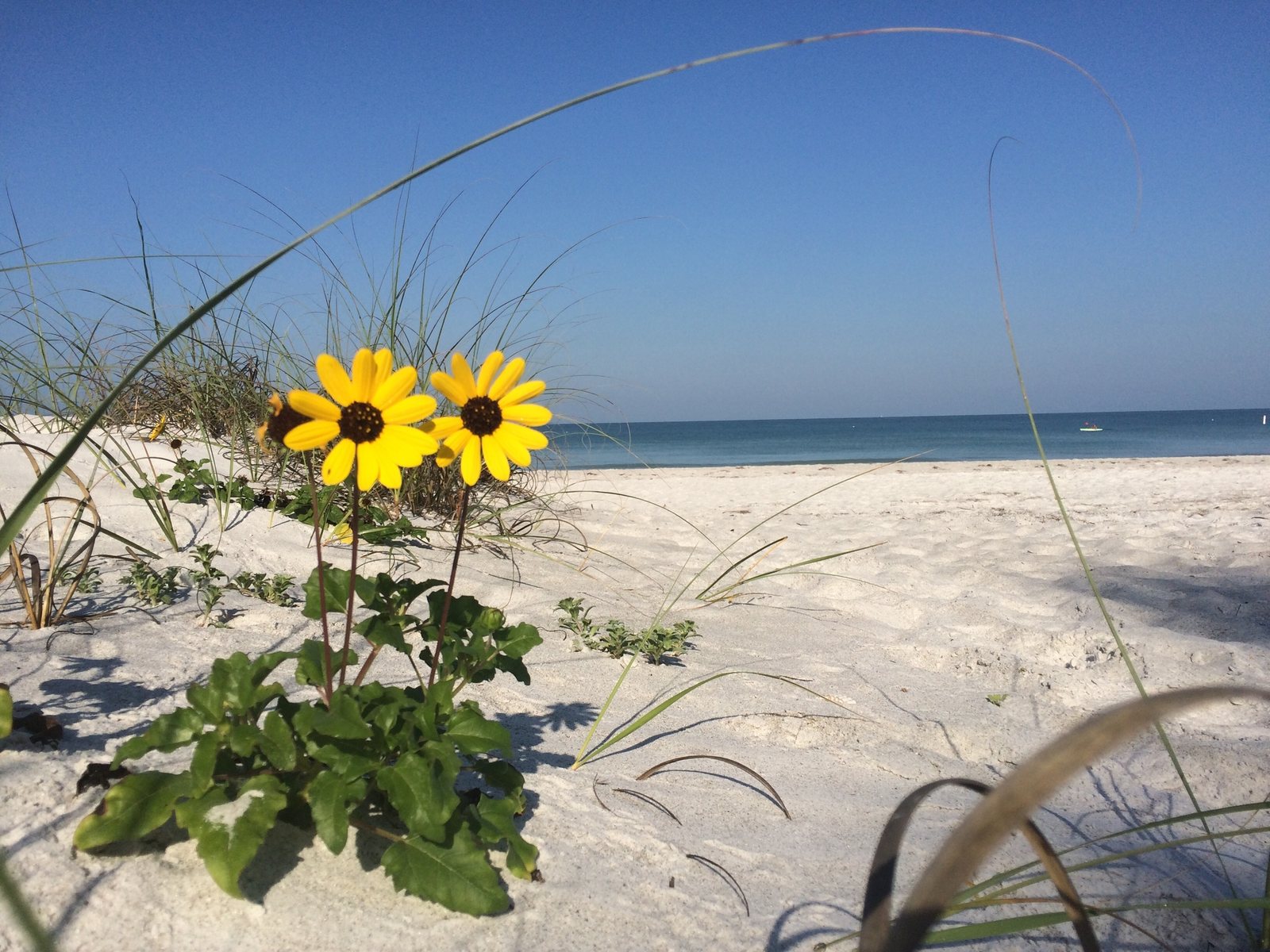
Beach sunflower is a spreading, short-lived perennial with yellow daisies, grown for its long flowering season and tolerance of sandy soil, drought and coastal salt spray. It is perennial in warm climates but grown as an annual where winters are cold. Low-growing forms make useful groundcover, although some forms are more upright.
At a glance
- Sun
- Full sun; flowering and growth become sparse in shade.
- Water
- Water regularly while establishing, then only during prolonged dry spells. Avoid persistently wet soil.
- Soil
- Well-drained sandy or gravelly soil; tolerates low fertility and coastal conditions but struggles in waterlogged clay.
- Height
- 1-3 ft (0.3-0.9 m)
- Spread
- 3-6 ft (0.9-1.8 m)
- Flowers
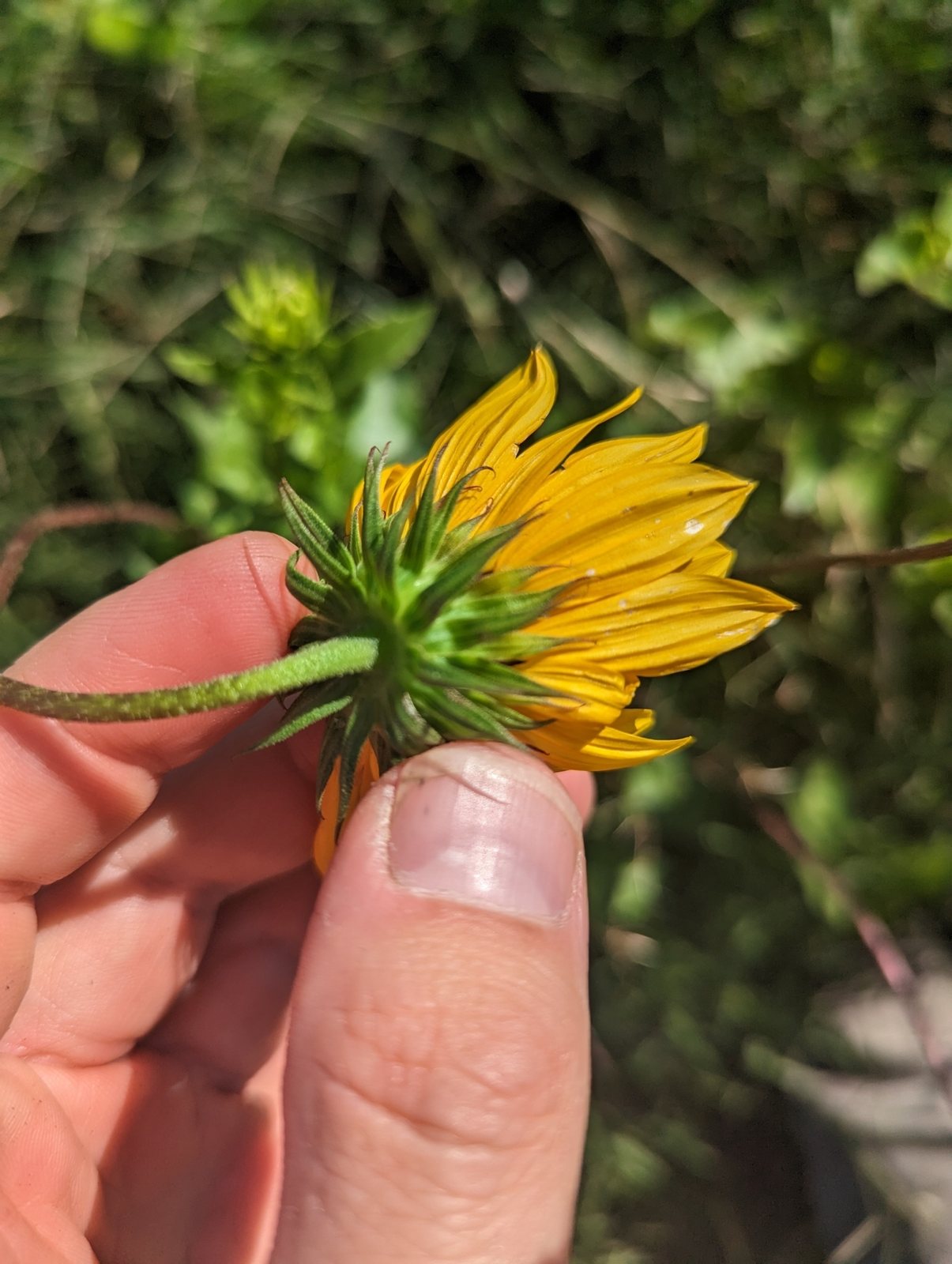
- Yellow rays around dark brown centres; spring to autumn, often nearly year-round in frost-free climates.
- Foliage
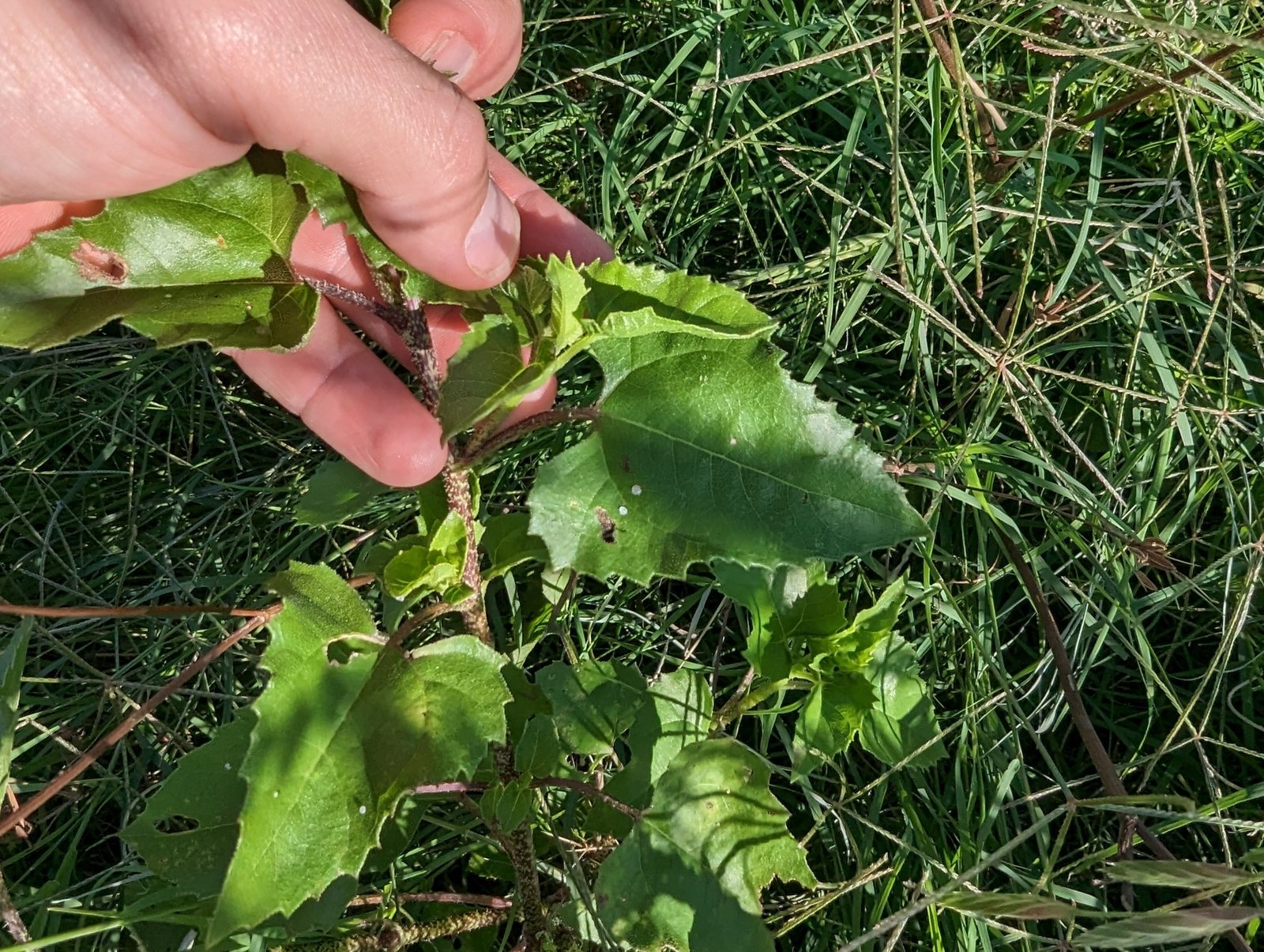
- Evergreen. Rough, hairy green leaves, triangular to heart-shaped and sometimes lobed; shape varies between forms.
- Growth
- Fast
- Care needed
- Low
The year at a glance
- Pollinators
- Drought tolerant
- Heat tolerant
- Wildlife
| J | F | M | A | M | J | J | A | S | O | N | D | |
|---|---|---|---|---|---|---|---|---|---|---|---|---|
| Flowers | ||||||||||||
| Fruit | ||||||||||||
| Plant |
Northern hemisphere months. In Australia, shift them by six.
- Difficulty
- Easy
- Toughness
- Very tough
Will it suit your garden?
Pick your zone, country, light and whether you have pets.
Full sun is 6 or more hours of direct sun a day, part shade 3 to 6 hours, shade under 3.
How it grows
Planting day
1 ft (0.3 m)
After 1 year
1.5 ft (0.45 m)
After 2 years
2 ft (0.6 m)
full size
About 2 years to full size.
From a typical nursery size, at an average rate for this kind of plant. A rule of thumb, not a forecast.
Good to know
- Cats and dogs
- Safe
- Native to
- the US
- Invasive in
- Australia
- In the garden
- Spreads vigorously: plan to contain it.
- Growth rate
- Fast
Care
Jobs through the year
- WaterMay–Jun, every 7 days
- Grow as an annual here; water new plants more often until rooted, then let soil dry between soakings.
- WaterJul–Aug, every 14 days
- Water rooted plants only during prolonged dry spells; avoid persistently wet soil.
- WaterSep–Oct, every 21 days
- Water only if unusually dry while plants remain actively growing.
- PruneJun–Aug
- Lightly trim sprawling stems and remove unwanted seedlings.
- DeadheadJul–Sep, every 14 days
- Remove spent flowers to limit self-seeding, leaving some seedheads for birds if desired.
- PruneOct–Nov
- Remove frost-killed annual growth, retaining seedheads where useful for wildlife.
- Plant after frost in full sun, leaving room for stems to spread.
- Water newly planted specimens until rooted, then let the soil dry between waterings.
- Use little or no fertiliser; rich feeding encourages sprawling growth.
- Keep mulch thin and away from the crown to discourage rot.
- Pull unwanted seedlings and trim stems before they cover neighbouring plants.
Pruning. Lightly trim long stems during the growing season to keep plants compact, and remove spent flowers if you want fewer seedlings. After frost, wait until spring growth appears before cutting away dead stems.
Through the year
- Spring
- In perennial plantings, remove frost-damaged stems once new growth is visible.
- Late spring
- Sow seed or plant young plants after frost, once the soil has warmed.
- Early summer
- Check establishment watering and lightly trim shoots that extend beyond their allotted space.
- Summer
- Water during prolonged drought and remove unwanted seedlings.
- Autumn
- Leave some seedheads for birds where self-seeding is acceptable; otherwise remove them.
- Winter
- Keep perennial plants well drained; in cold climates, remove annual plants after frost kills them.
In the garden
- Use low-growing forms as a loose groundcover on sunny coastal banks.
- Combine with pink muhly grass and blanket flower for a drought-tolerant, informal border.
- Let stems spill over a low retaining wall or the edge of a large container.
- Plant in sunny wildlife gardens where flowers can feed insects and seedheads can feed birds.
Garden styles it suits: Coastal, Florida subtropical, Wildlife garden, Pollinator garden, Desert / xeriscape and Dry gravel garden.
Plant it with: Blanket flower, Pink muhly grass, Lanceleaf coreopsis, Sea oats and Rosemary.
Wildlife: Flowers attract bees, butterflies and other pollinating insects. Seedheads provide food for seed-eating birds.
Problems to watch for
- Root and crown rot in wet soil: improve drainage or replant in a raised, sandy bed; avoid frequent irrigation.
- Sparse flowering and floppy stems: move into full sun and stop high-nitrogen feeding.
- Leaf spots or powdery mildew: improve airflow, water at soil level and remove badly affected foliage.
- Frost damage: grow as an annual outside its hardy range, or wait until spring to assess surviving crowns.
Safety
Not known to be toxic to people, cats, dogs or horses. No part is recognised as a significant poisoning hazard, although the rough foliage may irritate sensitive skin.
Where it spreads. Can spread vigorously by seed and sprawling stems in warm, sandy gardens. It is naturalised and regarded as an environmental weed in parts of Queensland and New South Wales, Australia; avoid planting near coastal dunes or bushland there.
Easily confused with
Common sunflower (Helianthus annuus)
Usually has a taller, upright annual habit, larger leaves and larger flowerheads; beach sunflower is generally lower, more spreading and smaller-flowered.
Swamp sunflower (Helianthus angustifolius)
Has long, narrow leaves and tall upright stems, usually flowering in late summer and autumn rather than over a long warm-season period.
Silverleaf sunflower (Helianthus argophyllus)
Has conspicuously silvery, densely hairy foliage and a taller upright habit, rather than the greener leaves and spreading habit typical of beach sunflower.
The name
Helianthus comes from Greek words for sun and flower, while debilis means weak or slender, referring to the stems.
Propagation. Sow seed in warm conditions after frost, or start under cover before the last frost. Take softwood cuttings during active growth to preserve the habit of a selected plant; seedlings can vary.
Checked against open data
- Accepted botanical name
- Helianthus debilis
- In the US and Canada
- Native in the lower 48 states.
- Native range
- Alabama, Connecticut, Florida, Georgia, Louisiana, Maryland, Masachusettes, Michigan, Mississippi, New Hampshire, New York and North Carolina.
- Measured
- Soil pH 5.2 to 7.2.
Sources: GBIF (CC BY 4.0), USDA PLANTS and Trefle (CC BY 4.0). The care and design notes are LandscapeGPT's own.
See it in your own yard.
Upload a photo of your yard and see it redesigned with plants that suit your climate, each checked against your zone.