Big bluestem
Andropogon gerardi. Family Poaceae. Ornamental grass.
Also called Turkeyfoot, Tall bluestem, Bluejoint.
Big bluestem is a tall, warm-season perennial grass native to North American prairies and open ground. Gardeners grow it for its upright summer growth, distinctive forked seed heads and coppery autumn colour. Give it room: established plants can spread into substantial patches.


At a glance
- Sun
- Full sun; tolerates light shade but becomes looser and more likely to lean.
- Water
- Water regularly during establishment. Established plants tolerate drought, although prolonged dry conditions reduce height and flowering.
- Soil
- Adaptable to sandy, loamy or clay soils, provided they are not persistently waterlogged. Lean to moderately fertile soil produces sturdier growth than rich, heavily fed soil.
- Height
- 4-8 ft (1.2-2.4 m)
- Spread
- 2-3 ft (0.6-0.9 m) initially; colonies can become wider over time
- Flowers
- Late summer to early autumn; small purplish to bronze flowers on finger-like branches, usually arranged in groups of three.
- Foliage
- Narrow green to blue-green leaves on upright stems, turning orange, copper, reddish purple or bronze in autumn, then straw-coloured in winter.
- Growth
- Moderate; slow to start in spring, then grows strongly in summer.
- Care needed
- Low
The year at a glance
- Deer resistant
- Drought tolerant
- Cold hardy
- Heat tolerant
- Wildlife
| J | F | M | A | M | J | J | A | S | O | N | D | |
|---|---|---|---|---|---|---|---|---|---|---|---|---|
| Flowers | ||||||||||||
| Fruit | ||||||||||||
| Plant |
Northern hemisphere months. In Australia, shift them by six.
- Difficulty
- Easy
- Toughness
- Very tough
Will it suit your garden?
Pick your zone, country, light and whether you have pets.
Full sun is 6 or more hours of direct sun a day, part shade 3 to 6 hours, shade under 3.
How it grows
Planting day
1.1 ft (0.35 m)
After 1 year
2.6 ft (0.8 m)
After 2 years
4 ft (1.2 m)
After 3 years
6 ft (1.7 m)
After 5 years
6 ft (1.8 m)
full size
About 3 years to full size.
From a typical nursery size, at an average rate for this kind of plant. A rule of thumb, not a forecast.
Good to know
- Cats and dogs
- Safe
- Native to
- Canada
- In the garden
- Spreads vigorously: plan to contain it.
- Growth rate
- Slow
Care
Jobs through the year
- WaterApr–May, Sep–Oct, every 14 days
- Water established clumps only if soil is dry; young plants need more frequent watering.
- WaterJun–Aug, every 14 days
- Water established clumps deeply during prolonged drought, not when rain is adequate.
- PruneFeb–Mar
- Check for wildlife, then cut old stems to 10–15 cm before new shoots lengthen.
- DivideApr–May
- Divide only oversized clumps as new growth appears; remove encroaching rhizomes.
- Plant in full sun with enough room for its mature height and spreading base.
- Water deeply during the first growing season, allowing the surface soil to dry between waterings.
- Avoid routine feeding; excess nitrogen encourages tall, floppy stems.
- Keep mulch thin and away from the crown, especially on heavy soil.
- Divide in spring if the clump becomes too large, and remove unwanted seedlings while small.
Pruning. Leave stems standing through winter, then cut them to 4-6 in (10-15 cm) above ground in late winter or early spring before new shoots lengthen. Remove broken stems sooner if they fall across paths.
Through the year
- Late winter
- Cut down old stems before new growth starts; check first for overwintering wildlife.
- Spring
- Plant or divide as the soil warms and new shoots appear.
- Late spring
- Weed around emerging shoots; this warm-season grass starts later than many border plants.
- Summer
- Water new plants during dry spells; established clumps usually need little supplementary watering.
- Early autumn
- Collect ripe seed if wanted, or remove seed heads where seedlings would be unwelcome.
- Late autumn
- Leave upright stems and seed heads for winter structure and wildlife.
In the garden
- Plant in broad groups with coneflowers and black-eyed Susans for a prairie-style border.
- Use behind shorter perennials to provide a tall, seasonal backdrop.
- Repeat clumps through a large naturalistic planting to link late-season flowers.
- Place where low autumn light can catch the coloured leaves and winter stems.
Garden styles it suits: Native meadow, New perennial (prairie), Midwest prairie, Wildlife garden, Autumn colour and Winter interest.
Plant it with: Purple coneflower, Black-eyed Susan, Rough blazing star, Butterfly weed, Wild bergamot and New England aster.
Wildlife: In its North American native range, the foliage feeds several skipper butterfly larvae. Clumps provide cover for insects and small animals, and some birds eat the seeds. Wind-pollinated flowers offer little direct value to nectar-feeding insects.
Problems to watch for
- Flopping stems: provide full sun, avoid fertiliser and move plants out of excessively rich soil; discreetly support established clumps if necessary.
- Rust or leaf spots: improve airflow, avoid wetting foliage repeatedly and remove badly affected leaves; treatment is rarely needed.
- Crown decline in wet soil: improve drainage or move the plant to a site without prolonged winter waterlogging.
- Unwanted spread: lift encroaching rhizomes in spring and remove seedlings or cut seed heads before seed falls.
Safety
Not known to be toxic to cats, dogs, horses or people. The leaves and stems are used as livestock forage; no part is recognised as poisonous under normal garden conditions.
Where it spreads. Can spread strongly by short rhizomes and seed in favourable garden conditions, including within its native range in the central and eastern United States and southern Canada. This local spread is not the same as being a listed invasive species.
Easily confused with
Little bluestem (Schizachyrium scoparium)
Usually shorter and more finely textured, with fluffy white seeds along slender stems rather than the conspicuous turkeyfoot seed heads of big bluestem.
Indiangrass (Sorghastrum nutans)
Has dense, golden-brown, plume-like flower heads rather than several finger-like branches.
Switchgrass (Panicum virgatum)
Produces broad, airy clouds of tiny flowers and seeds rather than narrow, forked seed heads.
The name
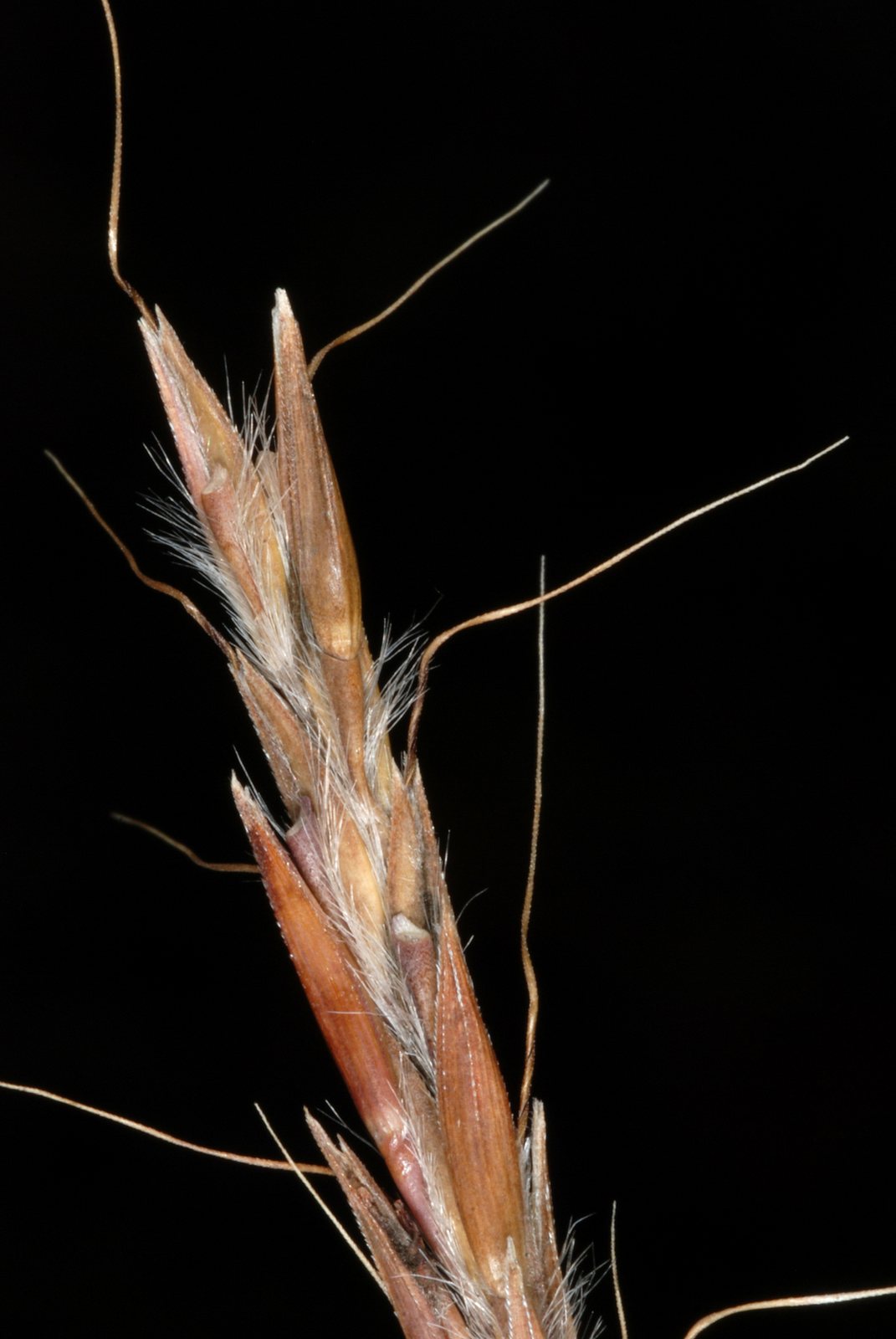
Andropogon comes from Greek words meaning 'man's beard', referring to the hairy spikelets, while the species name honours the French botanist Louis Gérard.
Propagation. Divide established clumps in spring as growth begins. Sow species seed in spring following the supplier's pretreatment instructions; a period of cold, moist conditions can improve germination. Seed-grown plants vary, and named cultivars should be divided to retain their characteristics.
Checked against open data
- Accepted botanical name
- Andropogon gerardi
- Native range
- Alabama, Arizona, Arkansas, Belize, Connecticut, Colorado, Costa Rica, Delaware, El Salvador, Florida, Georgia and Honduras.
- Measured
- Average height 68 cm.
Sources: GBIF (CC BY 4.0) and Trefle (CC BY 4.0). The care and design notes are LandscapeGPT's own.
See it in your own yard.
Upload a photo of your yard and see it redesigned with plants that suit your climate, each checked against your zone.