Bird's nest fern
Asplenium nidus. Family Aspleniaceae. Fern.
Also called Nest fern.
Bird's nest fern is a tropical evergreen fern with broad, glossy fronds arranged around a central cup. Gardeners grow it for its bold foliage in warm, shaded gardens and containers; in most of the United States, the United Kingdom and Canada, it needs indoor winter protection.
At a glance
- Sun
- Bright, indirect light or sheltered partial to full shade; avoid strong midday and afternoon sun.
- Water
- Keep the root zone lightly and evenly moist, but never waterlogged. Water the growing medium rather than pouring into the central cup.
- Soil
- Loose, humus-rich, freely draining, slightly acidic growing medium; a houseplant mix amended with fine orchid bark and perlite works well in pots.
- Height
- 2-5 ft (0.6-1.5 m)
- Spread
- 3-5 ft (0.9-1.5 m)
- Foliage
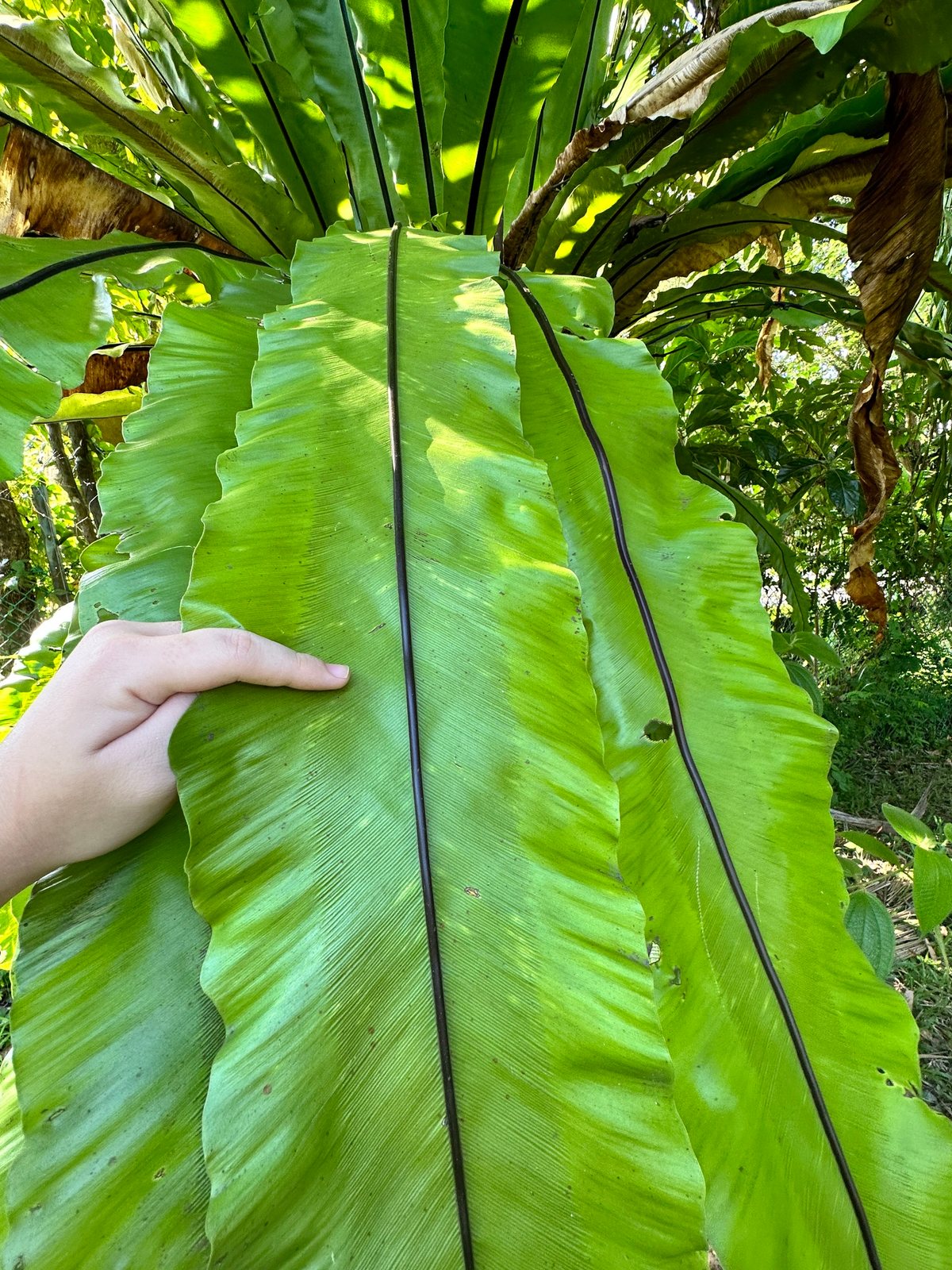
- Evergreen. Broad, undivided, glossy green fronds with dark midribs and gently rippled edges form an upright, spreading rosette. Mature fronds develop orderly brown spore lines underneath.
- Growth
- Slow to moderate; faster in warm, humid conditions.
- Care needed
- Medium
The year at a glance
- Low allergen
| J | F | M | A | M | J | J | A | S | O | N | D | |
|---|---|---|---|---|---|---|---|---|---|---|---|---|
| Plant |
Northern hemisphere months. In Australia, shift them by six.
- Difficulty
- Moderate
- Toughness
- Needs looking after
Will it suit your garden?
Pick your zone, country, light and whether you have pets.
Full sun is 6 or more hours of direct sun a day, part shade 3 to 6 hours, shade under 3.
How it grows
Planting day
1 ft (0.3 m)
After 1 year
1.8 ft (0.55 m)
After 2 years
2.6 ft (0.8 m)
After 3 years
3 ft (1.1 m)
full size
About 3 years to full size.
From a typical nursery size, at an average rate for this kind of plant. A rule of thumb, not a forecast.
Good to know
- Cats and dogs
- Safe
- Native to
- Australia
- Growth rate
- Moderate
Care
Jobs through the year
- WaterMar–May, Sep–Oct, every 7 days
- Grow in a sheltered pot here; water the mix when its surface begins to dry, avoiding the central cup.
- WaterJun–Aug, every 3 days
- Keep roots evenly moist, not sodden; check young plants and small pots more frequently.
- WaterJan–Feb, Nov–Dec, every 10 days
- Check indoor pots and water as the surface starts drying; never let the root ball dry completely.
- FeedMar–Aug, every 30 days
- Apply balanced liquid houseplant fertiliser at half strength.
- PruneMar–Sep
- Remove fully brown outer fronds at their bases; never cut the central growing point.
- ProtectAug–Oct
- Bring patio pots indoors before nights fall below 10°C; inspect for pests.
- ProtectJun–Aug
- Keep outdoors only in warm weather, shaded from strong sun and sheltered from drying wind.
- ProtectJan–Feb, Nov–Dec
- Provide humid air and bright indirect light away from heaters and cold draughts.
- Water when the surface of the growing medium begins to dry; let excess water drain away.
- Provide humid air and shelter from drying winds, heaters and cold draughts.
- Feed monthly in spring and summer with a balanced liquid houseplant fertiliser at half strength.
- Keep the central growing point above the soil surface and free of wet mulch.
- Repot in spring only when roots fill the container, using a pot just one size larger.
- Move pots indoors before nights fall below 10°C (50°F).
Pruning. Remove fully brown or damaged outer fronds at their bases with clean scissors whenever needed. Never cut into the central growing point or trim healthy fronds to reduce the plant's size.
Through the year
- Spring
- Check root growth and repot crowded plants into fresh, airy growing medium.
- Spring
- Resume light feeding as new fronds begin to expand.
- Summer
- Check moisture frequently and protect outdoor plants from strong sun and drying wind.
- Early autumn
- Bring summer patio plants indoors before nights drop below 10°C (50°F); inspect for pests first.
- Winter
- Stop feeding if growth slows, and water less often without allowing the root ball to dry completely.
- Winter
- Keep indoor plants in bright, indirect light away from heaters and cold window glass.
In the garden
- Use a single plant in a simple container as a bold foliage feature on a shaded patio.
- Plant beneath a frost-free tree canopy with smaller ferns for contrasting leaf shapes.
- Group with cast iron plants and peace lilies in a warm, sheltered courtyard.
- Use repeated plants along a shaded tropical walkway to create a consistent, sculptural edge.
Garden styles it suits: Modern tropical, Tropical, Architectural minimal, Modern courtyard, Balinese and Green on green.
Plant it with: Cast iron plant, Peace lily, Lady palm, Moth orchid, Bromeliads and Maidenhair fern.
Wildlife: The rosette can shelter small invertebrates in tropical gardens. It produces neither flowers nor nectar; the regular brown lines beneath mature fronds are spore-bearing structures, not pests.
Problems to watch for
- Brown, crisp edges: check for dry roots, low humidity, hot sun or excess fertiliser; correct the cause and flush accumulated salts from pots.
- Yellowing fronds and a soft, dark centre: waterlogging or crown rot is likely; improve drainage, keep water out of the centre and discard plants with a collapsed growing point.
- Scale insects or mealybugs: inspect frond bases and undersides, isolate affected plants and use a product labelled for indoor ferns, testing a small area first.
- Bleached or scorched patches: move the plant out of direct sun; damaged tissue will not turn green again.
Safety
Not known to be toxic to cats, dogs, horses or people. No part is recognised as poisonous, although eating foliage may cause mild digestive upset and the plant is not intended as food.
Easily confused with
Australian bird's nest fern (Asplenium australasicum)
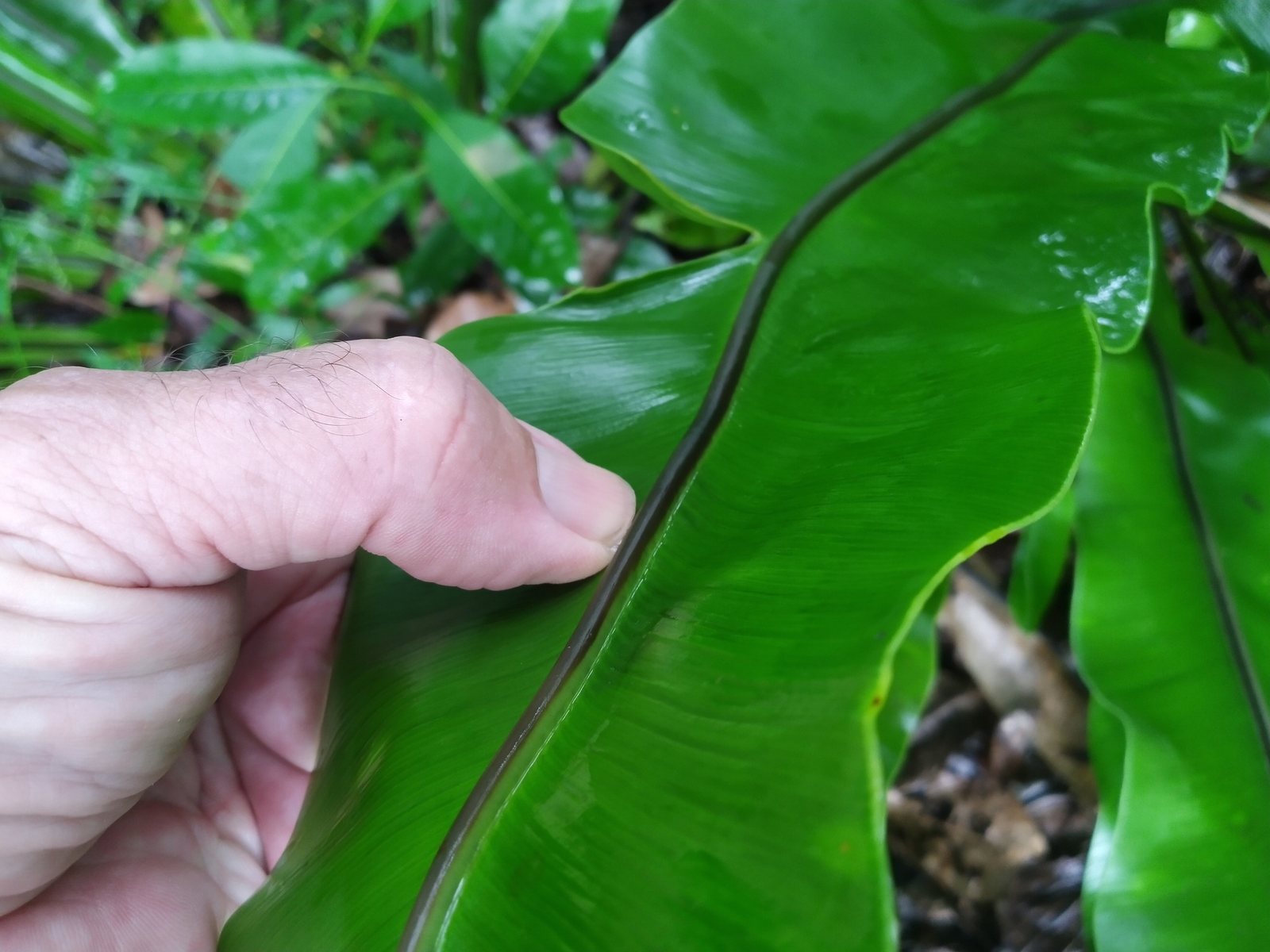
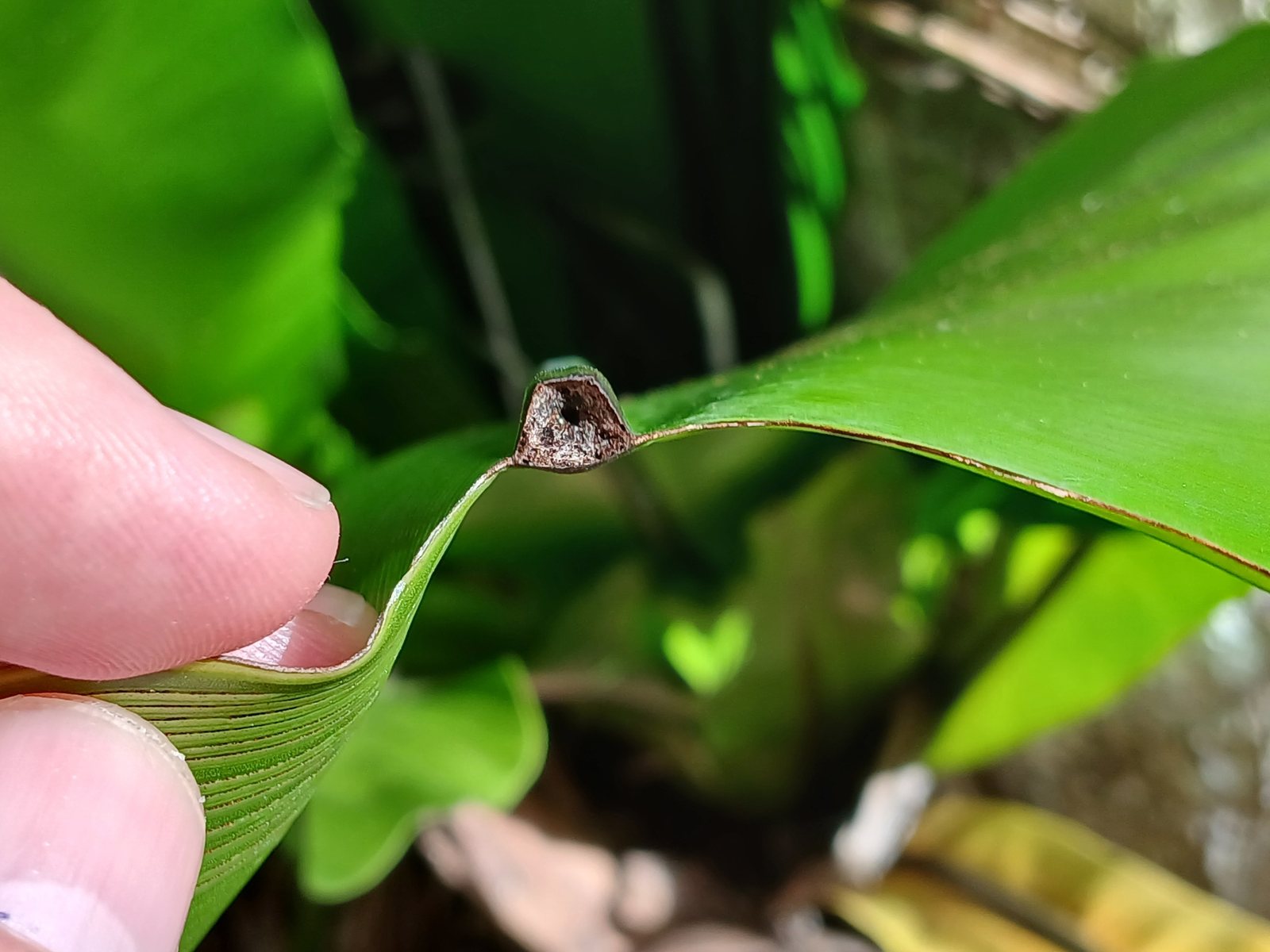
Very similar and often sold under the same common name, but its midrib has a conspicuous keel on the underside; the underside of the midrib in A. nidus is more rounded.
Japanese bird's nest fern (Asplenium antiquum)
Usually has narrower, more upright fronds. Cultivars overlap greatly in appearance, so a reliable species label is more useful than leaf waviness alone.
Hart's tongue fern (Asplenium scolopendrium)
Has narrower strap-shaped fronds with distinct heart-shaped lobes at their bases. It is a much smaller, cold-hardy garden fern.
The name
The species name nidus means 'nest', referring to the nest-like rosette formed by the fronds.
Propagation. Propagate from spores on mature frond undersides, sown on a clean, moist surface under warm, humid conditions. This is slow and requires care; a single-crowned plant cannot be divided like a clumping fern.
Checked against open data
- Accepted botanical name
- Asplenium nidus
- In the US and Canada
- Native in Hawaii and Pacific Basin.
- Native range
- Bismarck Archipelago, Borneo, Caroline Is., Christmas I., Jawa, Lesser Sunda Is., Malaya, Maluku, New Guinea, Philippines, Queensland and Solomon Is..
Sources: GBIF (CC BY 4.0), USDA PLANTS and Trefle (CC BY 4.0). The care and design notes are LandscapeGPT's own.
See it in your own yard.
Upload a photo of your yard and see it redesigned with plants that suit your climate, each checked against your zone.